







Question: Missing from the bottom question 2. What else should you keep the same (control variable) each time you change the material the sound is traveling
Missing from the bottom question 2. What else should you keep the same (control variable) each time you change the material the sound is traveling through?
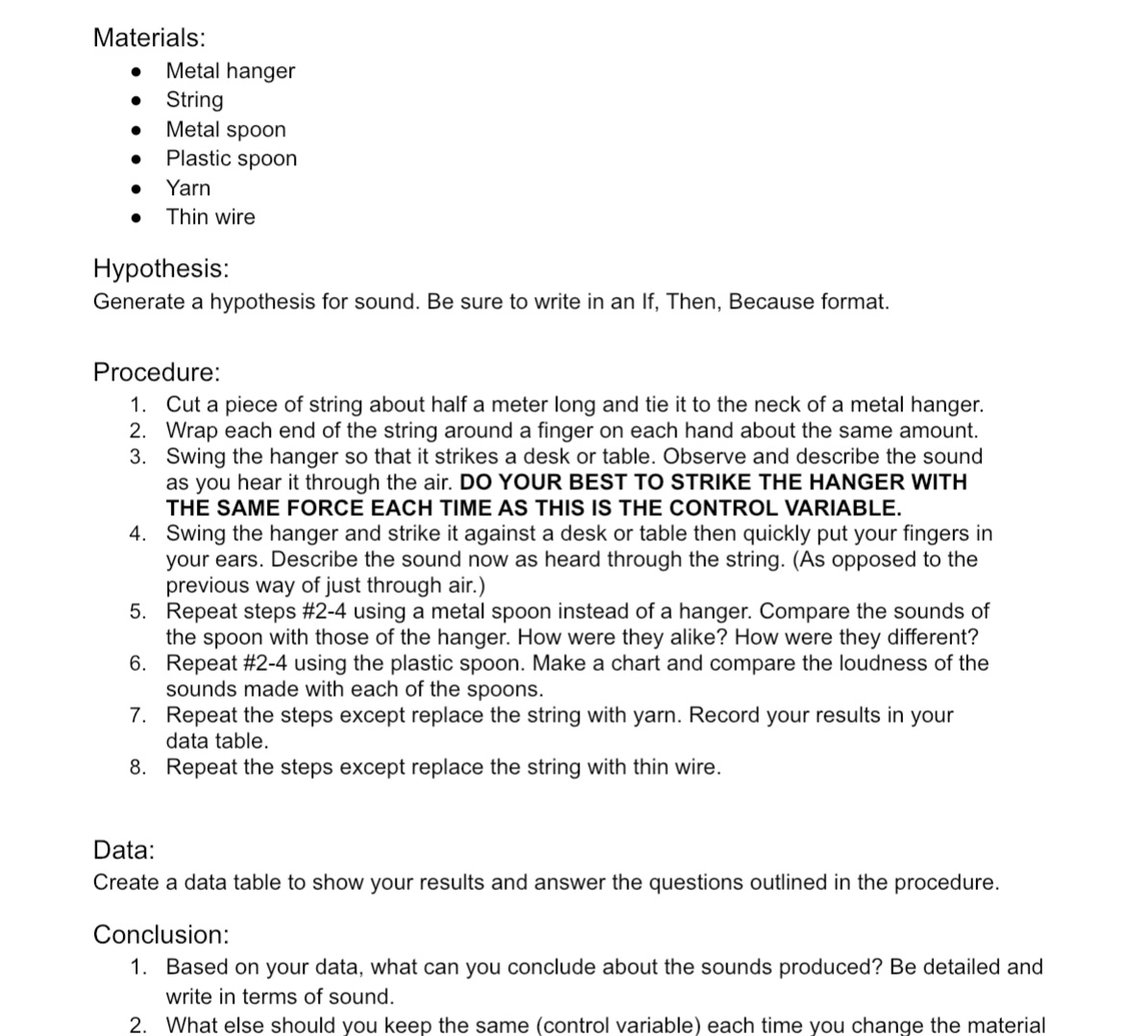
Materials: Metal hanger String Metal spoon Plastic spoon Yarn Thin wire Hypothesis: Generate a hypothesis for sound. Be sure to write in an If, Then. Because format. Procedure: 1. 2. 3. Data: Cut a piece of string about half a meter long and tie it to the neck of a metal hanger. Wrap each end of the string around a nger on each hand about the same amount. Swing the hanger so that it strikes a desk or table. Observe and describe the sound as you hear it through the air. DO YOUR BEST TO STRIKE THE HANGER WITH THE SAME FORCE EACH TIME AS THIS IS THE CONTROL VARIABLE. Swing the hanger and strike it against a desk or table then quickly put your ngers in your ears. Describe the sound now as heard through the string. (As opposed to the previous way of just through air.) Repeat steps #2-4 using a metal spoon instead of a hanger. Compare the sounds of the spoon with those of the hanger. How were they alike? How were they different? Repeat #2-4 using the plastic spoon. Make a chart and compare the loudness of the sounds made with each of the spoons. Repeat the steps except replace the string with yarn. Record your results in your data table. Repeat the steps except replace the string with thin wire. Create a data table to show your results and answer the questions outlined in the procedure. Conclusion: 1. Based on your data, what can you conclude about the sounds produced? Be detailed and write in terms ot sound. 2. What else should you keep the same (control variable) each time you change the material
Step by Step Solution
There are 3 Steps involved in it

Get step-by-step solutions from verified subject matter experts
 Study Help