







Question: Module 4: Geometry Capstone Instructions Learning objective: Extend skills by applying concepts of measurement to real world or classroom problems. (CLO 1) Practice your skills
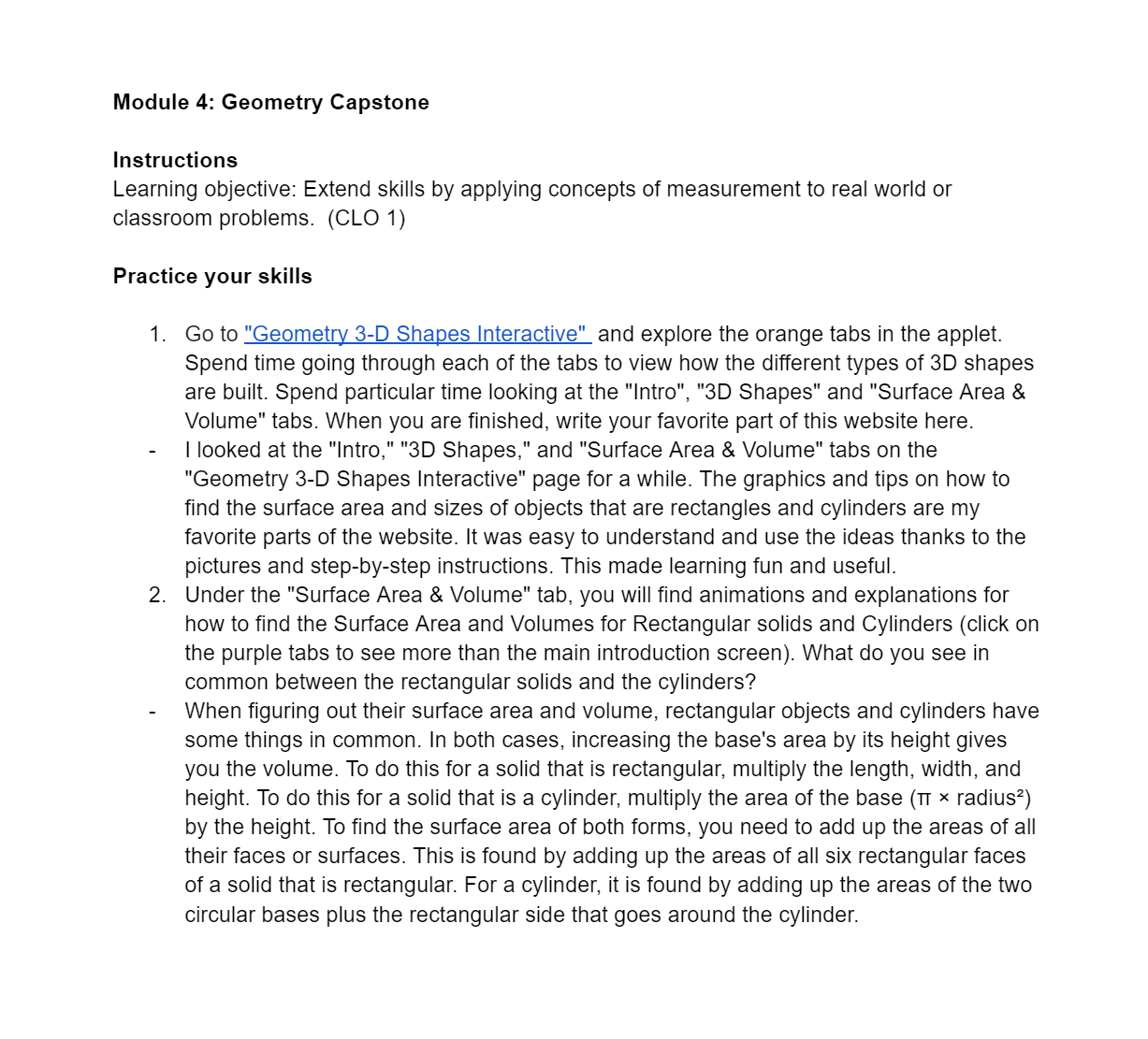
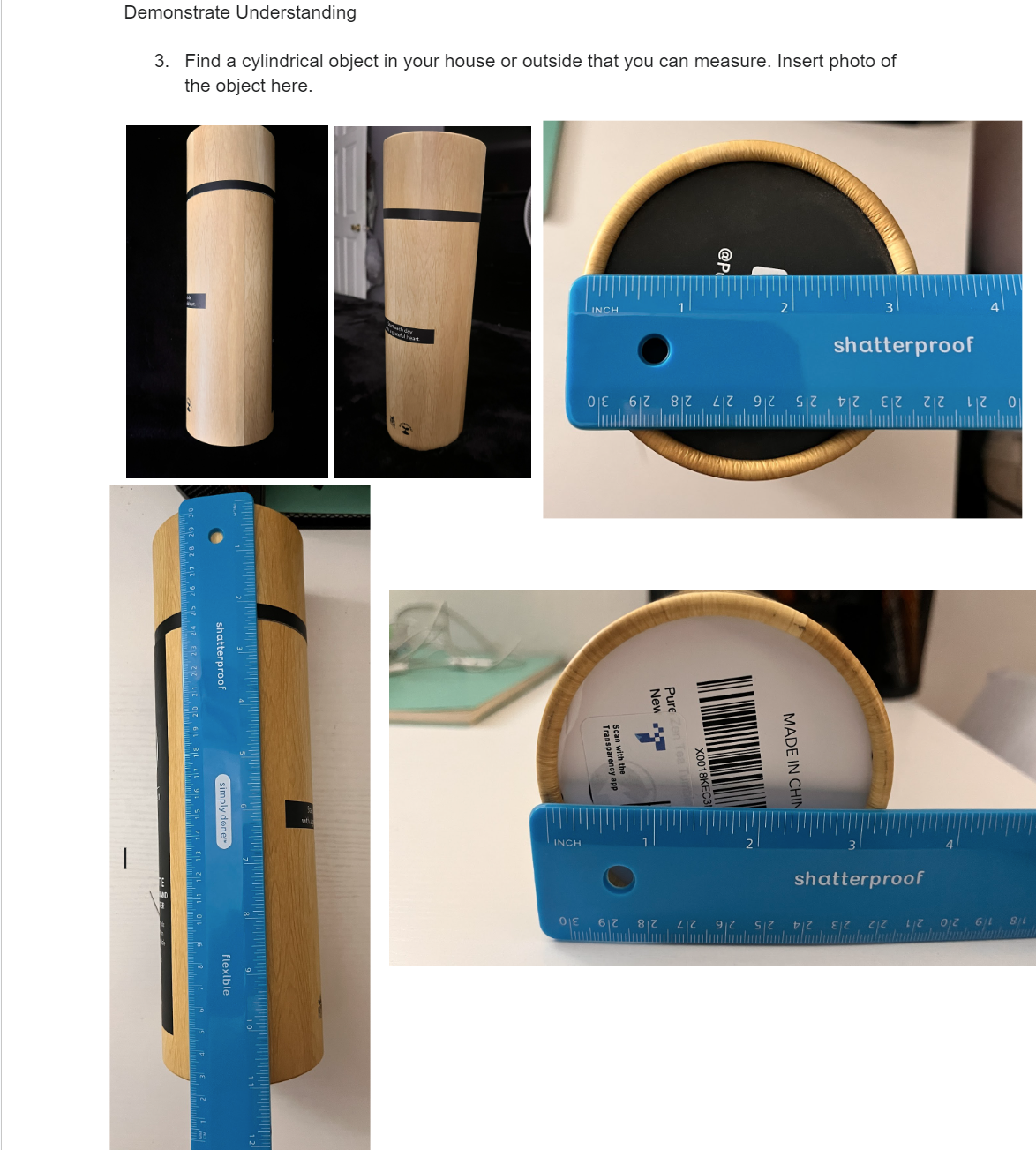
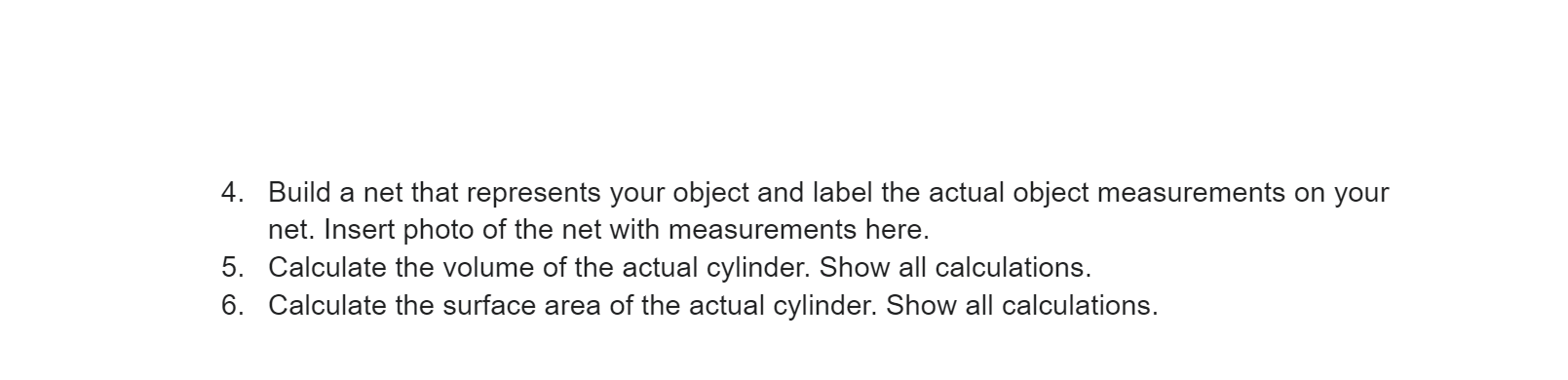
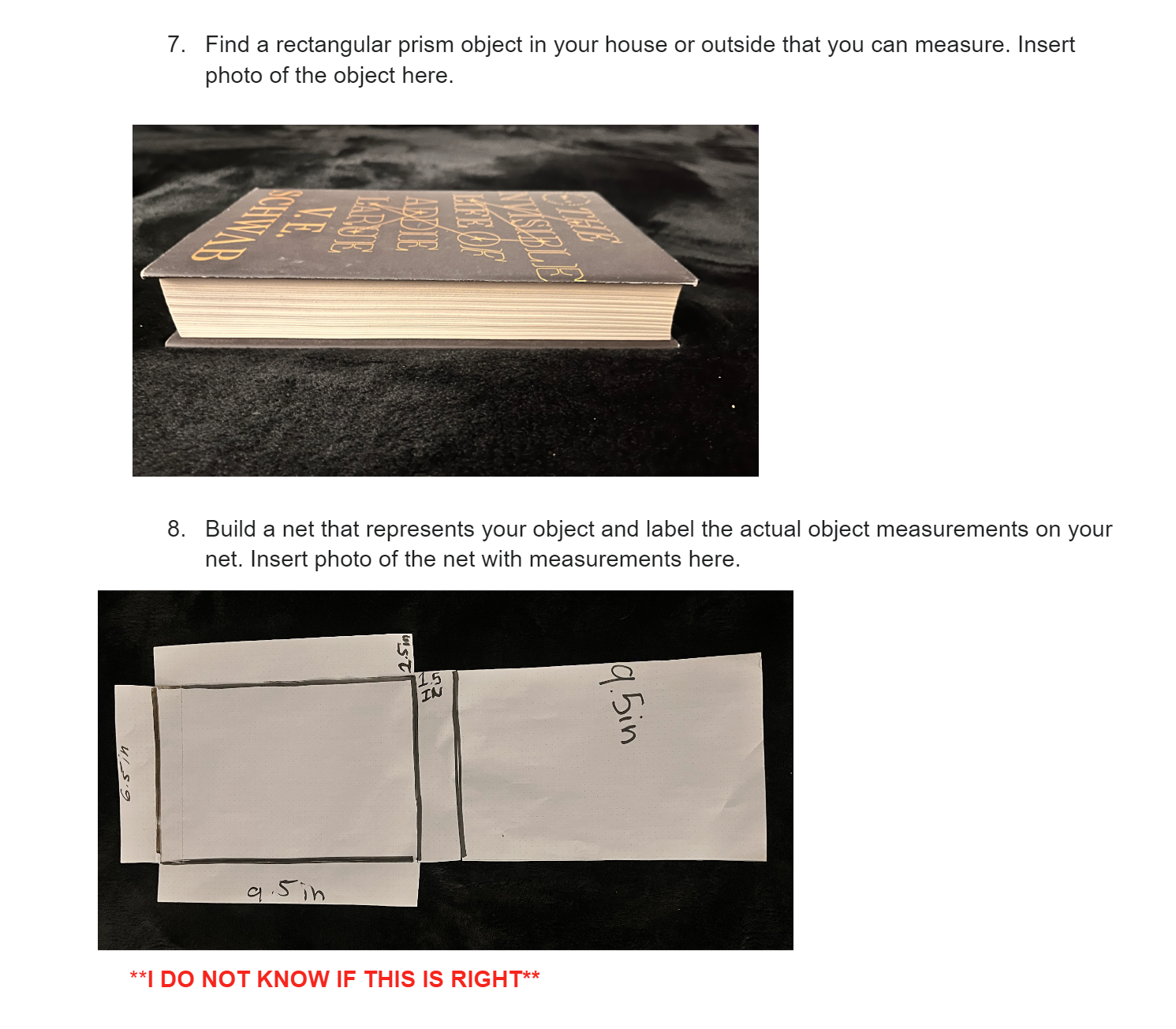
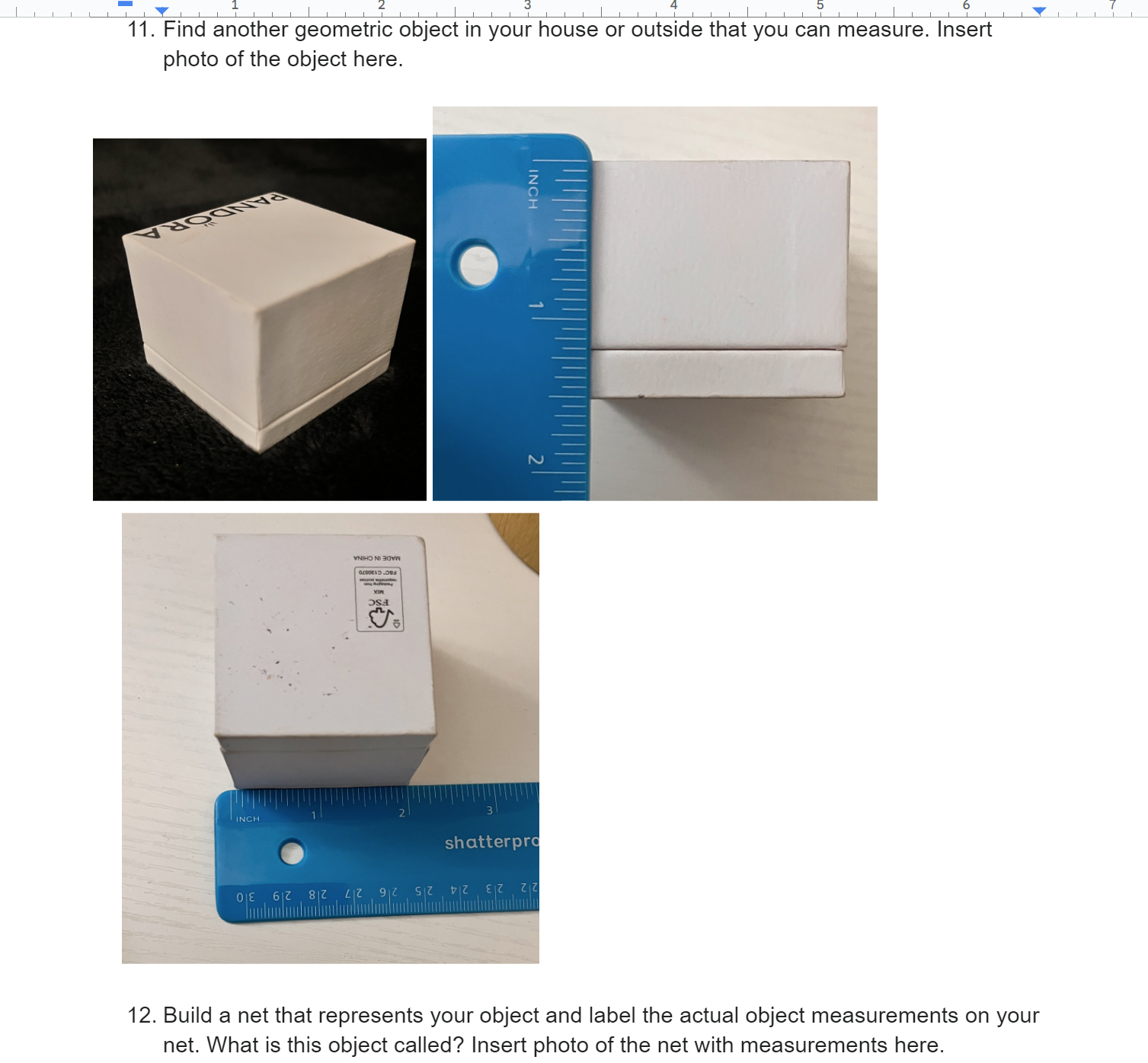
Module 4: Geometry Capstone Instructions Learning objective: Extend skills by applying concepts of measurement to real world or classroom problems. (CLO 1) Practice your skills 1. Go to "Geometry 3-D Shapes Interactive\" and explore the orange tabs in the applet. Spend time going through each of the tabs to view how the different types of 3D shapes are built. Spend particular time looking at the "Intro", "3D Shapes" and "Surface Area & Volume" tabs. When you are finished, write your favorite part of this website here. [ looked at the "Intro," "3D Shapes," and "Surface Area & Volume" tabs on the "Geometry 3-D Shapes Interactive" page for a while. The graphics and tips on how to find the surface area and sizes of objects that are rectangles and cylinders are my favorite parts of the website. It was easy to understand and use the ideas thanks to the pictures and step-by-step instructions. This made learning fun and useful. Under the "Surface Area & Volume" tab, you will find animations and explanations for how to find the Surface Area and Volumes for Rectangular solids and Cylinders (click on the purple tabs to see more than the main introduction screen). What do you see in common between the rectangular solids and the cylinders? When figuring out their surface area and volume, rectangular objects and cylinders have some things in common. In both cases, increasing the base's area by its height gives you the volume. To do this for a solid that is rectangular, multiply the length, width, and height. To do this for a solid that is a cylinder, multiply the area of the base (11 x radius?) by the height. To find the surface area of both forms, you need to add up the areas of all their faces or surfaces. This is found by adding up the areas of all six rectangular faces of a solid that is rectangular. For a cylinder, it is found by adding up the areas of the two circular bases plus the rectangular side that goes around the cylinder. lo 1/8 1/9 210 2/1 2 shatterproof shatterproof 12 1 2 2 2 3 2 4 25 26 27 2 8 29 30 MADE IN CHIN N X0018KEC31 Pure New HONI Scan with the 2 8 2/9 Transparency app 3. Find a cylindrical object in your house or outside that you can measure. Insert photo of INCH An the object here. Demonstrate Understanding shatterproof simply done") flexibleBuild a net that represents your object and label the actual object measurements on your net. Insert photo of the net with measurements here. Calculate the volume of the actual cylinder. Show all calculations. Calculate the surface area of the actual cylinder. Show all calculations. 7. Find a rectangular prism object in your house or outside that you can measure. Insert photo of the object here. 8. Build a net that represents your object and label the actual object measurements on your net. Insert photo of the net with measurements here. **I DO NOT KNOW IF THIS IS RIGHT** 9. Calculate the volume of the actual rectangular prism. Show all calculations. 10. Calculate the surface area of the actual rectangular prism. Show all calculations. 11. Find another geometric object in your house or outside that you can measure. Insert photo of the object here. 12. Build a net that represents your object and label the actual object measurements on your net. What is this object called? Insert photo of the net with measurements here. 13. Calculate the volume of the actual object. Show all calculations. 14. Calculate the surface area of the actual object. Show all calculations. Summary/Reflection: 15. What were the most challenging parts of this activity for you? 16. What do you feel you understand better about surface area and volume after this activity? 17. What would you change about this activity if you were the teacher? 18. Thinking forward to your teaching career, how might you use the concepts learned in this activity in your future classroom
Step by Step Solution
There are 3 Steps involved in it

Get step-by-step solutions from verified subject matter experts
 Study Help