


Question: Naive Methods A simple but widely used approach to forecasting is the naive approach. A naive forecast uses a single previous value of a time
Naive Methods A simple but widely used approach
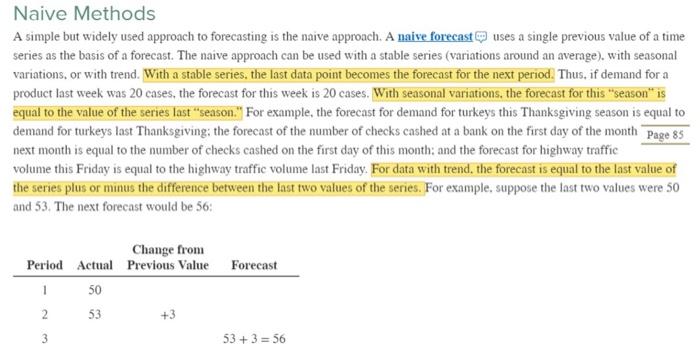
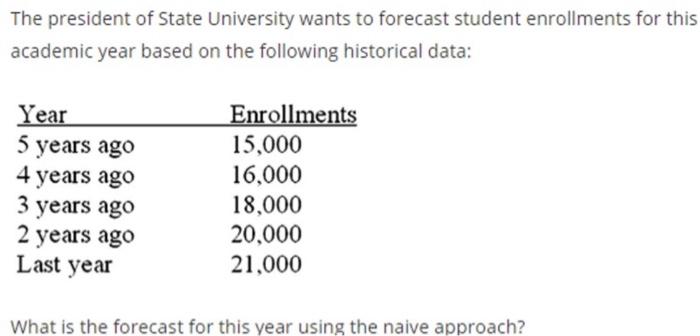
Naive Methods A simple but widely used approach to forecasting is the naive approach. A naive forecast uses a single previous value of a time series as the basis of a forecast. The naive approach can be used with a stable series (variations around an average), with seasonal variations, or with trend. With a stable series, the last data point becomes the forecast for the next period. Thus, if demand for a product last week was 20 cases, the forecast for this week is 20 cases. With seasonal variations, the forecast for this "season" is equal to the value of the series last "season." For example, the forecast for demand for turkeys this Thanksgiving season is equal to demand for turkeys last Thanksgiving; the forecast of the number of checks cashed at a bank on the first day of the month Page 85 next month is equal to the number of checks cashed on the first day of this month; and the forecast for highway traffic volume this Friday is equal to the highway traffic volume last Friday. For data with trend, the forecast is equal to the last value of the series plus or minus the difference between the last two values of the series. For example, suppose the last two values were 50 and 53. The next forecast would be 56: Change from Period Actual Previous Value Forecast 1 50 2 53 3 53+3=56 The president of State University wants to forecast student enrollments for this academic year based on the following historical data: Year Enrollments 5 years ago 15,000 4 years ago 16,000 3 years ago 18,000 2 years ago 20,000 Last year 21,000 What is the forecast for this year using the naive approach

Step by Step Solution

There are 3 Steps involved in it

1 Expert Approved Answer
Step: 1 Unlock blur-text-image

Question Has Been Solved by an Expert!

Get step-by-step solutions from verified subject matter experts

Step: 2 Unlock
Step: 3 Unlock

Students Have Also Explored These Related General Management Questions!