Question: Need a Conclusion for this work. Conclude by indicating how the SMART objectives or goals that you aim at to become an effective manager? Please
Need a Conclusion for this work. Conclude by indicating how the SMART objectives or goals that you aim at to become an effective manager? Please try to keep within 100 words The PNG files are attached for your reference -
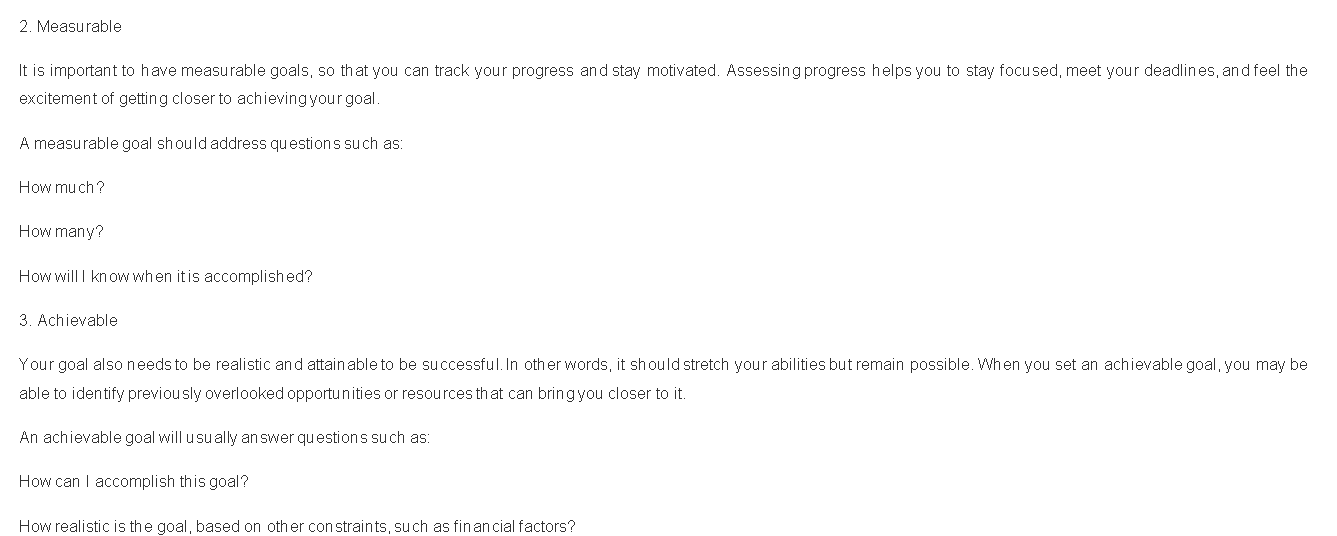
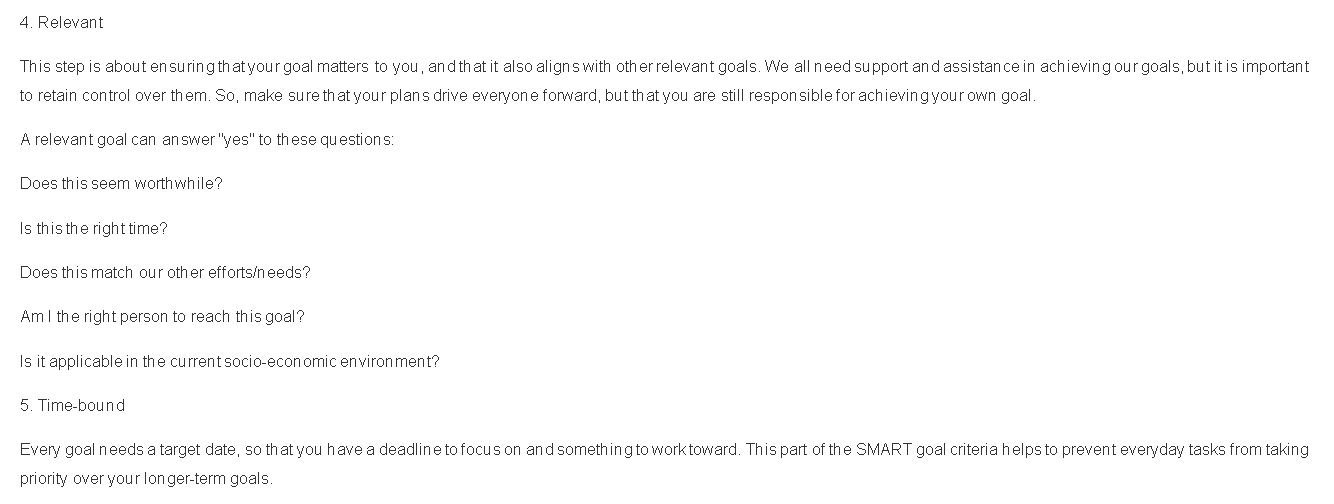
Introduction - Cross Cultural Communication in an organization deals with understanding different business Customs, beliefs, and communication Strategies It becomes Strategically important due to the Impact of globalization in business. ORIGIN OF CROSS CULTURE During the Cold War, the economy of the United States was largely self-contained because the world was polarized into two separate and competing powers: the East and the West Business transformed from individual-country capitalism to Global Capitalism Thus, the study of cross-cultural communication was originally found within businesses and government, both seeking to expand globally They began to offer language training to their employees and also to train employees to understandhow to act in abroad With this also came the development of the Foreign Service Institute or FSI, through the where government employees received trainings and prepared for overseas posts Assessment of one's traits, attributes, and characteristics. Strategic Leadership: Embracing Change Telecommunications, computers, the Internet, and one global marketplace have increased the pace of change exponentially during the past 10 years. The leadership challenge is to galvanize commitment among people within an organization as well as stakeholders outside the organization to embrace change and implement strategies intended to position the organization to succeed in a vastly different future. Leaders help their company embrace change by setting for their strategic intent a clear sense of where they want to lead the company and what results they expect to achieve Leader's vision an articulation of a simple criterion or characterization of what the leader sees the company must become to establish and sustain global leadership Make clear the performance expectations a leader has for the organization, and managers in it, as they seek to move toward that vision. Building an Organization 1. Education andleadership developmentis the effort to familiarize future leaders with the skills important to the company and to develop exception al leaders among the managers you employ. 2. Perseverance is the capacity to see a commitment through to completion long after most people would have stopped trying 3. Principles are your fundamental personal standards that guide your sense of honesty, integrity, and ethical behavior. Aspects High Vs Low Context Culture: The concept of high and low context culture relates to how an employee's thoughts, opinions, feelings, and upbringing affecthow they act within a given culture. Non-Verbal Communication: Gestures and eye contact are two areas of nonverbal communication that are utilized differently across cultures fore.g., American workers tend to wave their hand and use a finger to point when giving nonverbal direction. Extreme gesturing is considered rude in some cultures. While pointing may be considered appropriate in some contexts in the United States, Japanese would never use a finger to point towards another person because that gesture is considered rude in Japan. Language Differences: Linguistic differences between the employees or with the management plays a vital role with companies which compete globally Certain norms are followed by the organization, when there is communication between the native employees and the Foreign Clients to bring out rapport between them. Situations Eliciting Ideas Participation norms differ greatly across cultures. Team members from more egalitarian and individualistic countries, such as the U.S. or Australia, may be accustomed to voicing their unfiltered opinions andideas, while those from more hierarchical cultures, such as Japan, tend to speak up only after more senior colleagues have expressed their views. People from some cultures may hesitate to contribute because they worry about coming across as superficial or foolish; Finns, for example, favor a "think before you speak" approach, in stark contrast to the "shoot from the hip" attitude that is more prevalent among Americans. Communication patterns may also make it difficultfor people to participate equally in brainstorming sessions. Brazilians,forinstance, are typically at ease with overlapping conversations and interruptions, viewing them as signs of engagement. But others, accustomed to more orderly patterns of communication, can feel cut off or crowded out by the same behavior. The fix: To ensure everyone is contributing, leaders of cross-cultural teams should establish clear communication protocols. A classic tactic, when solicitingideas or opinions, is to go around the table (or conference linevideo chat screens) at least once so that everyone has a chance to speak. Encourage exploration by asking open-ended questions and keeping your own thoughts to yourself at first. Recent research on teams of Americans and East Asians shows that such tactics result in dramatically more even contributions: Instead of taking five times as many opportunities to speak and usingnearly 10 times as many words as their Chinese, Japanese, Korean, or Taiwanese colleagues, Americans took just 50% more turns and spoke just 4% more words when an inclusive team leadership approachedwas used. If equitable airtime or interruptions are the problem, try adopting a "four-sentence rule" to limit your most loquacious team members, or insisting on an obligatory gap between two people's comments, to give everyone time to respectfully jump in Surfacing Disagreement Comfort with public disagreementis another big source of conflict on cross-cultural teams. Members from cultures that place a high value on "face" and group harmony may be averse to confrontation because they assume it will descendinto conflict and upsets group dynamics - in short, social failure. In other cultures, having a"good fight" is a sign of trust. People from different parts of the world also vary in the amount of emotion they show, and expect from others, during a profession al debate. When, for example, people from Latin and Middle Eastern cultures raise their voices, colleagues from more neutral cultures can overestimate the degree of opposition being stated. On the flip side, when people from Asia or Scandinavia use silence and unreceptive body language to convey opposition, the message is often lost on more emotionally expressive peers. The fix: To encourage healthy debate, consider design ating a devil's advocate whose remit is to consider and prompt discussion of the challenges associated with differentpropositions. The role can be rotated across agenda items or across meetings, so everyone becomes more comfortable in it. Another option is to spread the same responsibility by asking everyone to offer pros and cons on a particular course of action so people feel free to argue both sides, without getting locked in to positions they feel obliged to defend. Giving Feedback Constructive criticism is an essential part of global teamwork, it helps to iron out some of the inevitable kinks relating to punctuality, communication style, or behavior in meetings that aggravate stereotypes and disrupt collaboration. But feedback can be its own cultural min efield. Executives from more in dividualistic and task-oriented cultures, notably the U.S., are conditioned to see it as an opportunity for personal development, a "gift" best delivered and received immediately even if it's in front of the group. By contrast, people from more collectivist and relationship-oriented cultures may be unaccustomed to voicingor listening to criticism in public, even if the team would benefit. Forface-saving reasons, they may prefer to meet one-on-one in an informal setting possibly over lunch or outside the workplace. If they come from hierarchical cultures, such as Malaysia or Mexico, they may not even feel it is their role to offer direct feedback to peers and instead deliver it to the team leader to convey. The words people choose to use will vary greatly too. Executives from low-context cultures, such as the Netherlands, for example, tend to be very direct in their corrective feedback, while those from high-context cultures, such as India or the Middle Eastern countries, often favor more nuancedlanguage. The fix: Leaders should encourage members of cross-cultural teams to find a middle ground. You might coach people to soften critical feedback through positive framing and/or by addressing the whole team even when sending a message to just one person. For example, if timekeeping is a recurrent issue, you might say "I always appreciate it when we're all synchronized andwe can make the most of our time together." It is also important to model the right behavior and show that you expect and appreciate constructive criticism yourself. A good starter question is: "Reviewing our meeting, what should do more of, less of, and the same of?" Beyond these quickfixes, teams need to pre-empt conflicton cross-cultural teams by developing a climate of trust where colleagues alwaysfeel safe to speak their minds. If you discuss potential problem areas early and often you will be well on your way to leveraging your group's diversity, in stead of seeing your progress and performance stalled by it. Good Collaboration is a Must Although we are all different, we share many similarities. We did not all come over on the same ship, butwe are all in the same boat. Bernard Baruch, American financier and statesman. It is no secret that today's workplace is rapidly becomingvast, as the business environment expands to include various geographic locations and span numerous cultures. What can be difficult, however, is understanding how to communicate effectively with individuals who speak another language, or who rely on different means to reach a common goal. Communication - The New Norm The internet and modern technology have opened new marketplaces that allow us to promote our businesses to new geographic locations and cultures. And given that it can now be as easy to work with people remotely as it is to work face-to-face, cross-cultural communication is increasingly the new norm. After all, if communication is electronic, it is as easy to work with someone in another country as it is to work with someone in the next town. Andwhy limit yourself to working with people with in convenient driving distance when, just as conveniently, you can work with the most knowledgeable people in the entire world? Understanding Cultural Diversity Given different cultural contexts, this brings new communication challenges to the workplace. Even when employees located in differentlocations or offices speak the same language (for instance, correspondences between English speakers in the U.S. and English-speakers in the UK), there are some cultural differences that should be considered to optimize communications between the two parties. In such cases, an effective communication strategy begins with the understanding that the sender of the message and the receiver of the message are from different cultures and backgrounds. Of course, this introduces a certain amount of uncertainty, making communications even more complex. Developing Awareness of Individual Cultures However, learning the basics about culture and at least something about the language of communication in different countries is important. This is necessary even for the basic level of understanding required to engage in appropriate greetings and physical contact, which can be a tricky area inter-culturally. Keep It Simple When you communicate, keep in mind that even though English is considered the international language of business, it is a mistake to assume that every businessperson speaks good English. In fact, only about half of the 800 million people who speak English learned it as a first language. And those who speak it as a second language are often more limited than native speakers. When you communicate cross-culturally, make efforts to keep your communication clear, simple and un ambiguous. And(sadly) avoid humor until you know th at the person you are communicating with "gets it" and is not offended by it. Humoris notoriously culture-specific: many things that pass for humor in one culture can be seen as grossly offensive in another. 6 Bass' theory of leadership states that there are three basic ways to explain how people become leaders. The first two explain the leadership developmentfor a small number of people. These theories are: Some personality traits may lead people naturally into leadership roles. This is the Trait Theory. A crisis or important event may cause a person to rise to the occasion, which brings out extraordinary leadership qualities in an ordinary person. This is the Great Events Theory People can choose to become leaders. People can learn leadership skills. This is the Transformation al or Process Leadership Theory. It is the most widely accepted theory today and the premise on which this guide is based. 7. To make sure your goals are clear and reach able, each one should be: Specific (simple, sensible, significant). Measurable (meaningful, motivating). Achievable (agreed, attain able). Relevant (reasonable, realistic, and resourced, results-based). Time bound (time-based, time limited, time/cost limited, timely, time-sensitive). 1. Specific Your goal should be clear and specific, otherwise you will not be able to focus your efforts or feel truly motivated to achieve it. When drafting your goal, try to answer the five "W" questions: What do I want to accomplish? Why is this goal important? Whois involved? Where is it located? Which resources or limits are involved? 2. Measurable It is important to have measurable goals, so that you can track your progress and stay motivated. Assessing progress helps you to stay focused, meet your deadlines, and feel the excitement of getting closer to achieving your goal. A measurable goal should address questions such as: How much? How many? How will know when itis accomplished? 3. Achievable Your goal also needs to be realistic and attain able to be successful. In other words, it should stretch your abilities but remain possible. When you set an achievable goal, you may be able to identify previously overlooked opportunities or resources that can bring you closer to it. An achievable goal will usually answer questions such as: How can I accomplish this goal? How realistic is the goal, based on other constraints, such as financial factors? 4. Relevant This step is about ensuring that your goal matters to you, and that it also aligns with other relevant goals. We all need support and assistance in achieving our goals, but it is important to retain control over them. So, make sure that your plans drive everyone forward, but that you are still responsible for achieving your own goal. A relevant goal can answer"yes" to these questions: Does this seem worthwhile? Is this the right time? Does this match our other effortseeds? Am I the right person to reach this goal? Is it applicable in the current socio-economic environment? 5. Time-bound Every goal needs a target date, so that you have a deadline to focus on and something to work toward. This part of the SMART goal criteria helps to prevent everyday tasks from taking priority over your longer-term goals









 Study Help