Question: need help create an annotated source about Mary Rowlandson. Use a critical text that you found from one of the online databases available through the
need help
create an annotated source about Mary Rowlandson. Use a critical textthat you found from one of the online databases available through the course guides at library.tctc.edu.
This post should contain the following (but not in this order):
The citation for the essay
immediately following it, an annotation summarizing it and reflecting on how it helped your understanding.
The annotation (excluding the citation) should be about Seventy to one hundred words
a header and title that fit MLA 9 standards
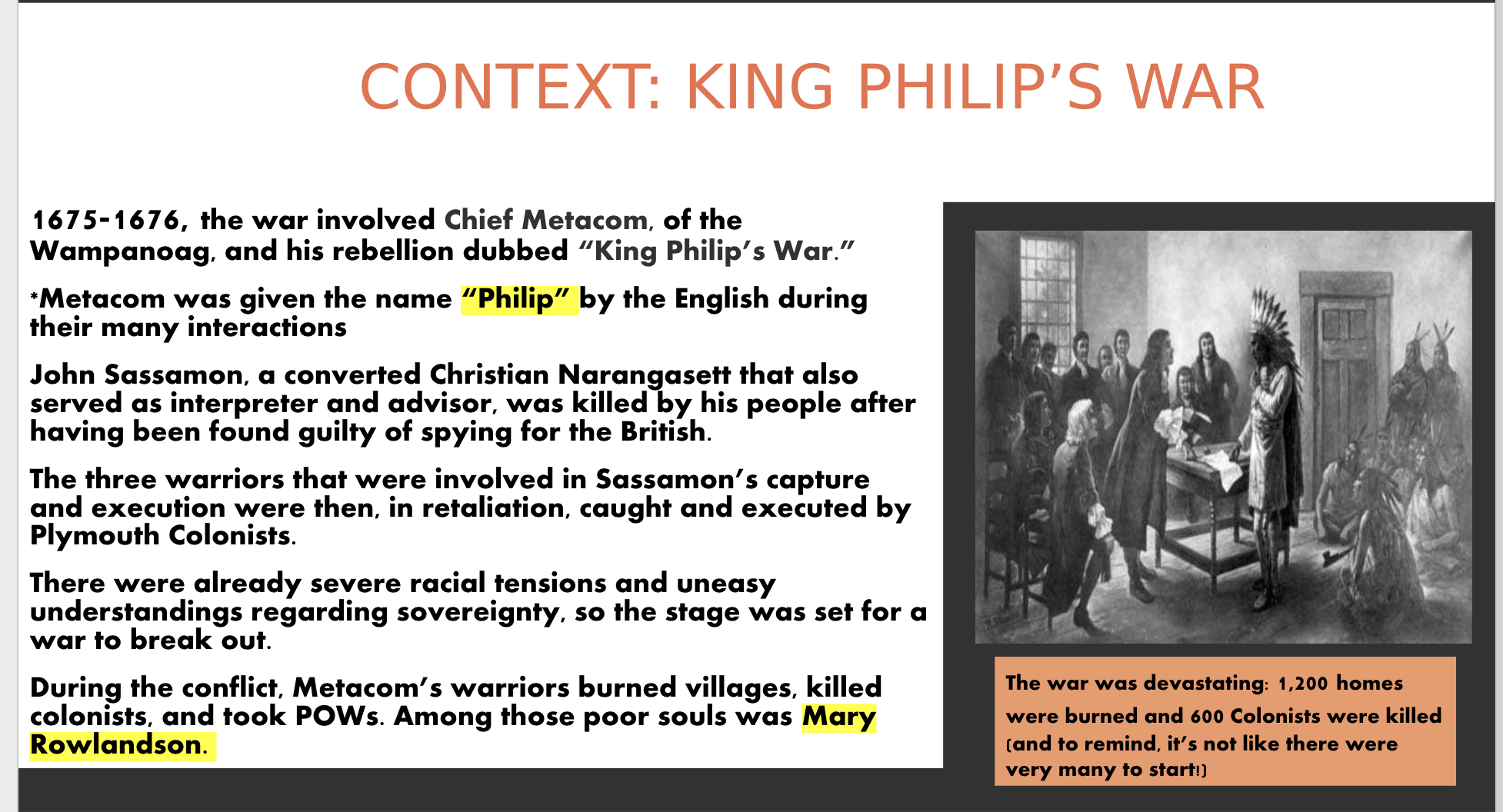
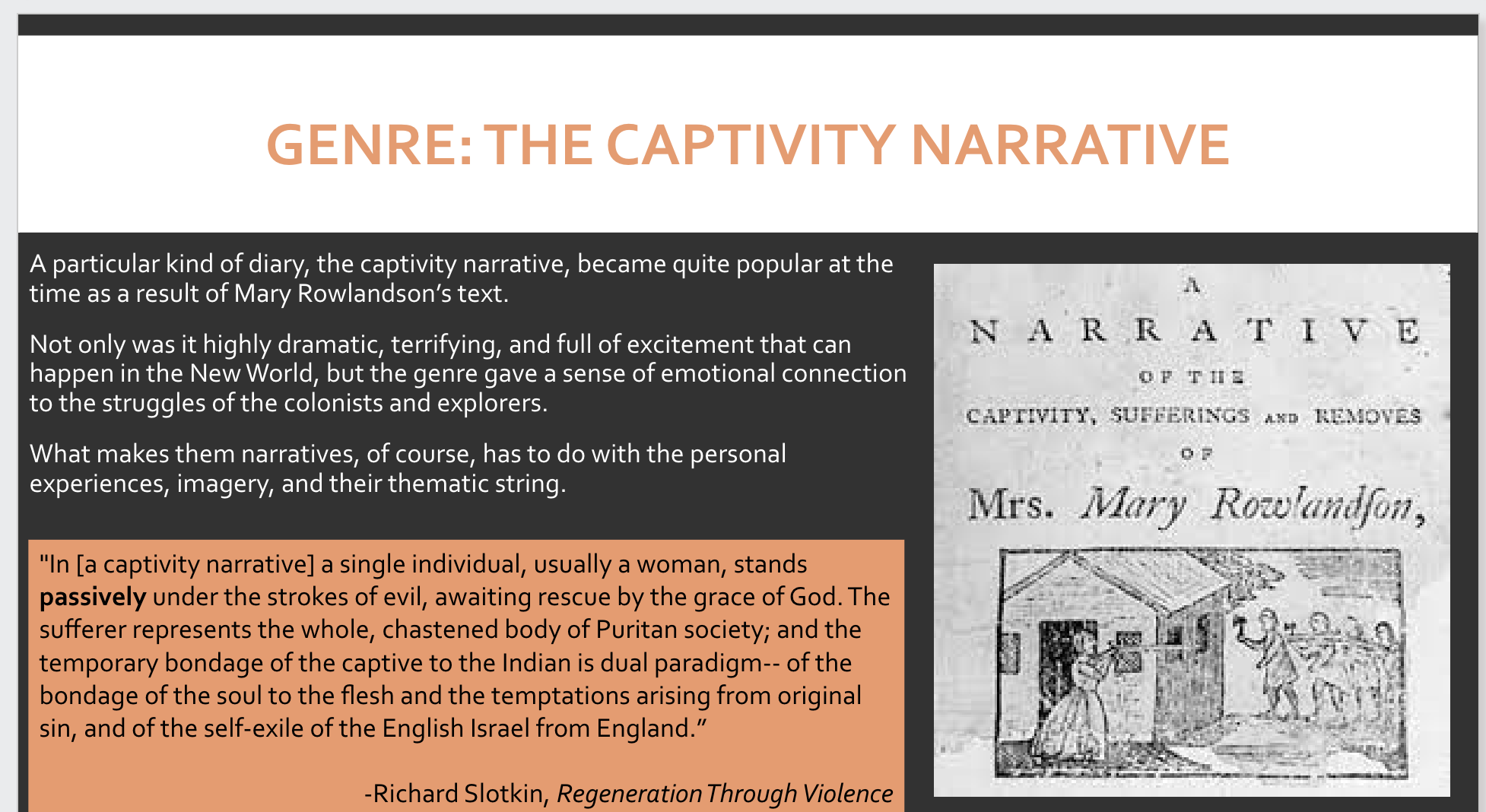
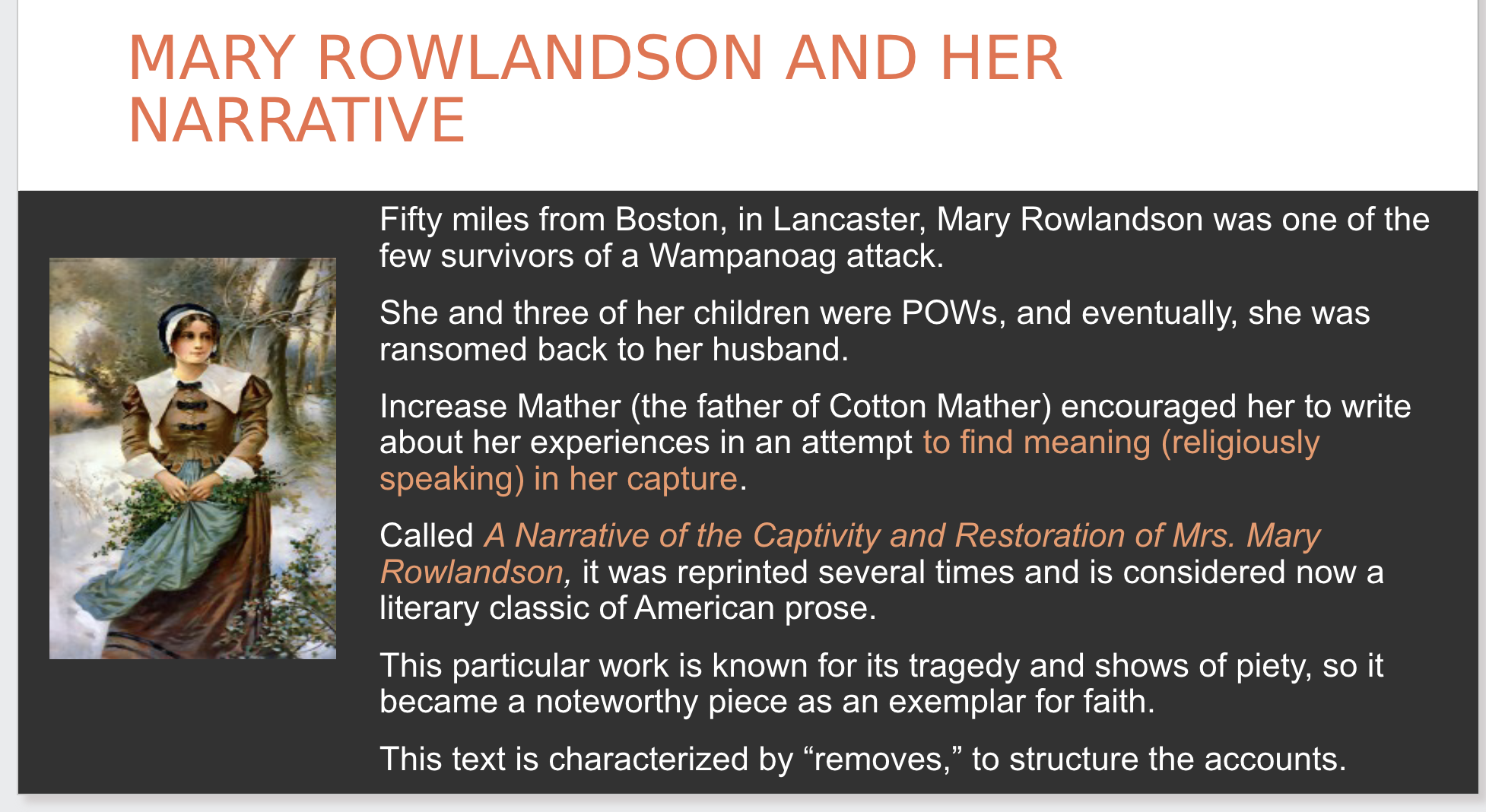
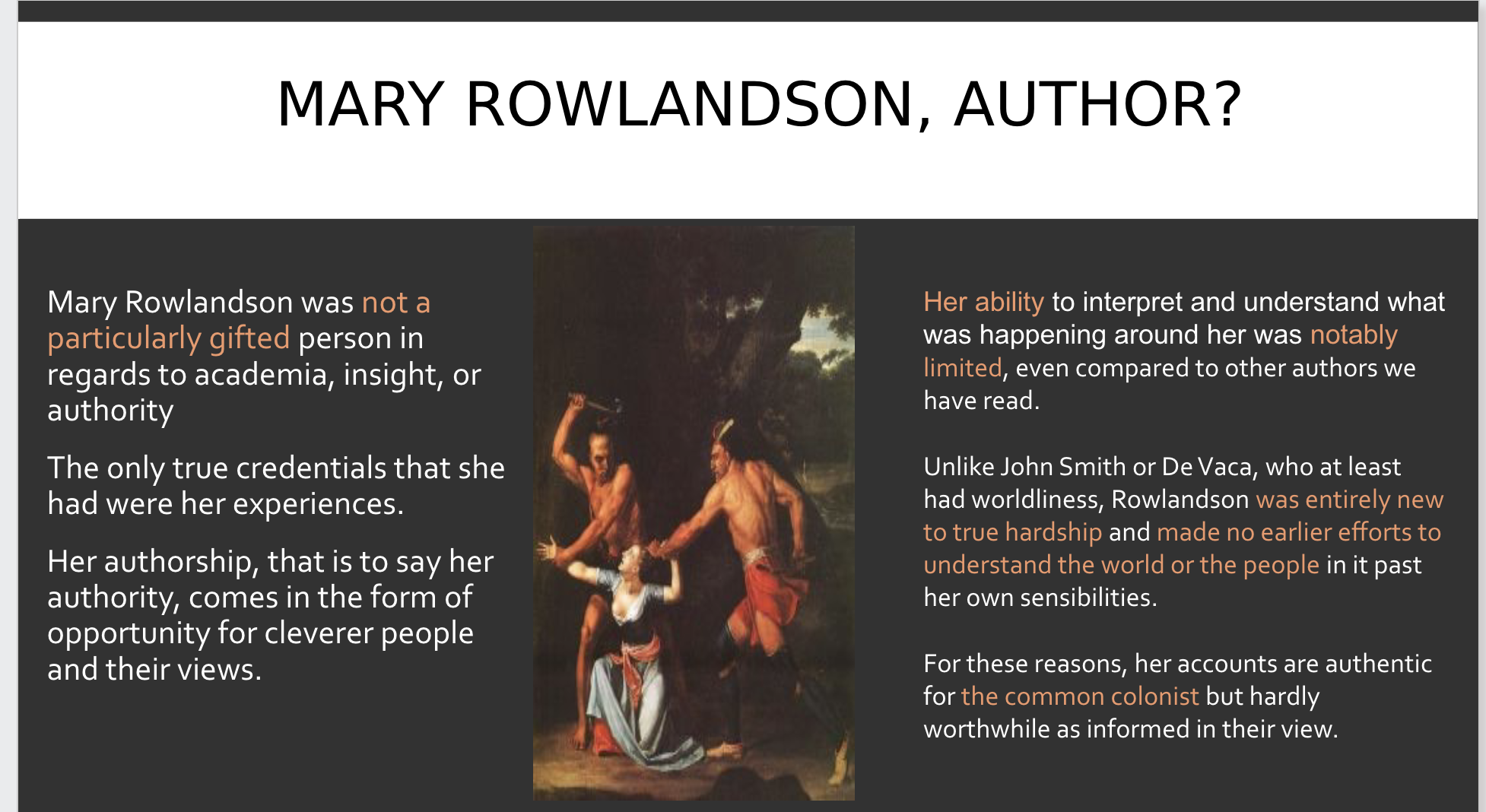
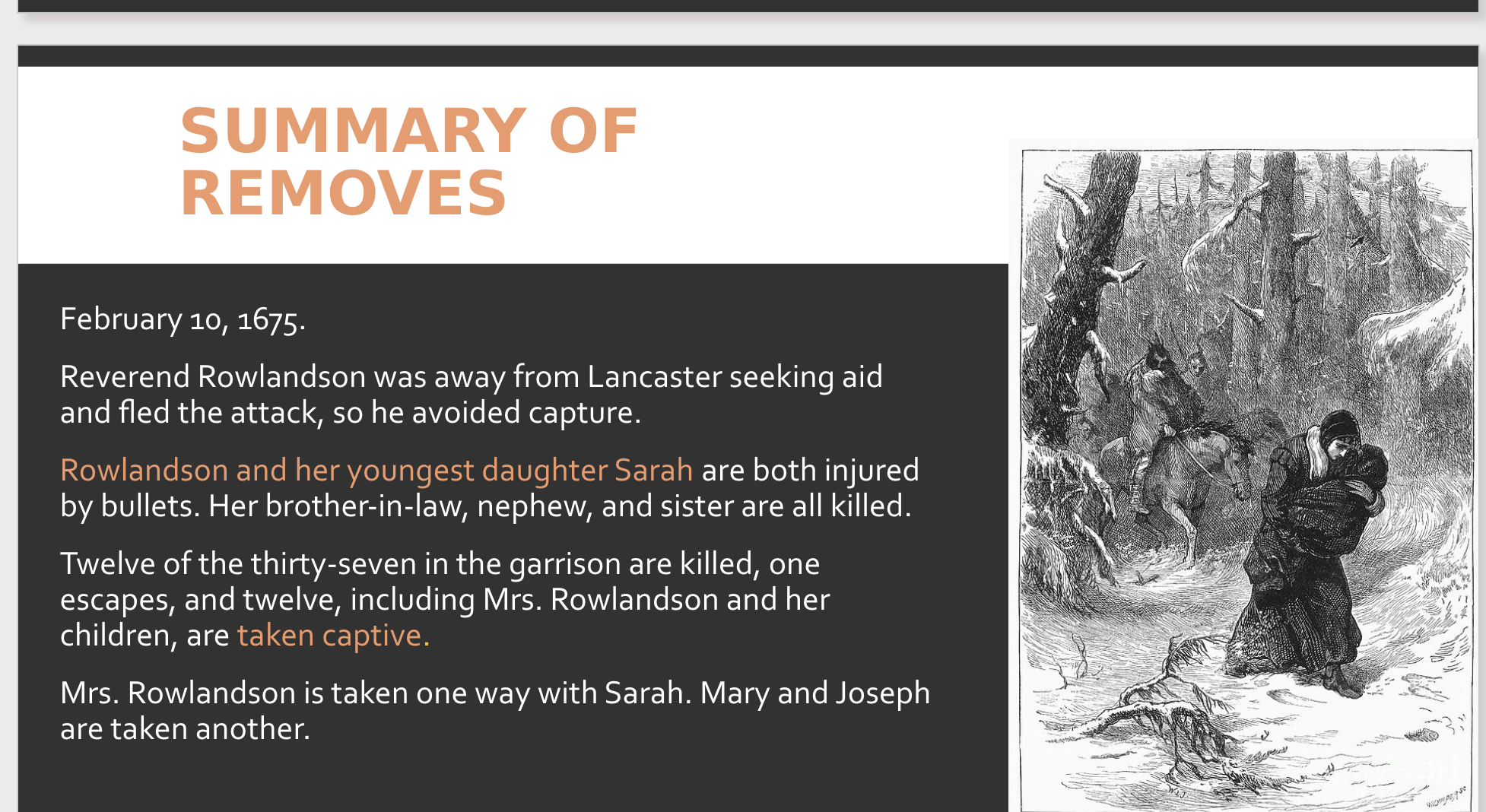
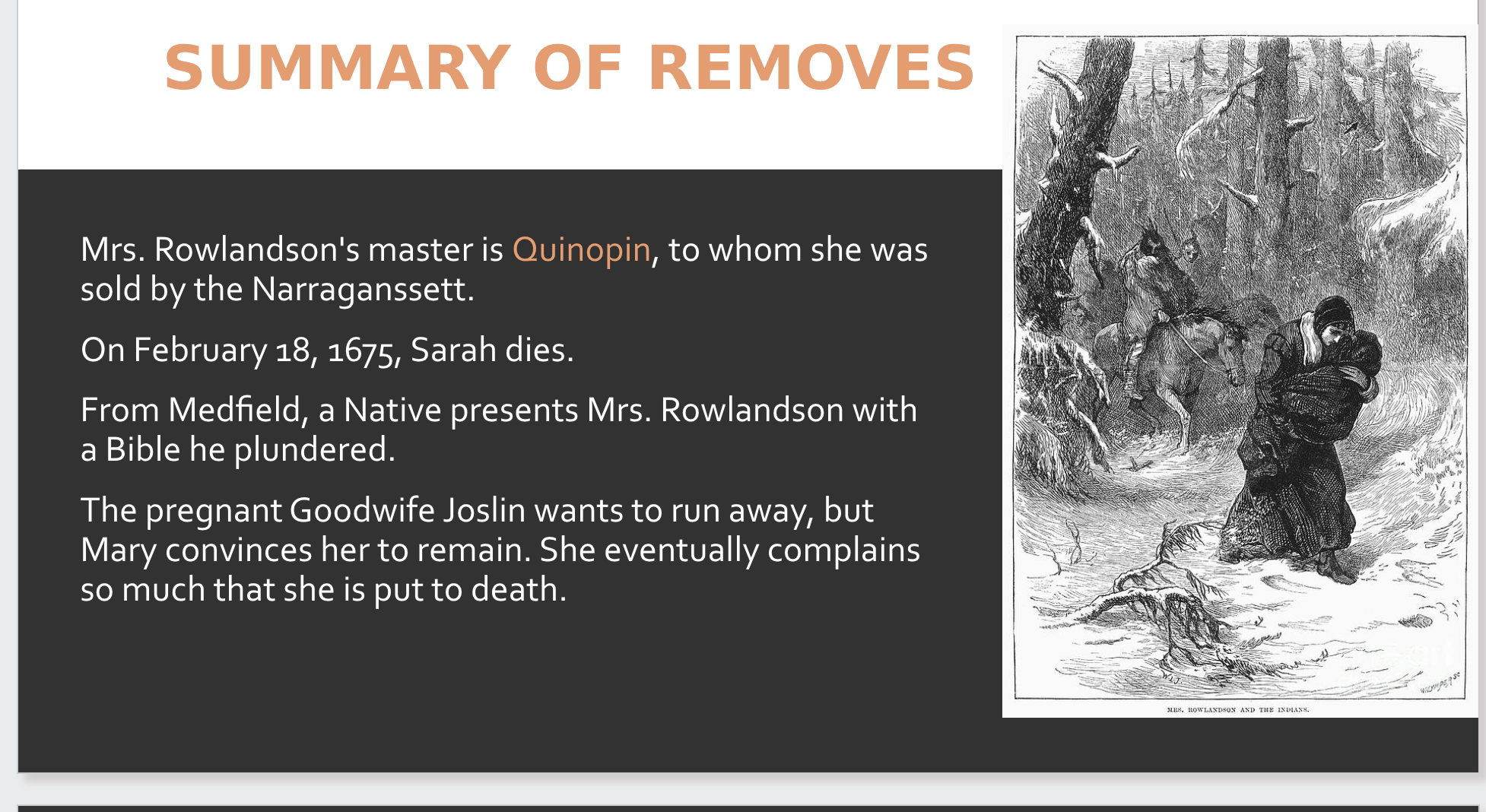
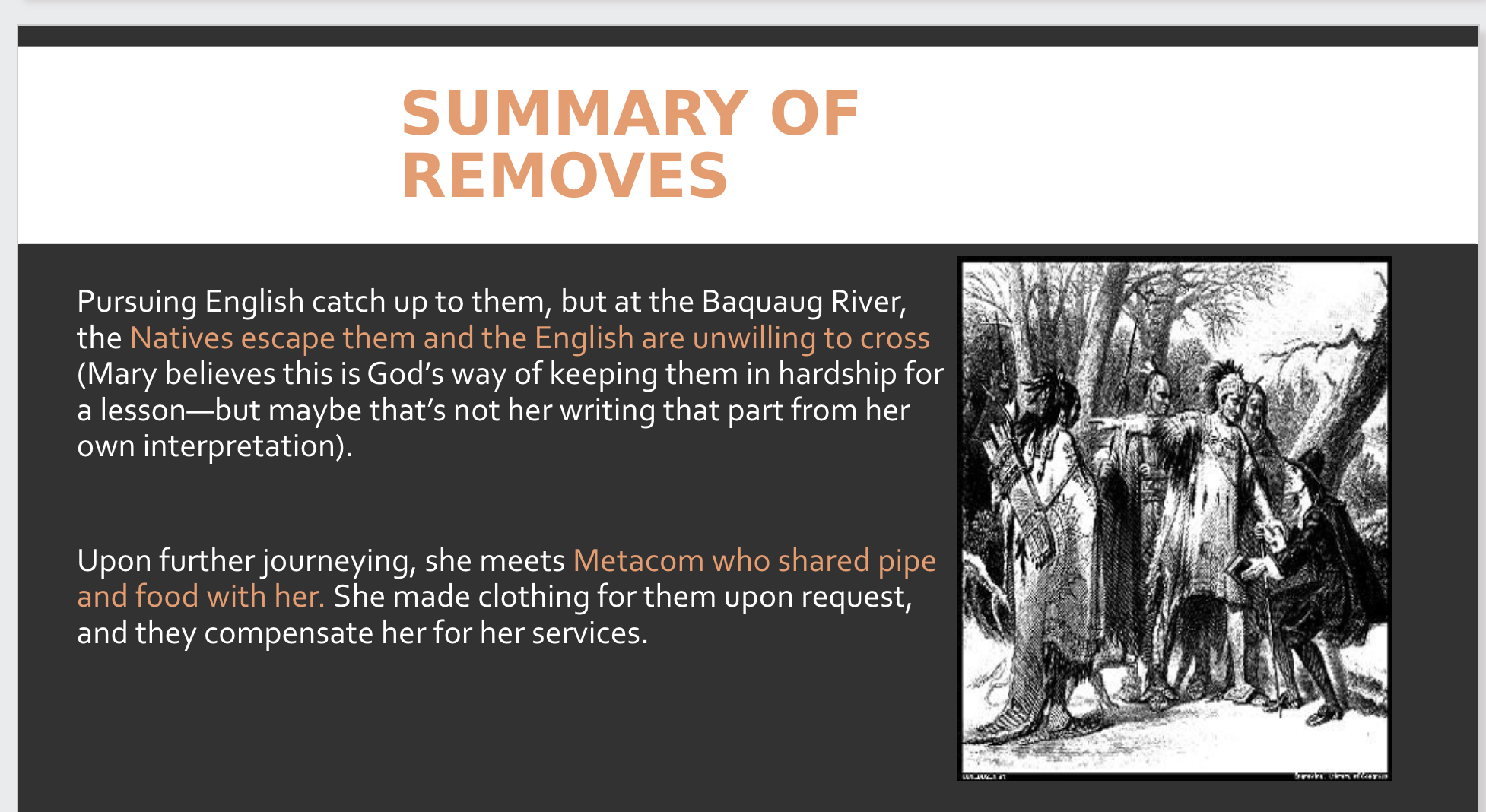
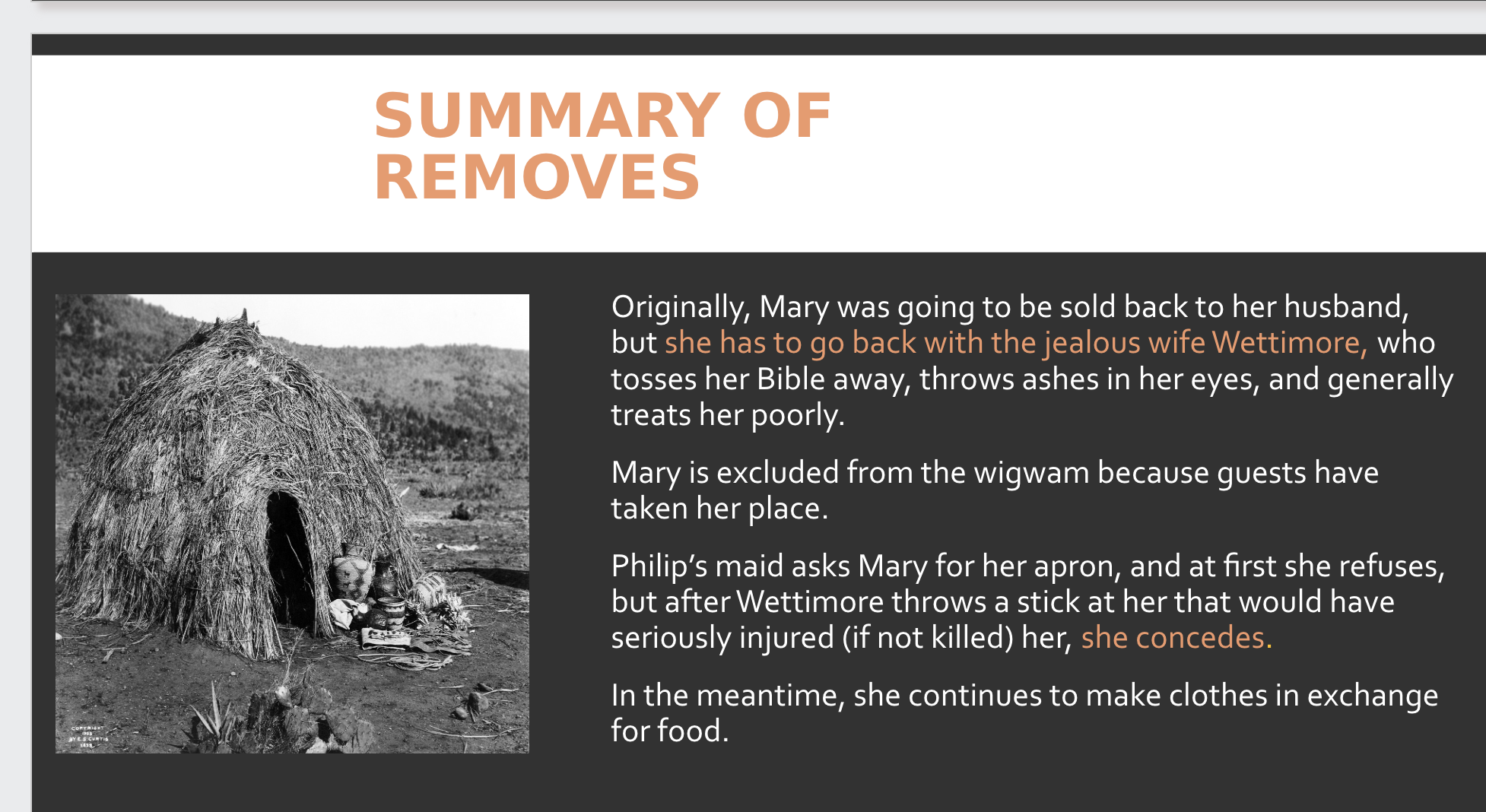
CONTEXT: KING PHILIP'S WAR 1675-1676, the war involved Chief Metacom, of the Wampanoag. and his rebellion dubbed \"King Philip's War.\" *Metacom was given the name \"Philip\" by the English during their many interactions John Sassamon, a converted Christian Narangasett that also served as interpreter and advisor, was killed by his people after having been found guilty of spying for the British. The three warriors that were involved in Sassamon's capture and execution were then, in retaliation, caught and executed by Plymouth Colonists. There were already severe racial tensions and uneasy understandings regarding sovereignty, so the stage was set for a war to break out. During the conflict. Metacom's warriors burned villages, killed The war was devastating: 1,200 homes colonists, and took POWs. Among those poor souls was Mary were burned and 600 Colonists were killed Rowlandson. {and to remind, it's not like there were very many to start) A particular kind of diary, the captivity narrative, became quite popular at the time as a result of Mary Rowlandson's text. Not only was it highly dramatic, terrifying, and full of excitement that can happen in the New World, but the genre gave a sense of emotional connection to the struggles of the colonists and explorers. What makes them narratives, of course, has to do with the personal experiences, imagery, and their thematic string. "In [a captivity narrative] a single individual, usually a woman, stands passively under the strokes of evil, awaiting rescue by the grace of God. The sufferer represents the whole, chastened body of Puritan society; and the temporary bondage of the captive to the Indian is dual paradigm-- of the bondage of the soul to the flesh and the temptations arising from original sin, and of the self-exile of the English Israel from England.\" -Richard Slotkin, Regeneration Through Violence ik NARRATIVE OF THE CAPTIVITY, SUFFERINGS axp REMOVES oF Mrs. Mary Rowlandfon, MARY ROWLANDSON AND HER NARRATIVE Fifty miles from Boston, in Lancaster, Mary Rowlandson was one of the few survivors of a Wampanoag attack. She and three of her children were POWSs, and eventually, she was ransomed back to her husband. Increase Mather (the father of Cotton Mather) encouraged her to write about her experiences in an attempt to find meaning (religiously speaking) in her capture. Called A Narrative of the Captivity and Restoration of Mrs. Mary Rowlandson, it was reprinted several times and is considered now a literary classic of American prose. This particular work is known for its tragedy and shows of piety, so it became a noteworthy piece as an exemplar for faith. This text is characterized by \"removes,\" to structure the accounts. MARY ROWLANDSON, AUTHOR? Mary Rowlandson was not a particularly gifted person in regards to academia, insight, or authority The only true credentials that she had were her experiences. Her authorship, that is to say her authority, comes in the form of opportunity for cleverer people and their views. Her ability to interpret and understand what was happening around her was notably limited, even compared to other authors we have read. Unlike John Smith or De Vaca, who at least had worldliness, Rowlandson was entirely new to true hardship and made no earlier efforts to understand the world or the people in it past her own sensibilities. For these reasons, her accounts are authentic for the common colonist but hardly worthwhile as informed in their view. SUMMARY OF REMOVES February 10, 1675. Reverend Rowlandson was away from Lancaster seeking aid and fled the attack, so he avoided capture. Rowlandson and her youngest daughter Sarah are both injured by bullets. Her brother-in-law, nephew, and sister are all killed. Twelve of the thirty-seven in the garrison are killed, one escapes, and twelve, including Mrs. Rowlandson and her children, are taken captive. Mrs. Rowlandson is taken one way with Sarah. Mary and Joseph are taken another.SUMMARY OF REMOVES Mrs. Rowlandson's master is Quinopin, to whom she was sold by the Narragansett. On February 18, 1675, Sarah dies. From Medfield, a Native presents Mrs. Rowlandson with a Bible he plundered. The pregnant Goodwife Joslin wants to run away, but Mary convinces her to remain. She eventually complains so much that she is put to death. MRS. ROWLANDSON AND THE INDIANS.Pursuing English catch up to them, but at the Baquaug River, the Natives escape them and the English are unwilling to cross & (Mary believes this is God's way of keeping them in hardship for } a lessonbut maybe that's not her writing that part from her own interpretation). Upon further journeying, she meets Metacom who shared pipe and food with her. She made clothing for them upon request, and they compensate her for her services. Originally, Mary was going to be sold back to her husband, but she has to go back with the jealous wife Wettimore, who tosses her Bible away, throws ashes in her eyes, and generally treats her poorly. Mary is excluded from the wigwam because guests have taken her place. Philip's maid asks Mary for her apron, and at first she refuses, but after Wettimore throws a stick at her that would have seriously injured (if not killed) her, she concedes. In the meantime, she continues to make clothes in exchange for food. SUMMARY OF REMOVES When Wittemore's child dies in the night, the captors mourn, but Mary feels nothing for it (perhaps, to her regret upon reflection). At the time, it meant more room in the wigwam. When they stop at another English town, Mrs. Rowlandson visits her niece. She steals a horse foot from a child, much like the Natives would take her food from her, too, if given the chance. She is remorseless as she satisfies her hunger. Perhaps she is learning or simply understands what she must do? Wittemore chastises her for begging, though, all the same, and threatens her with death for her dishonor.SUMMARY OF REMOVES COMPLETED Mr. John Hoar, lawyer from Concord sent by Joseph "God orders all things for His holy ends" Rowlandson, has come with the task of retrieving her. Mary Rowlandson With the money raised by fellow Christians for her ransom, they make arrangements. Tuesday, the Native Americans' General Court agrees to release Mrs. Rowlandson. Mr. Hoar, Mrs. Rowlandson, Tom, and Peter travel to Lancaster, Concord, and finally Boston, where she is reunited with her husband
Step by Step Solution
There are 3 Steps involved in it
1 Expert Approved Answer
Step: 1 Unlock
Question Has Been Solved by an Expert!
Get step-by-step solutions from verified subject matter experts
Step: 2 Unlock
Step: 3 Unlock
Students Have Also Explored These Related Literature Questions!









 Study Help