







Question: Need help writing Java Code. Ul 4. The that are larger than 5 lows. Tour program for game of Jump It consists of a board
Need help writing Java Code. 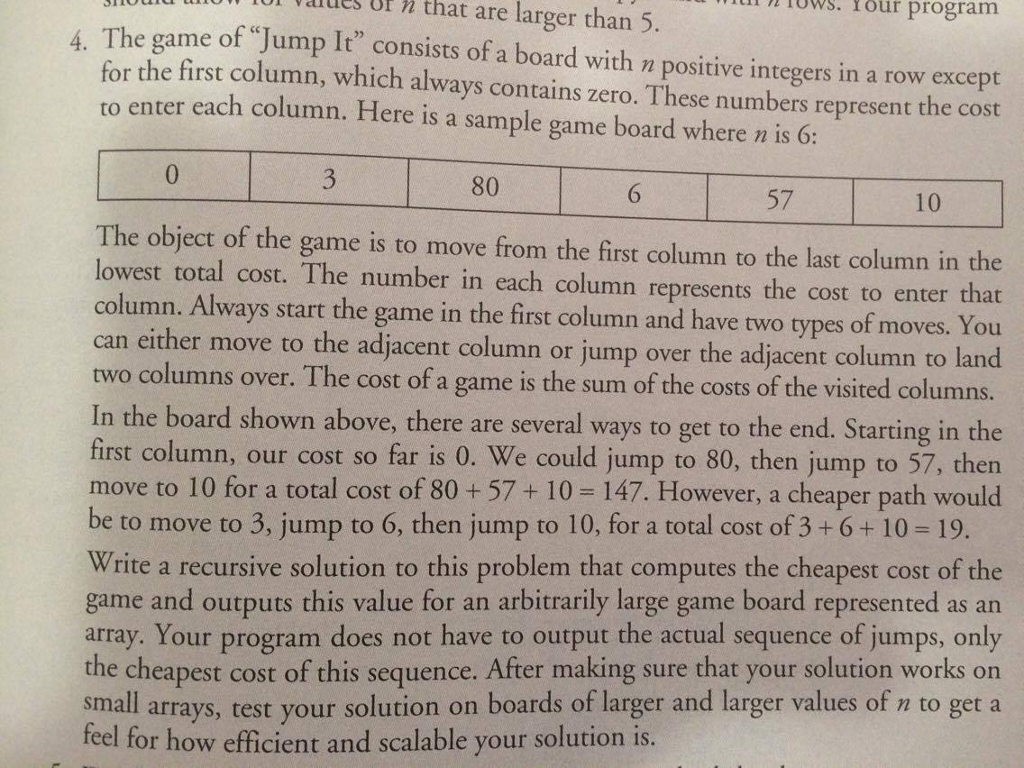
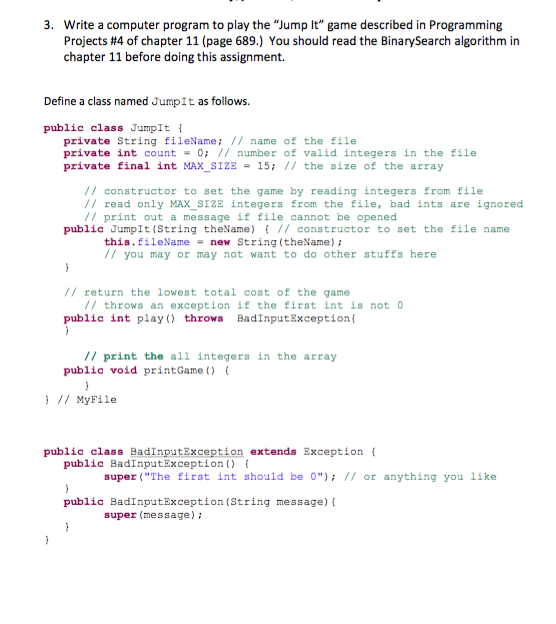
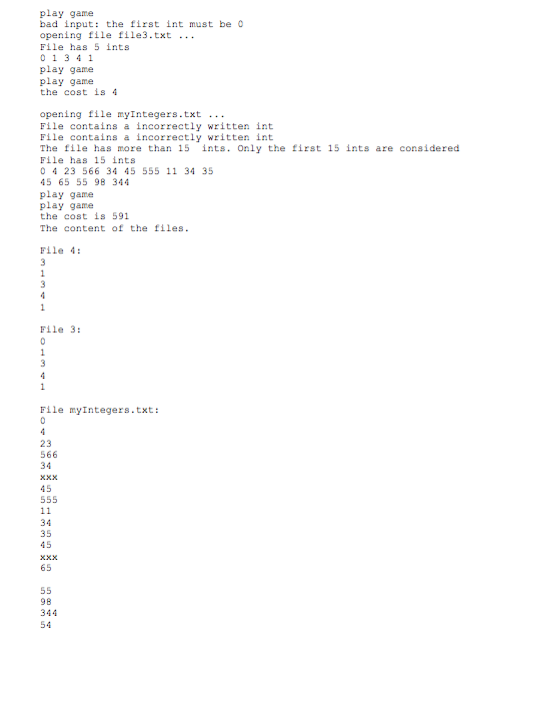
Ul 4. The that are larger than 5 lows. Tour program for game of "Jump It" consists of a board with n positive integers in a row except to the first column, which always contains zero. These numbers represent the cost enter each column. Here is a sample game board where n is 6: 80 The object of the game is to move from the first column to the last column in the lowest total cost. The number in each column represents the cost to enter that column. Always start the game in the first column and have two types of moves. You can either move to the adjacent column or jump over the adjacent column two columns over. The cost of a game is the sum of the costs of the visited columns In the board shown above, there are several ways to get to the end. Starting the in first column, our cost so far is 0. We could jump to 80, then jump to 57, then move to 10 for a total cost of 80 57 10 147. However, a cheaper path would be to move to 3, jump to 6, then jump to 10, for a total cost of 3 6 10 19 rite a recursive solution to this problem that computes the cheapest cost of the game and outputs this value for an arbitrarily large game board represented as an array. Your program does not have to output the actual sequence of jumps, only the cheapest cost of this sequence. After making sure that your solution works on small arrays, test your solution on boards of larger and larger values of n to get a feel for how efficient and scalable your solution is
Step by Step Solution
There are 3 Steps involved in it

Get step-by-step solutions from verified subject matter experts
 Study Help