







Question: No . 1 4 - 1 4 3 0 Keller v . Miri Microsystems Page 1 1 by most drivers for personal purposes. Herman v
No
Keller v Miri Microsystems
Page
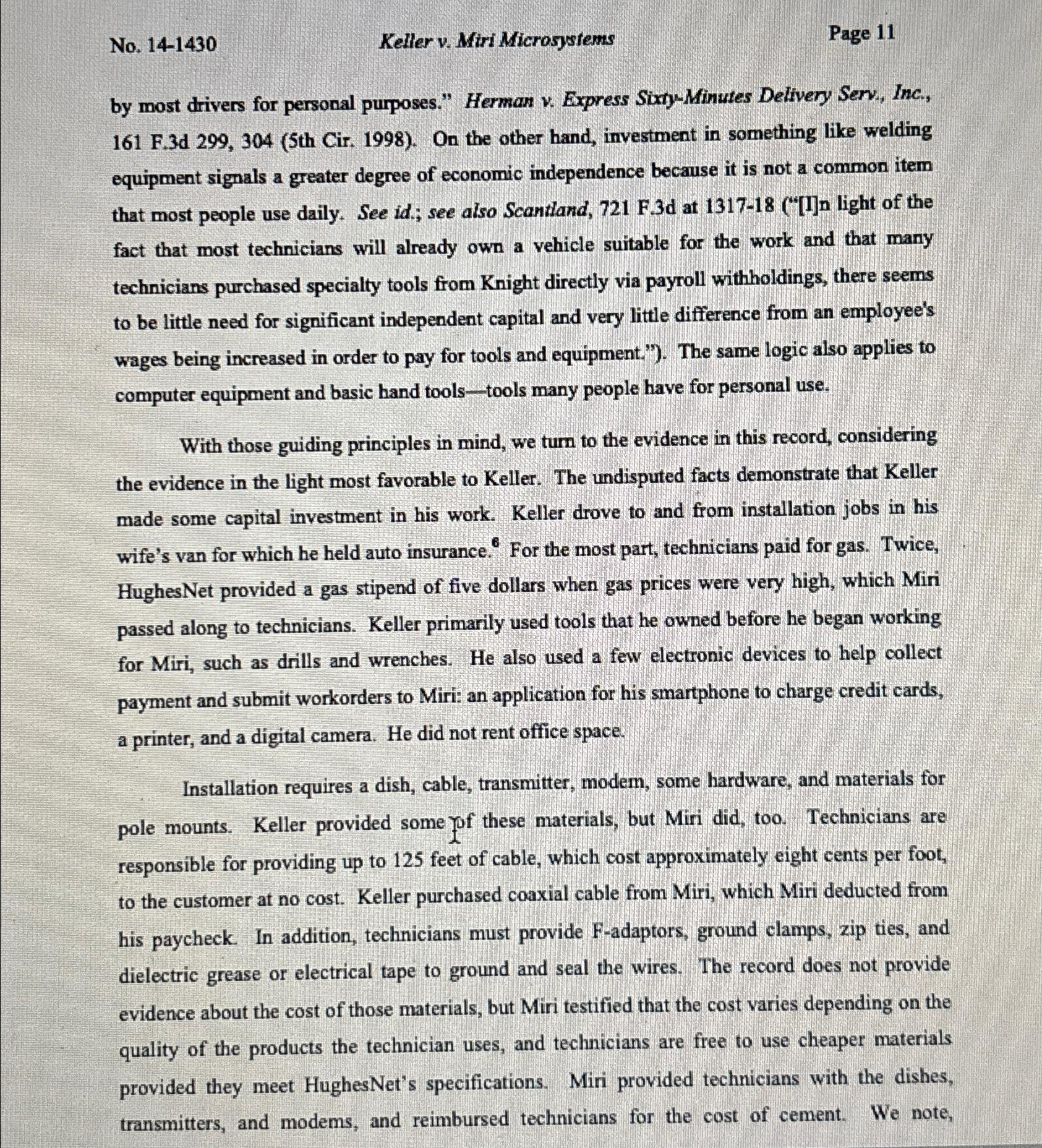
by most drivers for personal purposes." Herman v Express SixtyMinutes Delivery Serv, Inc, Fd th Cir. On the other hand, investment in something like welding equipment signals a greater degree of economic independence because it is not a common item that most people use daily. See id; see also Scantland, Fd at In light of the fact that most technicians will already own a vehicle suitable for the work and that many technicians purchased specialty tools from Knight directly via payroll withholdings, there seems to be little need for significant independent capital and very little difference from an employee's wages being increased in order to pay for tools and equipment." The same logic also applies to computer equipment and basic hand toolstools many people have for personal use.
With those guiding principles in mind, we turn to the evidence in this record, considering the evidence in the light most favorable to Keller. The undisputed facts demonstrate that Keller made some capital investment in his work. Keller drove to and from installation jobs in his wife's van for which he held auto insurance. For the most part, technicians paid for gas. Twice, HughesNet provided a gas stipend of five dollars when gas prices were very high, which Miri passed along to technicians. Keller primarily used tools that he owned before he began working for Miri, such as drills and wrenches. He also used a few electronic devices to help collect payment and submit workorders to Miri: an application for his smartphone to charge credit cards, a printer, and a digital camera. He did not rent office space.
Installation requires a dish, cable, transmitter, modem, some hardware, and materials for pole mounts. Keller provided some fof these materials, but Miri did, too. Technicians are responsible for providing up to feet of cable, which cost approximately eight cents per foot, to the customer at no cost Keller purchased coaxial cable from Miri, which Miri deducted from his paycheck. In addition, technicians must provide Fadaptors, ground clamps, zip ties, and dielectric grease or electrical tape to ground and seal the wires. The record does not provide evidence about the cost of those materials, but Miri testified that the cost varies depending on the quality of the products the technician uses, and technicians are free to use cheaper materials provided they meet HughesNet's specifications. Miri provided technicians with the dishes, transmitters, and modems, and reimbursed technicians for the cost of cement. We note,
Step by Step Solution
There are 3 Steps involved in it
1 Expert Approved Answer
Step: 1 Unlock

Question Has Been Solved by an Expert!
Get step-by-step solutions from verified subject matter experts
Step: 2 Unlock
Step: 3 Unlock
 Study Help