







Question: NOT ALLOWED TO USE PANDA!!!!!! Has to do it manually. The data passed in is a list already, no need to read it again. Thx
NOT ALLOWED TO USE PANDA!!!!!!
Has to do it manually. The data passed in is a list already, no need to read it again. Thx
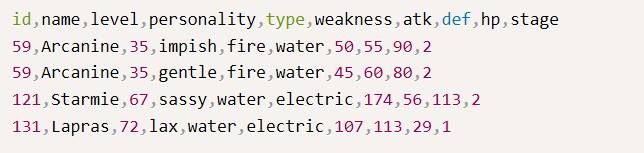
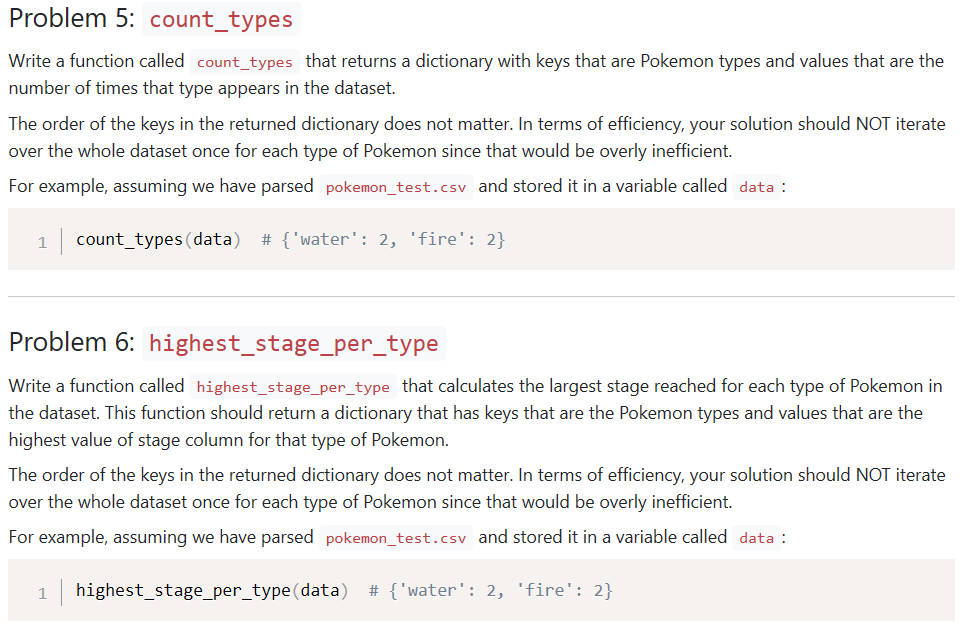
id,name, level, personality, type,weakness, atk, def, hp, stage 59, Arcanine, 35, impish,fire, water, 50,55,90,2 59, Arcanine, 35, gentle, fire, water,45,60,80,2 121, Starmie,67, sassy, water, electric,174,56,113,2 131, Lapras, 72,lax,water, electric,107,113,29,1 Problem 5: count_types Write a function called count_types that returns a dictionary with keys that are Pokemon types and values that are the number of times that type appears in the dataset. The order of the keys in the returned dictionary does not matter. In terms of efficiency, your solution should NOT iterate over the whole dataset once for each type of Pokemon since that would be overly inefficient. For example, assuming we have parsed pokemon_test.csv and stored it in a variable called data : count_types (data) # {'water': 2, 'fire': 2} Problem 6: highest_stage_per_type Write a function called highest_stage_per_type that calculates the largest stage reached for each type of Pokemon in the dataset. This function should return a dictionary that has keys that are the Pokemon types and values that are the highest value of stage column for that type of Pokemon. The order of the keys in the returned dictionary does not matter. In terms of efficiency, your solution should NOT iterate over the whole dataset once for each type of Pokemon since that would be overly inefficient. For example, assuming we have parsed pokemon_test.csv and stored it in a variable called data : highest_stage_per_type(data) # {'water': 2, 'fire': 2}
Step by Step Solution
There are 3 Steps involved in it

Get step-by-step solutions from verified subject matter experts
 Study Help