







Question: Not sure what this means ? please help this is for english (www.squires favette k12 ky.us/library/research/citing.htm KEY QUESTION #76/77 (60 marks, Communica- tion(20)/Application(40) Processing Information
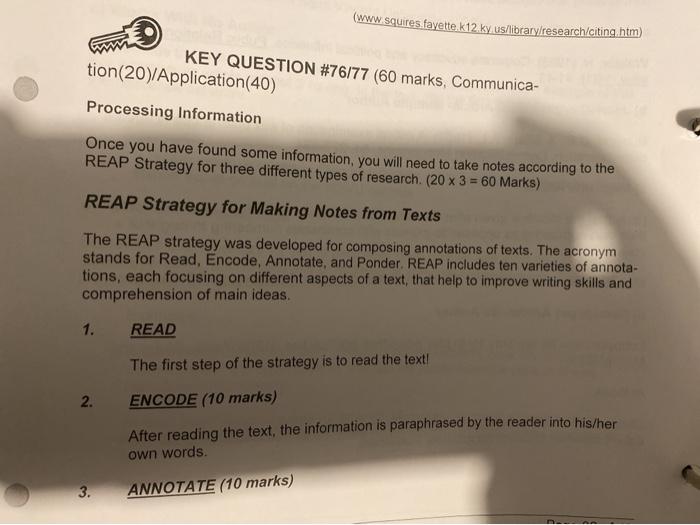
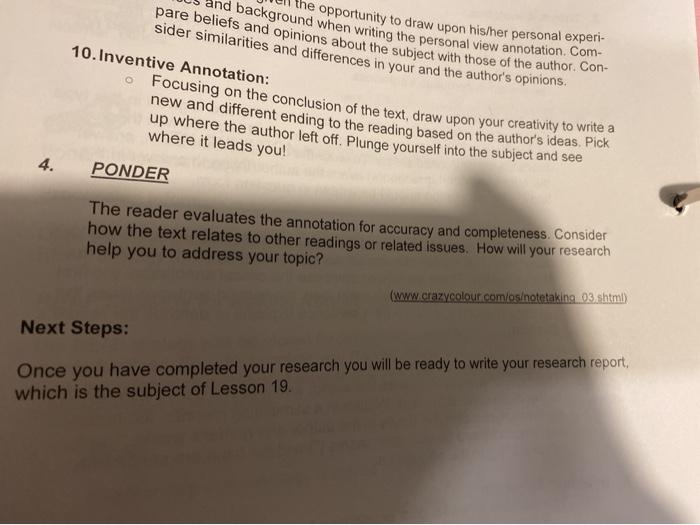
(www.squires favette k12 ky.us/library/research/citing.htm KEY QUESTION #76/77 (60 marks, Communica- tion(20)/Application(40) Processing Information Once you have found some information, you will need to take notes according to the REAP Strategy for three different types of research (20 x 3 = 60 Marks) REAP Strategy for Making Notes from Texts The REAP strategy was developed for composing annotations of texts. The acronym stands for Read, Encode, Annotate, and Ponder. REAP includes ten varieties of annota- tions, each focusing on different aspects of a text, that help to improve writing skills and comprehension of main ideas. 1. READ The first step of the strategy is to read the text! 2. ENCODE (10 marks) After reading the text, the information is paraphrased by the reader into his/her own words. 3. ANNOTATE (10 marks) the opportunity to draw upon his/her personal experi- nd background when writing the personal view annotation. Com- pare beliefs and opinions about the subject with those of the author. Con- sider similarities and differences in your and the author's opinions. 10. Inventive Annotation: Focusing on the conclusion of the text, draw upon your creativity to write a new and different ending to the reading based on the author's ideas. Pick up where the author left off. Plunge yourself into the subject and see where it leads you! 4. PONDER The reader evaluates the annotation for accuracy and completeness. Consider how the text relates to other readings or related issues. How will your research help you to address your topic? (www.crazycolour.com/osotetaking. 03.shtml) Next Steps: Once you have completed your research you will be ready to write your research report, which is the subject of Lesson 19
Step by Step Solution
There are 3 Steps involved in it

Get step-by-step solutions from verified subject matter experts
 Study Help