







Question: Not understanding the game, please help with question below Consider the case of a Simultaneous-Move Game: Consider the case of two households (Amber and Blatz),
Not understanding the game, please help with question below
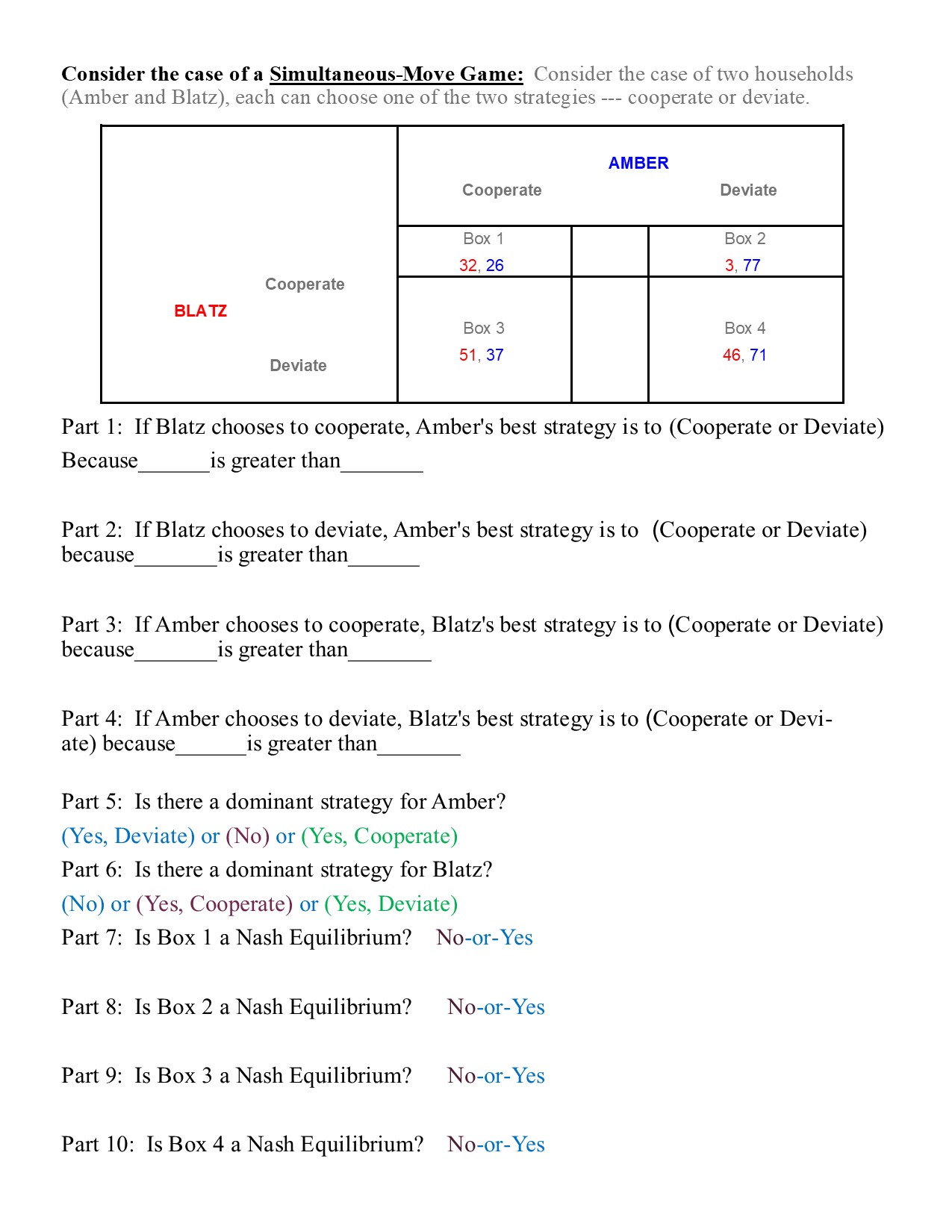
Consider the case of a Simultaneous-Move Game: Consider the case of two households (Amber and Blatz), each can choose one of the two strategies - cooperate or deviate. Cooperate Cooperate Part 1: If Blatz chooses to cooperate, Amber's best strategy is to (Cooperate or Deviate) Because is greater than Part 2: If Blatz chooses to deviate, Amber's best strategy is to (Cooperate or Deviate) because is greater than Part 3: If Amber chooses to cooperate, Blatz's best strategy is to (Cooperate or Deviate) because is greater than Part 4: If Amber chooses to deviate, Blatz's best strategy is to (Cooperate or Devi- ate) because is greater than Part 5: Is there a dominant strategy for Amber? (Yes, Deviate) or (No) or (Yes, Cooperate) Part 6: Is there a dominant strategy for Blatz? (N 0) or (Yes, Cooperate) or (Yes, Deviate) Part 7: Is Box 1 a Nash Equilibrium? NoorYes Part 8: Is Box 2 a Nash Equilibrium? No-or-Yes Part 9: Is Box 3 a Nash Equilibrium? No-or-Yes Part 10: Is Box 4 a Nash Equilibrium? No-or-Yes
Step by Step Solution
There are 3 Steps involved in it

Get step-by-step solutions from verified subject matter experts
 Study Help