







Question: NOTE: PLEASE DO NOT GIVE THE SAME ANSWER THAT HAS BEEN GIVEN BEFORE 1. Examine the formats for a proposal for qualitative, quantitative, or mixed
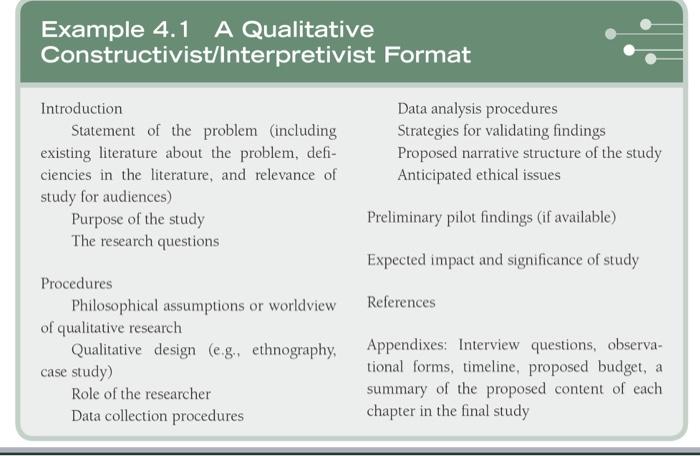
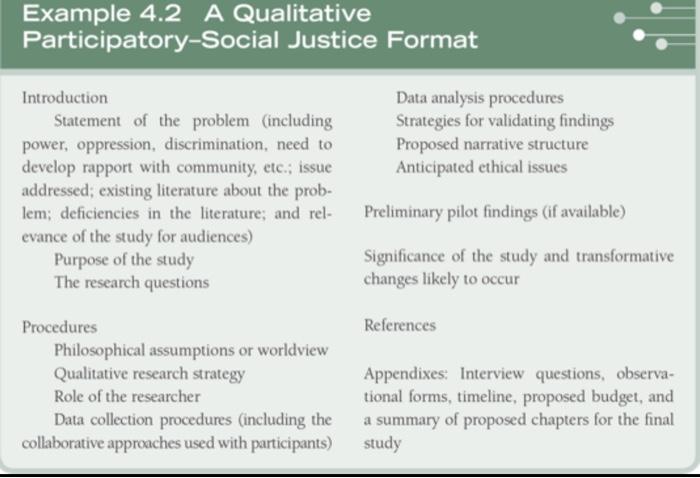
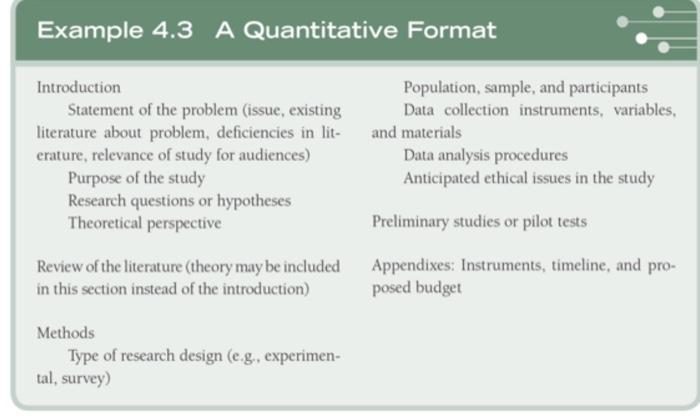
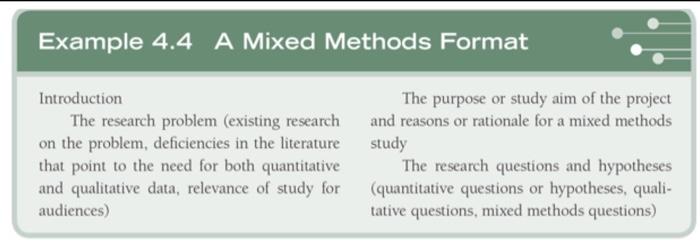
Example 4.1 A Qualitative Constructivist/Interpretivist Format Introduction Data analysis procedures Statement of the problem (including Strategies for validating findings existing literature about the problem, defi-_ Proposed narrative structure of the study ciencies in the literature, and relevance of Anticipated ethical issues study for audiences) Purpose of the study Preliminary pilot findings (if available) The research questions Expected impact and significance of study Procedures Philosophical assumptions or worldview References of qualitative research Qualitative design (e.g., ethnography, Appendixes: Interview questions, observacase study) tional forms, timeline, proposed budget, a Role of the researcher summary of the proposed content of each Data collection procedures chapter in the final study Example 4.2 A Qualitative Participatory-Social Justice Format Introduction Data analysis procedures Statement of the problem (including Strategies for validating findings power, oppression, discrimination, need to Proposed narrative structure develop rapport with community, etc.; issue Anticipated ethical issues addressed; existing literature about the problem; deficiencies in the literature; and rel- Preliminary pilot findings (if available) evance of the study for audiences) Purpose of the study Significance of the study and transformative The research questions changes likely to occur Procedures References Philosophical assumptions or worldview Qualitative research strategy Appendixes: Interview questions, observa- Role of the researcher tional forms, timeline, proposed budget, and Data collection procedures (including the a summary of proposed chapters for the final collaborative approaches used with participants) study Example 4.3 A Quantitative Format Introduction Population, sample, and participants Statement of the problem (issue, existing Data collection instruments, variables, literature about problem, deficiencies in lit- and materials erature, relevance of study for audiences) Data analysis procedures Purpose of the study Anticipated ethical issues in the study Research questions or hypotheses Theoretical perspective Preliminary studies or pilot tests Review of the literature (theory may be included Appendixes: Instruments, timeline, and proin this section instead of the introduction) posed budget Methods Type of research design (e.g., experimen- tal, survey) Example 4.4 A Mixed Methods Format Introduction The purpose or study aim of the project The research problem (existing research and reasons or rationale for a mixed methods on the problem, deficiencies in the literature study that point to the need for both quantitative The research questions and hypotheses and qualitative data, relevance of study for (quantitative questions or hypotheses, qualiaudiences) tative questions, mixed methods questions)
Step by Step Solution
There are 3 Steps involved in it

Get step-by-step solutions from verified subject matter experts
 Study Help