







Question: NOTE: When a firm has projects that differ in risk ( beta ) than the average for the company, then the firm's overall required return
NOTE: When a firm has projects that differ in risk beta than the "average" for the company, then the firm's overall required return from Problem isn't applicable. Each project needs to provide a return greater than or equal to its unique riskadjusted required return. THE RATES CALCULATED FOR PROJECTS A D IN # ARE THE REQUIRED RETURNS FOR EACH FOR THE FOLLOWING:
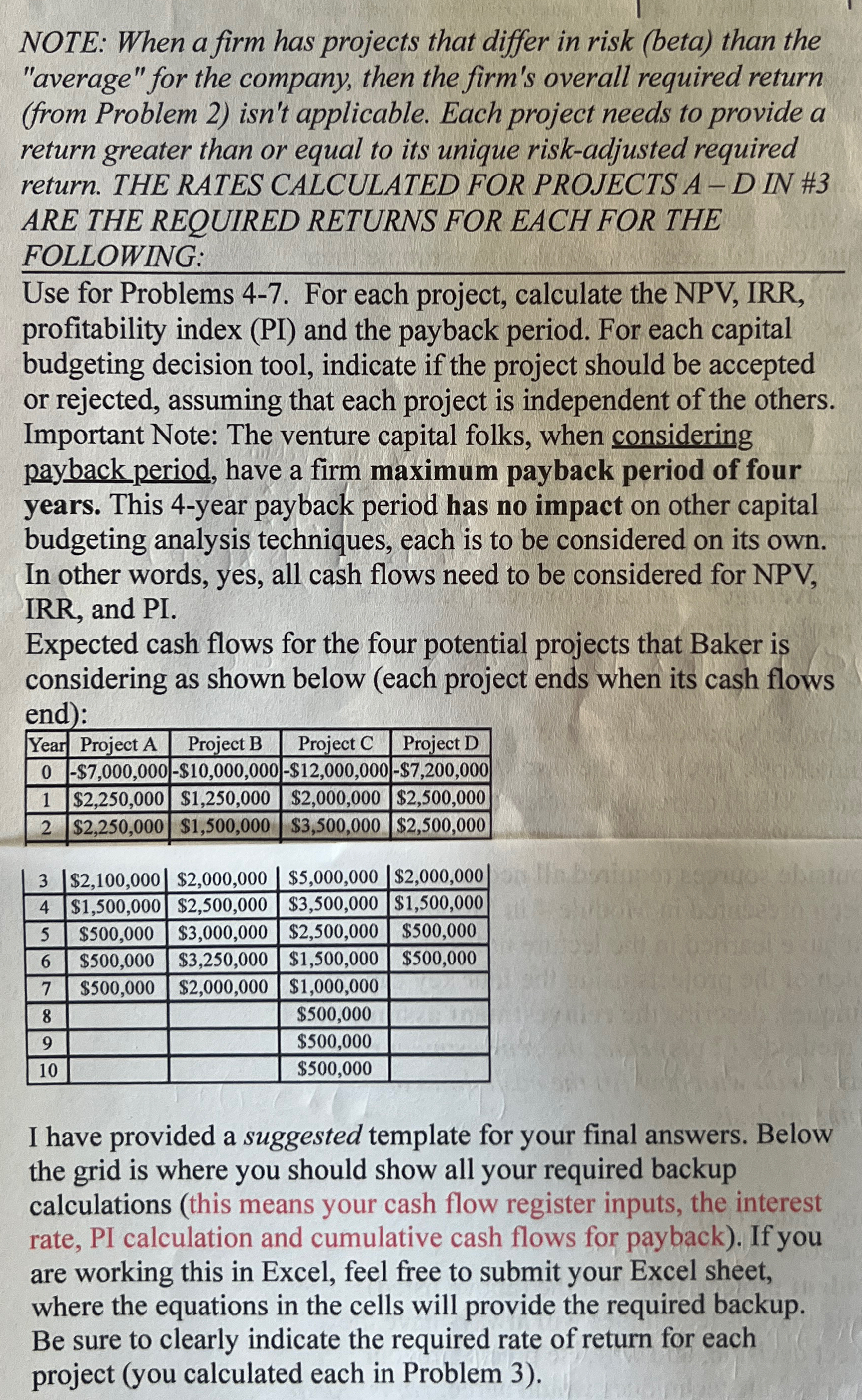
Use for Problems For each project, calculate the NPV IRR, profitability index PI and the payback period. For each capital budgeting decision tool, indicate if the project should be accepted or rejected, assuming that each project is independent of the others. Important Note: The venture capital folks, when considering payback period, have a firm maximum payback period of four years. This year payback period has no impact on other capital budgeting analysis techniques, each is to be considered on its own. In other words, yes, all cash flows need to be considered for NPV IRR, and PI
Expected cash flows for the four potential projects that Baker is considering as shown below each project ends when its cash flows end:
tableYearProject AProject BProject CProject D$$$$
Project A Required Return:
Project B Required Return:
Project C Required Return:
Project D Required Return:
Step by Step Solution
There are 3 Steps involved in it
1 Expert Approved Answer
Step: 1 Unlock

Question Has Been Solved by an Expert!
Get step-by-step solutions from verified subject matter experts
Step: 2 Unlock
Step: 3 Unlock
 Study Help