







Question: O Continue -~ Continus S 64 FIGURE 1 - A CENTIPEDE GAME in the modification, we can tell whether intentions-based motiva- tions are contributing to
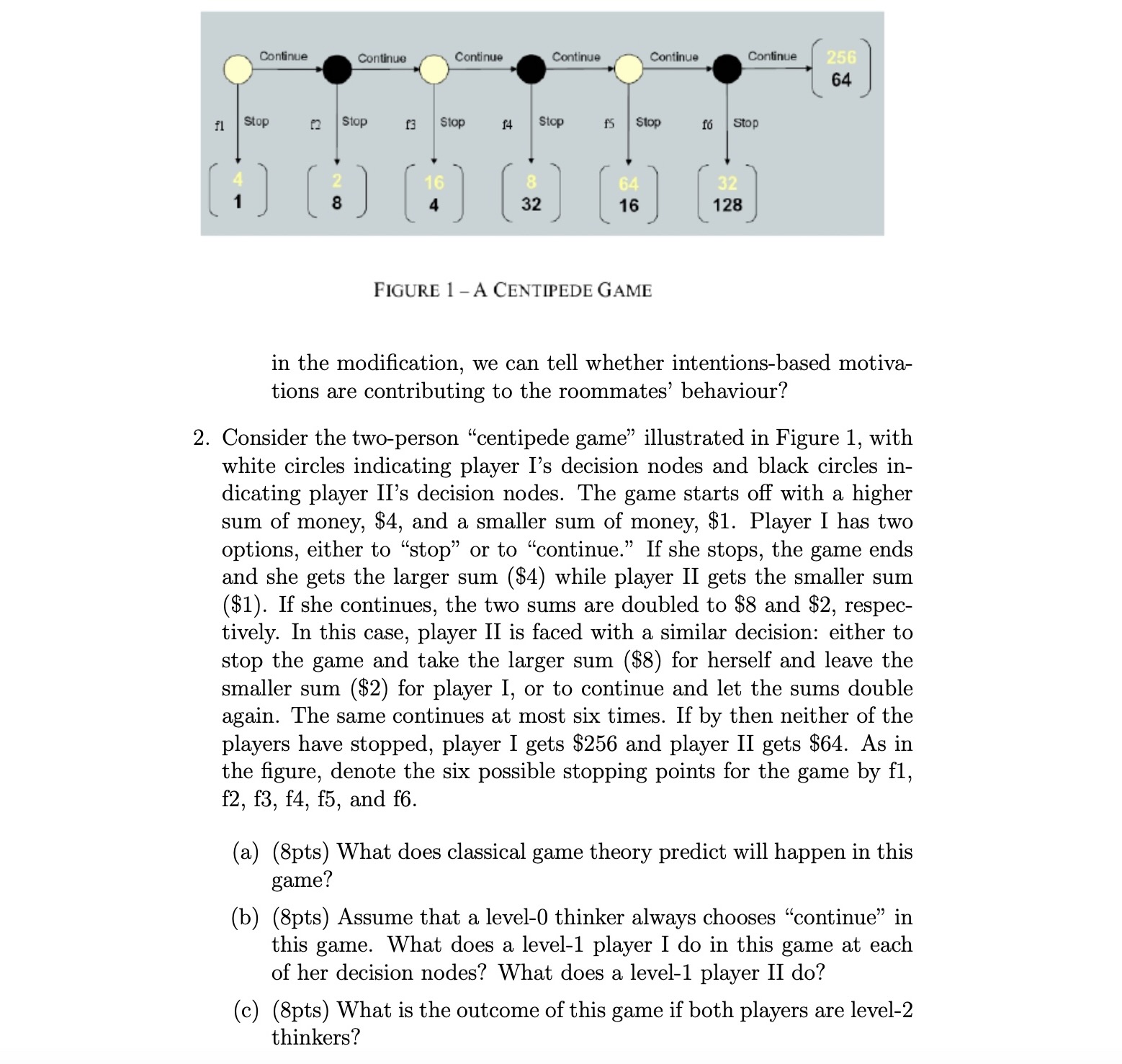
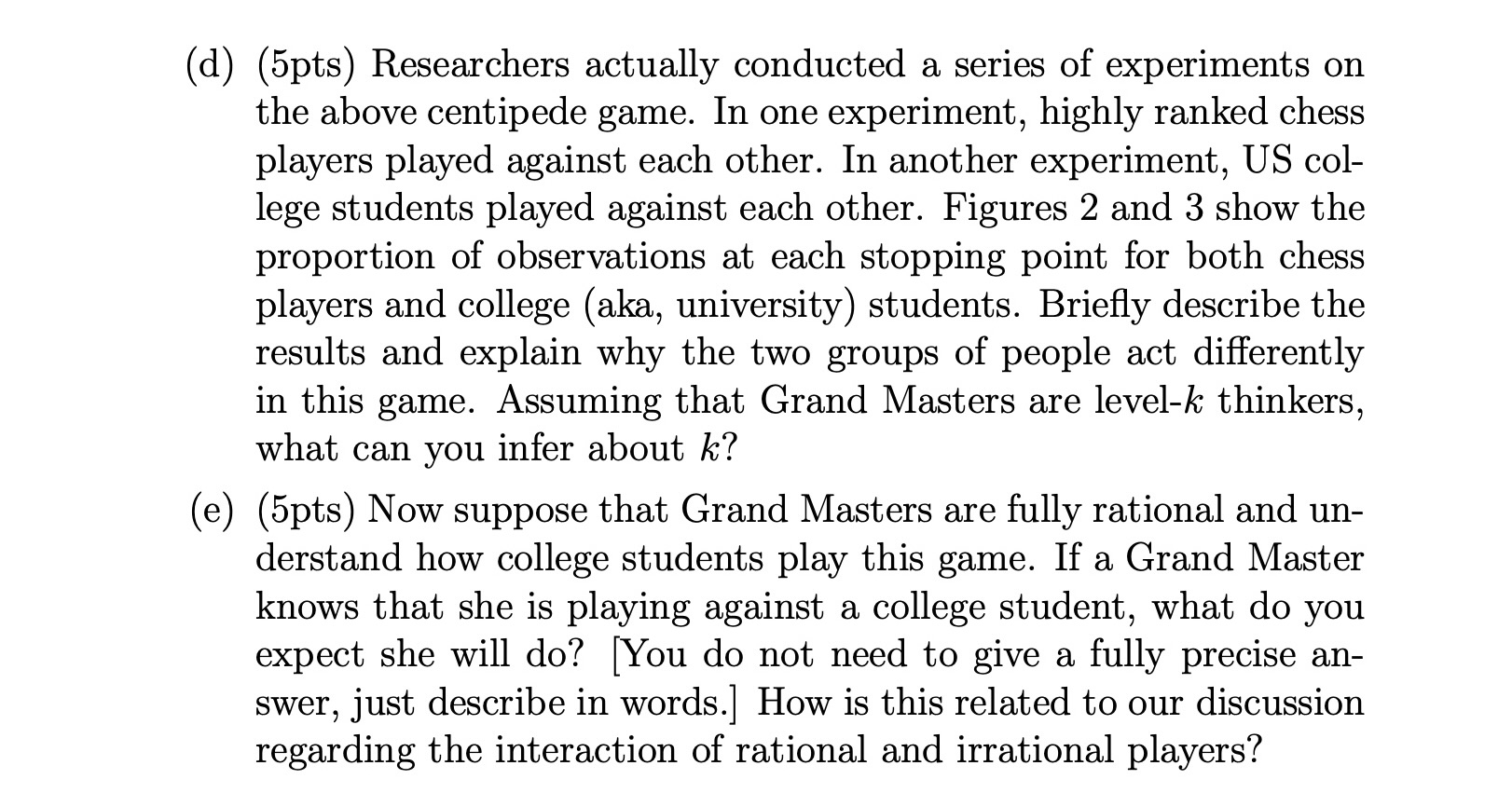
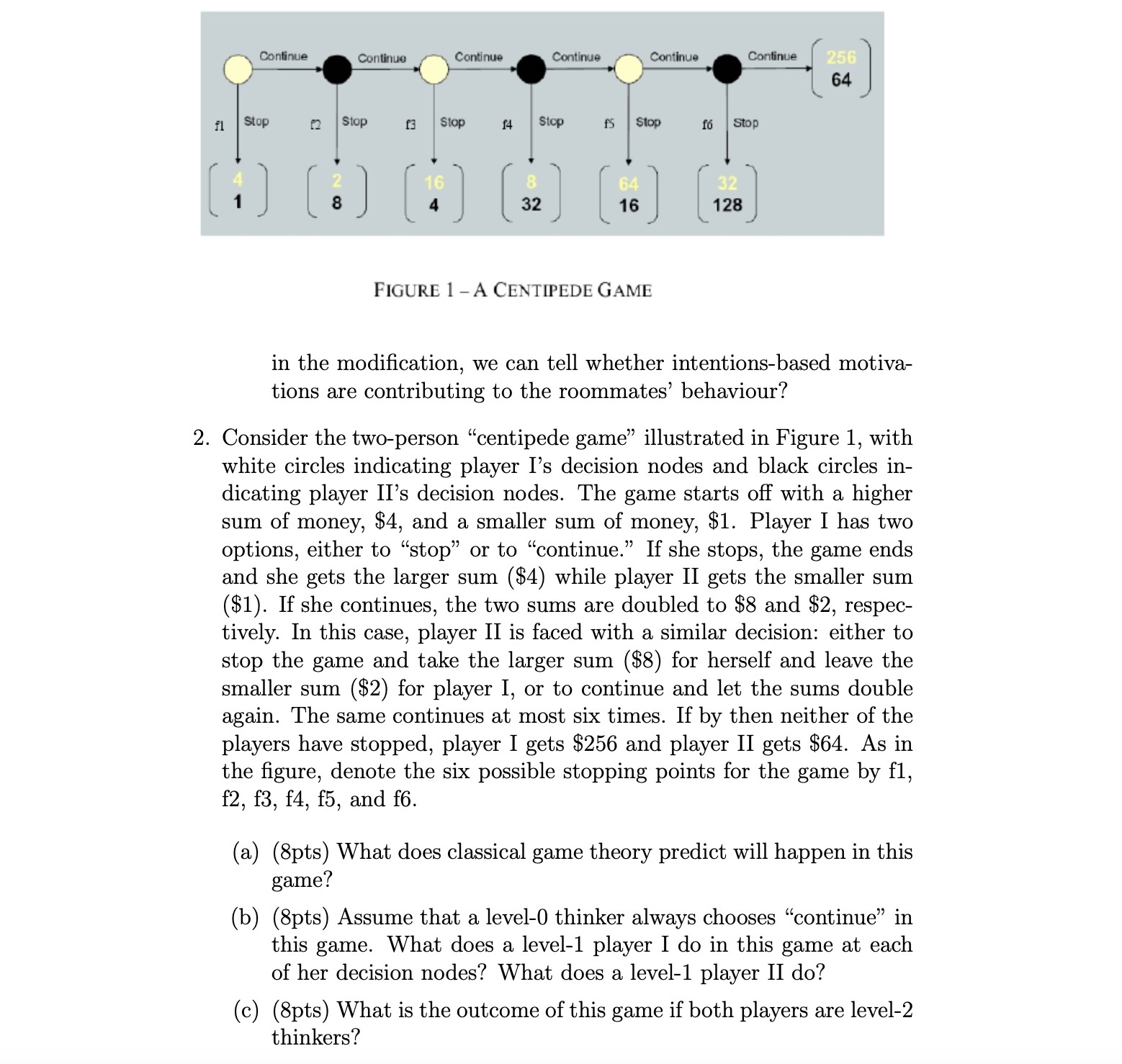
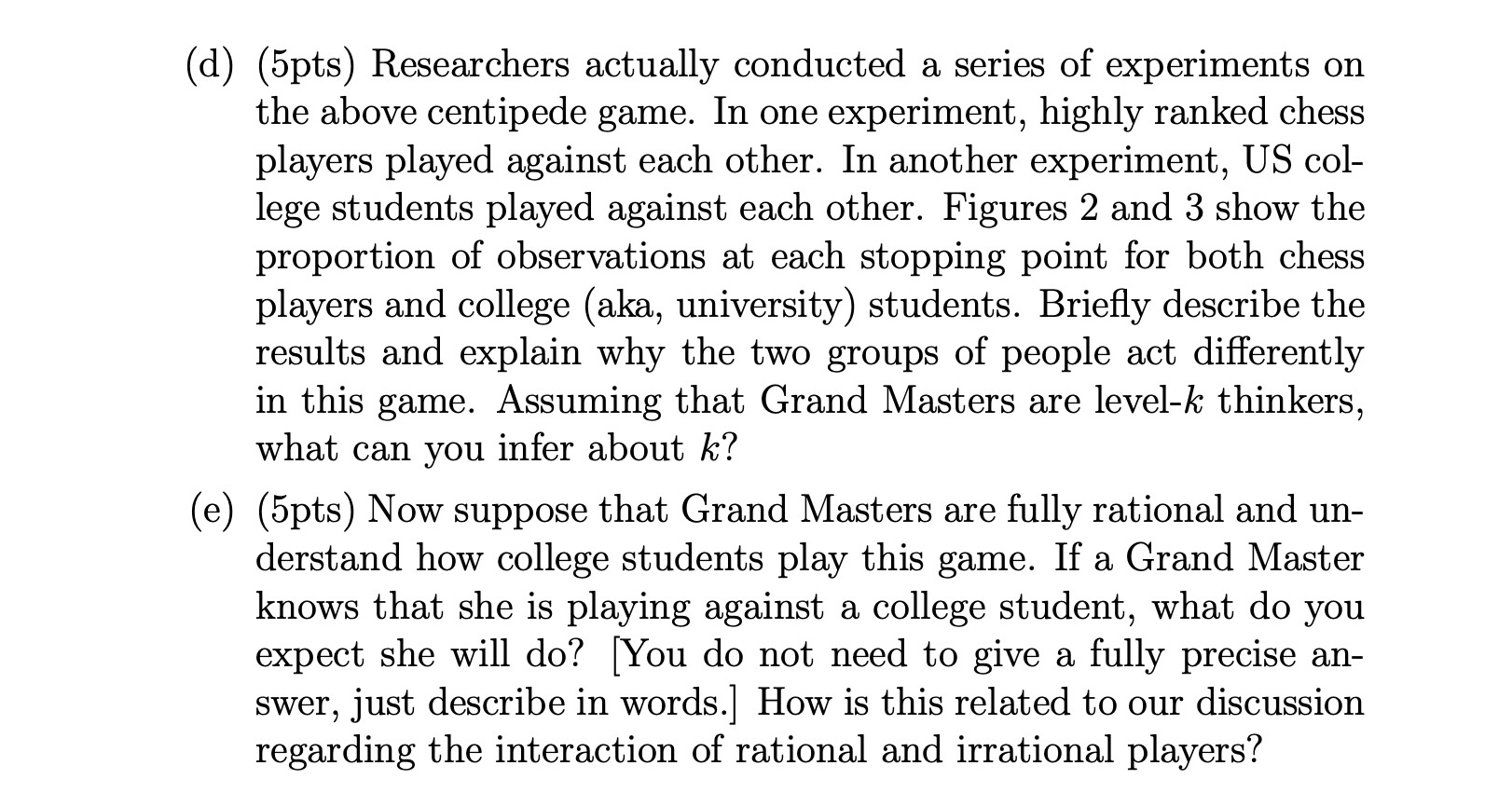
O Continue -~ Continus S 64 FIGURE 1 - A CENTIPEDE GAME in the modification, we can tell whether intentions-based motiva- tions are contributing to the roommates' behaviour? 2. Consider the two-person \"centipede game\" illustrated in Figure 1, with white circles indicating player I's decision nodes and black circles in- dicating player II's decision nodes. The game starts off with a higher sum of money, $4, and a smaller sum of money, $1. Player I has two options, either to \"stop\" or to \"continue.\" If she stops, the game ends and she gets the larger sum ($4) while player IT gets the smaller sum ($1). If she continues, the two sums are doubled to $8 and $2, respec- tively. In this case, player II is faced with a similar decision: either to stop the game and take the larger sum ($8) for herself and leave the smaller sum ($2) for player I, or to continue and let the sums double again. The same continues at most six times. If by then neither of the players have stopped, player I gets $256 and player II gets $64. As in the figure, denote the six possible stopping points for the game by f1, f2, 13, {4, 15, and 6. (a) (8pts) What does classical game theory predict will happen in this game? (b) (8pts) Assume that a level-0 thinker always chooses \"continue\" in this game. What does a level-1 player I do in this game at each of her decision nodes? What does a level-1 player 11 do? (c) (8pts) What is the outcome of this game if both players are level-2 thinkers? (d) (5pts) Researchers actually conducted a series of experiments on the above centipede game. In one experiment, highly ranked chess players played against each other. In another experiment, US col- lege students played against each other. Figures 2 and 3 show the proportion of observations at each stopping point for both chess players and college (aka, university) students. Briefly describe the results and explain why the two groups of people act differently in this game. Assuming that Grand Masters are level-k thinkers, what can you infer about k7 (5pts) Now suppose that Grand Masters are fully rational and un- derstand how college students play this game. If a Grand Master knows that she is playing against a college student, what do you expect she will do? [You do not need to give a fully precise an- swer, just describe in words.] How is this related to our discussion regarding the interaction of rational and irrational players
Step by Step Solution
There are 3 Steps involved in it

Get step-by-step solutions from verified subject matter experts
 Study Help