







Question: o The first possible outcome when a contract is tainted by a vitiating factor is that the contract is treated as void ab inito (i.e.
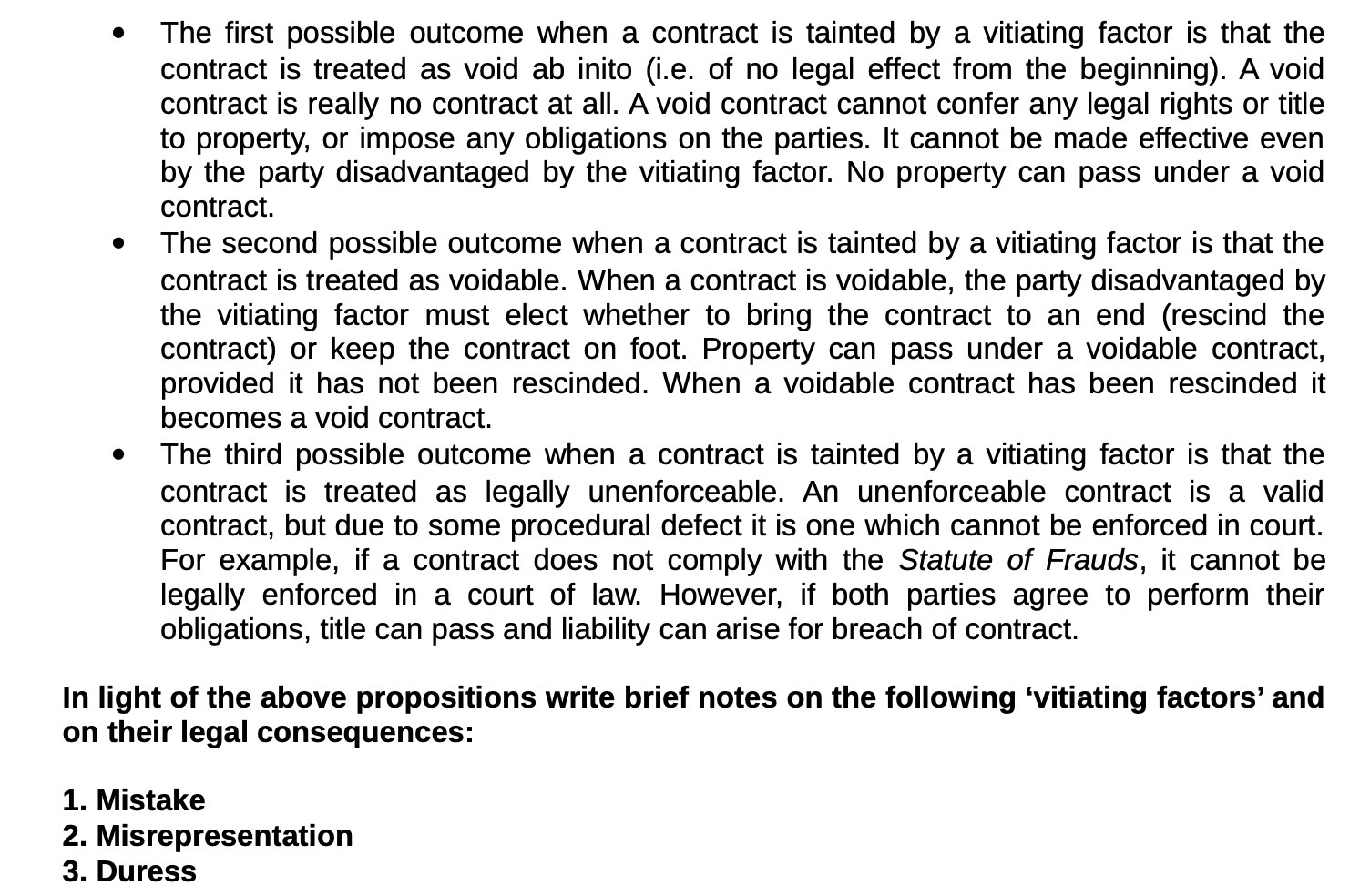
o The first possible outcome when a contract is tainted by a vitiating factor is that the contract is treated as void ab inito (i.e. of no legal effect from the beginning). A void contract is really no contract at all. A void contract cannot confer any legal rights or title to property, or impose any obligations on the parties. It cannot be made effective even by the party disadvantaged by the vitiating factor. No property can pass under a void contract. 0 The second possible outcome when a contract is tainted by a vitiating factor is that the contract is treated as voidable. When a contract is voidable. the party disadvantaged by the vitiating factor must elect whether to bring the contract to an end (rescind the contract) or keep the contract on foot. Property can pass under a voidable contract, provided it has not been rescinded. When a voidable contract has been rescinded it becomes a void contract. 0 The third possible outcome when a contract is tainted by a vitiating factor is that the contract is treated as legally unenforceable. An unenforceable contract is a valid contract, but due to some procedural defect it is one which cannot be enforced in court. For example, if a contract does not comply with the Statute of Frauds. it cannot be legally enforced in a court of law. However, if both parties agree to perform their obligations, title can pass and liability can arise for breach of contract. In light of the above propositions write brief notes on the following 'vitiating factors' and on their legal consequences: 1. Mistake 2. Misrepresentation 3. Duress
Step by Step Solution
There are 3 Steps involved in it

Get step-by-step solutions from verified subject matter experts
 Study Help