



Question: Old MathJax webview For the case mentioned provide the following. 1. Situation Analysis 2. Problem Analysis 3. Decision Analysis 4. Plan of Action 5. Recommendations
Old MathJax webview
For the case mentioned provide the following.
1. Situation Analysis 2. Problem Analysis 3. Decision Analysis 4. Plan of Action 5. Recommendations 6. Assumptions 7. Limitations 8. Learnings 9. Key Take Away 10. Verbal and Nonverbal Cues.
ki
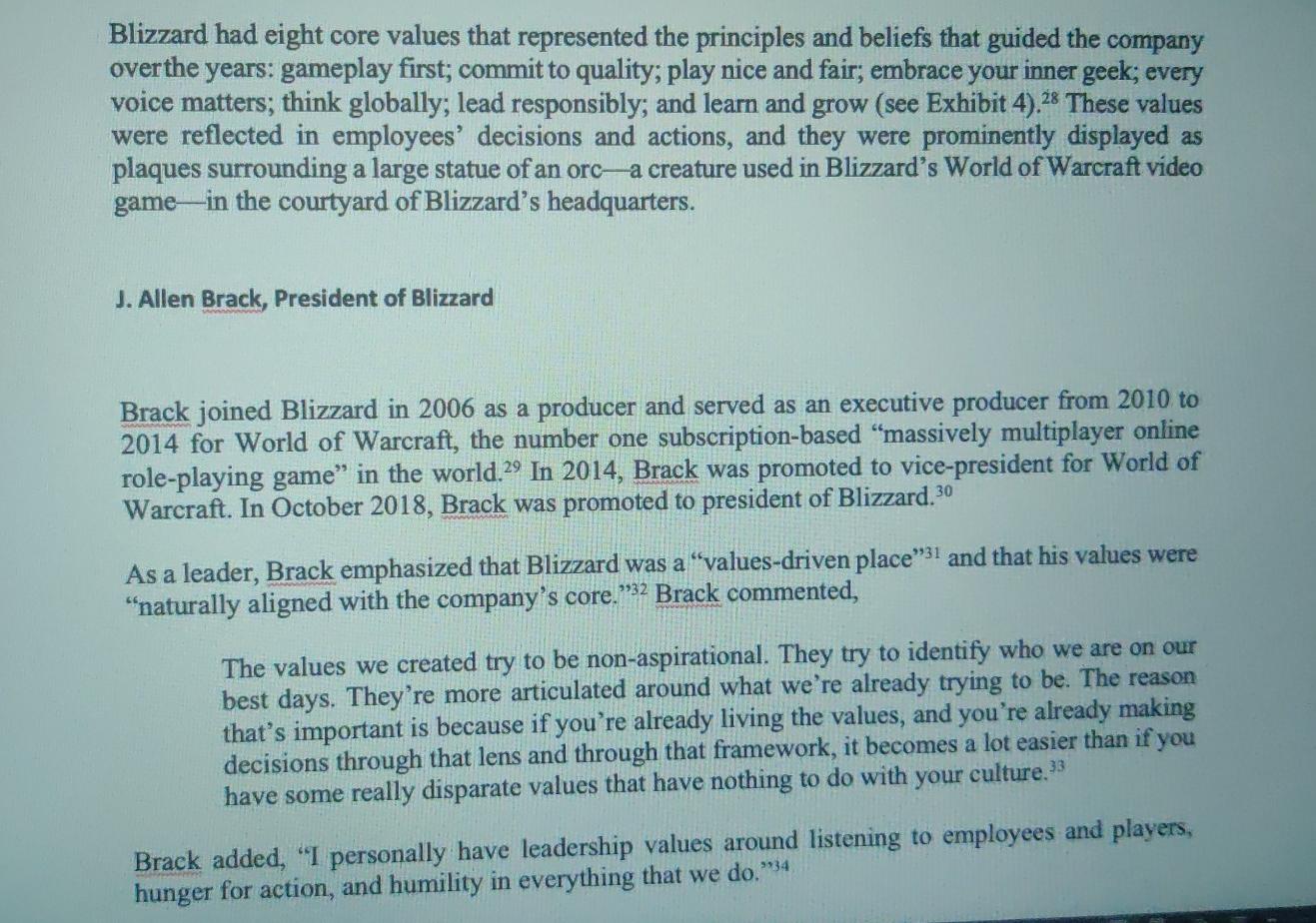
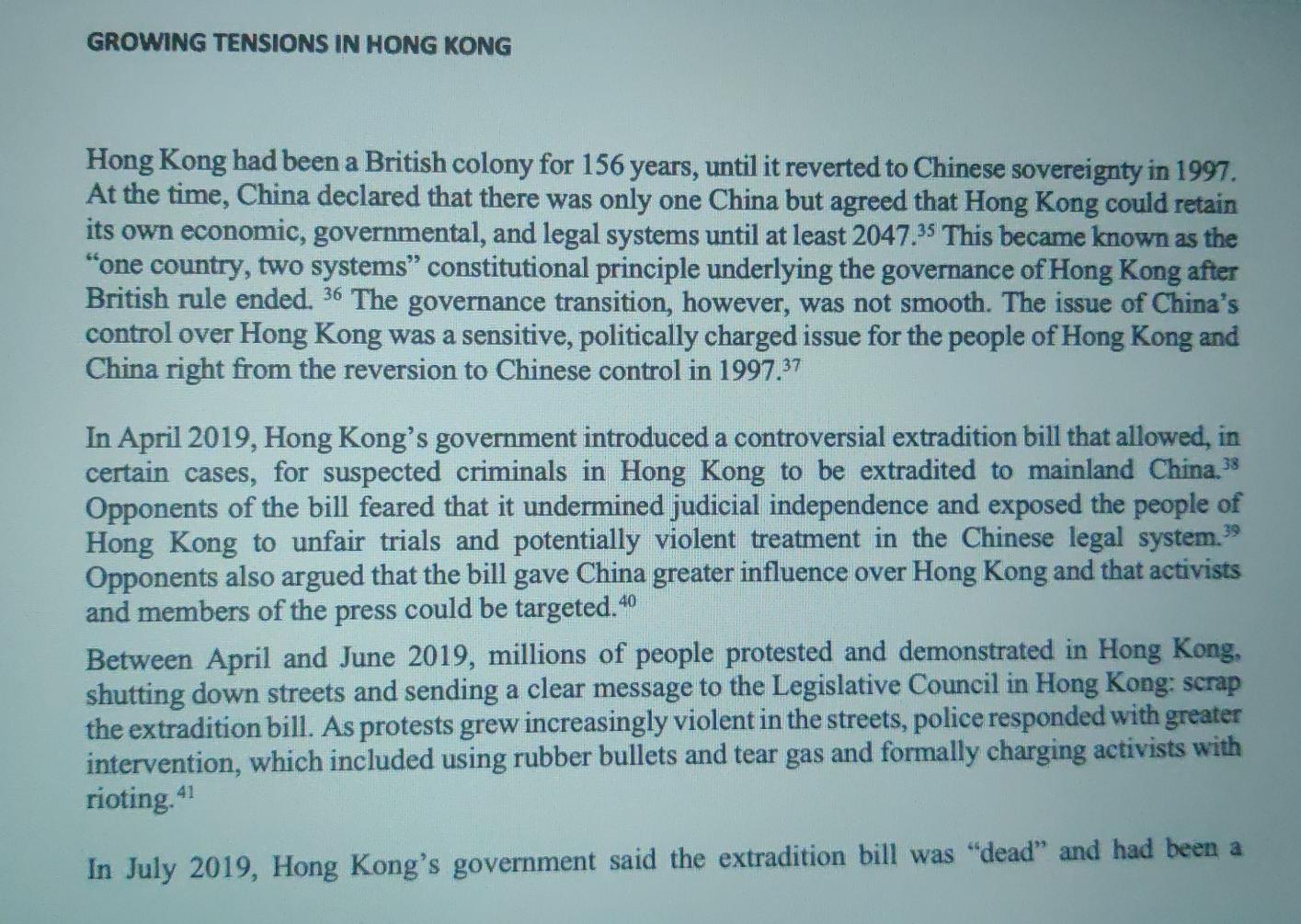
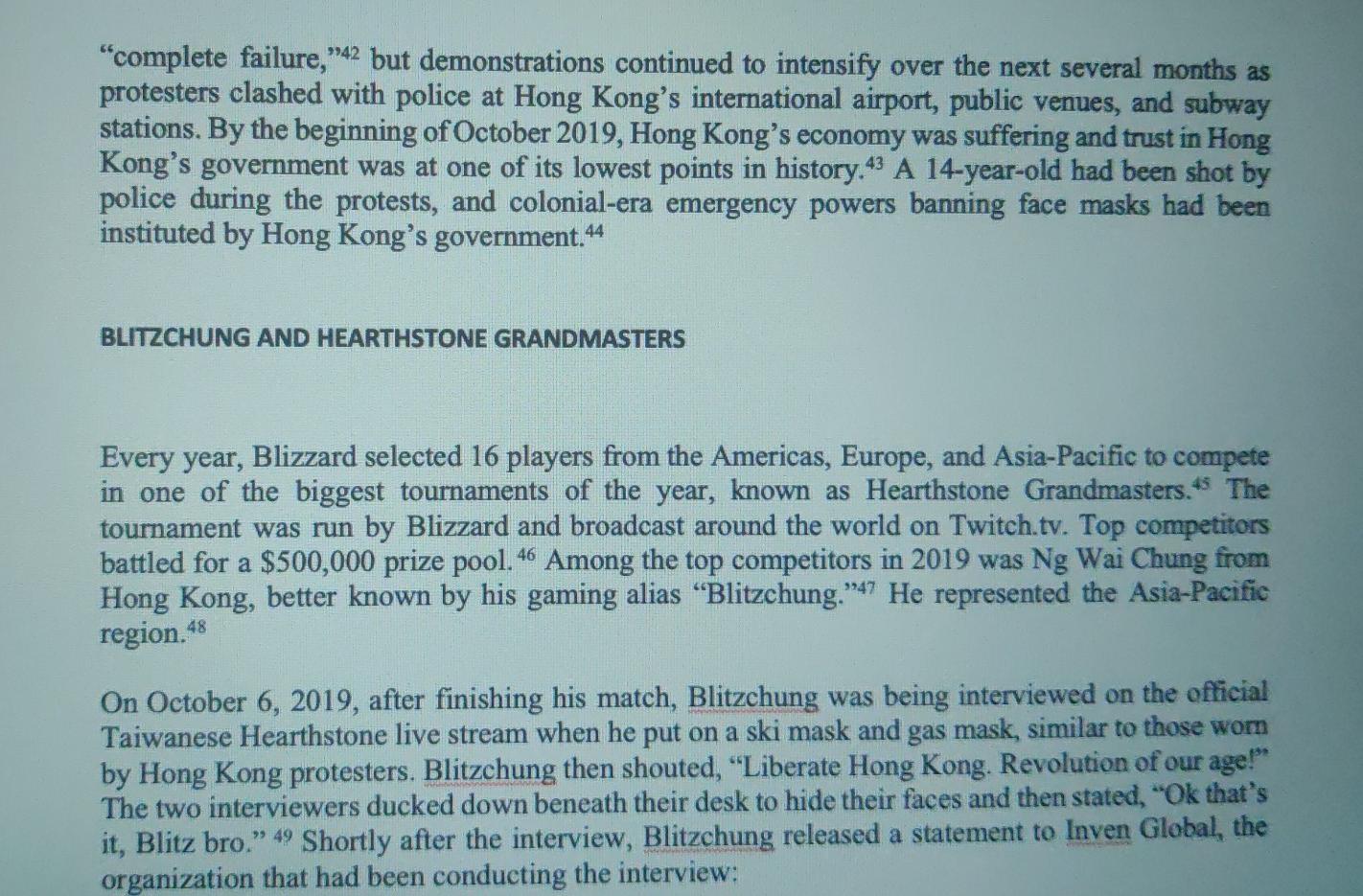
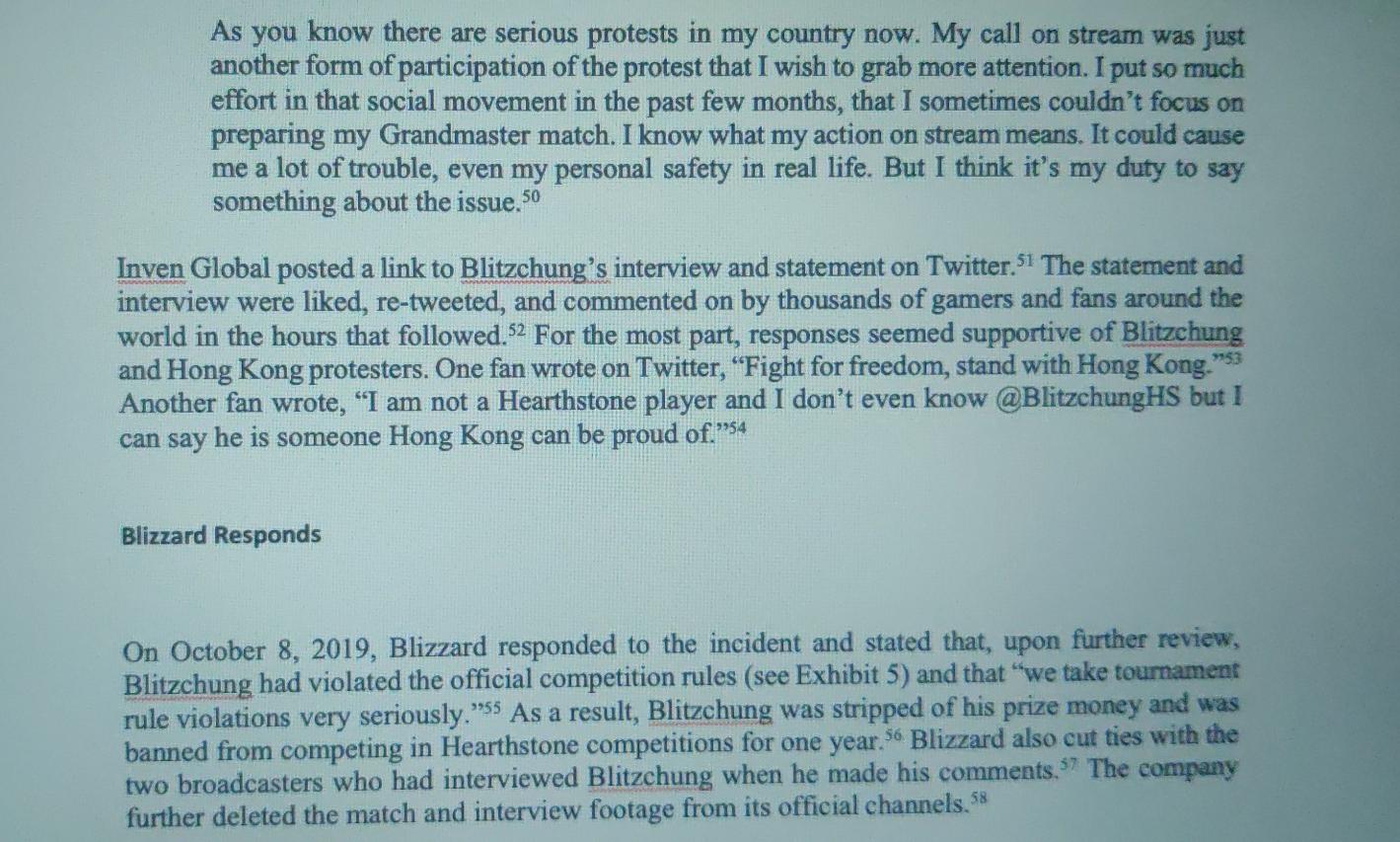
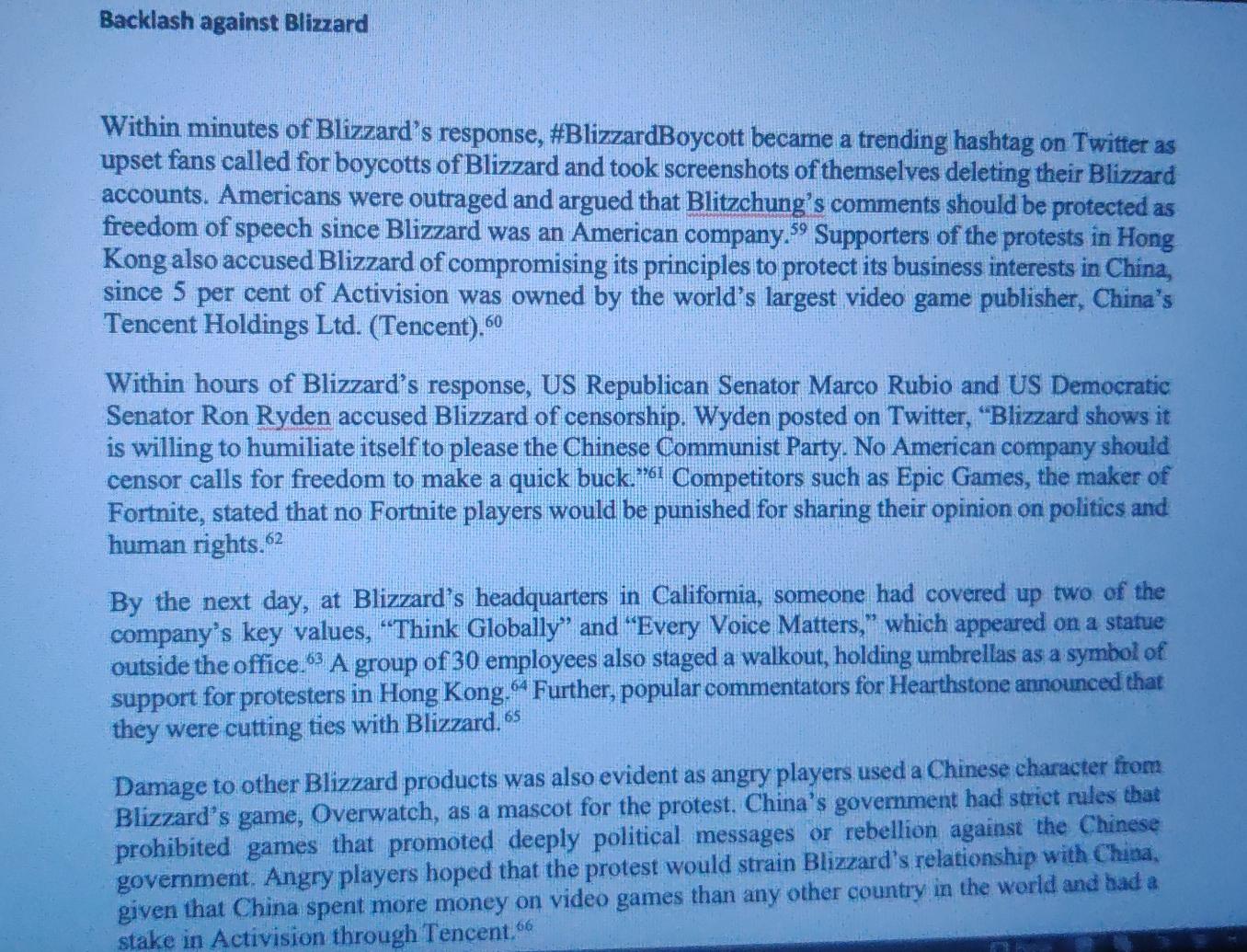
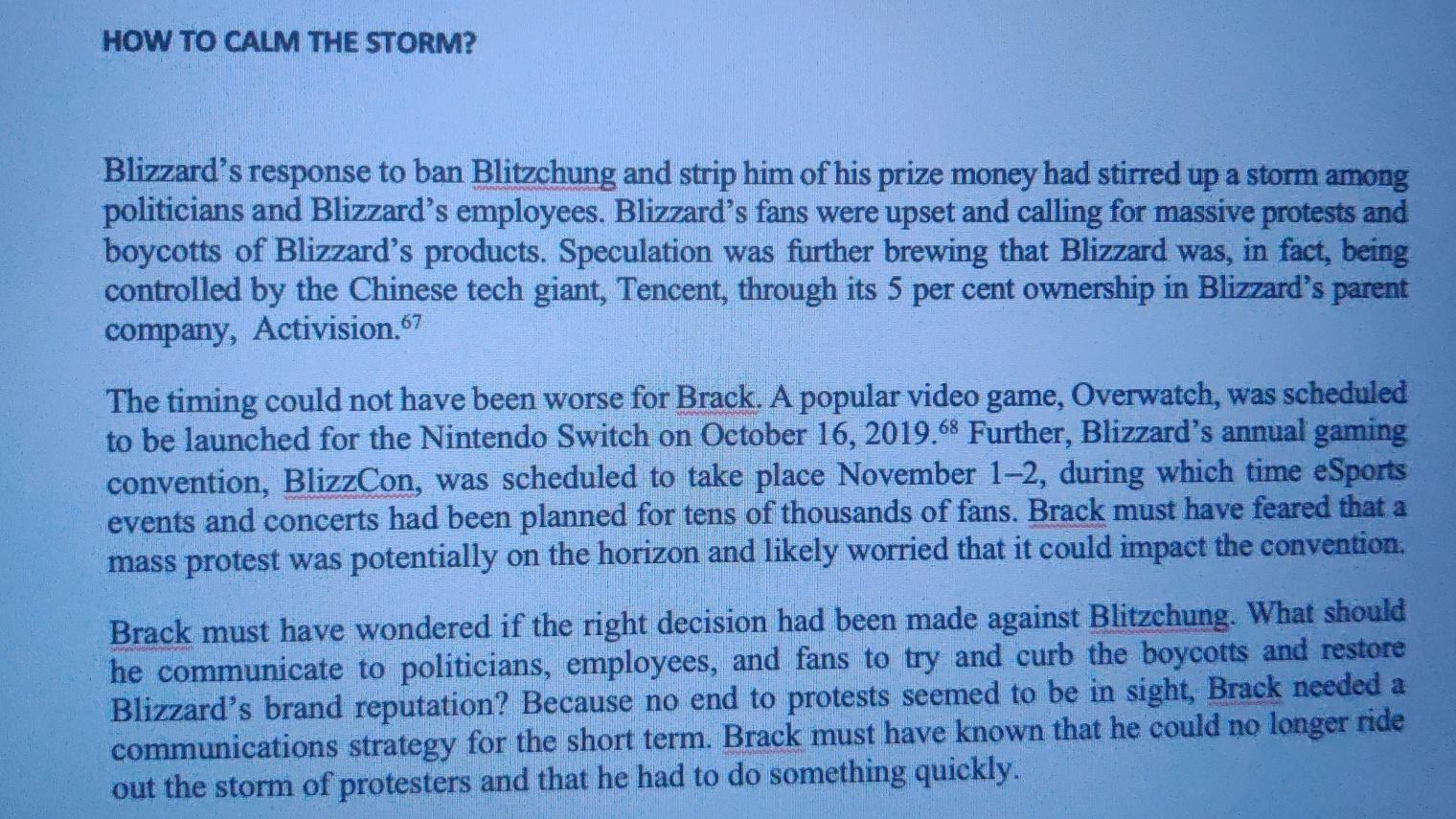
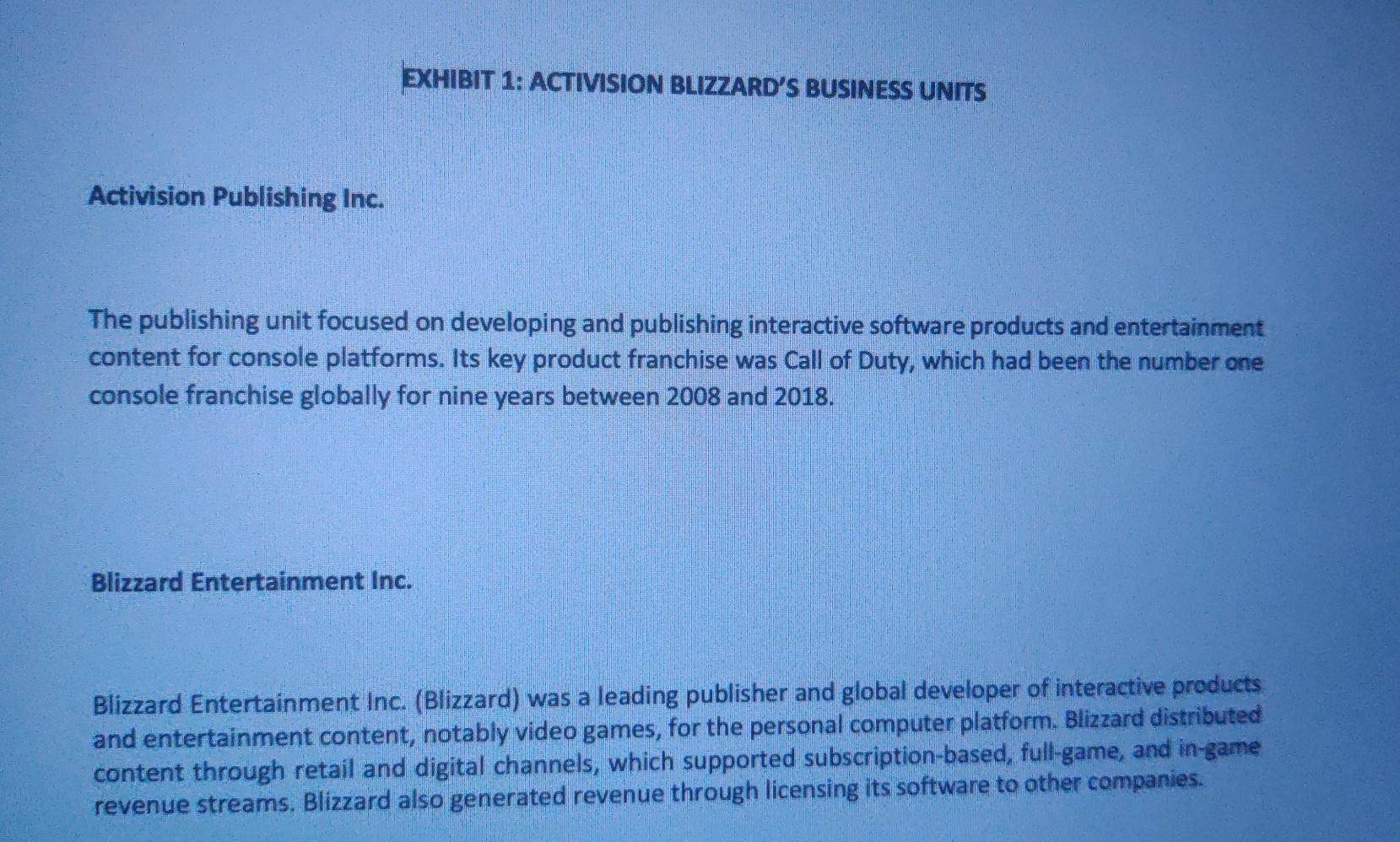
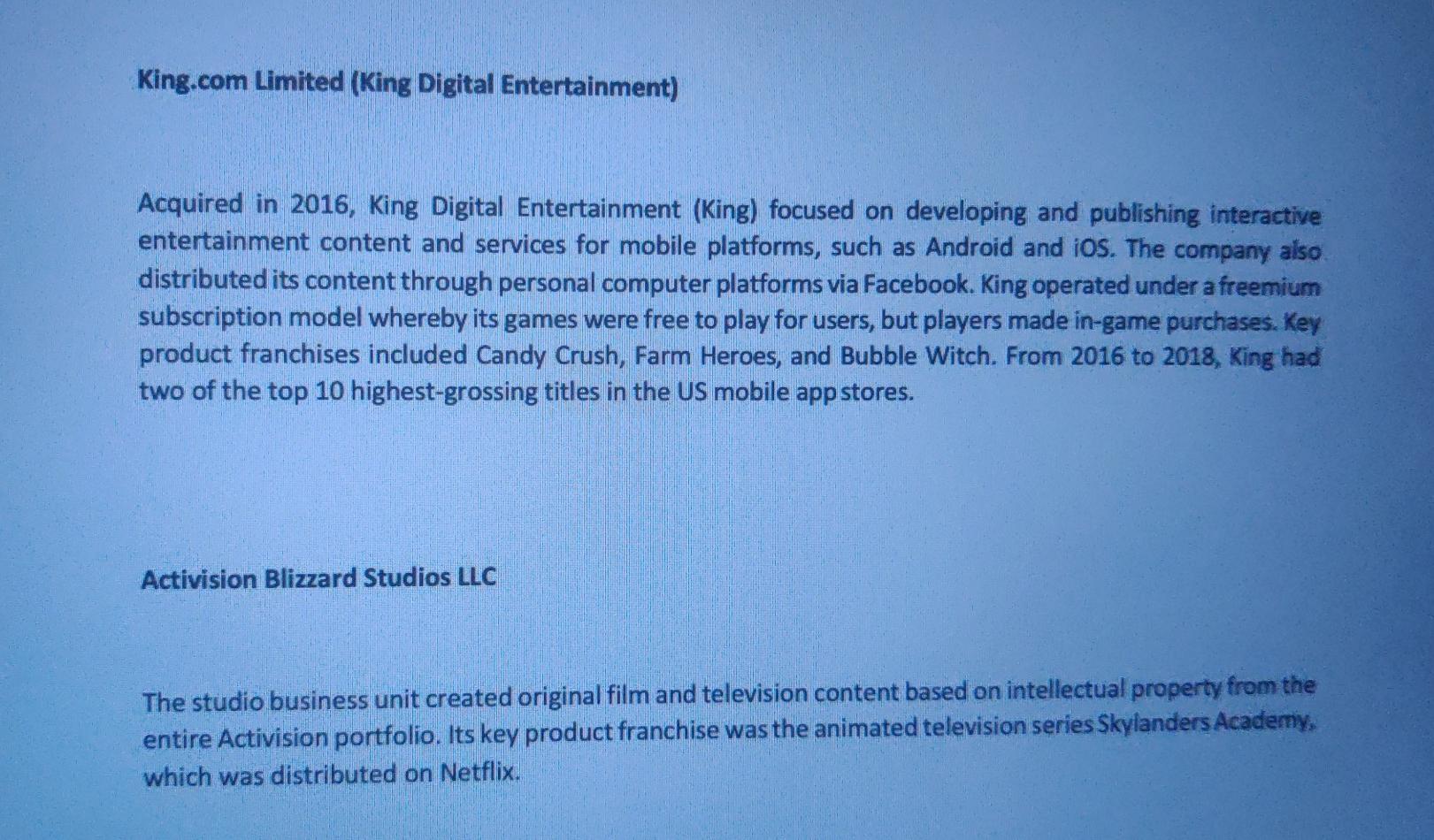
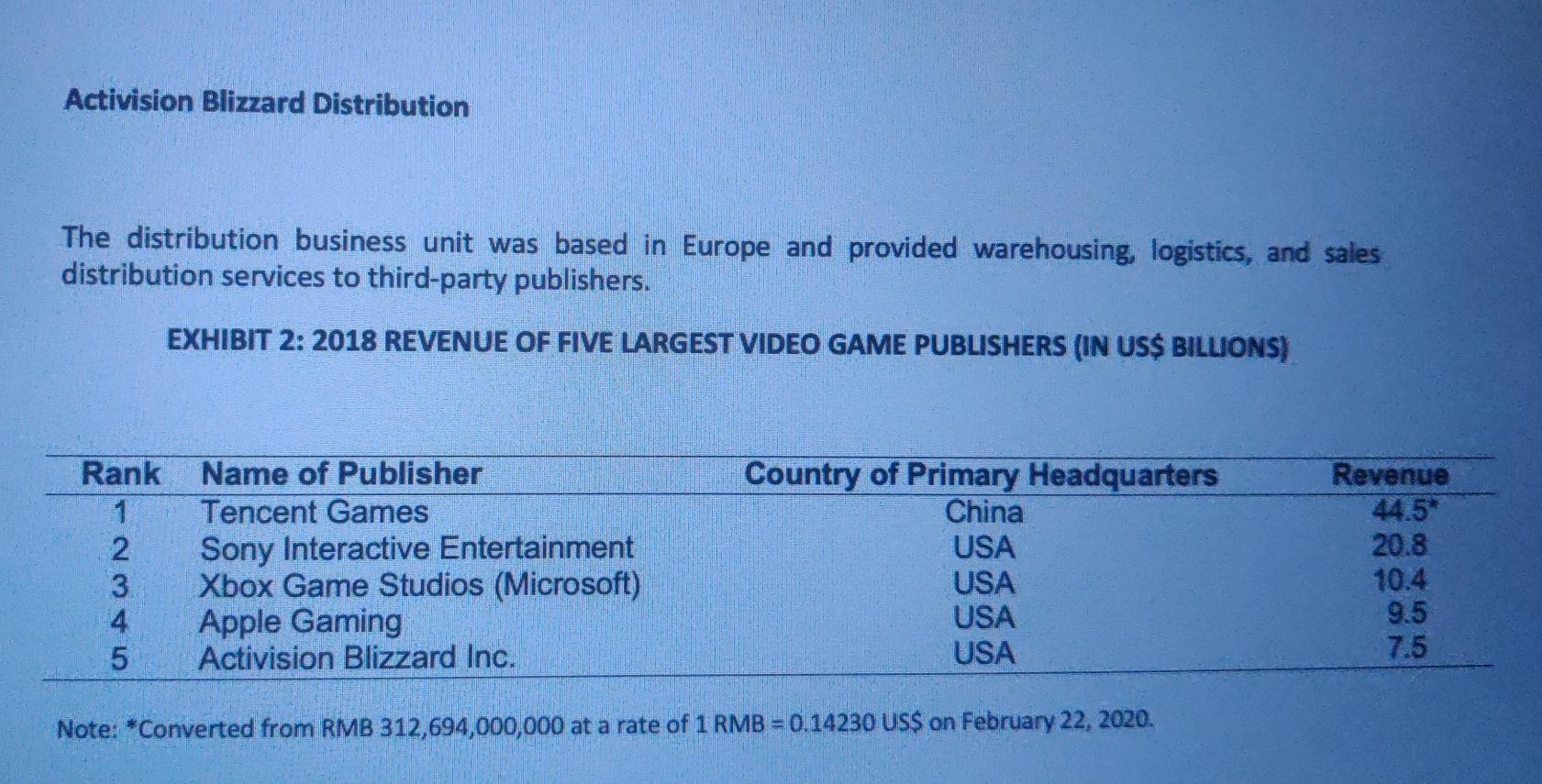
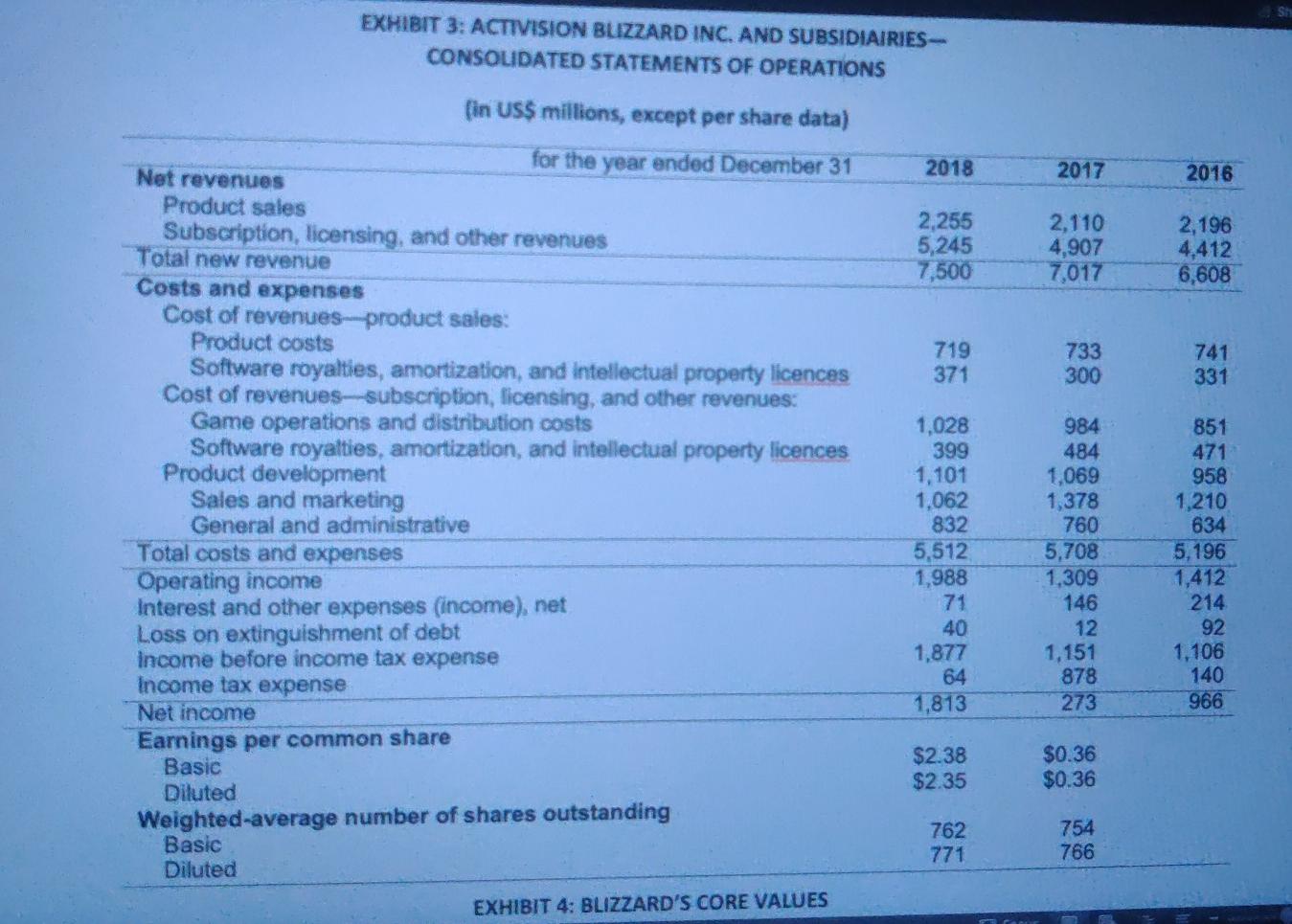
BLIZZARD CASE- J. Allen Brack, president of Blizzard Entertainment Inc. (Blizzard), subsidiary of one of the world's largest video game companies, was supposed to be reviewing final plans for Blizzard's annual eSports convention, BlizzCon. In just several weeks, BlizzCon was expecting tens of thousands of fans to attend in person and hundreds of thousands more fans to watch the event online. However, instead of getting ready for BlizzCon, Brack was distracted by a public relations fallout.2 On October 8, 2019, Blizzard banned a player, known as Blitzchung," from playing in future video game tournaments for a year and stripped him of his prize money, all as a result of a political statement that Blitzchung had made during an interview at a Blizzard event. Blizzard maintained that the player had violated tournament rules when he made his political statement. Now fans were angry and had taken to social media to protest Blizzard's actions; some fans were even calling for Brack's resignation. Further, US Senators accused Blizzard of censorship, and employees at Blizzard had staged a walkout. Brack could not escape the news headlines. To make matters worse, Blizzard's parent company, Activision Blizzard Inc. (Activision), which was publicly traded, was also facing a backlash as a result of Blizzard's actions. Brack had been president of Blizzard for just over one year, and the gaming world was waiting for Brack's next move.? Blizzard had been silent on the issue, and fans and players alike argued that Brack had to do something. He needed a crisis communications plan for the short term to address a number of stakeholders. GLOBAL ESPORTS MARKET Blizzard was situated within the world of competitive, organized video gaming known as eSports. The arena of eSports featured players from around the world competing in popular video games. As players competyl for lucrative prize money, fans eagerly watched from around the world, either by streaming on the Internet or on television, or by attending live gaming venues. In 2018, an estimated 380 million people worldwide watched eSports, including 165 million eSports "enthusiasts," a term that described frequent viewers. 10 Most of these enthusiasts were from North America, China, and South Korea. 11 Streaming service providers, such as Twitch.tv, offered subscription-based memberships that allowed fans to watch players compete in real time. This was generally how players built a fan base. 12 Given that large tournaments boasted millions of dollars in prize money, it was not uncommon for the world's best players to earn more than a million dollars in a year. Aside from receiving prize money at tournaments, players earned money as part of league or team salaries, sponsorships, and endorsements.13 In 2018, the global eSports market was valued at nearly US$865 million and was projected to reach $1.79 billion by 2022. The majority of revenues in the industry came from sponsorships and advertising, while ticket sales for live gaming venues also generated significant revenue for teams and event organizers.15 The number of gamers in the world was estimated to grow from 604 million in 2017 to 768 million in 2022. China was the largest gaming market worldwide.16 In 2019, it was estimated that 1.6 billion people around the world had some knowledge of eSports. 17 ACTIVISION BLIZZARD INC. Founded in a 2008 merger, Activision was a publicly traded video game holding company based in California. The company developed and distributed content and services on video game consoles, pero al computers, and mobile devices through one of its five business units: Activision Publishing Inc., Blizzard Entertainment Inc., King.com Limited (King Digital Entertainment), Activision Blizzard Studios LLC, and Activision Blizzard Distribution (see Exhibit 1).19 In 2018, Activision was one of the largest game companies in the world in terms of revenue (see Exhibits 2 and 3).20 Activision had $7.5 billion in net revenue and $2 billion in operating income, representing an increase of 7 per cent in revenue and 52 per cent in operating income since 2017. Its operating margin was 26.5 per cent in 2018, compared to 18.7 per cent in 2017. In 2018, its net income was $1.8 billion, an increase from $273 million in 2017. Diluted earnings per common share had increased to $2.35 from $0.36 in 2017.21 In 2018, Activision had approximately 9,900 employees worldwide. The majority of its employees in Europe were unionized.22 Blizzard Entertainment Inc. Founded in 1991, Blizzard was a leading publisher and global developer of interactive products and entertainment content, notably video games, for the personal computer platform. Blizzard distributed content through retail and digital channels, which supported subscription-based, full- game, and in-game revenue streams. Blizzard also generated revenue by licensing its software to other companies.23 In 1996, Blizzard launched a proprietary online gaming platform, Blizzard Battle.net, which distributed Blizzard and Activision content while enabling online social networking and user- generated content. At a time when Internet dial-up service was the norm, Blizzard's platform was one of the firt online gaming platforms that combined social media and gaming technology into one platform In 2014, Blizzard released Hearthstone, a free online digital collective card game for personal computers and mobile phones. The game featured social networking and allowed players to compete against one another to earn rewards and in-game prizes by defeating their opponents. As of November 2018, there were more than 100 million Hearthstone players worldwide. 25 In 2018, Blizzard launched the Overwatch League, the first major global professional eSports league with city-based teams.26 Blizzard also had a Major League Gaming business, which supported eSports events and served as a multi-platform network for Activision content. Since 1991, Blizzard had developed 19 games and had five main franchises: World of Warcraft, StarCraft, Diablo, Hearthstone, and Overwatch. From July 2019 through September 2019, Blizzard had around 33 million monthly active users.27 Blizzard had eight core values that represented the principles and beliefs that guided the company over the years: gameplay first; commit to quality; play nice and fair; embrace your inner geek; every voice matters; think globally; lead responsibly; and learn and grow (see Exhibit 4).28 These values were reflected in employees' decisions and actions, and they were prominently displayed as plaques surrounding a large statue of an orc-a creature used in Blizzard's World of Warcraft video game in the courtyard of Blizzard's headquarters. J. Allen Brack, President of Blizzard Brack joined Blizzard in 2006 as a producer and served as an executive producer from 2010 to 2014 for World of Warcraft, the number one subscription-based massively multiplayer online role-playing game in the world.29 In 2014, Brack was promoted to vice-president for World of Warcraft. In October 2018, Brack was promoted to president of Blizzard.30 As a leader, Brack emphasized that Blizzard was a "values-driven place"31 and that his values were "naturally aligned with the company's core."932 Brack commented, The values we created try to be non-aspirational. They try to identify who we are on our best days. They're more articulated around what we're already trying to be. The reason that's important is because if you're already living the values, and you're already making decisions through that lens and through that framework, it becomes a lot easier than if you have some really disparate values that have nothing to do with your culture.33 Brack added, "I personally have leadership values around listening to employees and players, hunger for action, and humility in everything that we do."934 GROWING TENSIONS IN HONG KONG Hong Kong had been a British colony for 156 years, until it reverted to Chinese sovereignty in 1997. At the time, China declared that there was only one China but agreed that Hong Kong could retain its own economic, governmental, and legal systems until at least 2047.35 This became known as the "one country, two systems constitutional principle underlying the governance of Hong Kong after British rule ended. 36 The governance transition, however, was not smooth. The issue of China's control over Hong Kong was a sensitive, politically charged issue for the people of Hong Kong and China right from the reversion to Chinese control in 1997.37 40 In April 2019, Hong Kong's government introduced a controversial extradition bill that allowed, in certain cases, for suspected criminals in Hong Kong to be extradited to mainland China.38 Opponents of the bill feared that it undermined judicial independence and exposed the people of Hong Kong to unfair trials and potentially violent treatment in the Chinese legal system. Opponents also argued that the bill gave China greater influence over Hong Kong and that activists and members of the press could be targeted." Between April and June 2019, millions of people protested and demonstrated in Hong Kong, shutting down streets and sending a clear message to the Legislative Council in Hong Kong: scrap the extradition bill. As protests grew increasingly violent in the streets, police responded with greater intervention, which included using rubber bullets and tear gas and formally charging activists with rioting. 41 In July 2019, Hong Kong's government said the extradition bill was "dead" and had been a "complete failure,"42 but demonstrations continued to intensify over the next several months as protesters clashed with police at Hong Kong's international airport, public venues, and subway stations. By the beginning of October 2019, Hong Kong's economy was suffering and trust in Hong Kong's government was at one of its lowest points in history.43 A 14-year-old had been shot by police during the protests, and colonial-era emergency powers banning face masks had been instituted by Hong Kong's government.44 BLITZCHUNG AND HEARTHSTONE GRANDMASTERS Every year, Blizzard selected 16 players from the Americas, Europe, and Asia-Pacific to compete in one of the biggest tournaments of the year, known as Hearthstone Grandmasters. The tournament was run by Blizzard and broadcast around the world on Twitch.tv. Top competitors battled for a $500,000 prize pool. 46 Among the top competitors in 2019 was Ng Wai Chung from Hong Kong, better known by his gaming alias "Blitzchung." .:47 He represented the Asia-Pacific region. 48 On October 6, 2019, after finishing his match, Blitzchung was being interviewed on the official Taiwanese Hearthstone live stream when he put on a ski mask and gas mask, similar to those worn by Hong Kong protesters. Blitzchung then shouted, "Liberate Hong Kong. Revolution of our age! The two interviewers ducked down beneath their desk to hide their faces and then stated, "Ok that's it, Blitz bro." 49 Shortly after the interview, Bli hung released a statement to Inven Global, the organization that had been conducting the interview: As you know there are serious protests in my country now. My call on stream was just another form of participation of the protest that I wish to grab more attention. I put so much effort in that social movement in the past few months, that I sometimes couldn't focus on preparing my Grandmaster match. I know what my action on stream means. It could cause me a lot of trouble, even my personal safety in real life. But I think it's my duty to say something about the issue.50 Inven Global posted a link to Blitzchung's interview and statement on Twitter. 51 The statement and interview were liked, re-tweeted, and commented on by thousands of gamers and fans around the world in the hours that followed. 52 For the most part, responses seemed supportive of Blitzchung and Hong Kong protesters. One fan wrote on Twitter, Fight for freedom, stand with Hong Kong." Another fan wrote, I am not a Hearthstone player and I don't even know @BlitzchungHS but I can say he is someone Hong Kong can be proud of."54 1753 Blizzard Responds On October 8, 2019, Blizzard responded to the incident and stated that, upon further review, Blitzchung had violated the official competition rules (see Exhibit 5) and that we take tournament rule violations very seriously.' 9955 As a result, Blitzchung was stripped of his prize money and was banned from competing in Hearthstone competitions for one year. 6 Blizzard also cut ties with the two broadcasters who had interviewed Blitzchung when he made his comments. The company further deleted the match and interview footage from its official channels. 58 Backlash against Blizzard Within minutes of Blizzard's response, #BlizzardBoycott became a trending hashtag on Twitter as upset fans called for boycotts of Blizzard and took screenshots of themselves deleting their Blizzard accounts. Americans were outraged and argued that Blitzchung's comments should be protected as freedom of speech since Blizzard was an American company.59 Supporters of the protests in Hong Kong also accused Blizzard of compromising its principles to protect its business interests in China, since 5 per cent of Activision was owned by the world's largest video game publisher, China's Tencent Holdings Ltd. (Tencent). 60 Within hours of Blizzard's response, US Republican Senator Marco Rubio and US Democratic Senator Ron Ryden accused Blizzard of censorship. Wyden posted on Twitter, "Blizzard shows it is willing to humiliate itself to please the Chinese Communist Party. No American company should censor calls for freedom to make a quick buck. -1 Competitors such as Epic Games, the maker of Fortnite, stated that no Fortnite players would be punished for sharing their opinion on politics and human rights. 62 By the next day, at Blizzard's headquarters in California, someone had covered up two of the company's key values, "Think Globally" and "Every Voice Matters," which appeared on a statue outside the office. 63 A group of 30 employees also staged a walkout, holding umbrellas as a symbol of support for protesters in Hong Kong 64 Further, popular commentators for Hearthstone announced that they were cutting ties with Blizzard. 65 Damage to other Blizzard products was also evident as angry players used a Chinese character from Blizzard's game, Overwatch, as a mascot for the protest. China's vernment had strict rules that prohibited games that promoted deeply political messages or rebellion against the Chinese government. Angry players hoped that the protest would strain Blizzard's relationship with China, given that China spent more money on video games than any other country in the world and had a stake in Activision through Tencent.66 HOW TO CALM THE STORM? Blizzard's response to ban Blitzchung and strip him of his prize money had stirred up a storm among politicians and Blizzard's employees. Blizzard's fans were upset and calling for massive protests and boycotts of Blizzard's products. Speculation was further brewing that Blizzard was, in fact, being controlled by the Chinese tech giant, Tencent, through its 5 per cent ownership in Blizzard's parent company, Activision.67 The timing could not have been worse for Brack. A popular video game, Overwatch, was scheduled to be launched for the Nintendo Switch on October 16, 2019.6% Further, Blizzard's annual gaming convention, BlizzCon, was scheduled to take place November 1-2, during which time eSports events and concerts had been planned for tens of thousands of fans. Brack must have feared that a mass protest was potentially on the horizon and likely worried that it could impact the convention. Brack must have wondered if the right decision had been made against Blitzchung. What should he communicate to politicians, employees, and fans to try and curb the boycotts and restore Blizzard's brand reputation? Because no end to protests seemed to be in sight, Brack needed a communications strategy for the short term. Brack must have known that he could no longer ride out the storm of protesters and that he had to do something quickly. EXHIBIT 1: ACTIVISION BLIZZARD'S BUSINESS UNITS Activision Publishing Inc. The publishing unit focused on developing and publishing interactive software products and entertainment content for console platforms. Its key product franchise was Call of Duty, which had been the number one console franchise globally for nine years between 2008 and 2018. Blizzard Entertainment Inc. Blizzard Entertainment Inc. (Blizzard) was a leading publisher and global developer of interactive products and entertainment content, notably video games, for the personal computer platform. Blizzard distributed content through retail and digital channels, which supported subscription-based, full-game, and in-game revenue streams. Blizzard also generated revenue through licensing its software to other companies. King.com Limited (King Digital Entertainment) Acquired in 2016, King Digital Entertainment (King) focused on developing and publishing interactive entertainment content and services for mobile platforms, such as Android and iOS. The company also distributed its content through personal computer platforms via Facebook. King operated under a freemium subscription model whereby its games were free to play for users, but players made in-game purchases. Key product franchises included Candy Crush, Farm Heroes, and Bubble Witch. From 2016 to 2018, King had two of the top 10 highest-grossing titles in the US mobile app stores. Activision Blizzard Studios LLC The studio business unit created original film and television content based on intellectual property from the entire Activision portfolio. Its key product franchise was the animated television series Skylanders Academy, which was distributed on Netflix. Activision Blizzard Distribution The distribution business unit was based in Europe and provided warehousing, logistics, and sales distribution services to third-party publishers. EXHIBIT 2: 2018 REVENUE OF FIVE LARGEST VIDEO GAME PUBLISHERS (IN US$ BILLIONS) Rank 1 2 3 4 5 Name of Publisher Tencent Games Sony Interactive Entertainment Xbox Game Studios (Microsoft) Apple Gaming Activision Blizzard Inc. Country of Primary Headquarters China USA USA USA USA Revenue 44.5 20.8 10.4 9.5 7.5 Note: *Converted from RMB 312,694,000,000 at a rate of 1 RMB = 0.14230 US$ on February 22, 2020. EXHIBIT 3: ACTIVISION BUZZARD INC. AND SUBSIDIAIRIES- CONSOLIDATED STATEMENTS OF OPERATIONS 2018 2017 2016 2.255 5,245 7,500 2,110 4,907 7,017 2,196 4,412 6,608 719 371 741 733 300 331 (in US$ millions, except per share data) for the year ended December 31 Net revenues Product sales Subscription, licensing, and other revenues Total new revenue Costs and expenses Cost of revenues product sales: Product costs Software royalties, amortization, and intellectual property licences Cost of revenues-subscription, licensing, and other revenues: Game operations and distribution costs Software royalties, amortization, and intellectual property licences Product development Sales and marketing General and administrative Total costs and expenses Operating income Interest and other expenses (income), net Loss on extinguishment of debt income before income tax expense Income tax expense Net income Earnings per common share Basic Diluted Weighted-average number of shares outstanding Basic Diluted EXHIBIT 4: BLIZZARD'S CORE VALUES 1,028 399 1,101 1,062 832 5,512 1,988 984 484 1,069 1,378 760 5,708 1,309 851 471 958 1,210 634 5,196 1,412 214 92 1,106 140 966 71 146 40 1,877 64 1,813 12 1,151 878 273 $2.38 $2.35 $0.36 $0.36 754 762 771 766 BLIZZARD CASE- J. Allen Brack, president of Blizzard Entertainment Inc. (Blizzard), subsidiary of one of the world's largest video game companies, was supposed to be reviewing final plans for Blizzard's annual eSports convention, BlizzCon. In just several weeks, BlizzCon was expecting tens of thousands of fans to attend in person and hundreds of thousands more fans to watch the event online. However, instead of getting ready for BlizzCon, Brack was distracted by a public relations fallout.2 On October 8, 2019, Blizzard banned a player, known as Blitzchung," from playing in future video game tournaments for a year and stripped him of his prize money, all as a result of a political statement that Blitzchung had made during an interview at a Blizzard event. Blizzard maintained that the player had violated tournament rules when he made his political statement. Now fans were angry and had taken to social media to protest Blizzard's actions; some fans were even calling for Brack's resignation. Further, US Senators accused Blizzard of censorship, and employees at Blizzard had staged a walkout. Brack could not escape the news headlines. To make matters worse, Blizzard's parent company, Activision Blizzard Inc. (Activision), which was publicly traded, was also facing a backlash as a result of Blizzard's actions. Brack had been president of Blizzard for just over one year, and the gaming world was waiting for Brack's next move.? Blizzard had been silent on the issue, and fans and players alike argued that Brack had to do something. He needed a crisis communications plan for the short term to address a number of stakeholders. GLOBAL ESPORTS MARKET Blizzard was situated within the world of competitive, organized video gaming known as eSports. The arena of eSports featured players from around the world competing in popular video games. As players competyl for lucrative prize money, fans eagerly watched from around the world, either by streaming on the Internet or on television, or by attending live gaming venues. In 2018, an estimated 380 million people worldwide watched eSports, including 165 million eSports "enthusiasts," a term that described frequent viewers. 10 Most of these enthusiasts were from North America, China, and South Korea. 11 Streaming service providers, such as Twitch.tv, offered subscription-based memberships that allowed fans to watch players compete in real time. This was generally how players built a fan base. 12 Given that large tournaments boasted millions of dollars in prize money, it was not uncommon for the world's best players to earn more than a million dollars in a year. Aside from receiving prize money at tournaments, players earned money as part of league or team salaries, sponsorships, and endorsements.13 In 2018, the global eSports market was valued at nearly US$865 million and was projected to reach $1.79 billion by 2022. The majority of revenues in the industry came from sponsorships and advertising, while ticket sales for live gaming venues also generated significant revenue for teams and event organizers.15 The number of gamers in the world was estimated to grow from 604 million in 2017 to 768 million in 2022. China was the largest gaming market worldwide.16 In 2019, it was estimated that 1.6 billion people around the world had some knowledge of eSports. 17 ACTIVISION BLIZZARD INC. Founded in a 2008 merger, Activision was a publicly traded video game holding company based in California. The company developed and distributed content and services on video game consoles, pero al computers, and mobile devices through one of its five business units: Activision Publishing Inc., Blizzard Entertainment Inc., King.com Limited (King Digital Entertainment), Activision Blizzard Studios LLC, and Activision Blizzard Distribution (see Exhibit 1).19 In 2018, Activision was one of the largest game companies in the world in terms of revenue (see Exhibits 2 and 3).20 Activision had $7.5 billion in net revenue and $2 billion in operating income, representing an increase of 7 per cent in revenue and 52 per cent in operating income since 2017. Its operating margin was 26.5 per cent in 2018, compared to 18.7 per cent in 2017. In 2018, its net income was $1.8 billion, an increase from $273 million in 2017. Diluted earnings per common share had increased to $2.35 from $0.36 in 2017.21 In 2018, Activision had approximately 9,900 employees worldwide. The majority of its employees in Europe were unionized.22 Blizzard Entertainment Inc. Founded in 1991, Blizzard was a leading publisher and global developer of interactive products and entertainment content, notably video games, for the personal computer platform. Blizzard distributed content through retail and digital channels, which supported subscription-based, full- game, and in-game revenue streams. Blizzard also generated revenue by licensing its software to other companies.23 In 1996, Blizzard launched a proprietary online gaming platform, Blizzard Battle.net, which distributed Blizzard and Activision content while enabling online social networking and user- generated content. At a time when Internet dial-up service was the norm, Blizzard's platform was one of the firt online gaming platforms that combined social media and gaming technology into one platform In 2014, Blizzard released Hearthstone, a free online digital collective card game for personal computers and mobile phones. The game featured social networking and allowed players to compete against one another to earn rewards and in-game prizes by defeating their opponents. As of November 2018, there were more than 100 million Hearthstone players worldwide. 25 In 2018, Blizzard launched the Overwatch League, the first major global professional eSports league with city-based teams.26 Blizzard also had a Major League Gaming business, which supported eSports events and served as a multi-platform network for Activision content. Since 1991, Blizzard had developed 19 games and had five main franchises: World of Warcraft, StarCraft, Diablo, Hearthstone, and Overwatch. From July 2019 through September 2019, Blizzard had around 33 million monthly active users.27 Blizzard had eight core values that represented the principles and beliefs that guided the company over the years: gameplay first; commit to quality; play nice and fair; embrace your inner geek; every voice matters; think globally; lead responsibly; and learn and grow (see Exhibit 4).28 These values were reflected in employees' decisions and actions, and they were prominently displayed as plaques surrounding a large statue of an orc-a creature used in Blizzard's World of Warcraft video game in the courtyard of Blizzard's headquarters. J. Allen Brack, President of Blizzard Brack joined Blizzard in 2006 as a producer and served as an executive producer from 2010 to 2014 for World of Warcraft, the number one subscription-based massively multiplayer online role-playing game in the world.29 In 2014, Brack was promoted to vice-president for World of Warcraft. In October 2018, Brack was promoted to president of Blizzard.30 As a leader, Brack emphasized that Blizzard was a "values-driven place"31 and that his values were "naturally aligned with the company's core."932 Brack commented, The values we created try to be non-aspirational. They try to identify who we are on our best days. They're more articulated around what we're already trying to be. The reason that's important is because if you're already living the values, and you're already making decisions through that lens and through that framework, it becomes a lot easier than if you have some really disparate values that have nothing to do with your culture.33 Brack added, "I personally have leadership values around listening to employees and players, hunger for action, and humility in everything that we do."934 GROWING TENSIONS IN HONG KONG Hong Kong had been a British colony for 156 years, until it reverted to Chinese sovereignty in 1997. At the time, China declared that there was only one China but agreed that Hong Kong could retain its own economic, governmental, and legal systems until at least 2047.35 This became known as the "one country, two systems constitutional principle underlying the governance of Hong Kong after British rule ended. 36 The governance transition, however, was not smooth. The issue of China's control over Hong Kong was a sensitive, politically charged issue for the people of Hong Kong and China right from the reversion to Chinese control in 1997.37 40 In April 2019, Hong Kong's government introduced a controversial extradition bill that allowed, in certain cases, for suspected criminals in Hong Kong to be extradited to mainland China.38 Opponents of the bill feared that it undermined judicial independence and exposed the people of Hong Kong to unfair trials and potentially violent treatment in the Chinese legal system. Opponents also argued that the bill gave China greater influence over Hong Kong and that activists and members of the press could be targeted." Between April and June 2019, millions of people protested and demonstrated in Hong Kong, shutting down streets and sending a clear message to the Legislative Council in Hong Kong: scrap the extradition bill. As protests grew increasingly violent in the streets, police responded with greater intervention, which included using rubber bullets and tear gas and formally charging activists with rioting. 41 In July 2019, Hong Kong's government said the extradition bill was "dead" and had been a "complete failure,"42 but demonstrations continued to intensify over the next several months as protesters clashed with police at Hong Kong's international airport, public venues, and subway stations. By the beginning of October 2019, Hong Kong's economy was suffering and trust in Hong Kong's government was at one of its lowest points in history.43 A 14-year-old had been shot by police during the protests, and colonial-era emergency powers banning face masks had been instituted by Hong Kong's government.44 BLITZCHUNG AND HEARTHSTONE GRANDMASTERS Every year, Blizzard selected 16 players from the Americas, Europe, and Asia-Pacific to compete in one of the biggest tournaments of the year, known as Hearthstone Grandmasters. The tournament was run by Blizzard and broadcast around the world on Twitch.tv. Top competitors battled for a $500,000 prize pool. 46 Among the top competitors in 2019 was Ng Wai Chung from Hong Kong, better known by his gaming alias "Blitzchung." .:47 He represented the Asia-Pacific region. 48 On October 6, 2019, after finishing his match, Blitzchung was being interviewed on the official Taiwanese Hearthstone live stream when he put on a ski mask and gas mask, similar to those worn by Hong Kong protesters. Blitzchung then shouted, "Liberate Hong Kong. Revolution of our age! The two interviewers ducked down beneath their desk to hide their faces and then stated, "Ok that's it, Blitz bro." 49 Shortly after the interview, Bli hung released a statement to Inven Global, the organization that had been conducting the interview: As you know there are serious protests in my country now. My call on stream was just another form of participation of the protest that I wish to grab more attention. I put so much effort in that social movement in the past few months, that I sometimes couldn't focus on preparing my Grandmaster match. I know what my action on stream means. It could cause me a lot of trouble, even my personal safety in real life. But I think it's my duty to say something about the issue.50 Inven Global posted a link to Blitzchung's interview and statement on Twitter. 51 The statement and interview were liked, re-tweeted, and commented on by thousands of gamers and fans around the world in the hours that followed. 52 For the most part, responses seemed supportive of Blitzchung and Hong Kong protesters. One fan wrote on Twitter, Fight for freedom, stand with Hong Kong." Another fan wrote, I am not a Hearthstone player and I don't even know @BlitzchungHS but I can say he is someone Hong Kong can be proud of."54 1753 Blizzard Responds On October 8, 2019, Blizzard responded to the incident and stated that, upon further review, Blitzchung had violated the official competition rules (see Exhibit 5) and that we take tournament rule violations very seriously.' 9955 As a result, Blitzchung was stripped of his prize money and was banned from competing in Hearthstone competitions for one year. 6 Blizzard also cut ties with the two broadcasters who had interviewed Blitzchung when he made his comments. The company further deleted the match and interview footage from its official channels. 58 Backlash against Blizzard Within minutes of Blizzard's response, #BlizzardBoycott became a trending hashtag on Twitter as upset fans called for boycotts of Blizzard and took screenshots of themselves deleting their Blizzard accounts. Americans were outraged and argued that Blitzchung's comments should be protected as freedom of speech since Blizzard was an American company.59 Supporters of the protests in Hong Kong also accused Blizzard of compromising its principles to protect its business interests in China, since 5 per cent of Activision was owned by the world's largest video game publisher, China's Tencent Holdings Ltd. (Tencent). 60 Within hours of Blizzard's response, US Republican Senator Marco Rubio and US Democratic Senator Ron Ryden accused Blizzard of censorship. Wyden posted on Twitter, "Blizzard shows it is willing to humiliate itself to please the Chinese Communist Party. No American company should censor calls for freedom to make a quick buck. -1 Competitors such as Epic Games, the maker of Fortnite, stated that no Fortnite players would be punished for sharing their opinion on politics and human rights. 62 By the next day, at Blizzard's headquarters in California, someone had covered up two of the company's key values, "Think Globally" and "Every Voice Matters," which appeared on a statue outside the office. 63 A group of 30 employees also staged a walkout, holding umbrellas as a symbol of support for protesters in Hong Kong 64 Further, popular commentators for Hearthstone announced that they were cutting ties with Blizzard. 65 Damage to other Blizzard products was also evident as angry players used a Chinese character from Blizzard's game, Overwatch, as a mascot for the protest. China's vernment had strict rules that prohibited games that promoted deeply political messages or rebellion against the Chinese government. Angry players hoped that the protest would strain Blizzard's relationship with China, given that China spent more money on video games than any other country in the world and had a stake in Activision through Tencent.66 HOW TO CALM THE STORM? Blizzard's response to ban Blitzchung and strip him of his prize money had stirred up a storm among politicians and Blizzard's employees. Blizzard's fans were upset and calling for massive protests and boycotts of Blizzard's products. Speculation was further brewing that Blizzard was, in fact, being controlled by the Chinese tech giant, Tencent, through its 5 per cent ownership in Blizzard's parent company, Activision.67 The timing could not have been worse for Brack. A popular video game, Overwatch, was scheduled to be launched for the Nintendo Switch on October 16, 2019.6% Further, Blizzard's annual gaming convention, BlizzCon, was scheduled to take place November 1-2, during which time eSports events and concerts had been planned for tens of thousands of fans. Brack must have feared that a mass protest was potentially on the horizon and likely worried that it could impact the convention. Brack must have wondered if the right decision had been made against Blitzchung. What should he communicate to politicians, employees, and fans to try and curb the boycotts and restore Blizzard's brand reputation? Because no end to protests seemed to be in sight, Brack needed a communications strategy for the short term. Brack must have known that he could no longer ride out the storm of protesters and that he had to do something quickly. EXHIBIT 1: ACTIVISION BLIZZARD'S BUSINESS UNITS Activision Publishing Inc. The publishing unit focused on developing and publishing interactive software products and entertainment content for console platforms. Its key product franchise was Call of Duty, which had been the number one console franchise globally for nine years between 2008 and 2018. Blizzard Entertainment Inc. Blizzard Entertainment Inc. (Blizzard) was a leading publisher and global developer of interactive products and entertainment content, notably video games, for the personal computer platform. Blizzard distributed content through retail and digital channels, which supported subscription-based, full-game, and in-game revenue streams. Blizzard also generated revenue through licensing its software to other companies. King.com Limited (King Digital Entertainment) Acquired in 2016, King Digital Entertainment (King) focused on developing and publishing interactive entertainment content and services for mobile platforms, such as Android and iOS. The company also distributed its content through personal computer platforms via Facebook. King operated under a freemium subscription model whereby its games were free to play for users, but players made in-game purchases. Key product franchises included Candy Crush, Farm Heroes, and Bubble Witch. From 2016 to 2018, King had two of the top 10 highest-grossing titles in the US mobile app stores. Activision Blizzard Studios LLC The studio business unit created original film and television content based on intellectual property from the entire Activision portfolio. Its key product franchise was the animated television series Skylanders Academy, which was distributed on Netflix. Activision Blizzard Distribution The distribution business unit was based in Europe and provided warehousing, logistics, and sales distribution services to third-party publishers. EXHIBIT 2: 2018 REVENUE OF FIVE LARGEST VIDEO GAME PUBLISHERS (IN US$ BILLIONS) Rank 1 2 3 4 5 Name of Publisher Tencent Games Sony Interactive Entertainment Xbox Game Studios (Microsoft) Apple Gaming Activision Blizzard Inc. Country of Primary Headquarters China USA USA USA USA Revenue 44.5 20.8 10.4 9.5 7.5 Note: *Converted from RMB 312,694,000,000 at a rate of 1 RMB = 0.14230 US$ on February 22, 2020. EXHIBIT 3: ACTIVISION BUZZARD INC. AND SUBSIDIAIRIES- CONSOLIDATED STATEMENTS OF OPERATIONS 2018 2017 2016 2.255 5,245 7,500 2,110 4,907 7,017 2,196 4,412 6,608 719 371 741 733 300 331 (in US$ millions, except per share data) for the year ended December 31 Net revenues Product sales Subscription, licensing, and other revenues Total new revenue Costs and expenses Cost of revenues product sales: Product costs Software royalties, amortization, and intellectual property licences Cost of revenues-subscription, licensing, and other revenues: Game operations and distribution costs Software royalties, amortization, and intellectual property licences Product development Sales and marketing General and administrative Total costs and expenses Operating income Interest and other expenses (income), net Loss on extinguishment of debt income before income tax expense Income tax expense Net income Earnings per common share Basic Diluted Weighted-average number of shares outstanding Basic Diluted EXHIBIT 4: BLIZZARD'S CORE VALUES 1,028 399 1,101 1,062 832 5,512 1,988 984 484 1,069 1,378 760 5,708 1,309 851 471 958 1,210 634 5,196 1,412 214 92 1,106 140 966 71 146 40 1,877 64 1,813 12 1,151 878 273 $2.38 $2.35 $0.36 $0.36 754 762 771 766
Step by Step Solution
There are 3 Steps involved in it
1 Expert Approved Answer
Step: 1 Unlock

Question Has Been Solved by an Expert!
Get step-by-step solutions from verified subject matter experts
Step: 2 Unlock
Step: 3 Unlock