







Question: Only attempt this conceptual question if you have left either Question 1 or Question 2 unanswered. If you have answered both questions (Q1-Q2). SKIP this
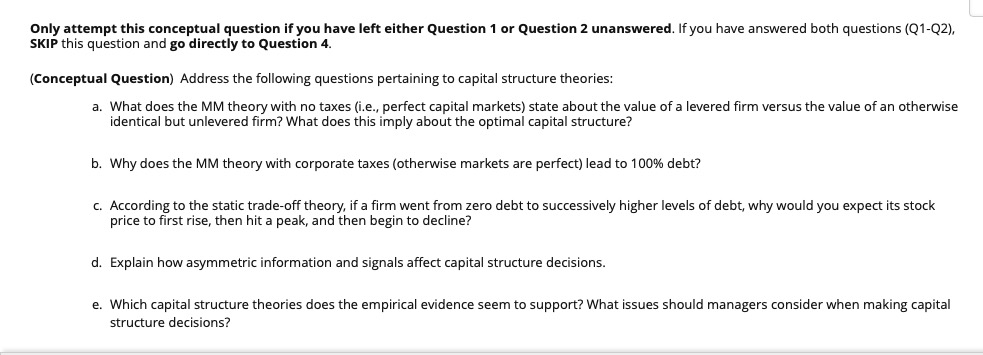
Only attempt this conceptual question if you have left either Question 1 or Question 2 unanswered. If you have answered both questions (Q1-Q2). SKIP this question and go directly to Question 4. (Conceptual Question) Address the following questions pertaining to capital structure theories: a. What does the MM theory with no taxes (i.e., perfect capital markets) state about the value of a levered firm versus the value of an otherwise identical but unlevered firm? What does this imply about the optimal capital structure? b. Why does the MM theory with corporate taxes (otherwise markets are perfect) lead to 100% debt? C. According to the static trade-off theory, if a firm went from zero debt to successively higher levels of debt, why would you expect its stock price to first rise, then hit a peak, and then begin to decline? d. Explain how asymmetric information and signals affect capital structure decisions. e. Which capital structure theories does the empirical evidence seem to support? What issues should managers consider when making capital structure decisions
Step by Step Solution
There are 3 Steps involved in it

Get step-by-step solutions from verified subject matter experts
 Study Help