Question: option 1: high consensus or low consensus option 2: high consistency or low consistency option 3: high distinctiveness low distinctiveness Suppose you, Bob, Cho, and
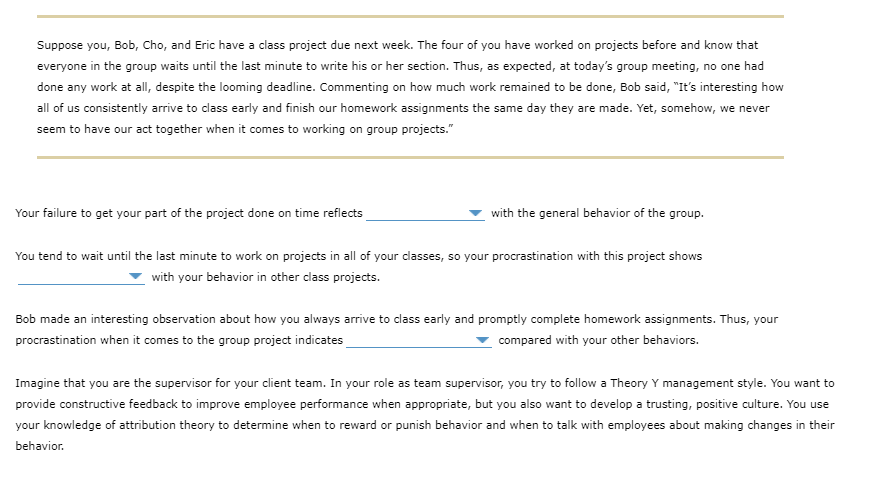 option 1: high consensus or low consensus
option 2: high consistency or low consistency
option 3: high distinctiveness low distinctiveness
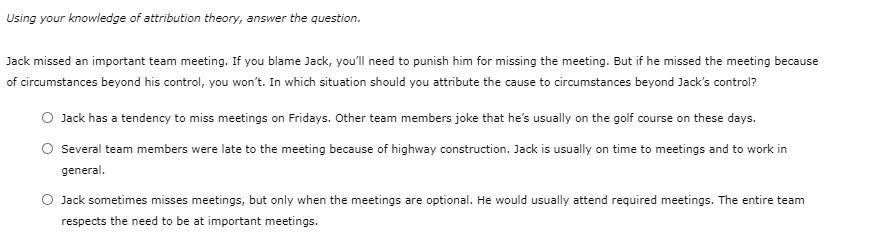
Suppose you, Bob, Cho, and Eric have a class project due next week. The four of you have worked on projects before and know that everyone in the group waits until the last minute to write his or her section. Thus, as expected, at today's group meeting, no one had done any work at all, despite the looming deadline. Commenting on how much work remained to be done, Bob said, "It's interesting how all of us consistently arrive to class early and finish our homework assignments the same day they are made. Yet, somehow, we never seem to have our act together when it comes to working on group projects." Your failure to get your part of the project done on time reflects with the general behavior of the group. You tend to wait until the last minute to work on projects in all of your classes, so your procrastination with this project shows with your behavior in other class projects. Bob made an interesting observation about how you always arrive to class early and promptly complete homework assignments. Thus, your procrastination when it comes to the group project indicates compared with your other behaviors. Imagine that you are the supervisor for your client team. In your role as team supervisor, you try to follow a Theory Y management style. You want to provide constructive feedback to improve employee performance when appropriate, but you also want to develop a trusting, positive culture. You use your knowledge of attribution theory to determine when to reward or punish behavior and when to talk with employees about making changes in their behavior. Using your knowledge of attribution theory, answer the question. Jack missed an important team meeting. If you blame Jack, you'll need to punish him for missing the meeting. But if he missed the meeting because of circumstances beyond his control, you won't. In which situation should you attribute the cause to circumstances beyond Jack's control? O Jack has a tendency to miss meetings on Fridays. Other team members joke that he's usually on the golf course on these days. Several team members were late to the meeting because of highway construction. Jack is usually on time to meetings and to work in general. Jack sometimes misses meetings, but only when the meetings are optional. He would usually attend required meetings. The entire team respects the need to be at important meetings









 Study Help