Question: Option 2: Hospital Database This database contains observations for six variables on U.S. hospitals. These variables include Geographic Region, Control, Service, Census, Number of Births,
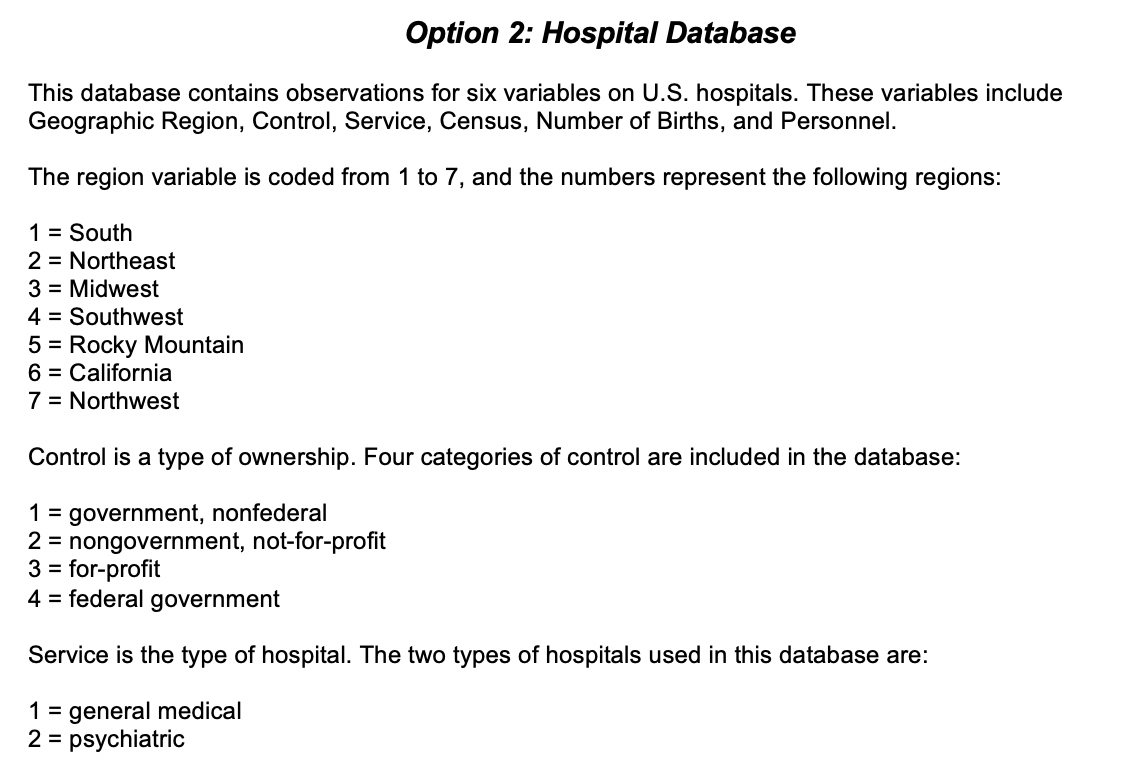
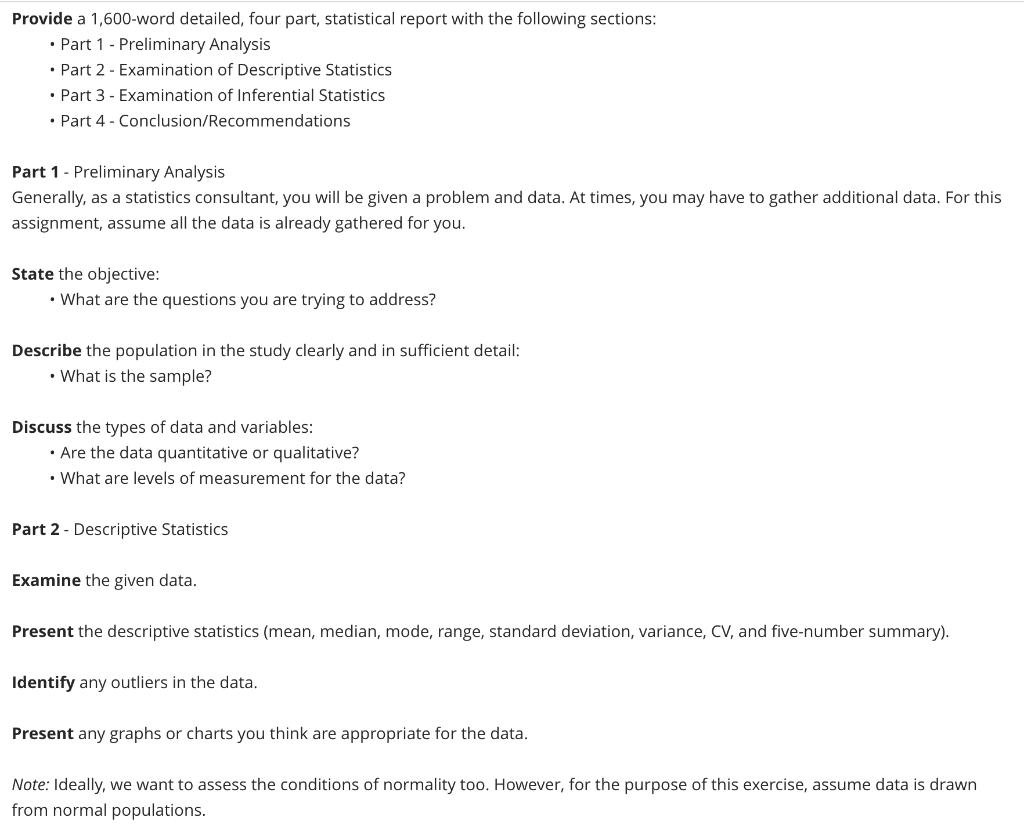
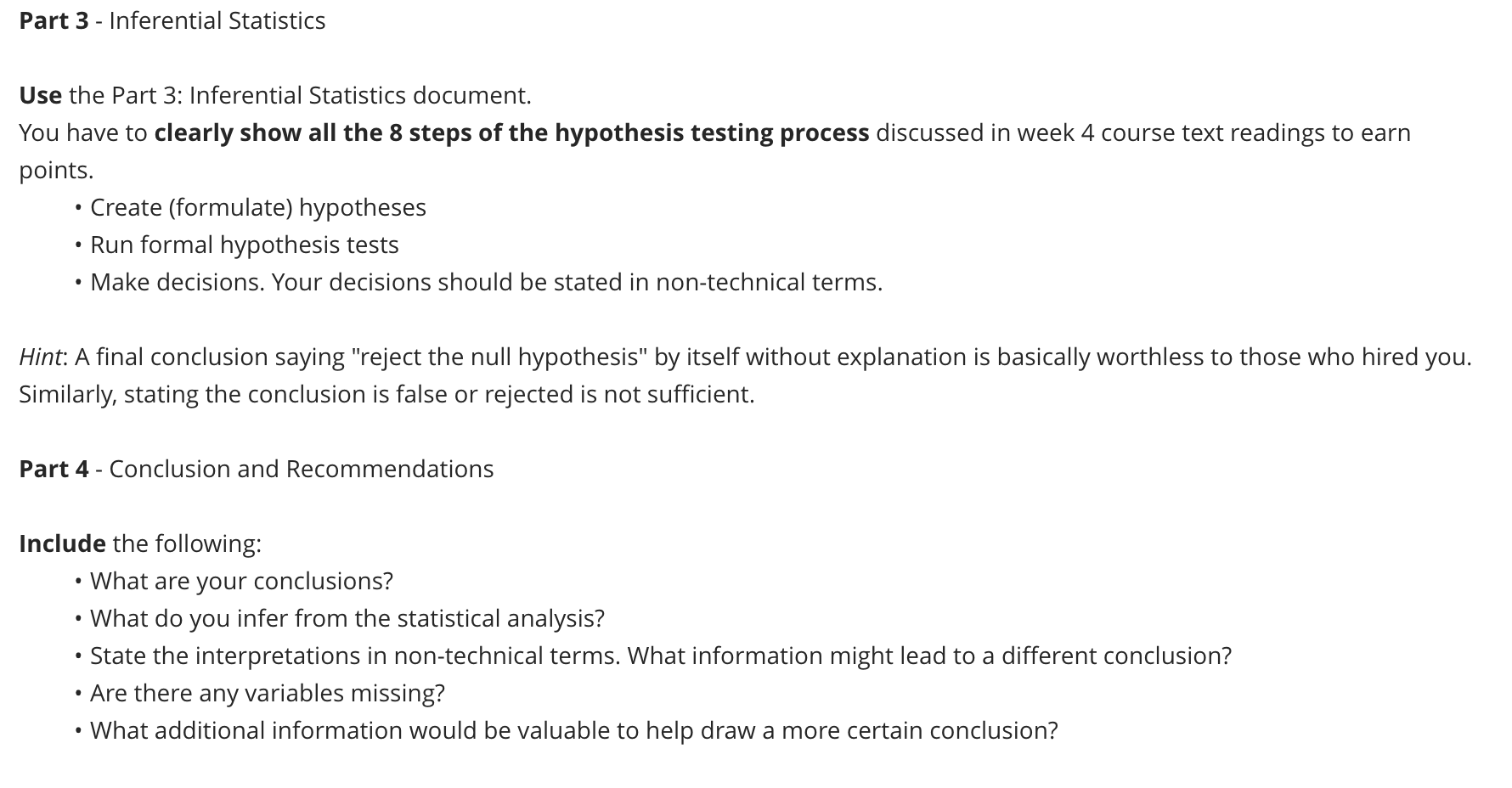
Option 2: Hospital Database This database contains observations for six variables on U.S. hospitals. These variables include Geographic Region, Control, Service, Census, Number of Births, and Personnel. The region variable is coded from 1 to 7, and the numbers represent the following regions: 1 = South 2 = Northeast 3 = Midwest 4 = Southwest 5 = Rocky Mountain 6 = California 7 = Northwest Control is a type of ownership. Four categories of control are included in the database: 1 = government, nonfederal 2 = nongovernment, not-for-profit 3 = for-profit 4 = federal government Service is the type of hospital. The two types of hospitals used in this database are: 1 = general medical 2 = psychiatric Provide a 1,600-word detailed, four part, statistical report with the following sections: Part 1 - Preliminary Analysis Part 2 - Examination of Descriptive Statistics Part 3 - Examination of Inferential Statistics Part 4 - Conclusion/Recommendations Part 1 - Preliminary Analysis Generally, as a statistics consultant, you will be given a problem and data. At times, you may have to gather additional data. For this assignment, assume all the data is already gathered for you. State the objective: What are the questions you are trying to address? Describe the population in the study clearly and in sufficient detail: What is the sample? Discuss the types of data and variables: Are the data quantitative or qualitative? What are levels of measurement for the data? Part 2 - Descriptive Statistics Examine the given data. Present the descriptive statistics (mean, median, mode, range, standard deviation, variance, CV, and five-number summary). Identify any outliers in the data. Present any graphs or charts you think are appropriate for the data. Note: Ideally, we want to assess the conditions of normality too. However, for the purpose of this exercise, assume data is drawn from normal populations. Part 3 - Inferential Statistics Use the Part 3: Inferential Statistics document. You have to clearly show all the 8 steps of the hypothesis testing process discussed in week 4 course text readings to earn points. Create (formulate) hypotheses Run formal hypothesis tests Make decisions. Your decisions should be stated in non-technical terms. Hint: A final conclusion saying "reject the null hypothesis" by itself without explanation is basically worthless to those who hired you. Similarly, stating the conclusion is false or rejected is not sufficient. Part 4 - Conclusion and Recommendations Include the following: What are your conclusions? What do you infer from the statistical analysis? State the interpretations in non-technical terms. What information might lead to a different conclusion? Are there any variables missing? What additional information would be valuable to help draw a more certain conclusion









 Study Help