







Question: our compay is Starbucks the slides please write within your heart im senior and need good mark thank you so much D3. STRATEGY FORMULATION (15%)
our compay is Starbucks 
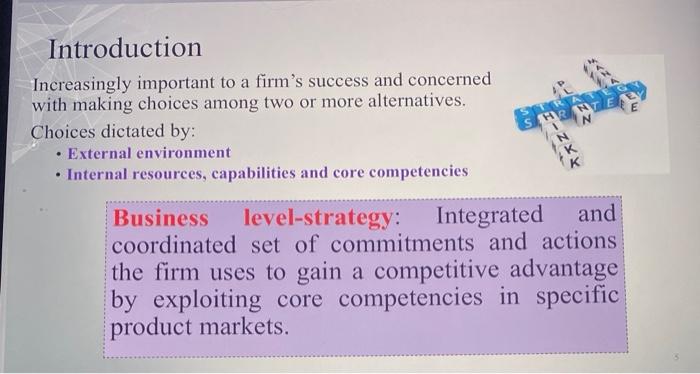
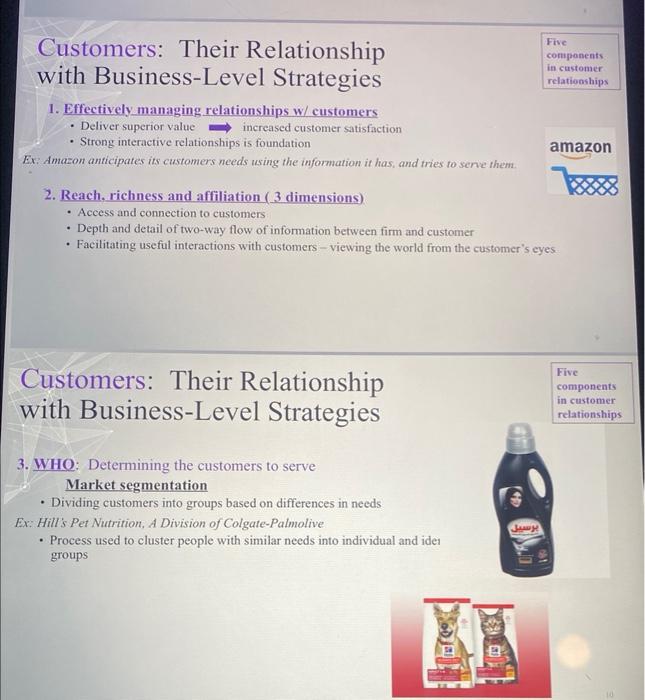
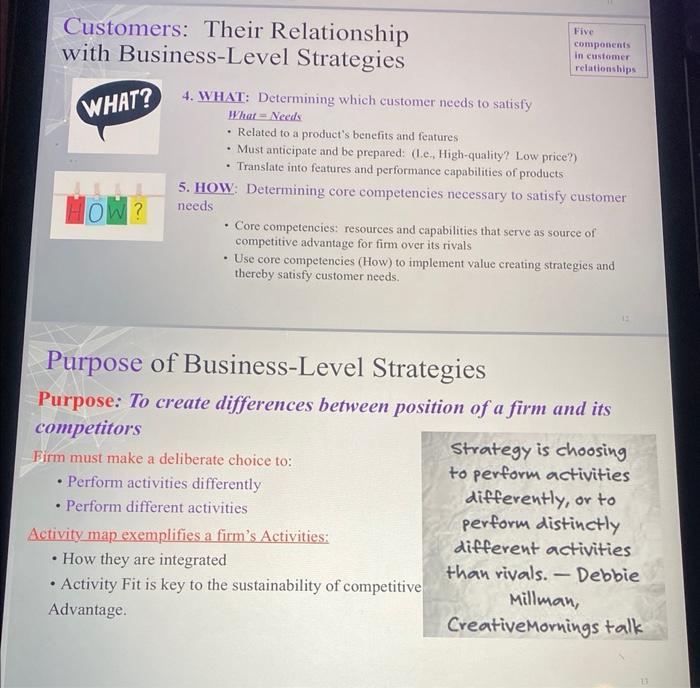
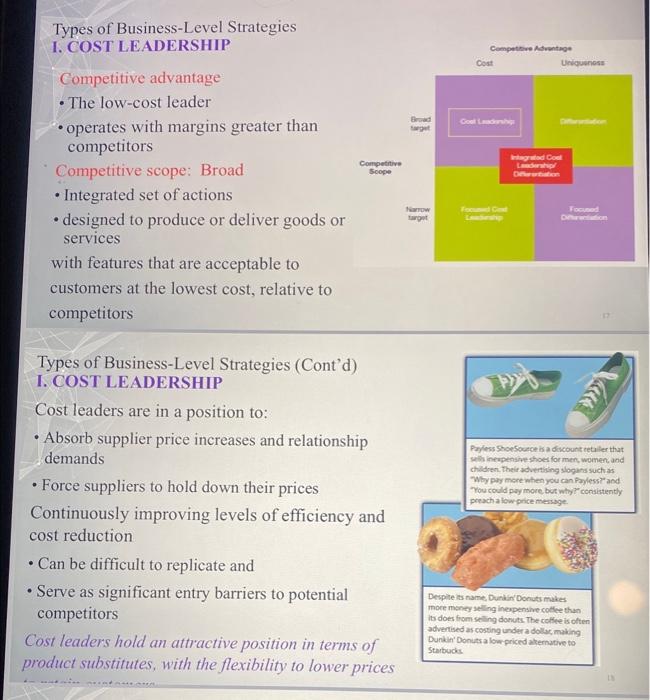
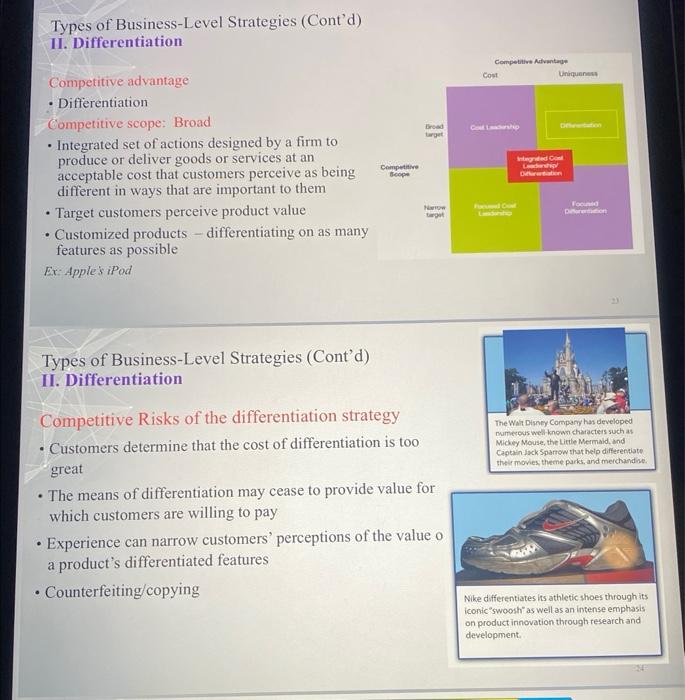
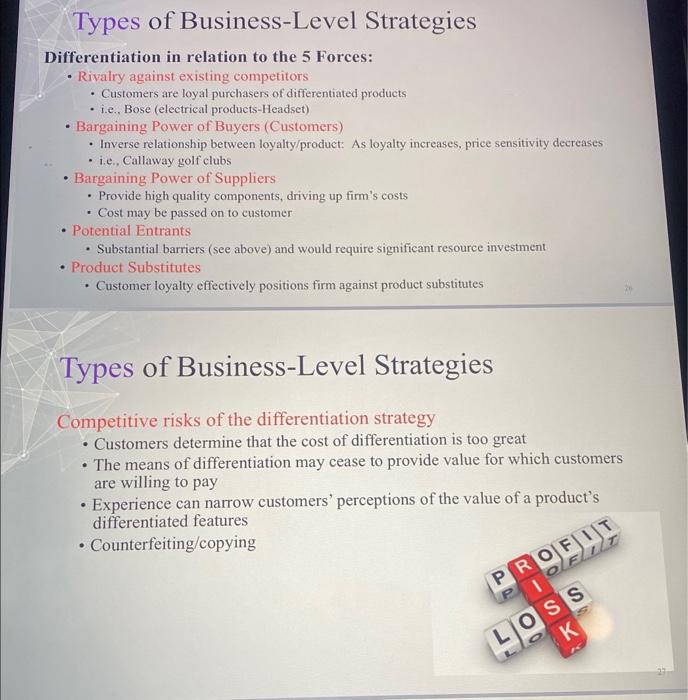
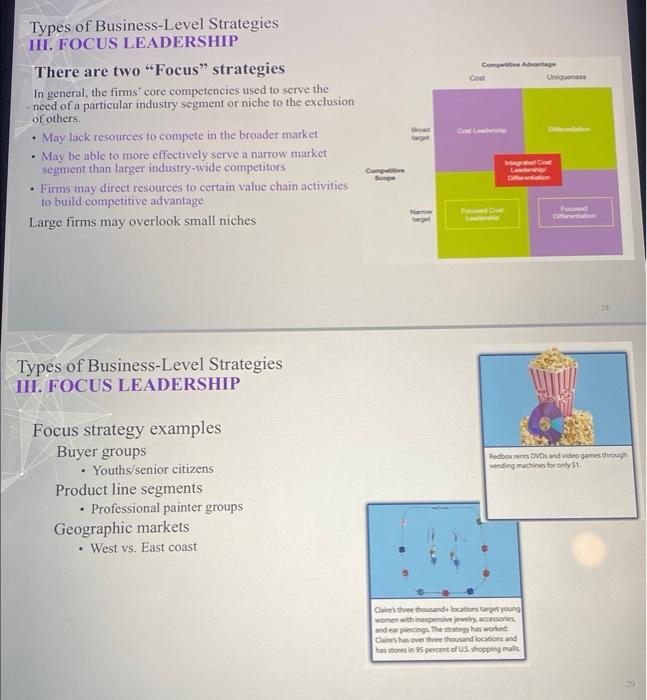
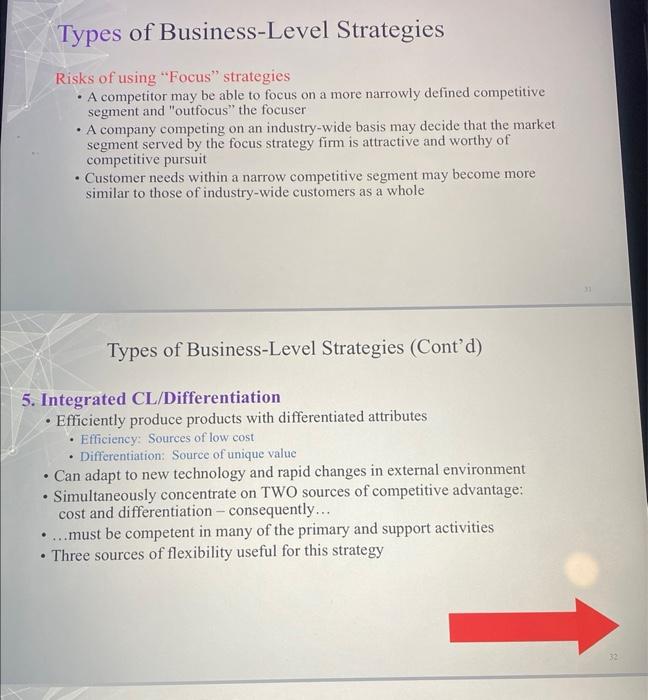
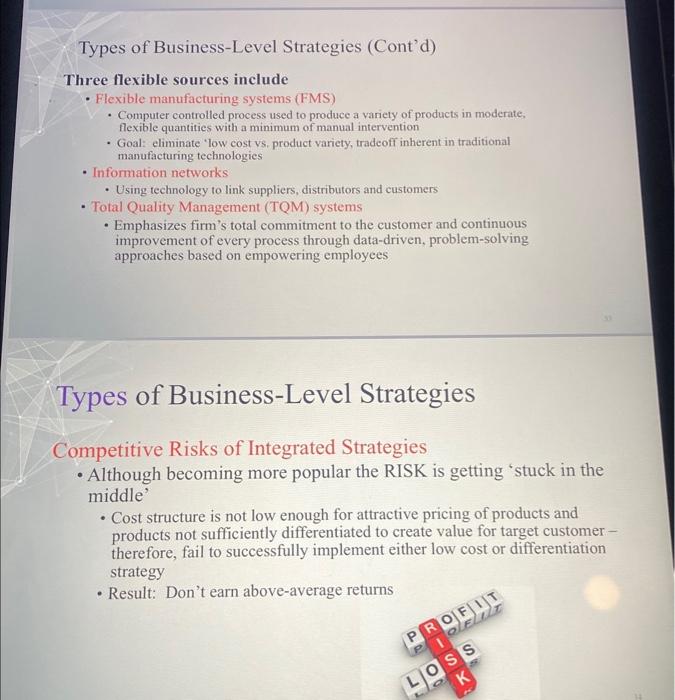
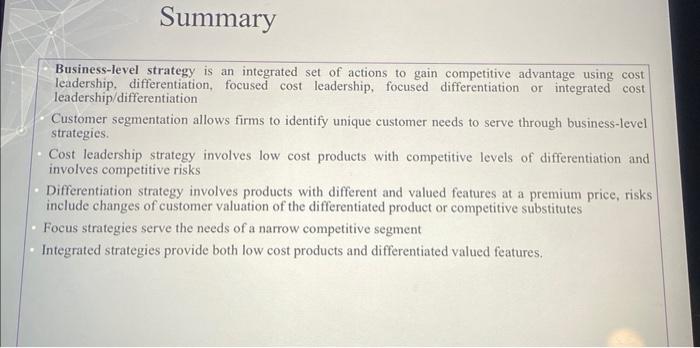
D3. STRATEGY FORMULATION (15\%) D3-1 Based on the previous analysis, determine the existing business-level strateqy that the company is applying. Your analysis should entail the framework explained in Chapter 4 - The Purpose of Business-Level Strategy and Types of Business-Level Strategies. Please provide specific arguments in this regard. Introduction Increasingly important to a firm's success and concerned with making choices among two or more alternatives. Choices dictated by: - External environment - Internal resources, capabilities and core competencies Business level-strategy: Integrated and coordinated set of commitments and actions the firm uses to gain a competitive advantage by exploiting core competencies in specific product markets. Customers: Their Relationship with Business-Level Strategies 1. Effectively managing relationships w/ customers - Deliver superior value increased customer satisfaction - Strong interactive relationships is foundation amazon Ex: Amazon anticipates its customers needs using the information it has, and tries to senve them. 2. Reach, richness and affiliation ( 3 dimensions) - Access and connection to customers - Depth and detail of two-way flow of information between firm and customer - Facilitating useful interactions with customers - viewing the world from the customer's eyes Customers: Their Relationship Five components with Business-Level Strategies in customer 3. WHQ: Determining the customers to serve Market segmentation - Dividing customers into groups based on differences in needs Ex: Hill's Pet Nutrition, A Division of Colgate-Palmolive - Process used to cluster people with similar needs into individual and ider groups Customers: Their Relationship with Business-Level Strategies Five components in cusfomer relationships 4. WHAT: Determining which customer needs to satisfy What = Needs - Related to a product's benefits and features - Must anticipate and be prepared: (L.e., High-quality? Low price?) - Translate into features and performance capabilities of products 5. HOW: Determining core competencies necessary to satisfy customer needs - Core competencies: resources and capabilities that serve as source of competitive advantage for firm over its rivals - Use core competencies (How) to implement value creating strategies and thereby satisfy customer needs. Types of Business-Level Strategies (Cont'd) I. COST LEADERSHIP Cost leaders are in a position to: - Absorb supplier price increases and relationship demands - Force suppliers to hold down their prices Continuously improving levels of efficiency and cost reduction - Can be difficult to replicate and - Serve as significant entry barriers to potential competitors Cost leaders hold an attractive position in terms of product substitutes, with the flexibility to lower prices Types of Business-Level Strategies (Cont'd) II. Differentiation Competitive Risks of the differentiation strategy - Customers determine that the cost of differentiation is too great - The means of differentiation may cease to provide value for which customers are willing to pay - Experience can narrow customers' perceptions of the value o a product's differentiated features - Counterfeiting/copying Types of Business-Level Strategies Differentiation in relation to the 5 Forces: - Rivalry against existing competitors - Customers are loyal purchasers of differentiated products - i.e., Bose (electrical products-Headset) - Bargaining Power of Buyers (Customers) - Inverse relationship between loyalty/product: As loyalty increases, price sensitivity decreases - i.e., Callaway golf clubs - Bargaining Power of Suppliers - Provide high quality components, driving up firm's costs - Cost may be passed on to customer - Potential Entrants - Substantial barriers (see above) and would require significant resource investment - Product Substitutes - Customer loyalty effectively positions firm against product substitutes Types of Business-Level Strategies Competitive risks of the differentiation strategy - Customers determine that the cost of differentiation is too great - The means of differentiation may cease to provide value for which customers are willing to pay - Experience can narrow customers' perceptions of the value of a product's differentiated features - Counterfeiting/copying Focus strategy examples Buyer groups - Youths/senior citizens Product line segments - Professional painter groups Geographic markets - West vs. East coast Types of Business-Level Strategies Risks of using "Focus" strategies - A competitor may be able to focus on a more narrowly defined competitive segment and "outfocus" the focuser - A company competing on an industry-wide basis may decide that the market segment served by the focus strategy firm is attractive and worthy of competitive pursuit - Customer needs within a narrow competitive segment may become more similar to those of industry-wide customers as a whole Types of Business-Level Strategies (Cont'd) 5. Integrated CL/Differentiation - Efficiently produce products with differentiated attributes - Efficiency: Sources of low cost - Differentiation: Source of unique valuc - Can adapt to new technology and rapid changes in external environment - Simultaneously concentrate on TWO sources of competitive advantage: cost and differentiation - consequently... -...must be competent in many of the primary and support activities - Three sources of flexibility useful for this strategy Types of Business-Level Strategies (Cont'd) Three flexible sources include - Flexible manufacturing systems (FMS) - Computer controlled process used to produce a variety of products in moderate, flexible quantities with a minimum of manual intervention - Goal: eliminate "low cost vs, product variety, tradeoff inherent in traditional manufacturing technologics - Information networks - Using technology to link suppliers, distributors and customers - Total Quality Management (TQM) systems - Emphasizes firm's total commitment to the customer and continuous improvement of every process through data-driven, problem-solving approaches based on empowering employees Types of Business-Level Strategies Competitive Risks of Integrated Strategies - Although becoming more popular the RISK is getting 'stuck in the middle' - Cost structure is not low enough for attractive pricing of products and products not sufficiently differentiated to create value for target customertherefore, fail to successfully implement either low cost or differentiation strategy - Result: Don't earn above-average ret-w. - Business-level strategy is an integrated set of actions to gain competitive advantage using cost leadership, differentiation, focused cost leadership, focused differentiation or integrated cost leadership/differentiation - Customer segmentation allows firms to identify unique customer needs to serve through business-level strategies. - Cost leadership strategy involves low cost products with competitive levels of differentiation and involves competitive risks - Differentiation strategy involves products with different and valued features at a premium price, risks include changes of customer valuation of the differentiated product or competitive substitutes Focus strategies serve the needs of a narrow competitive segment Integrated strategies provide both low cost products and differentiated valued features the slides
please write within your heart im senior and need good mark thank you so much
Step by Step Solution
There are 3 Steps involved in it
1 Expert Approved Answer
Step: 1 Unlock

Question Has Been Solved by an Expert!
Get step-by-step solutions from verified subject matter experts
Step: 2 Unlock
Step: 3 Unlock
 Study Help