Question: PART 1 COMPLETE: Operations and Supply Chain Management Current Supply Chain & Operations Process of Target Pick and Pack Methodology - Target has embraced a
PART 1 COMPLETE:
Operations and Supply Chain Management
Current Supply Chain & Operations Process of Target
- Pick and Pack Methodology - Target has embraced a pick-and-pack methodology for some products. Maybe than delivery full instances of a product, (for example, a case containing two dozen containers of pasta sauce), each store gets a sack from the dispersion place containing a "hodgepodge" of various things they've requested. This move has empowered the organization to lessen stock administration and work costs, alongside better use of room in stores.
- Store Fulfilment - To cut down on transportation costs, Target moved advanced satisfaction from dissemination focuses to stores. Clients can either get their request coming up or have a representative carry it to their vehicle. Target currently satisfies 80% of online orders from physical stores and has seen a 40% decrease in satisfaction costs accordingly. This is a significant change from the regular stockroom-based satisfaction model.
- Smaller backrooms - The reception of pick and pack implies that Target stores presently don't need as much private alcove area. They've effectively utilized that space, transforming reserved alcove area into extra room to redesign the client "experience factor." The new private cabin model has likewise permitted the organization to open more modest configuration stores.
- Own brand - Target has grown in excess of twelve lines of store brands (also called Target marks or claimed brands) going from clothing to nibble food and furniture. Claimed brands empower higher edges and better authority over supportability in the store network.
B. Current Issues
- Target was blamed for utilizing employing tests that were viewed as unfair dependent on race and sexual orientation. Thus, in 2015, the retailer consented to a $2.8 million settlement with the Equal Employment Opportunity Commission. A couple of years earlier, Target was hit with a legal claim that supposed age separation. A few specialists blamed Target for constraining out more established laborers.
- The individuals who work in Target's retail locations don't appear to be excessively cheerful. Furthermore, as you likely definitely know, glad representatives make a cheerful organization. Everything necessary are a couple of displeased specialists to make your work a lovely hopeless work environment. A title for one Glassdoor survey composed by a worker was "slave work." And one more mysterious representative basically stated "Target sucks." That essentially says everything, in the event that you ask us.
- You can't discover all that you need or need at Target. This is particularly evident with regards to the staple area. Indeed, even Target's head working official said the basic food item choice was deficient with regards to, Money magazine detailed. Most store delegates are paid to commend an organization, so this is exceptionally telling. Numerous clients aren't completely happy with Target's contributions, as can be seen by the 2.2% dunk in the store's people strolling through. (Comparable stores just had a 1.1% plunge.
3.Strategy and Sustainability
- A - Using some (not all) competitive dimensions, detail the link to the supply chain.
- Competing Cost - Cost Importance cutthroat need incorporates production costs, work productivity, limit usage, lessening stock, cost and productivity. Assuming the organization's business methodology is to contend on cost, the production network system should be intended to help this. Organizations that contend on cost offer products at the most reduced conceivable cost. These organizations are either keeping up with piece of the pie in a product market, or they are offering low costs to draw in clients. When an organization's business not set in stone that the organization will contend on cost, the other capacity techniques including store network ought to be intended to help this.
- Competing on Time - Delivery Time Importance competitive need incorporates short delivery time, delivery on due date, decreased production lead time, on-time delivery, and production process duration. Adaptability Importance competitive need incorporates huge number of product highlights or alternatives, new products into production rapidly, quick limit change, and configuration changes in production. time is perhaps the main way organizations contend today. Organizations in all enterprises are contending to convey top notch product with the briefest measure of time as could be expected. Clients today are progressively requesting short lead times and are not ready to sit tight for products and administrations. Organizations that can address the issues of the clients who need quick help are turning into the innovators in their individual enterprises.
Competing on Quality - competitive need incorporates high product execution, high product toughness, high product unwavering quality, straightforwardness to support product, quickness in tackling client grumblings, and conformance to plan specs. Contending on quality implies that the organization's products and administrations are known for their top notch nature. In store network the executives a significant trait of contending is on quality's product discernibility. This implies that the store network can undoubtedly follow a product from beginning stage to the end point which is the client/customer and back down the store
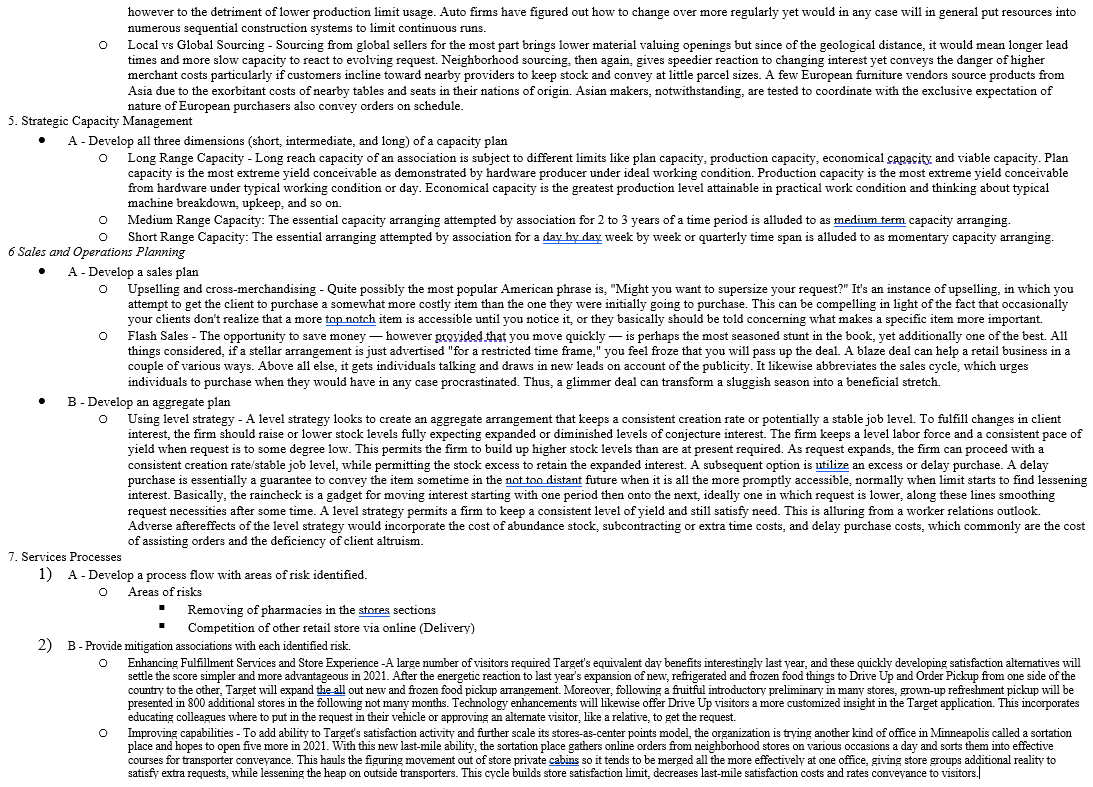
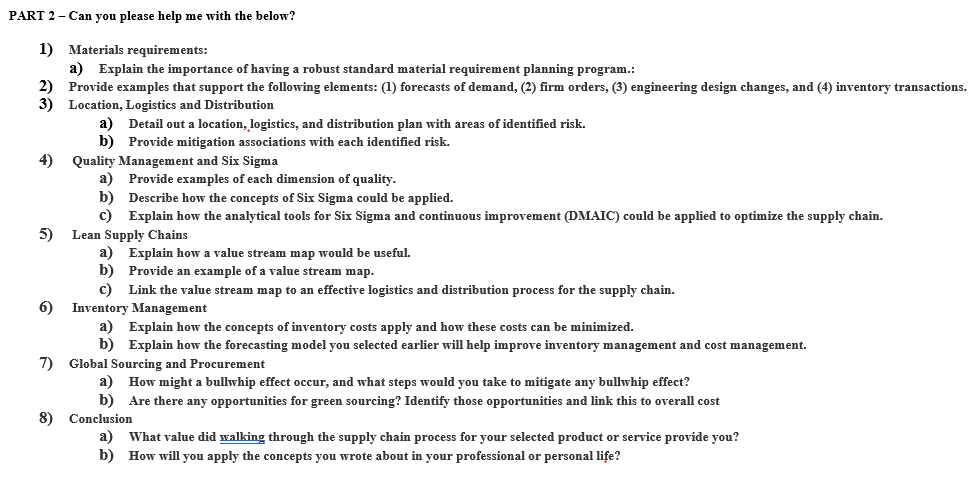
however to the detriment of lower production limit usage. Auto firms have figured out how to change over more regularly yet would in any case will in general put resources into numerous sequential construction systems to limit continuous runs. Local vs Global Sourcing - Sourcing from global sellers for the most part brings lower material valuing openings but since of the geological distance, it would mean longer lead times and more slow capacity to react to evolving request. Neighborhood sourcing, then again, gives speedier reaction to changing interest yet conveys the danger of higher merchant costs particularly if customers incline toward nearby providers to keep stock and convey at little parcel sizes. A few European furniture vendors source products from Asia due to the exorbitant costs of nearby tables and seats in their nations of origin. Asian makers, notwithstanding, are tested to coordinate with the exclusive expectation of nature of European purchasers also convey orders on schedule. 5. Strategic Capacity Management A - Develop all three dimensions (short, intermediate, and long) of a capacity plan Long Range Capacity - Long reach capacity of an association is subject to different limits like plan capacity, production capacity, economical capacity and viable capacity. Plan capacity is the most extreme yield conceivable as demonstrated by hardware producer under ideal working condition. Production capacity is the most extreme yield conceivable from hardware under typical working condition or day. Economical capacity is the greatest production level attainable in practical work condition and thinking about typical machine breakdown, upkeep, and so on. o Medium Range Capacity: The essential capacity arranging attempted by association for 2 to 3 years of a time period is alluded to as medium term capacity arranging. Short Range Capacity: The essential arranging attempted by association for a day by day week by week or quarterly time span is alluded to as momentary capacity arranging. 6 Sales and Operations Planning A - Develop a sales plan O Upselling and cross-merchandising - Quite possibly the most popular American phrase is, "Might you want to supersize your request?" It's an instance of upselling, in which you attempt to get the client to purchase a somewhat more costly item than the they were initially going to purchase. This can be compelling in light of the fact that occasionally your clients don't realize that a more top notch item is accessible until you notice it, or they basically should be told concerning what makes a specific item more important. Flash Sales - The opportunity to save money, however provided that you move quickly is perhaps the most seasoned stunt in the book, yet additionally one of the best. All things considered, if a stellar arrangement is just advertised "for a restricted time frame," you feel froze that you will pass up the deal. A blaze deal can help a retail business in a couple of various ways. Above all else, it gets individuals talking and draws in new leads on account of the publicity. It likewise abbreviates the sales cycle, which urges individuals to purchase when they would have in any case procrastinated. Thus, a glimmer deal can transform a sluggish season into a beneficial stretch. B - Develop an aggregate plan Using level strategy - A level strategy looks to create an aggregate arrangement that keeps a consistent creation rate or potentially a stable job level. To fulfill changes in client interest, the firm should raise or lower stock levels fully expecting expanded or diminished levels of conjecture interest. The firm keeps a level labor force and a consistent pace of yield when request is to some degree low. This permits the firm build up higher stock levels than are at present required. request expands, the firm can proceed with consistent creation rate/stable job level, while permitting the stock excess to retain the expanded interest. A subsequent option is utilize an excess or delay purchase. A delay purchase is essentially a guarantee convey the item sometime in the not too distant future when it is all the more promptly accessible, normally when limit starts to find lessening interest. Basically, the raincheck is a gadget for moving interest starting with one period then onto the next, ideally one in which request is lower, along these lines smoothing request necessities after some time. A level strategy permits a firm to keep a consistent level of yield and still satisfy need. This is alluring from a worker relations outlook. Adverse aftereffects of the level strategy would incorporate the cost of abundance stock, subcontracting or extra time costs, and delay purchase costs, which commonly are the cost of assisting orders and the deficiency of client altruism. 7. Services Processes 1) A - Develop a process flow with areas of risk identified. 0 Areas of risks Removing of pharmacies in the stores sections Competition of other retail store via online (Delivery) 2) B- Provide mitigation associations with each identified risk. Enhancing Fulfillment Services and Store Experience -A large number of visitors required Target's equivalent day benefits interestingly last year, and these quickly developing satisfaction altematives will settle the score simpler and more advantageous in 2021. After the energetic reaction to last year's expansion of new, refrigerated and frozen food things to Drive Up and Order Pickup from one side of the country to the other, Target will expand the all out new and frozen food pickup arrangement. Moreover, following a fruitful introductory preliminary in many stores, grown-up refreshment pickup will be presented in 800 additional stores in the following not many months. Technology enhancements will likewise offer Drive Up visitors a more customized insight in the Target application. This incorporates educating colleagues where to put in the request in their vehicle or approving an alterate visitor, like a relative to get the request. o Improving capabilities - To add ability to Target's satisfaction activity and further scale its stores-as-center points model, the organization is trying another kind of office in Minneapolis called a sortation place and hopes to open five more in 2021. With this new last-mile ability, the sortation place gathers online orders from neighborhood stores on various occasions a day and sorts them into effective courses for transporter conveyance. This hauls the figuring movement out of store private cabins so it tends to be merged all the more effectively at one office, giving store groups additional reality to satisfy extra requests, while lessening the heap on outside transporters. This cycle builds store satisfaction limit, decreases last-mile satisfaction costs and rates conveyance to visitors./ . O PART 2 - Can you please help me with the below? 1) Materials requirements: a) Explain the importance of having a robust standard material requirement planning program.: 2) Provide examples that support the following elements: (1) forecasts of demand, (2) firm orders, (3) engineering design changes, and (4) inventory transactions. 3) Location, Logistics and Distribution a) Detail out a location, logistics, and distribution plan with areas of identified risk. b) Provide mitigation associations with each identified risk. 4) Quality Management and Six Sigma a) Provide examples of each dimension of quality. b) Describe how the concepts of Six Sigma could be applied. c) Explain how the analytical tools for Six Sigma and continuous improvement (DMAIC) could be applied to optimize the supply chain. 5) Lean Supply Chains a) Explain how a value stream map would be useful. b) Provide an example of a value stream map. c) Link the value stream map to an effective logistics and distribution process for the supply chain. 6) Inventory Management a) Explain how the concepts of inventory costs apply and how these costs can be minimized. b) Explain how the forecasting model you selected earlier will help improve inventory management and cost management. 7) Global Sourcing and Procurement a) How might a bullwhip effect occur, and what steps would you take to mitigate any bullwhip effect? b) Are there any opportunities for green sourcing? Identify those opportunities and link this to overall cost 8) Conclusion a) What value did walking through the supply chain process for your selected product or service provide you? b) How will you apply the concepts you wrote about in your professional or personal life? however to the detriment of lower production limit usage. Auto firms have figured out how to change over more regularly yet would in any case will in general put resources into numerous sequential construction systems to limit continuous runs. Local vs Global Sourcing - Sourcing from global sellers for the most part brings lower material valuing openings but since of the geological distance, it would mean longer lead times and more slow capacity to react to evolving request. Neighborhood sourcing, then again, gives speedier reaction to changing interest yet conveys the danger of higher merchant costs particularly if customers incline toward nearby providers to keep stock and convey at little parcel sizes. A few European furniture vendors source products from Asia due to the exorbitant costs of nearby tables and seats in their nations of origin. Asian makers, notwithstanding, are tested to coordinate with the exclusive expectation of nature of European purchasers also convey orders on schedule. 5. Strategic Capacity Management A - Develop all three dimensions (short, intermediate, and long) of a capacity plan Long Range Capacity - Long reach capacity of an association is subject to different limits like plan capacity, production capacity, economical capacity and viable capacity. Plan capacity is the most extreme yield conceivable as demonstrated by hardware producer under ideal working condition. Production capacity is the most extreme yield conceivable from hardware under typical working condition or day. Economical capacity is the greatest production level attainable in practical work condition and thinking about typical machine breakdown, upkeep, and so on. o Medium Range Capacity: The essential capacity arranging attempted by association for 2 to 3 years of a time period is alluded to as medium term capacity arranging. Short Range Capacity: The essential arranging attempted by association for a day by day week by week or quarterly time span is alluded to as momentary capacity arranging. 6 Sales and Operations Planning A - Develop a sales plan O Upselling and cross-merchandising - Quite possibly the most popular American phrase is, "Might you want to supersize your request?" It's an instance of upselling, in which you attempt to get the client to purchase a somewhat more costly item than the they were initially going to purchase. This can be compelling in light of the fact that occasionally your clients don't realize that a more top notch item is accessible until you notice it, or they basically should be told concerning what makes a specific item more important. Flash Sales - The opportunity to save money, however provided that you move quickly is perhaps the most seasoned stunt in the book, yet additionally one of the best. All things considered, if a stellar arrangement is just advertised "for a restricted time frame," you feel froze that you will pass up the deal. A blaze deal can help a retail business in a couple of various ways. Above all else, it gets individuals talking and draws in new leads on account of the publicity. It likewise abbreviates the sales cycle, which urges individuals to purchase when they would have in any case procrastinated. Thus, a glimmer deal can transform a sluggish season into a beneficial stretch. B - Develop an aggregate plan Using level strategy - A level strategy looks to create an aggregate arrangement that keeps a consistent creation rate or potentially a stable job level. To fulfill changes in client interest, the firm should raise or lower stock levels fully expecting expanded or diminished levels of conjecture interest. The firm keeps a level labor force and a consistent pace of yield when request is to some degree low. This permits the firm build up higher stock levels than are at present required. request expands, the firm can proceed with consistent creation rate/stable job level, while permitting the stock excess to retain the expanded interest. A subsequent option is utilize an excess or delay purchase. A delay purchase is essentially a guarantee convey the item sometime in the not too distant future when it is all the more promptly accessible, normally when limit starts to find lessening interest. Basically, the raincheck is a gadget for moving interest starting with one period then onto the next, ideally one in which request is lower, along these lines smoothing request necessities after some time. A level strategy permits a firm to keep a consistent level of yield and still satisfy need. This is alluring from a worker relations outlook. Adverse aftereffects of the level strategy would incorporate the cost of abundance stock, subcontracting or extra time costs, and delay purchase costs, which commonly are the cost of assisting orders and the deficiency of client altruism. 7. Services Processes 1) A - Develop a process flow with areas of risk identified. 0 Areas of risks Removing of pharmacies in the stores sections Competition of other retail store via online (Delivery) 2) B- Provide mitigation associations with each identified risk. Enhancing Fulfillment Services and Store Experience -A large number of visitors required Target's equivalent day benefits interestingly last year, and these quickly developing satisfaction altematives will settle the score simpler and more advantageous in 2021. After the energetic reaction to last year's expansion of new, refrigerated and frozen food things to Drive Up and Order Pickup from one side of the country to the other, Target will expand the all out new and frozen food pickup arrangement. Moreover, following a fruitful introductory preliminary in many stores, grown-up refreshment pickup will be presented in 800 additional stores in the following not many months. Technology enhancements will likewise offer Drive Up visitors a more customized insight in the Target application. This incorporates educating colleagues where to put in the request in their vehicle or approving an alterate visitor, like a relative to get the request. o Improving capabilities - To add ability to Target's satisfaction activity and further scale its stores-as-center points model, the organization is trying another kind of office in Minneapolis called a sortation place and hopes to open five more in 2021. With this new last-mile ability, the sortation place gathers online orders from neighborhood stores on various occasions a day and sorts them into effective courses for transporter conveyance. This hauls the figuring movement out of store private cabins so it tends to be merged all the more effectively at one office, giving store groups additional reality to satisfy extra requests, while lessening the heap on outside transporters. This cycle builds store satisfaction limit, decreases last-mile satisfaction costs and rates conveyance to visitors./ . O PART 2 - Can you please help me with the below? 1) Materials requirements: a) Explain the importance of having a robust standard material requirement planning program.: 2) Provide examples that support the following elements: (1) forecasts of demand, (2) firm orders, (3) engineering design changes, and (4) inventory transactions. 3) Location, Logistics and Distribution a) Detail out a location, logistics, and distribution plan with areas of identified risk. b) Provide mitigation associations with each identified risk. 4) Quality Management and Six Sigma a) Provide examples of each dimension of quality. b) Describe how the concepts of Six Sigma could be applied. c) Explain how the analytical tools for Six Sigma and continuous improvement (DMAIC) could be applied to optimize the supply chain. 5) Lean Supply Chains a) Explain how a value stream map would be useful. b) Provide an example of a value stream map. c) Link the value stream map to an effective logistics and distribution process for the supply chain. 6) Inventory Management a) Explain how the concepts of inventory costs apply and how these costs can be minimized. b) Explain how the forecasting model you selected earlier will help improve inventory management and cost management. 7) Global Sourcing and Procurement a) How might a bullwhip effect occur, and what steps would you take to mitigate any bullwhip effect? b) Are there any opportunities for green sourcing? Identify those opportunities and link this to overall cost 8) Conclusion a) What value did walking through the supply chain process for your selected product or service provide you? b) How will you apply the concepts you wrote about in your professional or personal life




