







Question: Part 2: Problems (38 marks) Problem 1 (7 marks) Consider a country that experiences a positive, one-time shock to its output. Assume that output
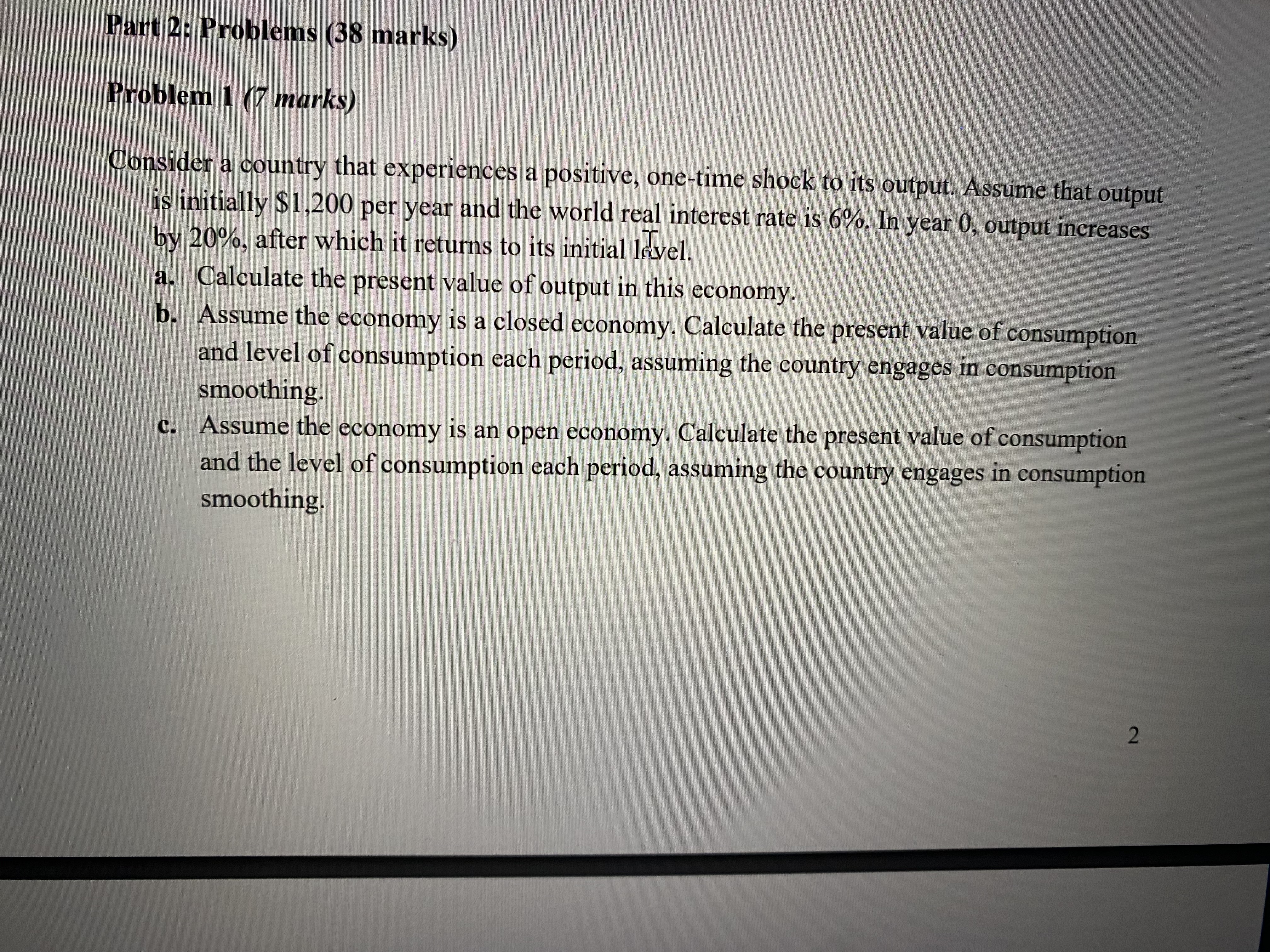
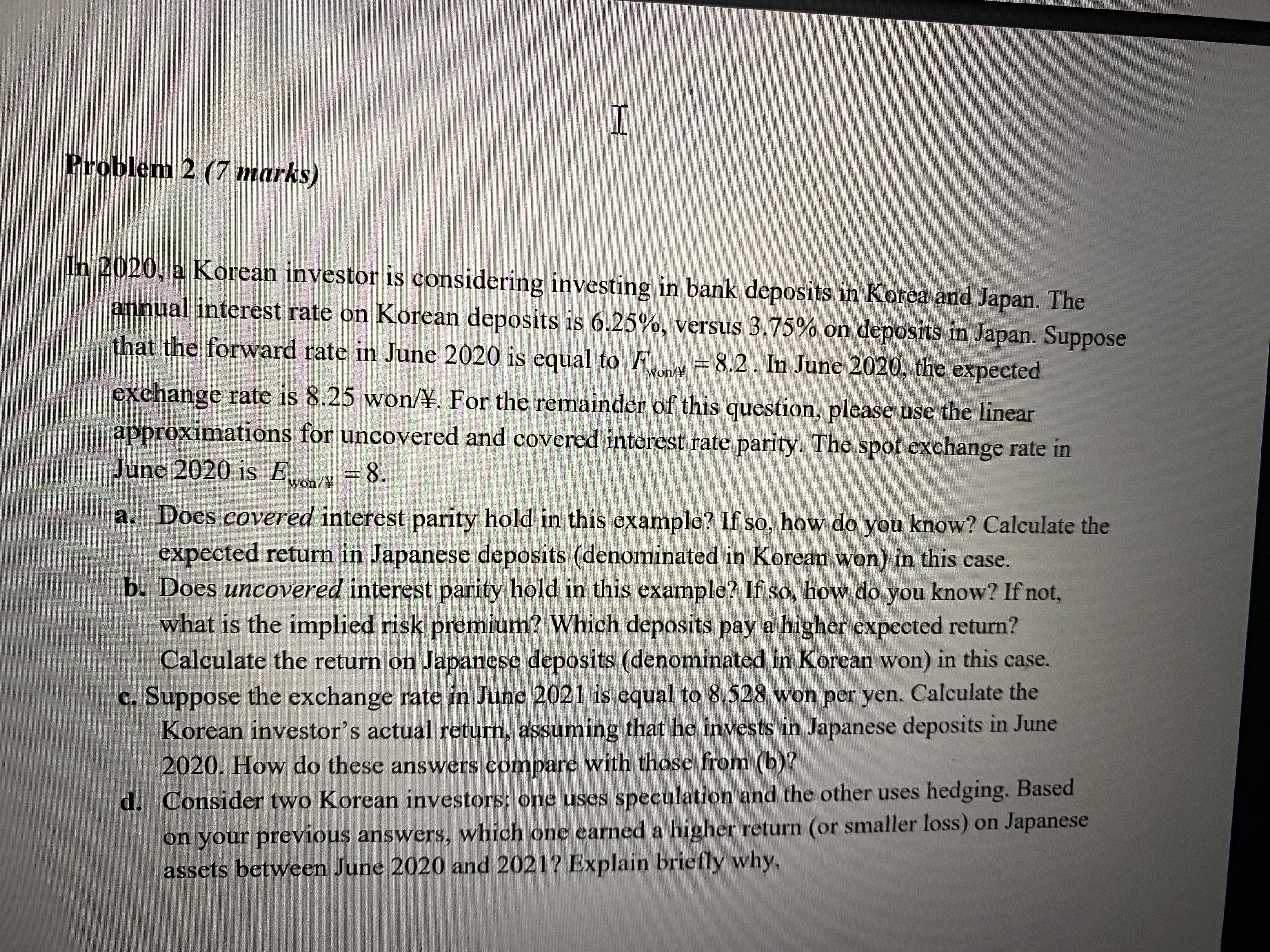
Part 2: Problems (38 marks) Problem 1 (7 marks) Consider a country that experiences a positive, one-time shock to its output. Assume that output is initially $1,200 per year and the world real interest rate is 6%. In year 0, output increases by 20%, after which it returns to its initial level. a. Calculate the present value of output in this economy. b. Assume the economy is a closed economy. Calculate the present value of consumption and level of consumption each period, assuming the country engages in consumption smoothing. c. Assume the economy is an open economy. Calculate the present value of consumption and the level of consumption each period, assuming the country engages in consumption smoothing. 2 I Problem 2 (7 marks) In 2020, a Korean investor is considering investing in bank deposits in Korea and Japan. The annual interest rate on Korean deposits is 6.25%, versus 3.75% on deposits in Japan. Suppose that the forward rate in June 2020 is equal to F=8.2. In June 2020, the expected exchange rate is 8.25 won/\. For the remainder of this question, please use the linear approximations for uncovered and covered interest rate parity. The spot exchange rate in June 2020 is Ewon/* = 8. a. Does covered interest parity hold in this example? If so, how do you know? Calculate the expected return in Japanese deposits (denominated in Korean won) in this case. b. Does uncovered interest parity hold in this example? If so, how do you know? If not, what is the implied risk premium? Which deposits pay a higher expected return? Calculate the return on Japanese deposits (denominated in Korean won) in this case. c. Suppose the exchange rate in June 2021 is equal to 8.528 won per yen. Calculate the Korean investor's actual return, assuming that he invests in Japanese deposits in June 2020. How do these answers compare with those from (b)? d. Consider two Korean investors: one uses speculation and the other uses hedging. Based on your previous answers, which one earned a higher return (or smaller loss) on Japanese assets between June 2020 and 2021? Explain briefly why.
Step by Step Solution
There are 3 Steps involved in it

Get step-by-step solutions from verified subject matter experts
 Study Help