







Question: Part 2 : Selection Strategy Now that you have created a system to assess applicants on the six key factors, you must decide how to
Part : Selection Strategy
Now that you have created a system to assess applicants on the six key factors, you must decide how to process this information. Employee selection systems have multiple assessments, and organizations must decide how to integrate them.
One assessment strategy is compensatory and allows an applicant's strengths to compensate for weaknesses in another area. For example, a recent college graduate may score highly in the educational requirements for a job opening but score low in terms of work experience. A compensatory strategy will help the recent graduate's limited work experience be "compensated" by his or her high level of education.
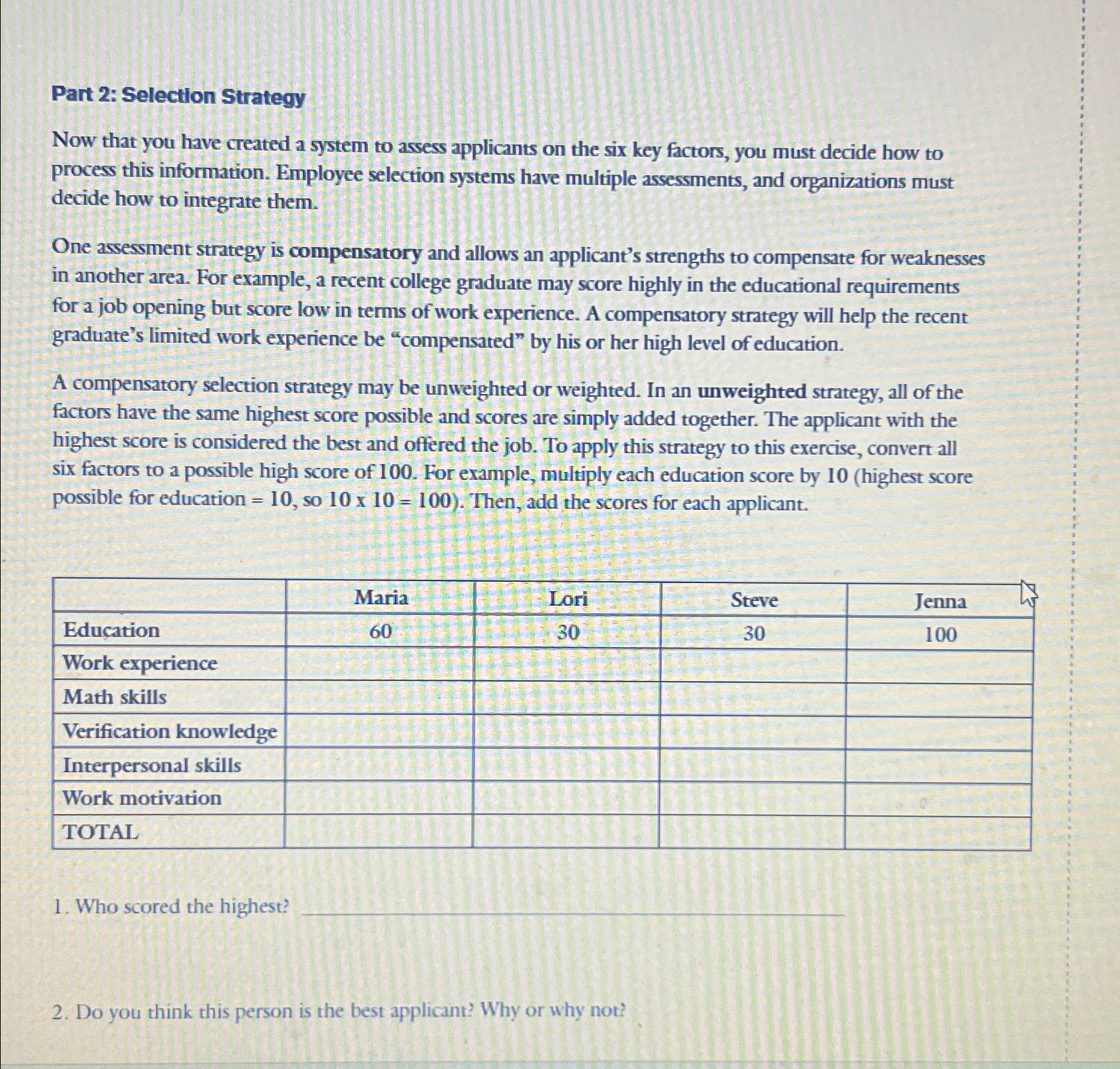
A compensatory selection strategy may be unweighted or weighted. In an unweighted strategy, all of the factors have the same highest score possible and scores are simply added together. The applicant with the highest score is considered the best and offered the job. To apply this strategy to this exercise, convert all six factors to a possible high score of For example, multiply each education score by highest score possible for education so Then, add the scores for each applicant.
tableMaria,Lori,Steve,JennaEducationWork experience,,,,Math skills,,,,Verification knowledge,,,,Interpersonal skills,,,,Work motivation,,,,TOTAL
Who scored the highest?
Do you think this person is the best applicant? Why or why not?
Step by Step Solution
There are 3 Steps involved in it
1 Expert Approved Answer
Step: 1 Unlock

Question Has Been Solved by an Expert!
Get step-by-step solutions from verified subject matter experts
Step: 2 Unlock
Step: 3 Unlock
 Study Help