







Question: Part A) A pointer variable cannot point to other pointer variables. Circle on answer True False A pointer can be used to access elements of
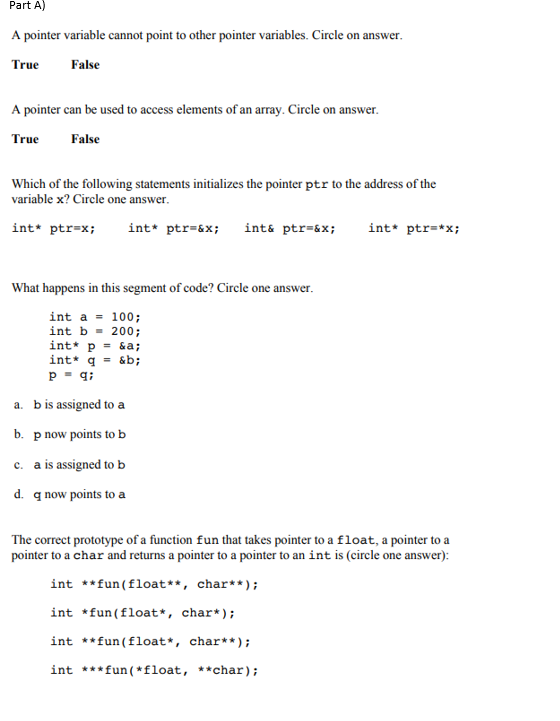
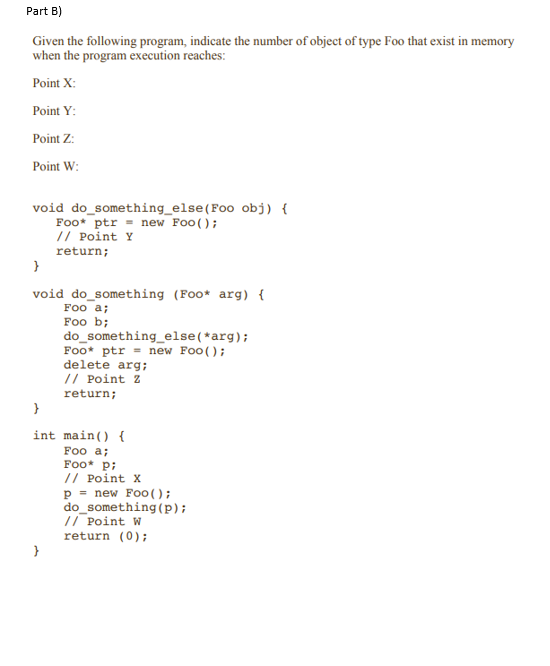
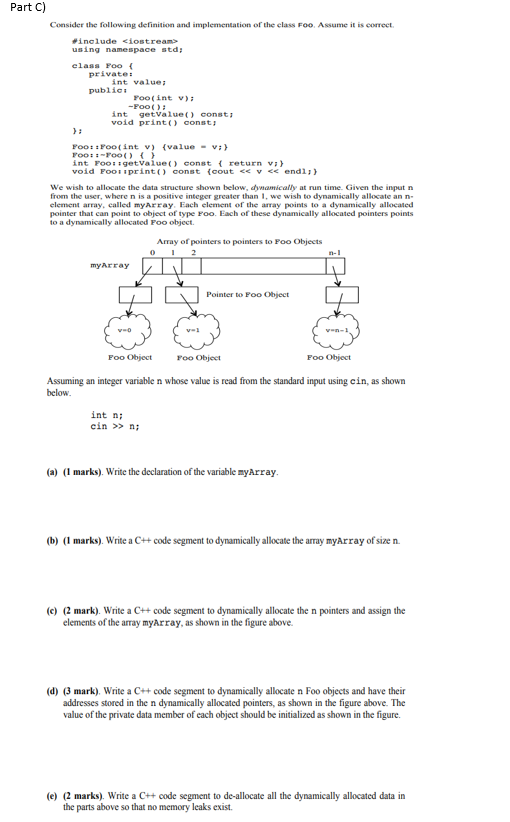
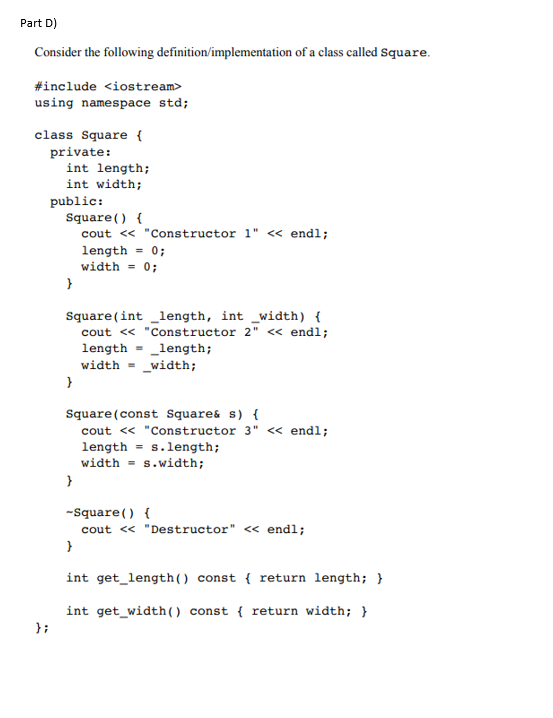
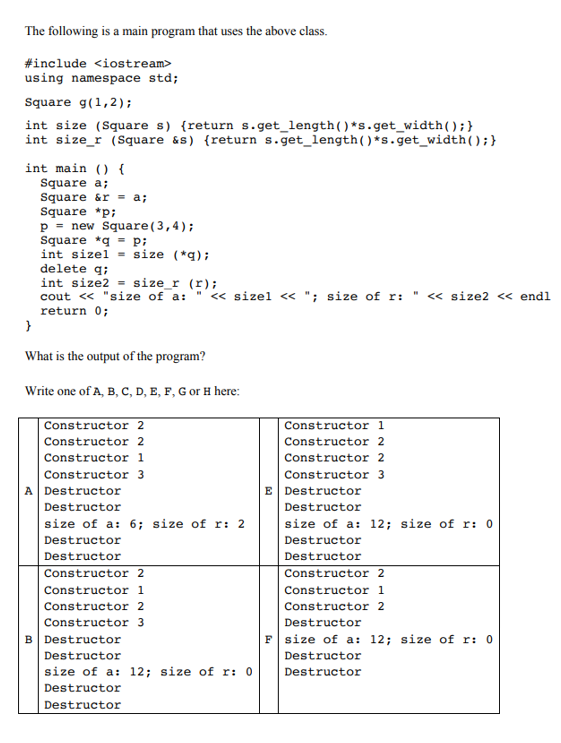
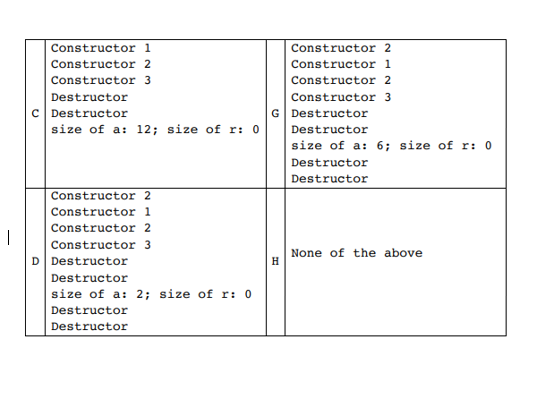
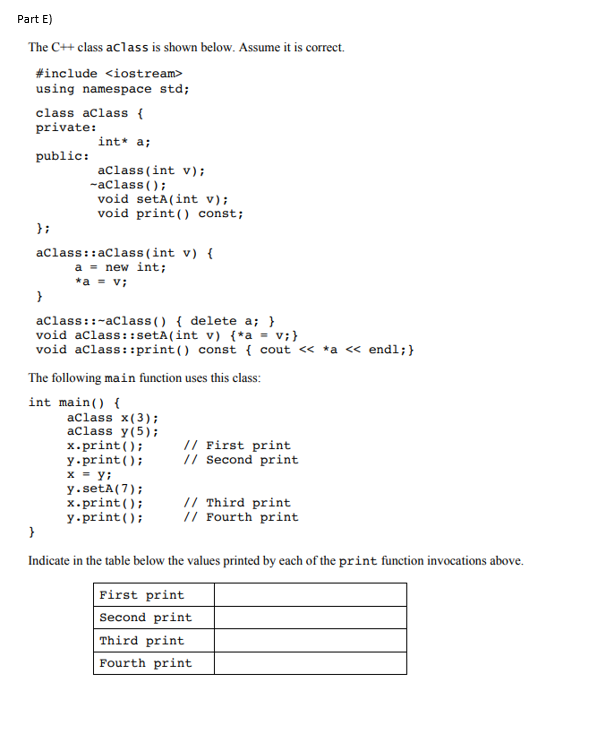
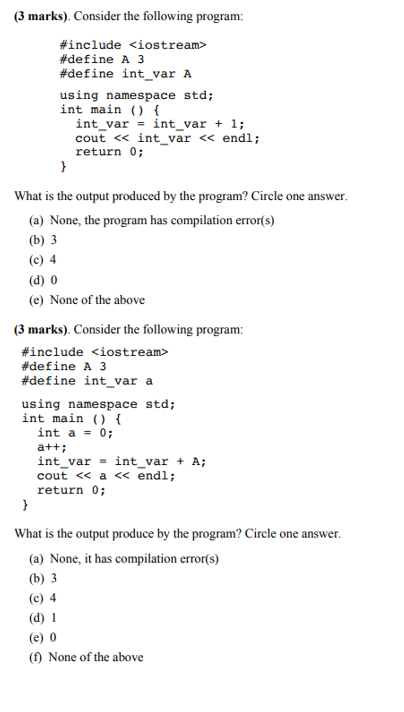
Part A) A pointer variable cannot point to other pointer variables. Circle on answer True False A pointer can be used to access elements of an array. Circle on answer True False Which of the following statements initializes the pointer ptr to the address of the variable x? Circle one answer int* ptr-x ; int* ptr-&x; int& ptr-&x; int* ptr-*x; What happens in this segment of code? Circle one answer int a100; int b-200; int* p-&a; Pgi b is assigned to a p now points to b a is assigned to b q now points to a a. b. c. d. The correct prototype of a function fun that takes pointer to a float, a pointer to a pointer to a char and returns a pointer to a pointer to an int is (circle one answer): int **fun (float**, char**; int *fun (float*, char*); int **fun (float*, char**; int ***fun (*float, **char)
Step by Step Solution
There are 3 Steps involved in it

Get step-by-step solutions from verified subject matter experts
 Study Help