







Question: Part A Determine when the acceleration equals 0 for an object whose velocity function is defined as 3/ =/+ , for 0 0 for x
Part A
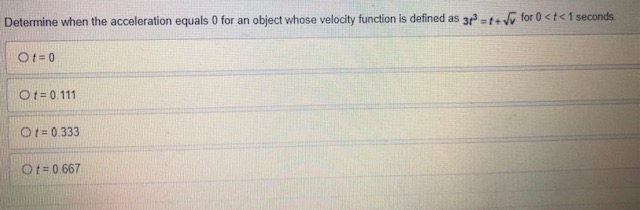
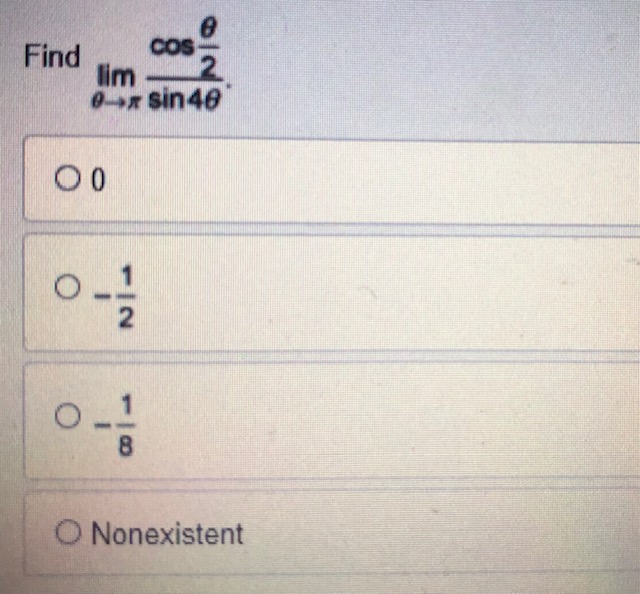
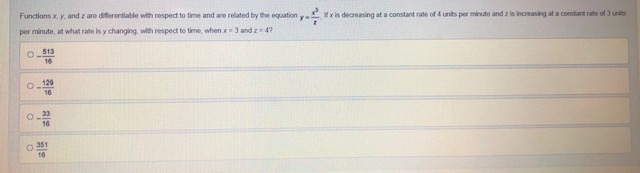
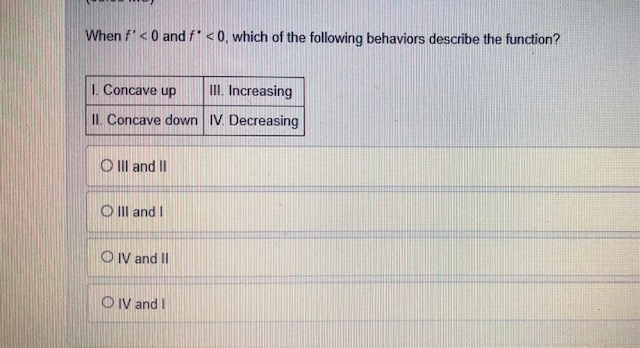
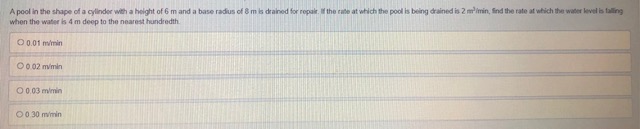
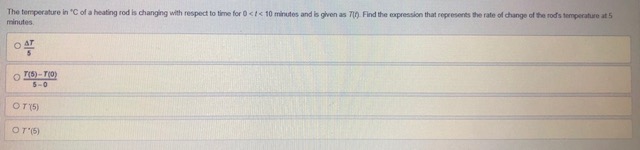
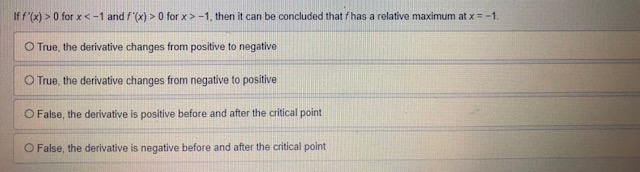

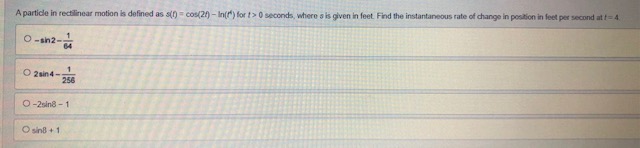
Determine when the acceleration equals 0 for an object whose velocity function is defined as 3/ =/+ , for 0 0 for x 0 for x > -1, then it can be concluded that fhas a relative maximum at x = =1. O True, the derivative changes from positive to negative O True, the derivative changes from negative to positive O False, the derivative is positive before and after the critical point O False, the derivative is negative before and after the critical pointA company wants to encrypt a document containing important postwords. To do this, the sum of two positive numbers will need to be minided. if the product of both number is 72, what is the minimum sum? Q 16 97 0372 073A particle in rectilinear motion is defined as s(f) = cos(21) - In(f ) for 12 0 seconds, where's is given in feet. Find the instantaneous rate of change in position in feet per second att= 4 O -th2- O 2un4- 1 256 O-2xin8 - 1 O uhl + 1
Step by Step Solution
There are 3 Steps involved in it

Get step-by-step solutions from verified subject matter experts
 Study Help