







Question: PART A Direction: Solve the problem below. A particle is in motion and is accelerating. The functional form of the velocity is v(t) = 20t
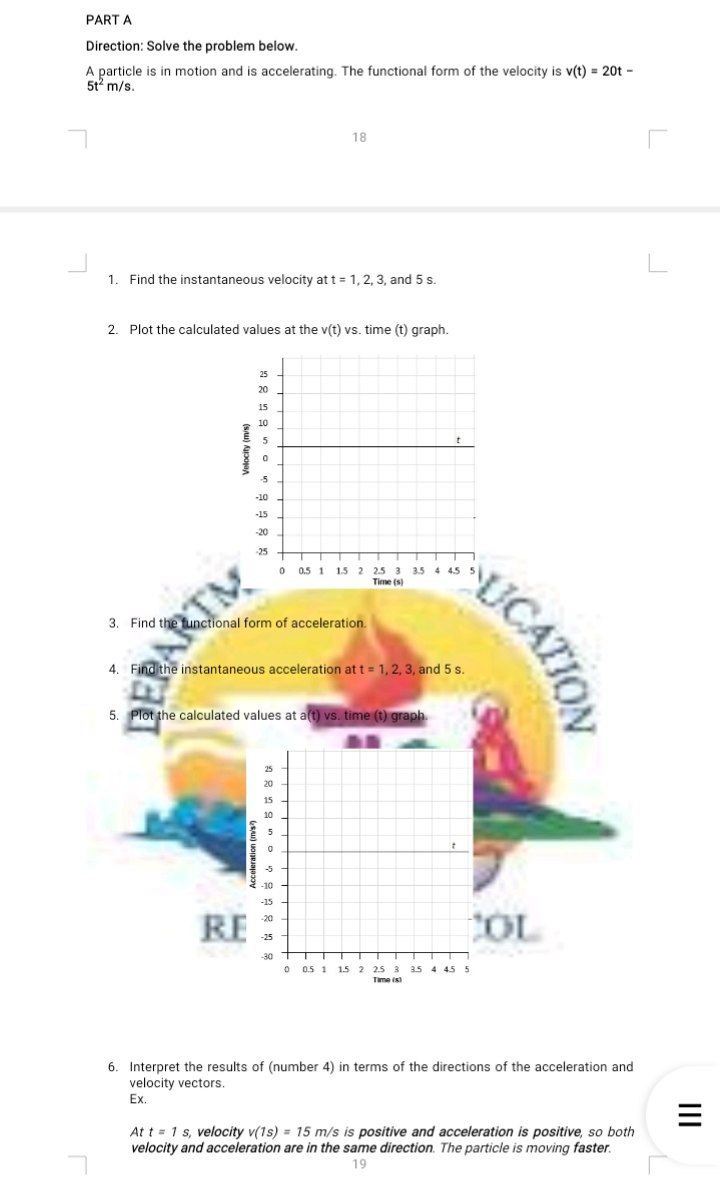
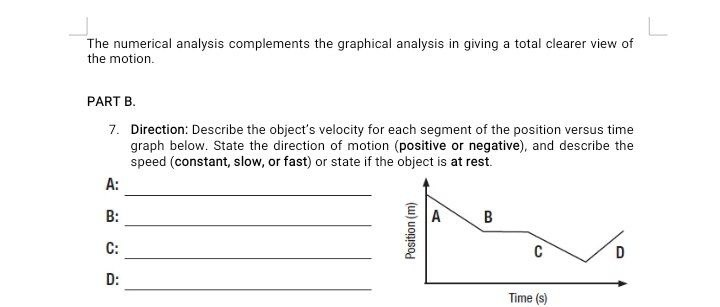
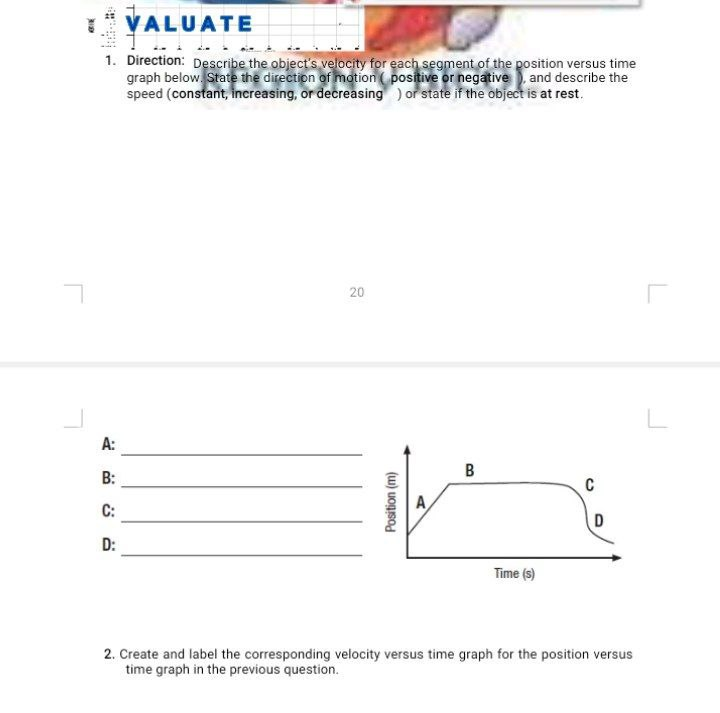
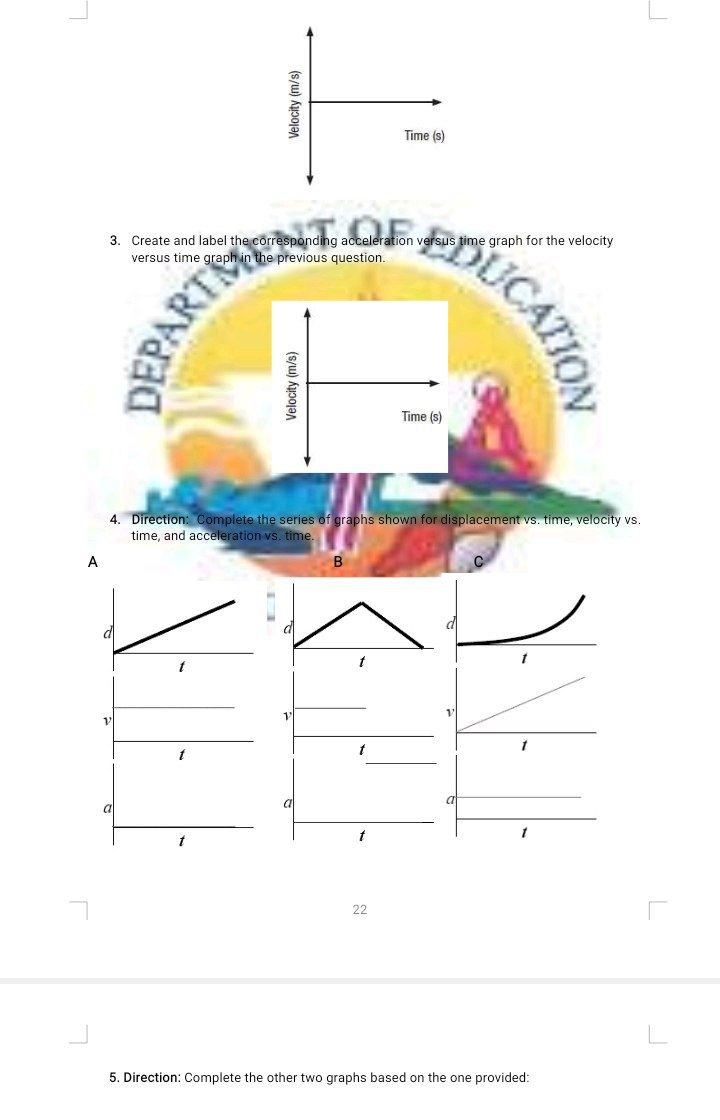
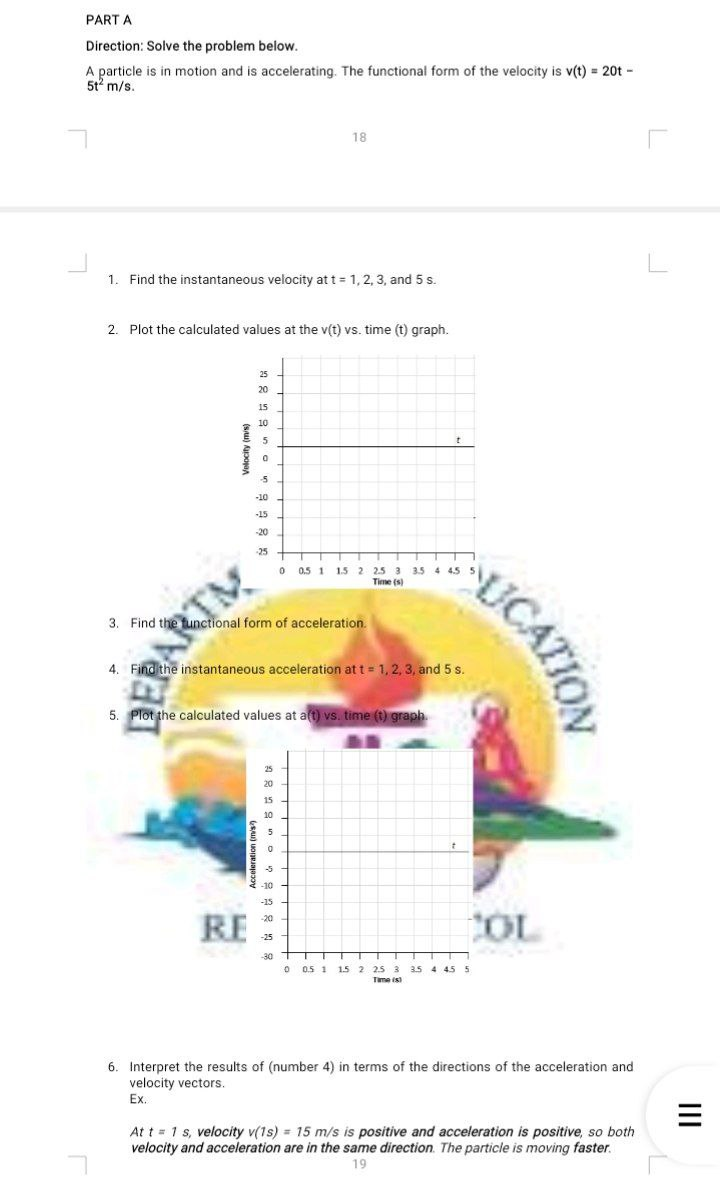
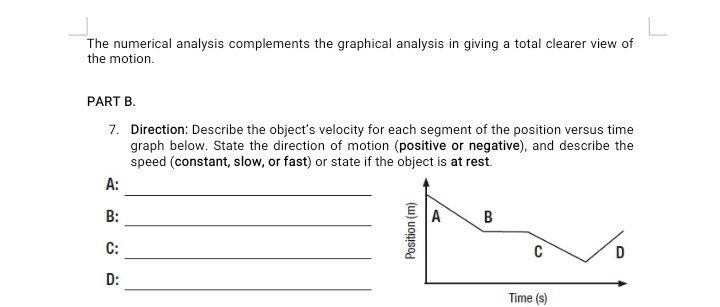
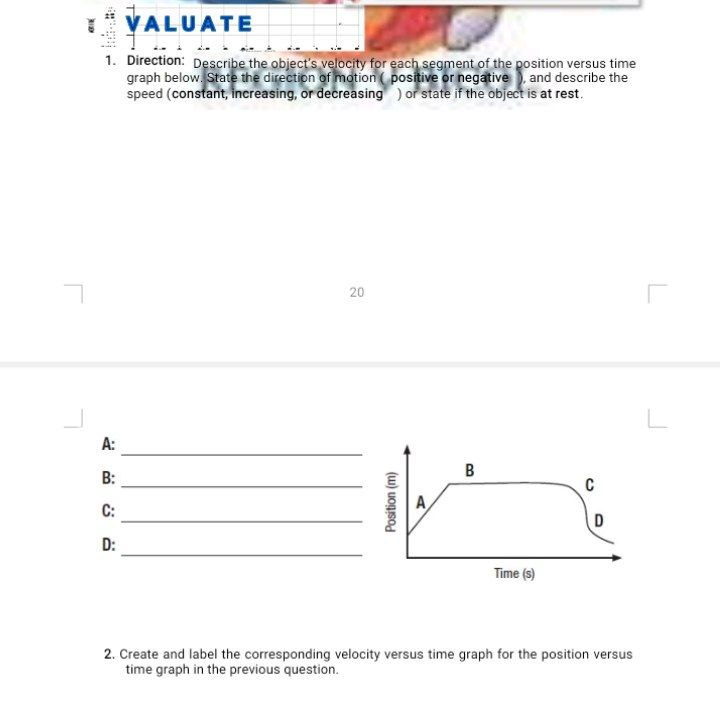
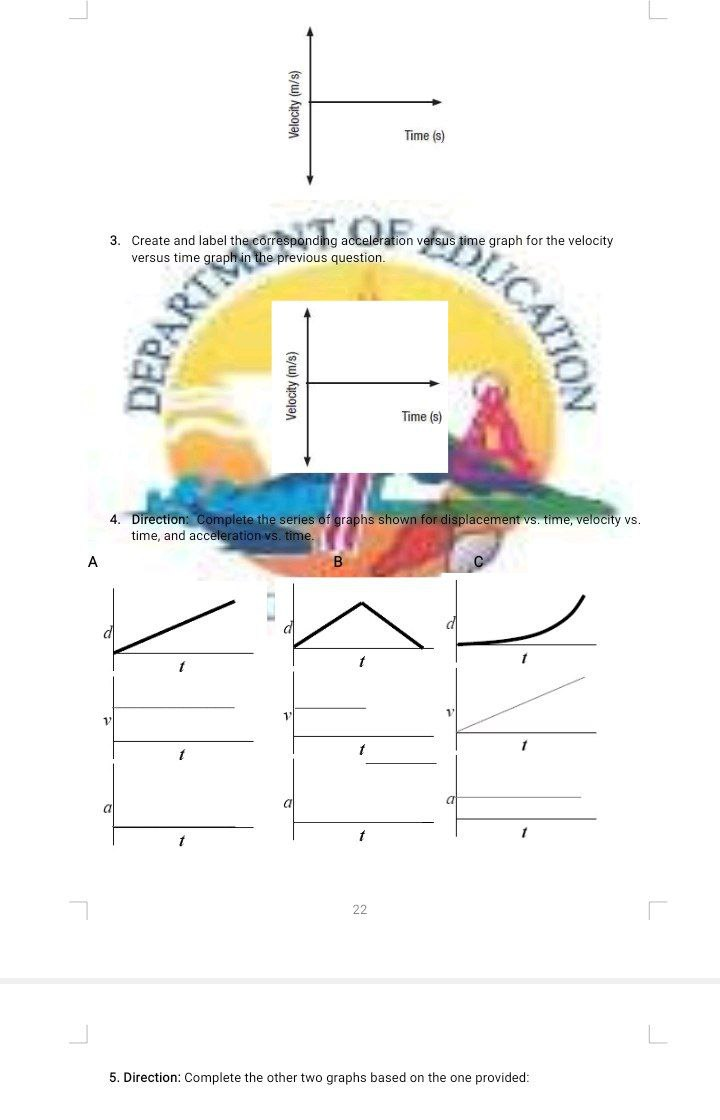
PART A Direction: Solve the problem below. A particle is in motion and is accelerating. The functional form of the velocity is v(t) = 20t - 5tz m/s. 18 L 1. Find the instantaneous velocity at t = 1, 2, 3, and 5 s. 2. Plot the calculated values at the v(t) vs. time (t) graph. Velocity (mis) 0 05 1 15 2 25 3 35 4 45 Time (s) 3. Find the functional form of acceleration. UCATION 4. Find the instantaneous acceleration at t = 1, 2, 3, and 5 s. 5. Plot the calculated values at art) vs. time (t) graph Acceleration (mis) RE -20 -15 OL 30 D 05 1 15 2 25 3 35 4 45 Time is! 6. Interpret the results of (number 4) in terms of the directions of the acceleration and velocity vectors. Ex. At t = 1 s, velocity v(1s) = 15 m/s is positive and acceleration is positive, so both velocity and acceleration are in the same direction. The particle is moving faster. 19The numerical analysis complements the graphical analysis in giving a total clearer view of the motion. PART B. 7. Direction: Describe the object's velocity for each segment of the position versus time graph below. State the direction of motion (positive or negative), and describe the speed (constant, slow, or fast) or state if the object is at rest. A: B: A B Position (m) C: D: Time (s)VALUATE 1. Direction: Describe the object's velocity for each segment of the position versus time graph below. State the direction of motion ( positive or negative ), and describe the speed (constant, increasing, or decreasing ) or state if the object is at rest. 20 L C Position (m) C: A D: Time (s) 2. Create and label the corresponding velocity versus time graph for the position versus time graph in the previous question.Velocity (m/s) Time (s) 3. Create and label the corresponding acceleration versus time graph for the velocity versus time graph in the previous question. UCATION DEPAR Velocity (m/s) Time (s) 4. Direction: Complete the series of graphs shown for displacement vs. time, velocity vs. time, and acceleration vs. time. A B 7 22 L 5. Direction: Complete the other two graphs based on the one provided
Step by Step Solution
There are 3 Steps involved in it

Get step-by-step solutions from verified subject matter experts
 Study Help