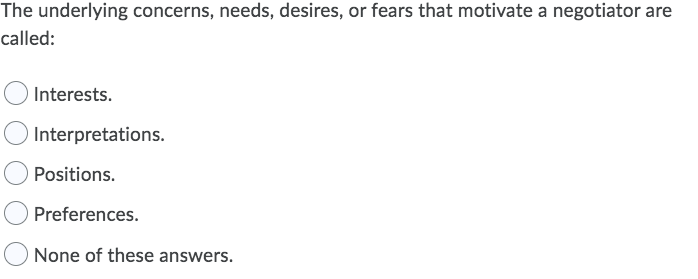
Question: part A. part b. part c part d. The underlying concerns, needs, desires, or fears that motivate a negotiator are called: Interests. Interpretations. Positions. Preferences.

part A.
part A. part b. part c part d. The underlying

part b.

part A. part b. part c part d. The underlying

part c

part A. part b. part c part d. The underlying

part d.

part A. part b. part c part d. The underlying

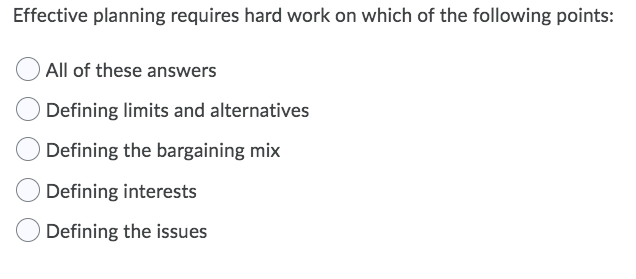
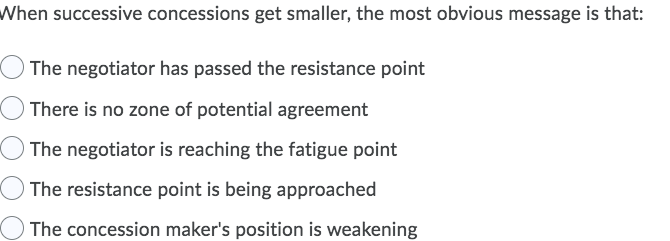
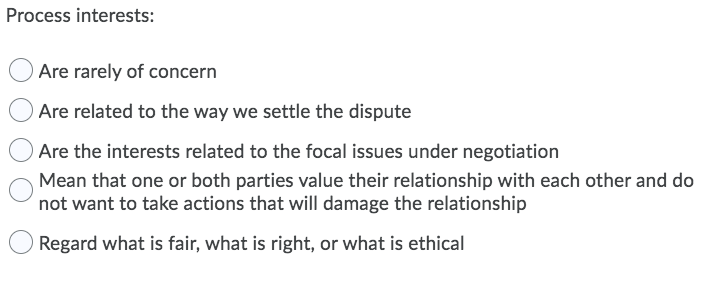
The underlying concerns, needs, desires, or fears that motivate a negotiator are called: Interests. Interpretations. Positions. Preferences. None of these answers. Effective planning requires hard work on which of the following points: All of these answers Defining limits and alternatives Defining the bargaining mix Defining interests Defining the issues When successive concessions get smaller, the most obvious message is that: The negotiator has passed the resistance point There is no zone of potential agreement The negotiator is reaching the fatigue point The resistance point is being approached The concession maker's position is weakening Process interests: Are rarely of concern Are related to the way we settle the dispute Are the interests related to the focal issues under negotiation Mean that one or both parties value their relationship with each other and do not want to take actions that will damage the relationship Regard what is fair, what is right, or what is ethical

Step by Step Solution

There are 3 Steps involved in it

1 Expert Approved Answer
Step: 1 Unlock blur-text-image

Question Has Been Solved by an Expert!

Get step-by-step solutions from verified subject matter experts

Step: 2 Unlock
Step: 3 Unlock

Students Have Also Explored These Related General Management Questions!