







Question: Part I- Using the terms defined below, fill in the blanks. (15) 1. A is a variable in a class that is encapsulated within the
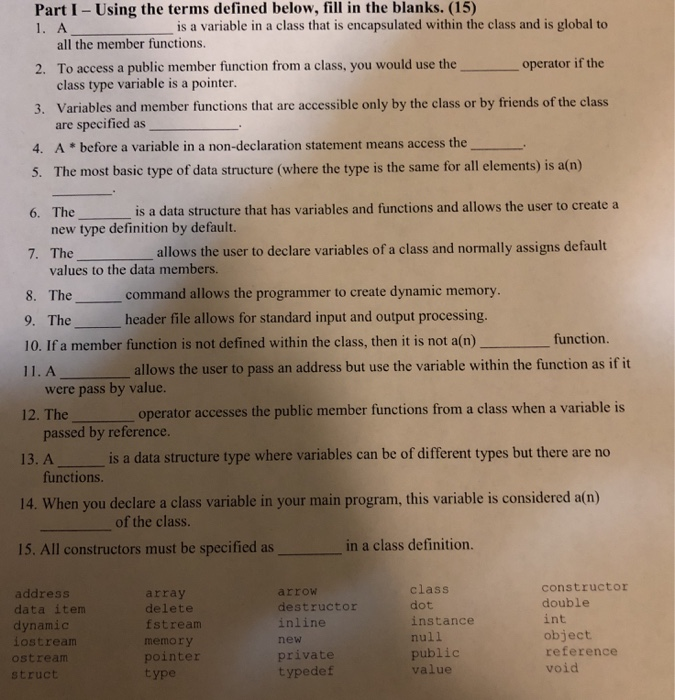
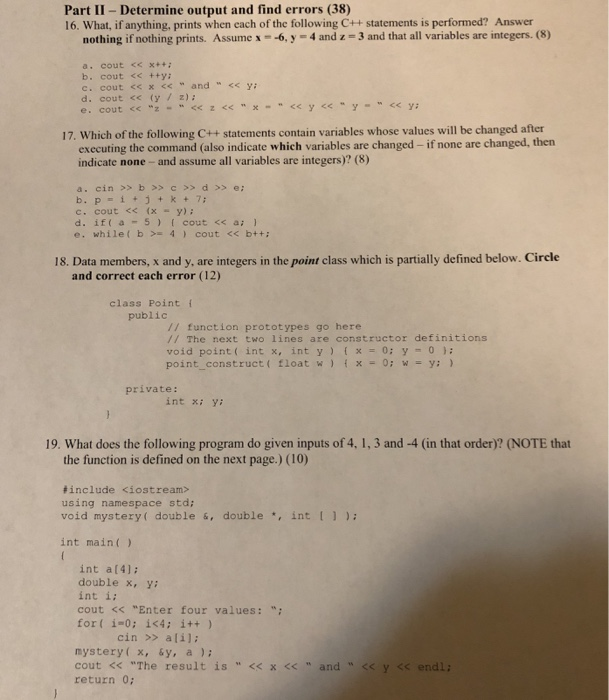
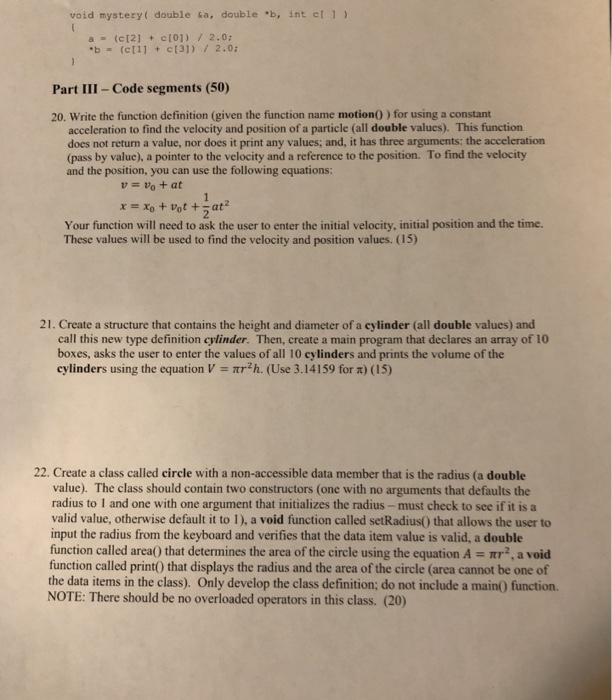
Part I- Using the terms defined below, fill in the blanks. (15) 1. A is a variable in a class that is encapsulated within the class and is global to all the member functions. 2. To access a public member function from a class, you would use theoperator if the class type variable is a pointer. Variables and member functions that are accessible only by the class or by friends of the class are specified as 4. A before a variable in a non-declaration statement means access the 5. The most basic type of data structure (where the type is the same for all elements) is an) he is a data structure that has variables and functions and allows the user to create a new type definition by default. The values to the data members. 7. allows the user to declare variables of a class and normally assigns default 8. The 9. The 10. If a member function is not defined within the class, then it is not a(n) command allows the programmer to create dynamic memory header file allows for standard input and output processing. function allows the user to pass an address but use the variable within the function as if it were pass by value. passed by reference functions. 12. The operator accesses the public member functions from a class when a variable is 13. A is a data structure type where variables can be of different types but there are no 14. When you declare a class variable in your main program, this variable is considered a(n) of the class 15. All constructors must be specified as in a class definition. class dot instance null constructor double int object reference void address data item array delete fstream memory destructor ne nli new private typede in ublic value Part II - Determine output and find errors (38) 16. What, if anything, prints when each of the following C++ statements is performed? Answer nothing if nothing prints. Assumex -6.-4 and z -3 and that all variables are integers. (8) a. cout >b >>c>> d>> e: c. cout 4 cout using namespace std; void mystery double &, double,intI int main() int a(4]: double x, y int i: cout > ali]: mystery ( x, &y, a ); cout
Step by Step Solution
There are 3 Steps involved in it

Get step-by-step solutions from verified subject matter experts
 Study Help