







Question: Part II: Deal the Cards (10 points) Complete the function deal-cards ), which takes one argument, deck, is a list Cards objects (but not necessarily
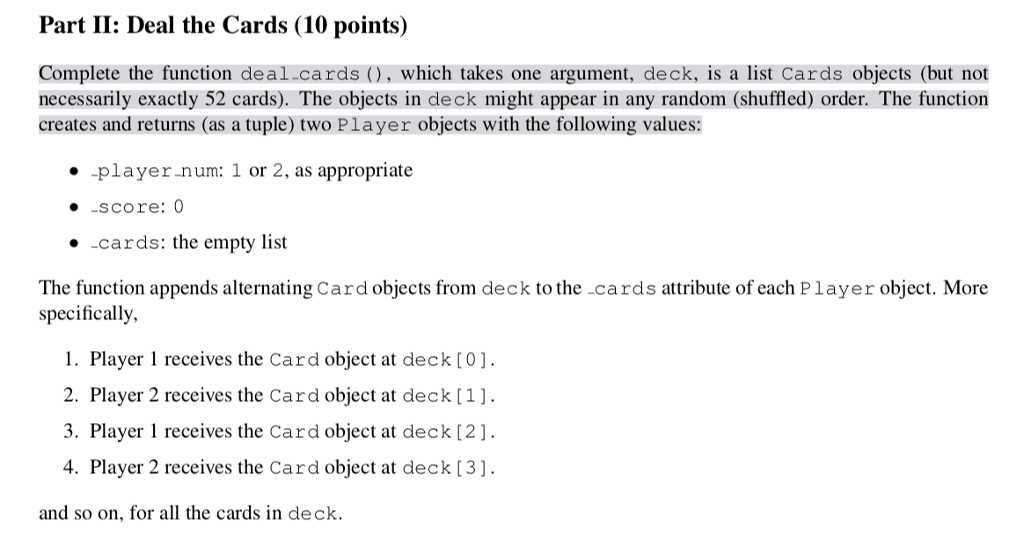
Part II: Deal the Cards (10 points) Complete the function deal-cards ), which takes one argument, deck, is a list Cards objects (but not necessarily exactly 52 cards). The objects in deck might appear in any random (shuffled) order. The function creates and returns (as a tuple) two Player objects with the following values: . -player num: 1 or 2, as appropriate . score: 0 cards: the empty list The function appends alternating Card objects from deck to the cards attribute of each Player object. More specifically, 1. Player 1 receives the Card object at deck [0]. 2. Player 2 receives the Card object at deck [1. 3. Player 1 receives the Card object at deck [2. 4. Player 2 receives the Card object at deck [3]. and so on, for all the cards in deck
Step by Step Solution
There are 3 Steps involved in it

Get step-by-step solutions from verified subject matter experts
 Study Help