







Question: performance Management CASE STUDY 9-1 Was Robert Eaton a Good Coach? Robert Eaton was CEO and chairman of Chrysler from 1993 to 1998, replacing Lee
performance Management 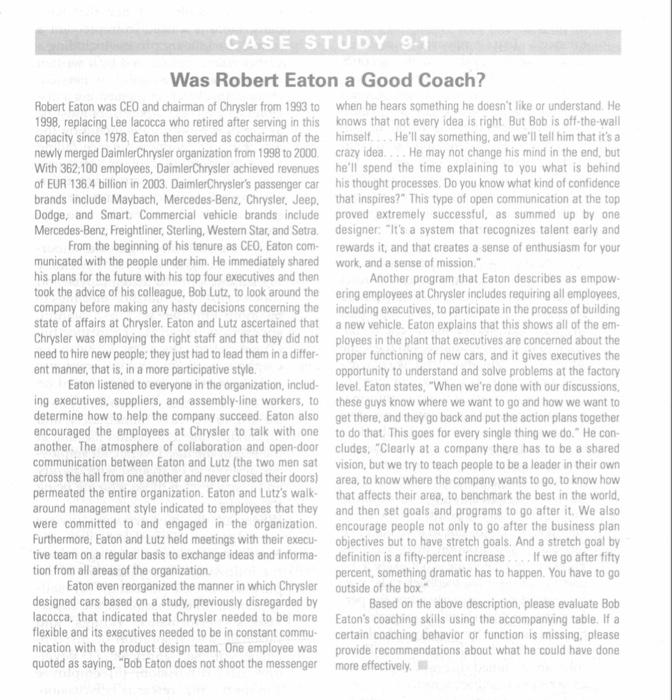
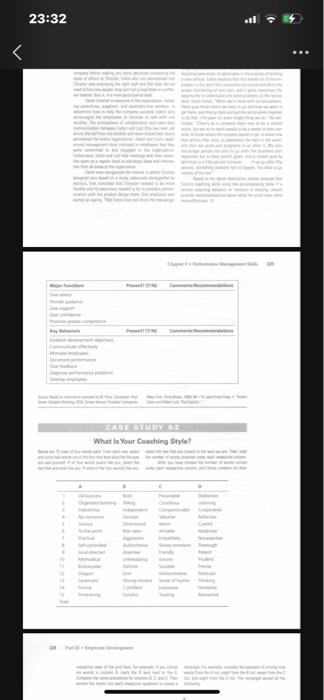
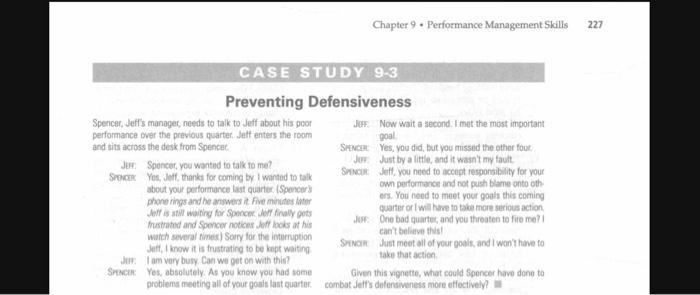
CASE STUDY 9-1 Was Robert Eaton a Good Coach? Robert Eaton was CEO and chairman of Chrysler from 1993 to 1998, replacing Lee lacocca who retired after serving in this capacity since 1978. Eaton then served as cochairman of the newly merged DaimlerChrysler organization from 1998 to 2000 With 362,100 employees, DaimlerChrysler achieved revenues of EUR 136.4 billion in 2003. DaimlerChrysler's passenger car brands include Maybach, Mercedes-Benz, Chrysler, Jeep, Dodge, and Smart. Commercial vehicle brands include Mercedes-Benz, Freightliner, Sterling, Western Star, and Setra From the beginning of his tenure as CEO, Eaton com- municated with the people under him. He immediately shared his plans for the future with his top four executives and then took the advice of his colleague, Bob Lutz, to look around the company before making any hasty decisions concerning the state of affairs at Chrysler. Eaton and Lutz ascertained that Chrysler was employing the right staff and that they did not need to hire new people; they just had to lead them in a differ- ent manner, that is, in a more participative style. Eaton listened to everyone in the organization, includ- ing executives, suppliers, and assembly-line workers, to determine how to help the company succeed. Eaton also encouraged the employees at Chrysler to talk with one another. The atmosphere of collaboration and open-door communication between Eaton and Lutz (the two men sat across the hall from one another and never closed their doors) permeated the entire organization. Eaton and Lutz's walk around management style indicated to employees that they were committed to and engaged in the organization. Furthermore, Eaton and Lutz held meetings with their execu- tive team on a regular basis to exchange ideas and informa- tion from all areas of the organization. Eaton even reorganized the manner in which Chrysler designed cars based on a study, previously disregarded by lacocca, that indicated that Chrysler needed to be more flexible and its executives needed to be in constant commu- nication with the product design team. One employee was quoted as saying, "Bob Eaton does not shoot the messenger when he hears something he doesn't like or understand. He knows that not every idea is right. But Bob is off-the-wall himself... He'll say something, and we'll tell him that it's a crazy idea.... He may not change his mind in the end, but he'll spend the time explaining to you what is behind his thought processes. Do you know what kind of confidence that inspires?" This type of open communication at the top proved extremely successful, as summed up by one designer: "It's a system that recognizes talent early and rewards it, and that creates a sense of enthusiasm for your work, and a sense of mission." Another program that Eaton describes as empow ering employees at Chrysler includes requiring all employees, including executives, to participate in the process of building a new vehicle. Eaton explains that this shows all of the em ployees in the plant that executives are concerned about the proper functioning of new cars, and it gives executives the opportunity to understand and solve problems at the factory level. Eaton states, "When we're done with our discussions, these guys know where we want to go and how we want to get there, and they go back and put the action plans together to do that. This goes for every single thing we do." He con- cludes, "Clearly at a company there has to be a shared vision, but we try to teach people to be a leader in their own area, to know where the company wants to go, to know how that affects their area, to benchmark the best in the world. and then set goals and programs to go after it. We also encourage people not only to go after the business plan objectives but to have stretch goals. And a stretch goal by definition is a fifty-percent increase. If we go after fifty percent, something dramatic has to happen. You have to go outside of the box." Based on the above description, please evaluate Bob Eaton's coaching skills using the accompanying table. If a certain coaching behavior or function is missing, please provide recommendations about what he could have done more effectively. 23:32 ment P P CASE STUDY 0-2 What Is Your Coaching Style? Chapter 9 Performance Management Skills CASE STUDY 9-3 Preventing Defensiveness JEFF Now wait a second. I met the most important goal SPENCER: Yes, you did, but you missed the other four Jur: Just by a little, and it wasn't my fault. SPENCER Jeff, you need to accept responsibility for your own performance and not push blame onto oth ers. You need to meet your goals this coming quarter or I will have to take more serious action One bad quarter, and you threaten to fire me?! can't believe this! SPENCER Just meet all of your goals, and I won't have to Jor: take that action. Given this vignette, what could Spencer have done to combat Jeff's defensiveness more effectively? Spencer, Jeff's manager, needs to talk to Jeff about his poor performance over the previous quarter. Jeff enters the room and sits across the desk from Spencer Spencer, you wanted to talk to me? JEH: SPENCER Yes, Jeff, thanks for coming by I wanted to talk about your performance last quarter (Spencer's phone rings and he answers it Five minutes later Jeff is still waiting for Spencer Jeff finally gets frustrated and Spencer notices Jeff looks at his watch several times) Sorry for the interruption Jeff, I know it is frustrating to be kept waiting I am very busy. Can we get on with this? Yes, absolutely. As you know you had some problems meeting all of your goals last quarter. J: SPENCER: 227 Step by Step Solution
There are 3 Steps involved in it
1 Expert Approved Answer
Step: 1 Unlock

Question Has Been Solved by an Expert!
Get step-by-step solutions from verified subject matter experts
Step: 2 Unlock
Step: 3 Unlock
 Study Help