Question: pleaaase read the first three pics and i need a brief discussion about what impressed you or interested you, look at the fourth picture for
pleaaase read the first three pics and i need a brief discussion about what impressed you or interested you, look at the fourth picture for details.
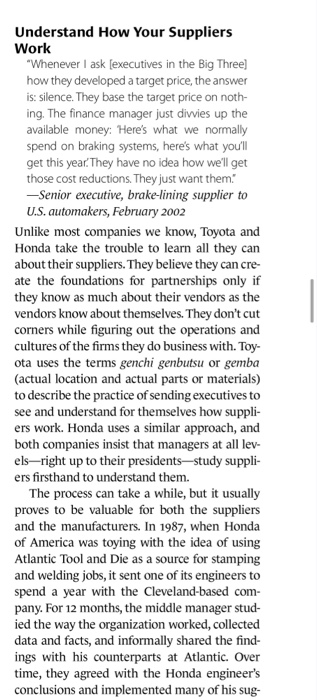
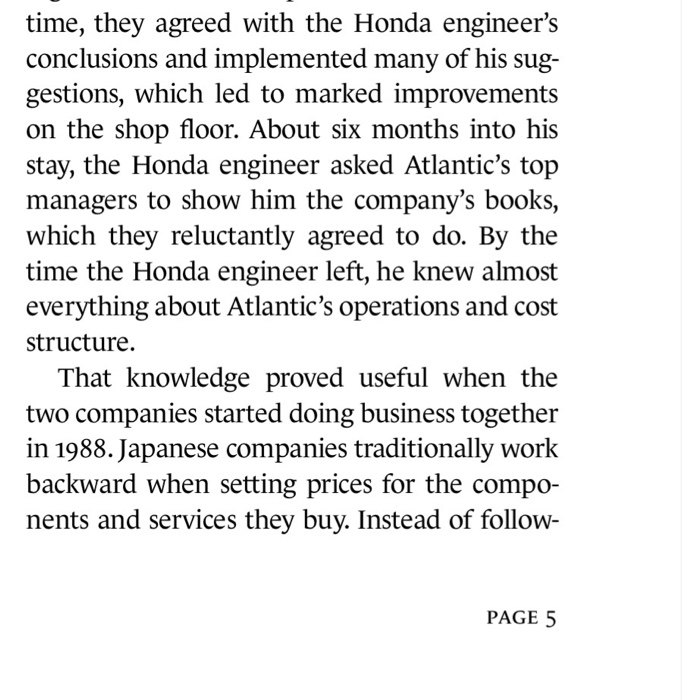
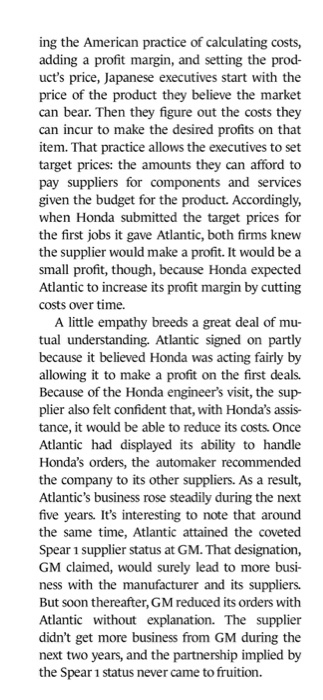
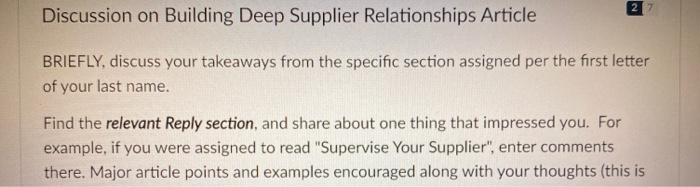
Understand How Your Suppliers Work "Whenever I ask [executives in the Big Three) how they developed a target price, the answer is: silence. They base the target price on noth- ing. The finance manager just divvies up the available money: Here's what we normally spend on braking systems, here's what you'll get this year. They have no idea how we'll get those cost reductions. They just want them -Senior executive, brake-lining supplier to U.S. automakers, February 2002 Unlike most companies we know, Toyota and Honda take the trouble to learn all they can about their suppliers. They believe they can cre- ate the foundations for partnerships only if they know as much about their vendors as the vendors know about themselves. They don't cut corners while figuring out the operations and cultures of the firms they do business with. Toy- ota uses the terms genchi genbutsu or gemba (actual location and actual parts or materials) to describe the practice of sending executives to see and understand for themselves how suppli- ers work. Honda uses a similar approach, and both companies insist that managers at all lev- els-right up to their presidents-study suppli- ers firsthand to understand them. The process can take a while, but it usually proves to be valuable for both the suppliers and the manufacturers. In 1987, when Honda of America was toying with the idea of using Atlantic Tool and Die as a source for stamping and welding jobs, it sent one of its engineers to spend a year with the Cleveland-based com- pany. For 12 months, the middle manager stud- ied the way the organization worked, collected data and facts, and informally shared the find- ings with his counterparts at Atlantic. Over time, they agreed with the Honda engineer's conclusions and implemented many of his sug- time, they agreed with the Honda engineer's conclusions and implemented many of his sug- gestions, which led to marked improvements on the shop floor. About six months into his stay, the Honda engineer asked Atlantic's top managers to show him the company's books, which they reluctantly agreed to do. By the time the Honda engineer left, he knew almost everything about Atlantic's operations and cost structure. That knowledge proved useful when the two companies started doing business together in 1988. Japanese companies traditionally work backward when setting prices for the compo- nents and services they buy. Instead of follow- PAGE 5 ing the American practice of calculating costs, adding a profit margin, and setting the prod- uct's price, Japanese executives start with the price of the product they believe the market can bear. Then they figure out the costs they can incur to make the desired profits on that item. That practice allows the executives to set target prices: the amounts they can afford to pay suppliers for components and services given the budget for the product. Accordingly, when Honda submitted the target prices for the first jobs it gave Atlantic, both firms knew the supplier would make a profit. It would be a small profit, though, because Honda expected Atlantic to increase its profit margin by cutting costs over time. A little empathy breeds a great deal of mu- tual understanding. Atlantic signed on partly because it believed Honda was acting fairly by allowing it to make a profit on the first deals. Because of the Honda engineer's visit the sup- plier also felt confident that, with Honda's assis- tance, it would be able to reduce its costs. Once Atlantic had displayed its ability to handle Honda's orders, the automaker recommended the company to its other suppliers. As a result, Atlantic's business rose steadily during the next five years. It's interesting to note that around the same time, Atlantic attained the coveted Spear 1 supplier status at GM. That designation, GM claimed, would surely lead to more busi- ness with the manufacturer and its suppliers. But soon thereafter, GM reduced its orders with Atlantic without explanation. The supplier didn't get more business from GM during the next two years, and the partnership implied by the Spear 1 status never came to fruition. 27 Discussion on Building Deep Supplier Relationships Article BRIEFLY, discuss your takeaways from the specific section assigned per the first letter of your last name. Find the relevant Reply section, and share about one thing that impressed you. For example, if you were assigned to read "Supervise Your Supplier", enter comments there. Major article points and examples encouraged along with your thoughts (this is









 Study Help