







Question: PLEASE ANSWER ASAP!!! 1. Cost is a concern for many. If you had to choose between buying food for dinner or buying your prescriptions, which
PLEASE ANSWER ASAP!!!
1. Cost is a concern for many. If you had to choose between buying food for dinner or buying your prescriptions, which would you choose? Why? (explore ways communication plays a role)
2. If you are a provider using the biomedical model, how would you use communication (what kinds of questions would you ask) with a patient to identify a problem?
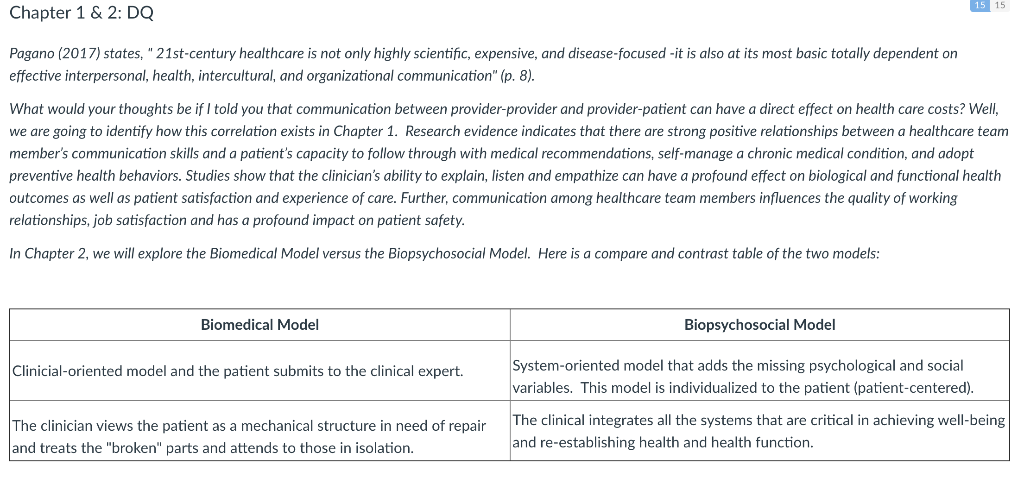
15 15 Chapter 1 & 2: DO Pagano (2017) states, " 21st century healthcare is not only highly scientific, expensive, and disease-focused -it is also at its most basic totally dependent on effective interpersonal, health, intercultural, and organizational communication" (p. 8). What would your thoughts be if I told you that communication between provider-provider and provider-patient can have a direct effect on health care costs? Well, we are going to identify how this correlation exists in Chapter 1. Research evidence indicates that there are strong positive relationships between a healthcare team member's communication skills and a patient's capacity to follow through with medical recommendations, self-manage a chronic medical condition, and adopt preventive health behaviors. Studies show that the clinician's ability to explain, listen and empathize can have a profound effect on biological and functional health outcomes as well as patient satisfaction and experience of care. Further, communication among healthcare team members influences the quality of working relationships, job satisfaction and has a profound impact on patient safety. In Chapter 2, we will explore the Biomedical Model versus the Biopsychosocial Model. Here is a compare and contrast table of the two models: Biomedical Model Biopsychosocial Model Clinicial-oriented model and the patient submits to the clinical expert. System-oriented model that adds the missing psychological and social variables. This model is individualized to the patient (patient-centered). The clinical integrates all the systems that are critical in achieving well-being and re-establishing health and health function. The clinician views the patient as a mechanical structure in need of repair and treats the "broken" parts and attends to those in isolationStep by Step Solution
There are 3 Steps involved in it
1 Expert Approved Answer
Step: 1 Unlock

Question Has Been Solved by an Expert!
Get step-by-step solutions from verified subject matter experts
Step: 2 Unlock
Step: 3 Unlock
 Study Help