Please answer questions 1 and 2 !!!
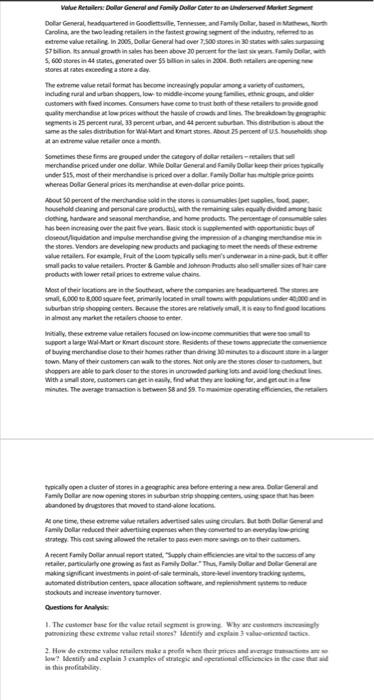
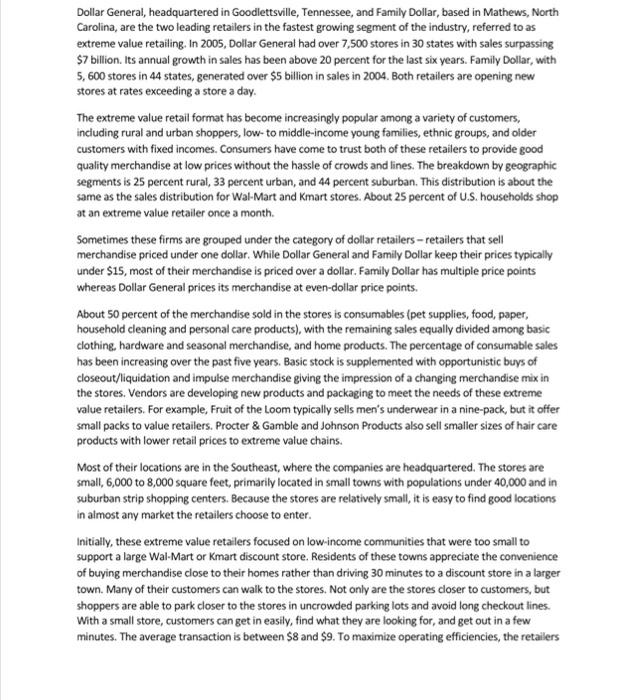
Watue Retailer: Dollar General and Family Doller Ceter to an Underserved Market segment Dolor General headquartered in Goodientsile, Tennessee and Family Database Mewton Carolina, are the two leading retailen in the fastest growingment of industry, edo extremevalueretailing In 2005, Dollar General had over 7.500 stores in 30 states with sales $7 billionIts gowth in sales has been above 20 percent for the last years. Family Dowth 5.600 stores in states, generated over $5 billion in les in 2001 here pening.no stores atrates exceeding a store a day The extremevalueret format has become increasingly popular amonga vietetom Induding tural and urban shoppers, low to middle come unghie pod customers whoed incomes. Consumers are come to trust both of these tales to provide good Quality merchandise at low prices without the hassle of growth and lines. The breakdown ements is 25 percentual 33 percent urban, and 4 percent suburban. This distributions to the same as the sales distribution for Wal-Mart and tomartstores About 25 percent of Soulshop at an extreme alertalerne month Sometimes these firms are grouped under the category of dollar retailerrealestate merchandise priced under one dolar. While Dollar General and San Dollar keep the price under 535, most of their merchandise is priced over a dolomiy Dollar hastigle points whereas Dollar General prices its merchandise at even dolar price points About 50 percent of the merchandise sold in the stores consumables et supplied food household deaning and personal care products with the many divided month doing hardware and seasonal merchandise and home products. The percentage of comme has been increasing over the past five yearn Basic stock is supplemented opportunitiboa com/liquidation and impulse merchandise ping the impression of changed the stores. Vendors are developing new products and package to meet the needs of the alertaler. For emple. Fruit of the Loom typicallyelmer's underwain and butto small packs to value retailers Procter & Gamble and chron Products alho e saliera products with lower retail prices to extreme value chains Mon of their locations are in the Southeast where the competentered the small, 6.000 1.000 square feet, primarily located in small town with population under 2.000 din suburban strip shopping centers. Because the stores are relatively small say to find good locations in almost any market the retailers choose to enter Initially. These extreme value retailers focused on low income communities that were support a large Wal Martor Kmart discount store Residents of these preciate the comme of buying merchandise dose to their homes rather than driving minutes to decoratie town. Many of their customers can walk to the stores. Not only are the stores desertome, but shoppers are able to park doser to the stores in crowded porting too long chedules With a small store, customers can get in easily. And what they are looking for and get out in minutes. The average traction between $8 and 59. Tommee operating efficacementales typically open a cluster of stores in a geographics before entering a new Doland Family Dollar are now opening stores in suburban stripping centers in thes.be tandoned by drugstores that moved to stand alone location At one time, the extremevalt etter advertised sales ing rulers Butbol Family Dollar reduced their advertising expenses when they converted to an everydaywrig strategy. This conting allowed the retaler to pass even more sving on to their customer Arce Family Dollar and reported. "Spoly chances are vital com tailer, particularly one growing as fast as Family Dolur. ThenFamily Dolar and Dollar Generale moking significant investments in point of sale terminal, Store inventory tracking automated distribution centers, pace allocations and produce stockouts and increase inventory turnover Questions for Analysis The customer base for the value til sementis . Why are customers mining these extreme al retail stores Identify and explaint 2 How de extreme values make a profit when their presager low! Wentify and explain examples of strategie and apertional efficiencies in the this pro Dollar General, headquartered in Goodlettsville, Tennessee, and Family Dollar, based in Mathews, North Carolina, are the two leading retailers in the fastest growing segment of the industry, referred to as extreme value retailing. In 2005, Dollar General had over 7,500 stores in 30 states with sales surpassing $7 billion. Its annual growth in sales has been above 20 percent for the last six years. Family Dollar, with 5,600 stores in 44 states, generated over $5 billion in sales in 2004. Both retailers are opening new stores at rates exceeding a store a day. The extreme value retail format has become increasingly popular among a variety of customers, including rural and urban shoppers, low-to middle-income young families, ethnic groups, and older customers with fixed incomes. Consumers have come to trust both of these retailers to provide good quality merchandise at low prices without the hassle of crowds and lines. The breakdown by geographic segments is 25 percent rural, 33 percent urban, and 44 percent suburban. This distribution is about the same as the sales distribution for Wal-Mart and Kmart stores. About 25 percent of U.S. households shop at an extreme value retailer once a month. Sometimes these firms are grouped under the category of dollar retailers -retailers that sell merchandise priced under one dollar. While Dollar General and Family Dollar keep their prices typically under $15, most of their merchandise is priced over a dollar. Family Dollar has multiple price points whereas Dollar General prices its merchandise at even-dollar price points. About 50 percent of the merchandise sold in the stores is consumables (pet supplies, food, paper, household cleaning and personal care products), with the remaining sales equally divided among basic clothing, hardware and seasonal merchandise, and home products. The percentage of consumable sales has been increasing over the past five years. Basic stock is supplemented with opportunistic buys of closeout/liquidation and impulse merchandise giving the impression of a changing merchandise mixin the stores. Vendors are developing new products and packaging to meet the needs of these extreme value retailers. For example, Fruit of the Loom typically sells men's underwear in a nine-pack, but it offer small packs to value retailers. Procter & Gamble and Johnson Products also sell smaller sizes of hair care products with lower retail prices to extreme value chains. Most of their locations are in the Southeast, where the companies are headquartered. The stores are small, 6,000 to 8,000 square feet, primarily located in small towns with populations under 40,000 and in suburban strip shopping centers. Because the stores are relatively small, it is easy to find good locations in almost any market the retailers choose to enter. Initially, these extreme value retailers focused on low-income communities that were too small to support a large Wal-Mart or Kmart discount store. Residents of these towns appreciate the convenience of buying merchandise close to their homes rather than driving 30 minutes to a discount store in a larger town. Many of their customers can walk to the stores. Not only are the stores closer to customers, but shoppers are able to park closer to the stores in uncrowded parking lots and avoid long checkout lines. With a small store, customers can get in easily, find what they are looking for, and get out in a few minutes. The average transaction is between $8 and $9. To maximize operating efficiencies, the retailers