







Question: Please answer ASAP! Thank you so much (individual or component costs of capital Compute the cost of the following: a. A bond that has $1.000
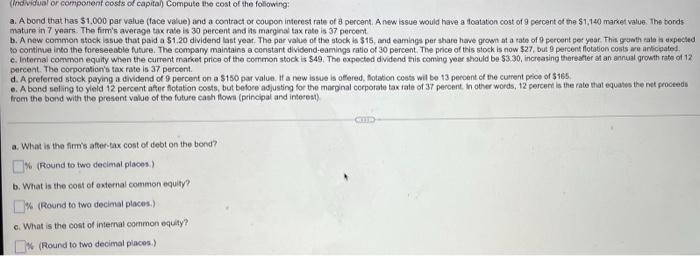
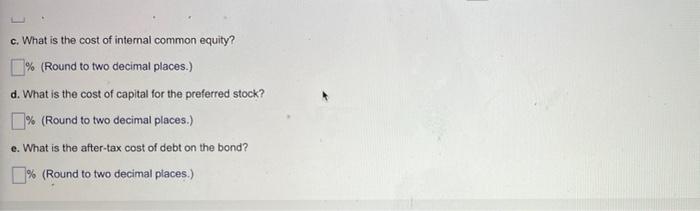
(individual or component costs of capital Compute the cost of the following: a. A bond that has $1.000 par value (face value) and a contract or coupon interest rate of 8 percent. A new issue would have a floatation cost of 9 percent of the $1,140 market value. The bords mature in 7 years. The firm's average tax rate is 30 percent and its marginal tax rate is 37 percent b. A new common stock issue that paid a $1.20 dividend last year. The par value of the stock is $15, and eamings per share have grown at a rate of 9 percent per year. This growth rate is expected to continue into the foreseeable future. The company maintains a constant dividend-eamings ratio of 30 percent. The price of this stock is now $27, but 9 percent flotation costs are anticipated c. Internal common equity when the current market price of the common stock is $49. The expected dividend this coming year should be $3.30, increasing thereafter at an annual growth rate of 12 percent. The corporation's tax rate is 37 percent d. A preferred stock paying a dividend of 9 percent on a $150 par value. If a new issue is offered, Notation costs will be 13 percent of the current price of $165 e. A bond selling to yield 12 percent after flotation costs, but before adjusting for the marginal corporate tax rate of 37 percent. In other words, 12 percent is the rate that equates the net proceeds from the bond with the present value of the future cash flow (principal and interest) a. What is the firm's after tax cost of debt on the bond? % (Round to two decimal places) b. What is the cost of external common equity? % (Round to two decimal places.) What is the cost of internal common equity? * (Round to two decimal places) c. What is the cost of internal common equity? % (Round to two decimal places.) d. What is the cost of capital for the preferred stock? 1% (Round to two decimal places.) e. What is the after-tax cost of debt on the bond? 0% (Round to two decimal places.)
Step by Step Solution
There are 3 Steps involved in it

Get step-by-step solutions from verified subject matter experts
 Study Help