Question: Please answer in 600 words! Read the argument below and do the following: 1. Represent the argument in standard form, including an argument map diagram.
Please answer in 600 words!
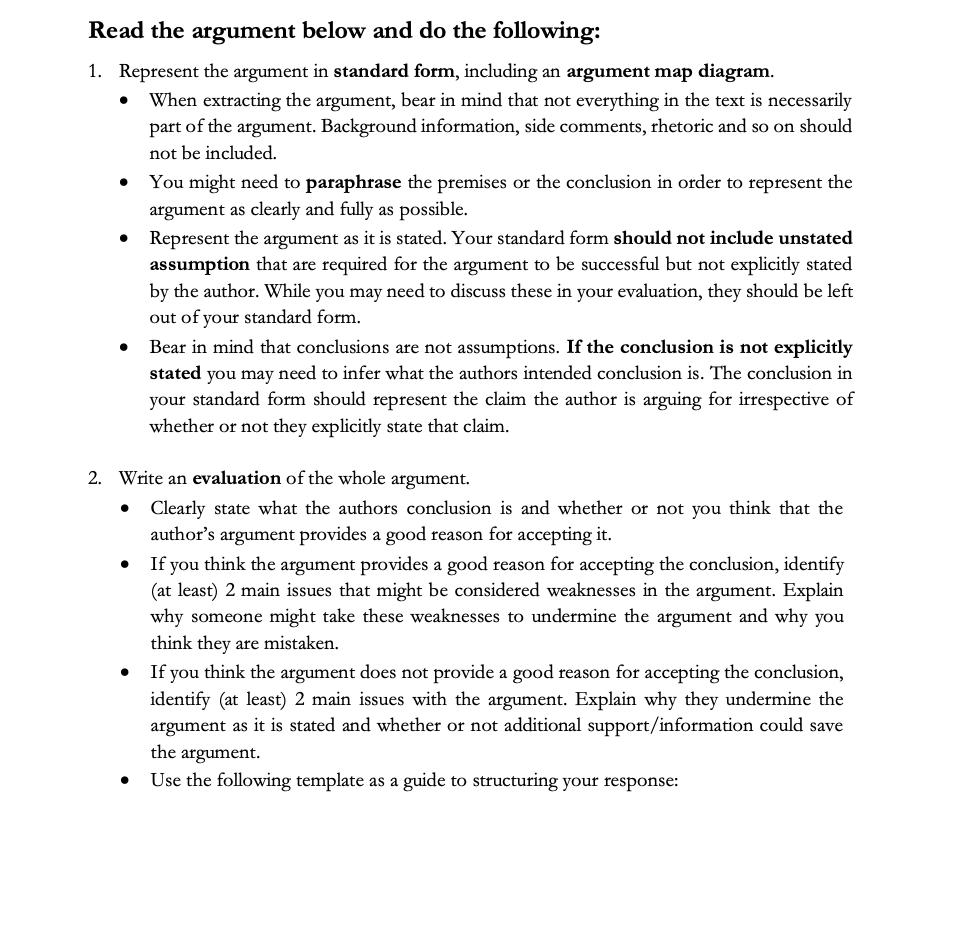
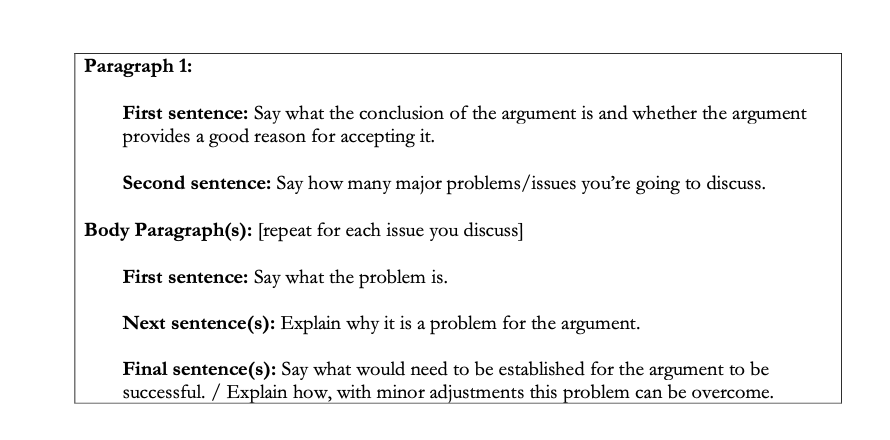

Read the argument below and do the following: 1. Represent the argument in standard form, including an argument map diagram. When extracting the argument, bear in mind that not everything in the text is necessarily part of the argument. Background information, side comments, rhetoric and so on should not be included. You might need to paraphrase the premises or the conclusion in order to represent the argument as clearly and fully as possible. Represent the argument as it is stated. Your standard form should not include unstated assumption that are required for the argument to be successful but not explicitly stated by the author. While you may need to discuss these in your evaluation, they should be left out of your standard form. Bear in mind that conclusions are not assumptions. If the conclusion is not explicitly stated you may need to infer what the authors intended conclusion is. The conclusion in your standard form should represent the claim the author is arguing for irrespective of whether or not they explicitly state that claim. 2. Write an evaluation of the whole argument. Clearly state what the authors conclusion is and whether or not you think that the author's argument provides a good reason for accepting it. If you think the argument provides a good reason for accepting the conclusion, identify (at least) 2 main issues that might be considered weaknesses in the argument. Explain why someone might take these weaknesses to undermine the argument and why you think they are mistaken. If you think the argument does not provide a good reason for accepting the conclusion, identify (at least) 2 main issues with the argument. Explain why they undermine the argument as it is stated and whether or not additional support/information could save the argument. Use the following template as a guide to structuring your response: Paragraph 1: First sentence: Say what the conclusion of the argument is and whether the argument provides a good reason for accepting it. Second sentence: Say how many major problems/issues you're going to discuss. Body Paragraph(s): [repeat for each issue you discuss] First sentence: Say what the problem is. Next sentence(s): Explain why it is a problem for the argument. Final sentence(s): Say what would need to be established for the argument to be successful. / Explain how, with minor adjustments this problem can be overcome. Argument: The case for a legalized kidney market Organ transplantation is one of the chief glories of modern medicine. But it's a miracle tragically out of reach for many thousands of people whose lives might be saved. There just aren't enough organs to go around. Thousands of people die each year waiting for kidney transplants. More still become too sick to receive a transplant. This situation has sparked recent debate about what was once unthinkable: Should we legalize the market for human kidneys? The idea is not as crazy as it might at first seem. It's not like selling a kidney greatly impoverishes the donor's quality of life. People can live normal lives with only one kidney and there is no evidence that donating a kidney decrease the donor's life expectancy. If donating a kidney does no harm then it is unreasonably paternalistic to prohibit people from selling a kidney if they want to. Moreover, we already allow people to sell their sperm and eggs. Why not their kidneys too? Adapted from an article on National Public Radio Read the argument below and do the following: 1. Represent the argument in standard form, including an argument map diagram. When extracting the argument, bear in mind that not everything in the text is necessarily part of the argument. Background information, side comments, rhetoric and so on should not be included. You might need to paraphrase the premises or the conclusion in order to represent the argument as clearly and fully as possible. Represent the argument as it is stated. Your standard form should not include unstated assumption that are required for the argument to be successful but not explicitly stated by the author. While you may need to discuss these in your evaluation, they should be left out of your standard form. Bear in mind that conclusions are not assumptions. If the conclusion is not explicitly stated you may need to infer what the authors intended conclusion is. The conclusion in your standard form should represent the claim the author is arguing for irrespective of whether or not they explicitly state that claim. 2. Write an evaluation of the whole argument. Clearly state what the authors conclusion is and whether or not you think that the author's argument provides a good reason for accepting it. If you think the argument provides a good reason for accepting the conclusion, identify (at least) 2 main issues that might be considered weaknesses in the argument. Explain why someone might take these weaknesses to undermine the argument and why you think they are mistaken. If you think the argument does not provide a good reason for accepting the conclusion, identify (at least) 2 main issues with the argument. Explain why they undermine the argument as it is stated and whether or not additional support/information could save the argument. Use the following template as a guide to structuring your response: Paragraph 1: First sentence: Say what the conclusion of the argument is and whether the argument provides a good reason for accepting it. Second sentence: Say how many major problems/issues you're going to discuss. Body Paragraph(s): [repeat for each issue you discuss] First sentence: Say what the problem is. Next sentence(s): Explain why it is a problem for the argument. Final sentence(s): Say what would need to be established for the argument to be successful. / Explain how, with minor adjustments this problem can be overcome. Argument: The case for a legalized kidney market Organ transplantation is one of the chief glories of modern medicine. But it's a miracle tragically out of reach for many thousands of people whose lives might be saved. There just aren't enough organs to go around. Thousands of people die each year waiting for kidney transplants. More still become too sick to receive a transplant. This situation has sparked recent debate about what was once unthinkable: Should we legalize the market for human kidneys? The idea is not as crazy as it might at first seem. It's not like selling a kidney greatly impoverishes the donor's quality of life. People can live normal lives with only one kidney and there is no evidence that donating a kidney decrease the donor's life expectancy. If donating a kidney does no harm then it is unreasonably paternalistic to prohibit people from selling a kidney if they want to. Moreover, we already allow people to sell their sperm and eggs. Why not their kidneys too? Adapted from an article on National Public Radio









 Study Help