







Question: Please answer in context with the scenario given above. Thank you and I will help to upvote:) Monash Chem Products manufactures MonC caustic soda, which
Please answer in context with the scenario given above. Thank you and I will help to upvote:)
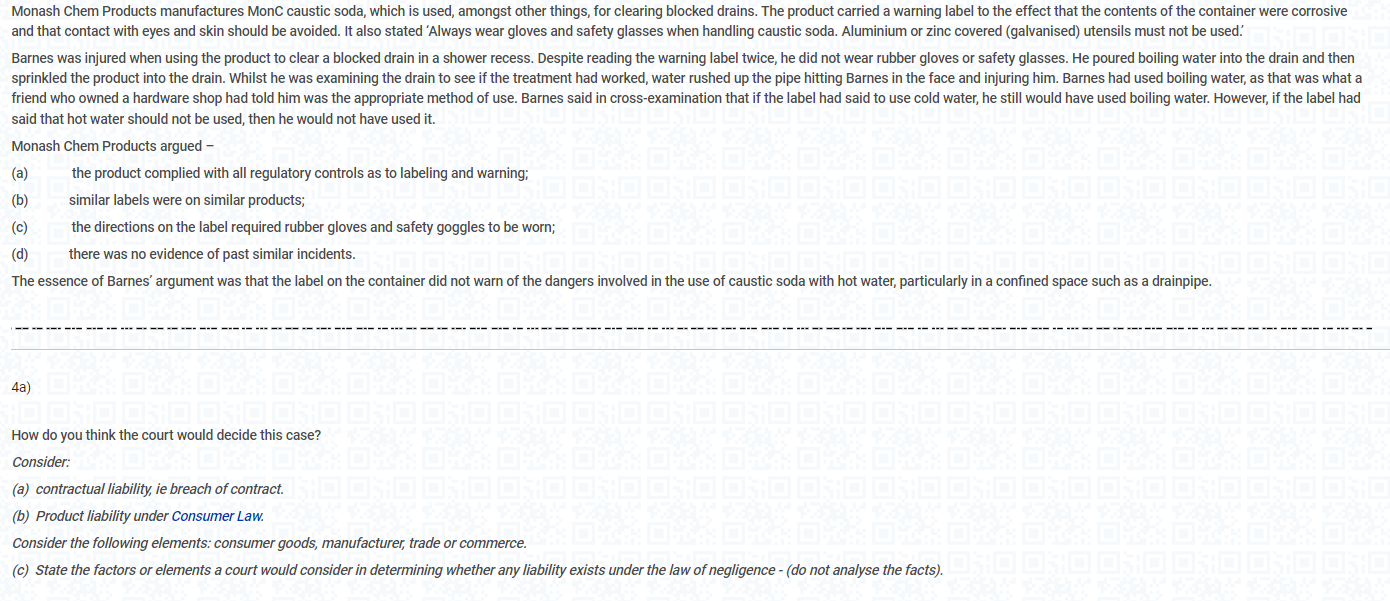
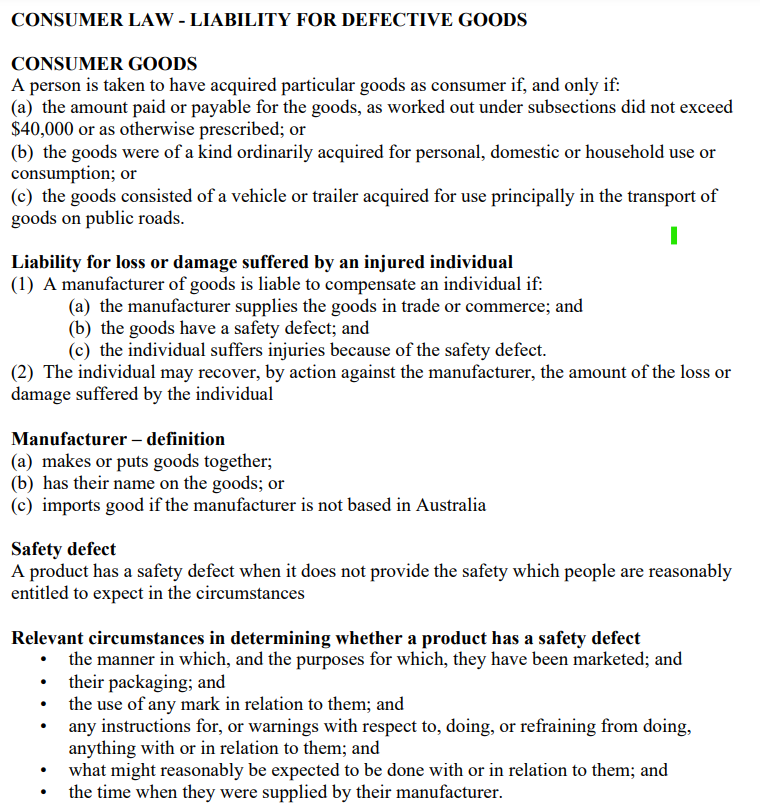
Monash Chem Products manufactures MonC caustic soda, which is used, amongst other things, for clearing blocked drains. The product carried a warning label to the effect that the contents of the container were corrosive and that contact with eyes and skin should be avoided. It also stated 'Always wear gloves and safety glasses when handling caustic soda. Aluminium or zinc covered (galvanised) utensils must not be used. Barnes was injured when using the product to clear a blocked drain in a shower recess. Despite reading the warning label twice, he did not wear rubber gloves or safety glasses. He poured boiling water into the drain and then sprinkled the product into the drain. Whilst he was examining the drain to see if the treatment had worked, water rushed up the pipe hitting Barnes in the face and injuring him. Barnes had used boiling water, as that was what a friend who owned a hardware shop had told him was the appropriate method of use. Barnes said in cross-examination that if the label had said to use cold water, he still would have used boiling water. However, if the label had said that hot water should not be used, then he would not have used it. Monash Chem Products argued - (a) the product complied with all regulatory controls as to labeling and warning; (b) similar labels were on similar products; SEA (c) the directions on the label required rubber gloves and safety goggles to be worn; (d) there was no evidence of past similar incidents. The essence of Barnes' argument was that the label on the container did not warn of the dangers involved in the use of caustic soda with hot water, particularly in a confined space such as a drainpipe. 4a) How do you think the court would decide this case? Consider: (a) contractual liability, ie breach of contract. (b) Product liability under Consumer Law. Consider the following elements: consumer goods, manufacturer, trade or commerce. (c) State the factors or elements a court would consider in determining whether any liability exists under the law of negligence - (do not analyse the facts).000 070 070 030 07:0 CONSUMER LAW - LIABILITY FOR DEFECTIVE GOODS CONSUMER GOODS A person is taken to have acquired particular goods as consumer if, and only if: (a) the amount paid or payable for the goods, as worked out under subsections did not exceed $40,000 or as otherwise prescribed; or (b) the goods were of a kind ordinarily acquired for personal, domestic or household use or consumption; or (c) the goods consisted of a vehicle or trailer acquired for use principally in the transport of goods on public roads. Liability for loss or damage suffered by an injured individual (1) A manufacturer of goods is liable to compensate an individual if: (a) the manufacturer supplies the goods in trade or commerce; and (b) the goods have a safety defect; and (c) the individual suffers injuries because of the safety defect. (2) The individual may recover, by action against the manufacturer, the amount of the loss or damage suffered by the individual Manufacturer - definition (a) makes or puts goods together; (b) has their name on the goods; or (c) imports good if the manufacturer is not based in Australia Safety defect A product has a safety defect when it does not provide the safety which people are reasonably entitled to expect in the circumstances Relevant circumstances in determining whether a product has a safety defect the manner in which, and the purposes for which, they have been marketed; and their packaging; and the use of any mark in relation to them; and . any instructions for, or warnings with respect to, doing, or refraining from doing, anything with or in relation to them; and what might reasonably be expected to be done with or in relation to them; and the time when they were supplied by their manufacturer. Monash Chem Products manufactures MonC caustic soda, which is used, amongst other things, for clearing blocked drains. The product carried a warning label to the effect that the contents of the container were corrosive and that contact with eyes and skin should be avoided. It also stated 'Always wear gloves and safety glasses when handling caustic soda. Aluminium or zinc covered (galvanised) utensils must not be used. Barnes was injured when using the product to clear a blocked drain in a shower recess. Despite reading the warning label twice, he did not wear rubber gloves or safety glasses. He poured boiling water into the drain and then sprinkled the product into the drain. Whilst he was examining the drain to see if the treatment had worked, water rushed up the pipe hitting Barnes in the face and injuring him. Barnes had used boiling water, as that was what a friend who owned a hardware shop had told him was the appropriate method of use. Barnes said in cross-examination that if the label had said to use cold water, he still would have used boiling water. However, if the label had said that hot water should not be used, then he would not have used it. Monash Chem Products argued - (a) the product complied with all regulatory controls as to labeling and warning; (b) similar labels were on similar products; SEA (c) the directions on the label required rubber gloves and safety goggles to be worn; (d) there was no evidence of past similar incidents. The essence of Barnes' argument was that the label on the container did not warn of the dangers involved in the use of caustic soda with hot water, particularly in a confined space such as a drainpipe. 4a) How do you think the court would decide this case? Consider: (a) contractual liability, ie breach of contract. (b) Product liability under Consumer Law. Consider the following elements: consumer goods, manufacturer, trade or commerce. (c) State the factors or elements a court would consider in determining whether any liability exists under the law of negligence - (do not analyse the facts).000 070 070 030 07:0 CONSUMER LAW - LIABILITY FOR DEFECTIVE GOODS CONSUMER GOODS A person is taken to have acquired particular goods as consumer if, and only if: (a) the amount paid or payable for the goods, as worked out under subsections did not exceed $40,000 or as otherwise prescribed; or (b) the goods were of a kind ordinarily acquired for personal, domestic or household use or consumption; or (c) the goods consisted of a vehicle or trailer acquired for use principally in the transport of goods on public roads. Liability for loss or damage suffered by an injured individual (1) A manufacturer of goods is liable to compensate an individual if: (a) the manufacturer supplies the goods in trade or commerce; and (b) the goods have a safety defect; and (c) the individual suffers injuries because of the safety defect. (2) The individual may recover, by action against the manufacturer, the amount of the loss or damage suffered by the individual Manufacturer - definition (a) makes or puts goods together; (b) has their name on the goods; or (c) imports good if the manufacturer is not based in Australia Safety defect A product has a safety defect when it does not provide the safety which people are reasonably entitled to expect in the circumstances Relevant circumstances in determining whether a product has a safety defect the manner in which, and the purposes for which, they have been marketed; and their packaging; and the use of any mark in relation to them; and . any instructions for, or warnings with respect to, doing, or refraining from doing, anything with or in relation to them; and what might reasonably be expected to be done with or in relation to them; and the time when they were supplied by their manufacturerStep by Step Solution
There are 3 Steps involved in it
1 Expert Approved Answer
Step: 1 Unlock

Question Has Been Solved by an Expert!
Get step-by-step solutions from verified subject matter experts
Step: 2 Unlock
Step: 3 Unlock
 Study Help