



Question: Please answer questions in the style they are presented. I've asked 3 other professionals and they were unable to correctly answer them. Periodic Inventory by


Please answer questions in the style they are presented. I've asked 3 other professionals and they were unable to correctly answer them.
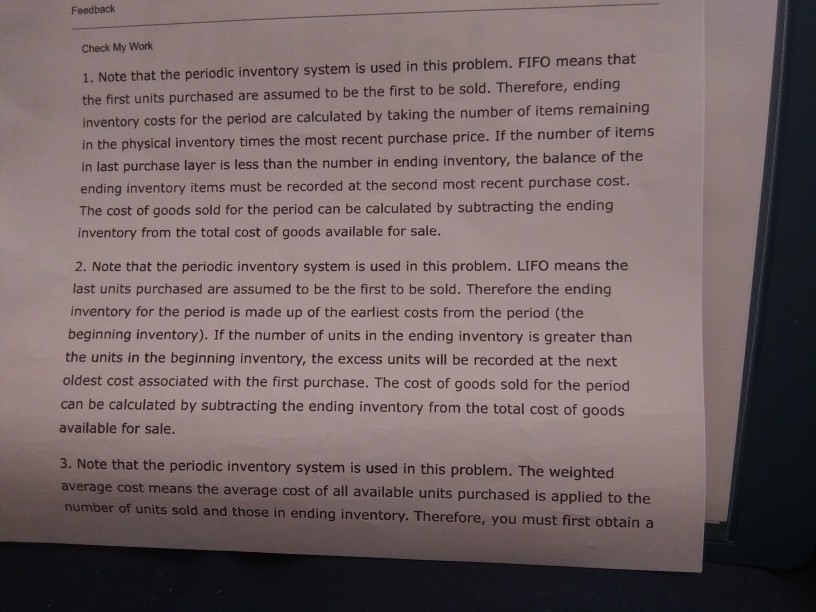
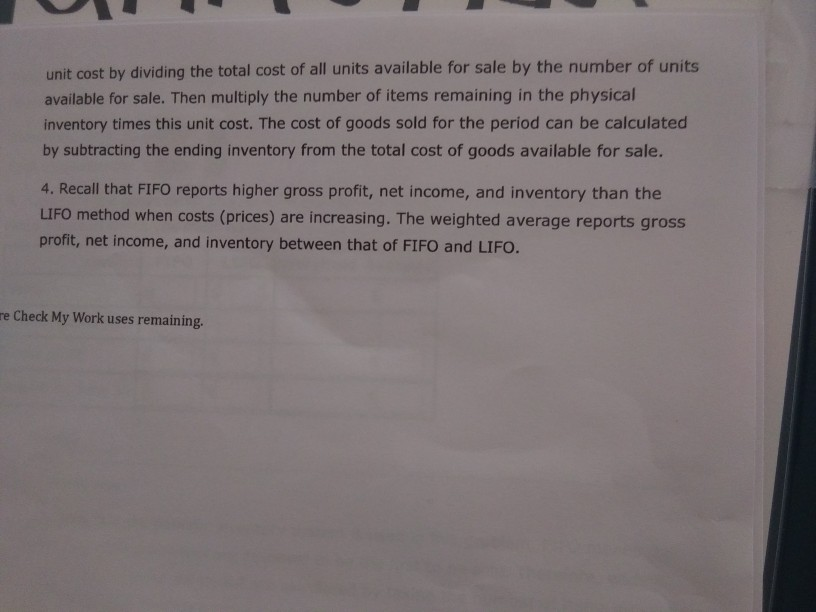
Periodic Inventory by Three Methods he beginning inventory for Dunne Co. and data on purchases and sales for a three-month period are as follows: Number Date Transaction of Units Per Unit Total Apr. 3 Inventory 25 $1,200 $30,000 8 Purchase 1,240 93,000 11 Sale 40 2,000 80,000 30 Sale 2,000 60,000 May 8 Purchase 1,260 75,600 10 Sale 2,000 100,000 19 Sale 2,000 40,000 28 Purchase 1,260 100,800 June 5 Sale 2,250 90,000 16 Sale 2,250 56,250 21 Purchase 35 1,264 44,240 28 Sale 2,250 99,000 Required: 35 21 Purchase 28 Sale 1,264 2,250 44,240 99,000 44 Required: 1. Determine the inventory on June 30 and the cost of goods sold for the three-month period, using the first-in, first-out method and the periodic inventory system. Inventory, June 30 $ Cost of goods sold $ 2. Determine the inventory on June 30 and the cost of goods sold for the three-month period, using the last-in, first-out method and the periodic inventory system. Inventory, June 30 $ Cost of goods sold $ 3. Determine the inventory on June 30 and the cost of goods sold for the three-month period, using the weighted average cost method and the periodic inventory system Note: Round the weighted average unit cost to the nearest dollar and final answers to the nearest dollar. Inventory, June 30 $ Cost of goods sold $ 4. Compare the gross profit and June 30 inventories using the following column headings. For those boxes in which you must enter subtracted or negative numbers use a minus sign. FIFO LIFO Weighted Average Sales $ $ TO Cost of goods sold Gross profit $ $ $ Inventory, June 30 $ $ $ Feedback Check My Work 1. Note that the periodic inventory system is used in this problem. FIFO means that the first units purchased are assumed to be the first to be sold. Therefore, ending inventory costs for the period are calculated by taking the number of items remaining Feedback Check My Work 1. Note that the periodic inventory system is used in this problem. FIFO means that the first units purchased are assumed to be the first to be sold. Therefore, ending inventory costs for the period are calculated by taking the number of items remaining in the physical inventory times the most recent purchase price. If the number of items in last purchase layer is less than the number in ending inventory, the balance of the ending inventory items must be recorded at the second most recent purchase cost. The cost of goods sold for the period can be calculated by subtracting the ending inventory from the total cost of goods available for sale. 2. Note that the periodic inventory system is used in this problem. LIFO means the last units purchased are assumed to be the first to be sold. Therefore the ending inventory for the period is made up of the earliest costs from the period (the beginning inventory). If the number of units in the ending inventory is greater than the units in the beginning inventory, the excess units will be recorded at the next oldest cost associated with the first purchase. The cost of goods sold for the period can be calculated by subtracting the ending inventory from the total cost of goods available for sale. 3. Note that the periodic inventory system is used in this problem. The weighted average cost means the average cost of all available units purchased is applied to the number of units sold and those in ending inventory. Therefore, you must first obtain a unit cost by dividing the total cost of all units available for sale by the number of units available for sale. Then multiply the number of items remaining in the physical inventory times this unit cost. The cost of goods sold for the period can be calculated by subtracting the ending inventory from the total cost of goods available for sale. 4. Recall that FIFO reports higher gross profit, net income, and inventory than the LIFO method when costs (prices) are increasing. The weighted average reports gross profit, net income, and inventory between that of FIFO and LIFO. re Check My Work uses remaining
Step by Step Solution
There are 3 Steps involved in it

Get step-by-step solutions from verified subject matter experts