







Question: Please answer the last 2 question for each problem 2. [Covered Interest Parity Condition] Suppose that you have $1 to invest. You have two investment
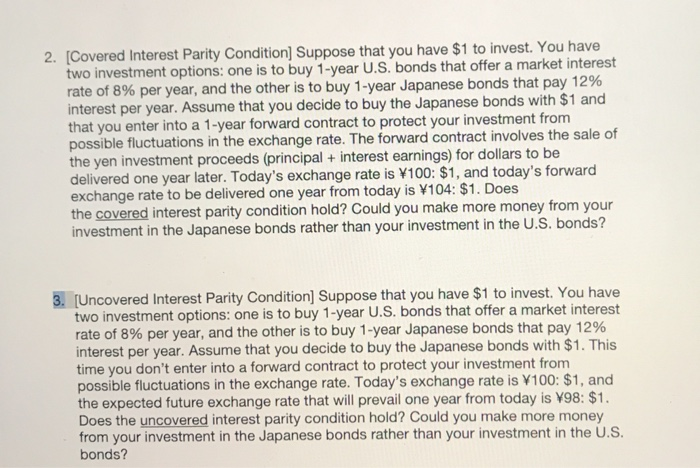
2. [Covered Interest Parity Condition] Suppose that you have $1 to invest. You have two investment options: one is to buy 1-year U.S. bonds that offer a market interest rate of 8% per year, and the other is to buy 1-year Japanese bonds that pay 12% interest per year. Assume that you decide to buy the Japanese bonds with $1 and that you enter into a 1-year forward contract to protect your investment from possible fluctuations in the exchange rate. The forward contract involves the sale of the yen investment proceeds (principal + interest earnings) for dollars to be delivered one year later. Today's exchange rate is 100: $1, and today's forward exchange rate to be delivered one year from today is V104: $1. Does the covered interest parity condition hold? Could you make more money from your investment in the Japanese bonds rather than your investment in the U.S. bonds? 3. [Uncovered Interest Parity Condition] Suppose that you have $1 to invest. You have two investment options: one is to buy 1-year U.S. bonds that offer a market interest rate of 8% per year, and the other is to buy 1-year Japanese bonds that pay 12% interest per year. Assume that you decide to buy the Japanese bonds with $1. This time you don't enter into a forward contract to protect your investment from possible fluctuations in the exchange rate. Today's exchange rate is V100: $1, and the expected future exchange rate that will prevail one year from today is V98: $1. Does the uncovered interest parity condition hold? Could you make more money from your investment in the Japanese bonds rather than your investment in the U.S. bonds
Step by Step Solution
There are 3 Steps involved in it

Get step-by-step solutions from verified subject matter experts
 Study Help