







Question: Please be specific, answer all parts step by step, and show the formula you use. Thank you! 1. (a) The risk-free rate of return is
 Please be specific, answer all parts step by step, and show the formula you use. Thank you!
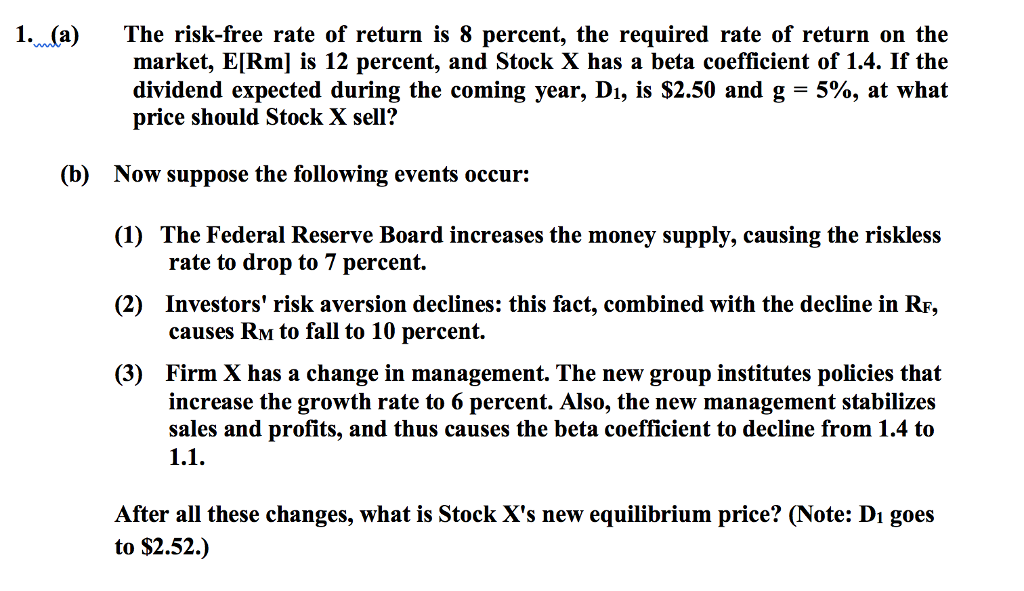
1. (a) The risk-free rate of return is 8 percent, the required rate of return on the market, E[Rm] is 12 percent, and Stock X has a beta coefficient of 1.4. If the dividend expected during the coming year, D, is $2.50 and g = 5%, at what price should Stock X sell? Now suppose the following events occur: (1) (2) (3) (b) The Federal Reserve Board increases the money supply, causing the riskless rate to drop to 7 percent. Investors' risk aversion declines: this fact, combined with the decline in RF, causes RM to fall to 10 percent. Firm X has a change in management. The new group institutes policies that increase the growth rate to 6 percent. Also, the new management stabilizes sales and profits, and thus causes the beta coefficient to decline from 1.4 to After all these changes, what is Stock X's new equilibrium price? (Note: Di goes to $2.52.)
Step by Step Solution
There are 3 Steps involved in it

Get step-by-step solutions from verified subject matter experts
 Study Help