







Question: Please can anyone solve this this is the for point 1 EXERCISES/PROBLEMS 1. [ROA and ROE models and Ratio Components] The Salza Technology Corporation successfully
![EXERCISES/PROBLEMS 1. [ROA and ROE models and Ratio Components] The Salza Technology](https://dsd5zvtm8ll6.cloudfront.net/si.experts.images/questions/2024/09/66fa3ed515582_11666fa3ed4b4346.jpg)
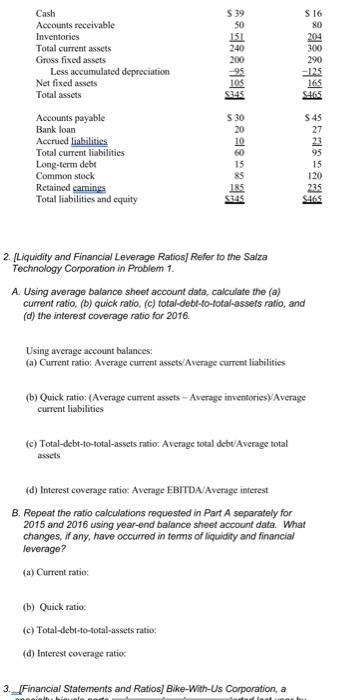
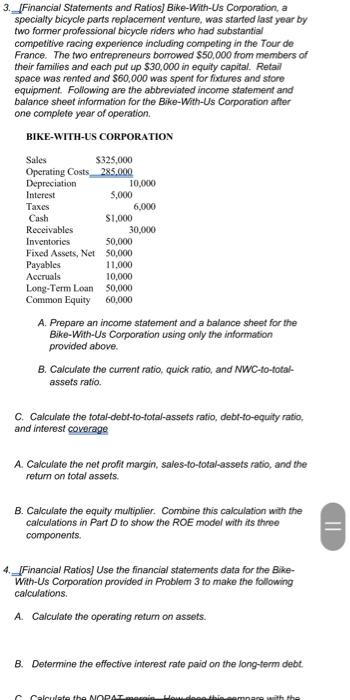
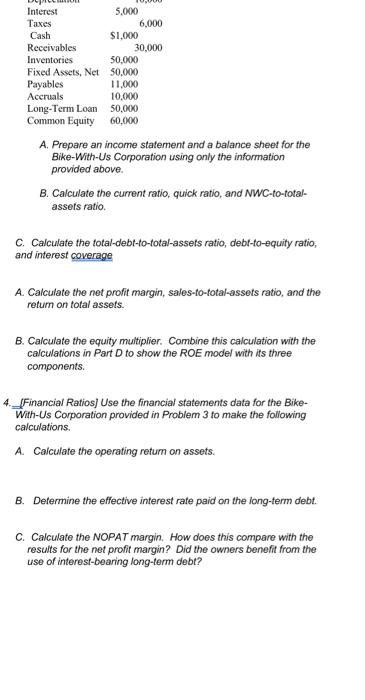
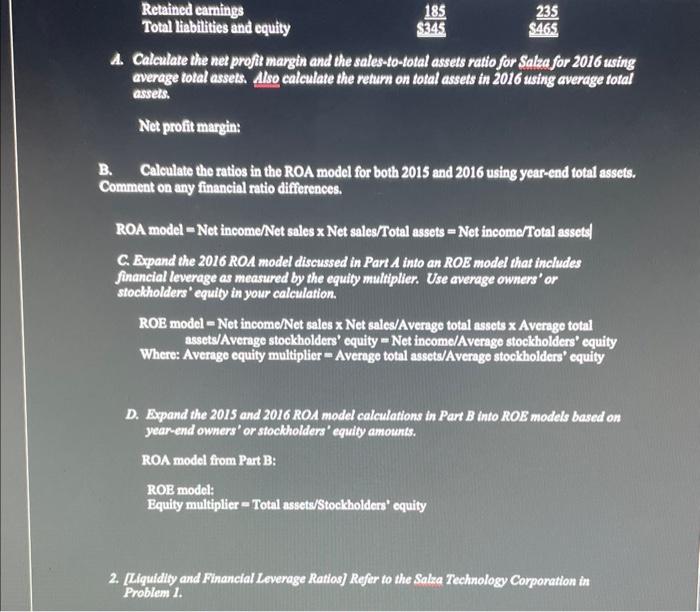
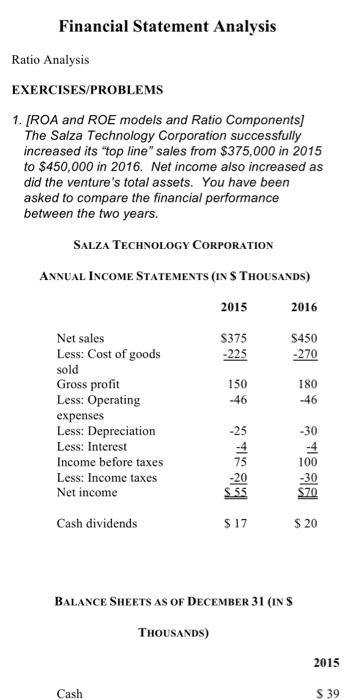
EXERCISES/PROBLEMS 1. [ROA and ROE models and Ratio Components] The Salza Technology Corporation successfully increased its \"top line\" sales from \\( \\$ 375,000 \\) in 2015 to \\( \\$ 450,000 \\) in 2016. Net income also increased as did the venture's total assets. You have been asked to compare the financial performance between the two years. SALZA TEChNOLOGY CORPORATION ANNUAL INCOME Statements (IN \\$ Thousands) 4. Calculate the net profit margin and the sales-to-total assets ratio for Salea for 2016 using average total assets. Also calculate the return on total assets in 2016 using average total asseks. Net profit margin: B. Caleulate the ratios in the ROA model for both 2015 and 2016 using year-end total assets. Comment on any financial ratio differences. ROA model - Net income/Net sales \\( x \\) Net sales/Total assets \\( = \\) Net income/Total assets C. Appand the 2016 ROA model discussed in Part A into an ROE model that includes financial leverage as measured by the equity multiplier. Use average owners' or stockholders' equily in your calculation. ROB model \\( = \\) Net income/Net sales \\( x \\) Net sales/Average total assets \\( x \\) Averago total assets/Average stockholders' equity = Net income/Average stockholders' equity Where: Average equity multiplier = Average total assets/Average stockholders' equity D. Expand the 2015 and 2016 ROA model calculations in Part B into ROE models based on year-end owners' or stockholders' equily amounts. ROA model from Part B: ROB model: Bquity multiplier = Total assets/Stockholders' equity 2. [Mquidity and Financial Leverage Ratios] Refar to the Salka Technology Corponation in Problem 1. 2. [Liquidity and Financial Leverage Ratios] Refer to the Salza Technology Corporation in Problem 1. A. Using average balance sheet account data, calculate the (a) current ratio, (b) quick ratio, (c) total-debt-to-total-assets ratio, and (d) the interest coverage ratio for 2016. Using average account balances: (a) Current ratio: Average current assets/Average current liabilities (b) Quick ratio: (Average current assets - Average imventories)/Average current liabilities (c) Total-debt-to-total-assets ratio: Average total debt/Average total assets (d) Interest coverage ratio: Average EBITDA/Average interest B. Repeat the ratio calculations requested in Part A separately for 2015 and 2016 using year-end balance sheet account data. What changes, if any, have occurred in terms of liquidity and financial leverage? (a) Current ratio: (b) Quick ratio: (c) Total-debt-to-total-assets ratio: (d) Interest coverage ratio: 3. [Financial Statements and Ratios] Bike-With-Us Corporation, a A. Prepare an income statement and a balance sheet for the Bike-With-Us Corporation using only the information provided above. B. Calculate the current ratio, quick ratio, and NWC-to-totalassets ratio. C. Calculate the total-debt-to-total-assets ratio, debt-to-equity ratio, and interest coverage A. Calculate the net profit margin, sales-to-total-assets ratio, and the retum on total assets. B. Calculate the equity multiplier. Combine this calculation with the calculations in Part D to show the ROE model with its three components. 4. [Financial Ratios] Use the financial statements data for the BikeWith-Us Corporation provided in Problem 3 to make the following calculations. A. Calculate the operating retum on assets. B. Defermine the effective interest rate paid on the long-term debt. C. Calculate the NOPAT margin. How does this compare with the results for the net profit margin? Did the owners benefit from the use of interest-bearing long-term debt? to compare the Inancial periormance between the two years. Salza Techologr Coreroration ANUAL. INCONE STATEMENTS (IVS THoUsAvDs) BALANCE SHEETS AS OF DECEMEER 31 (INS THotsANDS) 2. [Liquidity and Financial Leverage Ratios] Refer to the Salza Technology Corporation in Problem 1. A. Using average balance sheet account data, calculate the (a) current ratio, (b) quick ratio, (c) total-debt-fo-total-assets ratio, and (d) the interest coverage ratio for 2016. Using average account balances: (a) Current ratio: Average current assets/Average current liabilities 3. [Financial Statements and Ratios] Bike-With-Us Corporation, a specialty bicycle parts replacement venture, was started last year by two former professional bicycle riders who had substantial competitive racing experience including competing in the Tour de France. The two entrepreneurs borrowed \\( \\$ 50,000 \\) from members of their families and each put up \\( \\$ 30,000 \\) in equity capital. Retall space was rented and \\( \\$ 60,000 \\) was spent for fixtures and store equipment. Following are the abbreviated income statement and balance sheet information for the Bike-With-Us Corporation after one complete year of operation. A. Prepare an income statement and a balance sheet for the Bike-With-Us Corporation using only the information provided above. B. Calculate the current ratio, quick ratio, and NWC-to-fotalassets ratio. C. Calculate the total-debt-to-fotal-assets ratio, debt-to-equity ratio, and interest coverage A. Calculate the net profit margin, sales-to-total-assets ratio, and the return on total assets. B. Calculate the equity multiplier. Combine this calculation with the calculations in Part D to show the ROE model with its three components. 4. [Financial Ratios] Use the financial statements data for the BikeWith-Us Corporation provided in Problem 3 to make the following calculations. A. Calculate the operating retum on assets. B. Determine the effective interest rate paid on the long-term debt. EXERCISES/PROBLEMS 1. [ROA and ROE models and Ratio Components] The Salza Technology Corporation successfully increased its \"top line\" sales from \\( \\$ 375,000 \\) in 2015 to \\( \\$ 450,000 \\) in 2016. Net income also increased as did the venture's total assets. You have been asked to compare the financial performance between the two years. SALZA TEChNOLOGY CORPORATION ANNUAL INCOME Statements (IN \\$ Thousands) 4. Calculate the net profit margin and the sales-to-total assets ratio for Salea for 2016 using average total assets. Also calculate the return on total assets in 2016 using average total asseks. Net profit margin: B. Caleulate the ratios in the ROA model for both 2015 and 2016 using year-end total assets. Comment on any financial ratio differences. ROA model - Net income/Net sales \\( x \\) Net sales/Total assets \\( = \\) Net income/Total assets C. Appand the 2016 ROA model discussed in Part A into an ROE model that includes financial leverage as measured by the equity multiplier. Use average owners' or stockholders' equily in your calculation. ROB model \\( = \\) Net income/Net sales \\( x \\) Net sales/Average total assets \\( x \\) Averago total assets/Average stockholders' equity = Net income/Average stockholders' equity Where: Average equity multiplier = Average total assets/Average stockholders' equity D. Expand the 2015 and 2016 ROA model calculations in Part B into ROE models based on year-end owners' or stockholders' equily amounts. ROA model from Part B: ROB model: Bquity multiplier = Total assets/Stockholders' equity 2. [Mquidity and Financial Leverage Ratios] Refar to the Salka Technology Corponation in Problem 1. 2. [Liquidity and Financial Leverage Ratios] Refer to the Salza Technology Corporation in Problem 1. A. Using average balance sheet account data, calculate the (a) current ratio, (b) quick ratio, (c) total-debt-to-total-assets ratio, and (d) the interest coverage ratio for 2016. Using average account balances: (a) Current ratio: Average current assets/Average current liabilities (b) Quick ratio: (Average current assets - Average imventories)/Average current liabilities (c) Total-debt-to-total-assets ratio: Average total debt/Average total assets (d) Interest coverage ratio: Average EBITDA/Average interest B. Repeat the ratio calculations requested in Part A separately for 2015 and 2016 using year-end balance sheet account data. What changes, if any, have occurred in terms of liquidity and financial leverage? (a) Current ratio: (b) Quick ratio: (c) Total-debt-to-total-assets ratio: (d) Interest coverage ratio: 3. [Financial Statements and Ratios] Bike-With-Us Corporation, a A. Prepare an income statement and a balance sheet for the Bike-With-Us Corporation using only the information provided above. B. Calculate the current ratio, quick ratio, and NWC-to-totalassets ratio. C. Calculate the total-debt-to-total-assets ratio, debt-to-equity ratio, and interest coverage A. Calculate the net profit margin, sales-to-total-assets ratio, and the retum on total assets. B. Calculate the equity multiplier. Combine this calculation with the calculations in Part D to show the ROE model with its three components. 4. [Financial Ratios] Use the financial statements data for the BikeWith-Us Corporation provided in Problem 3 to make the following calculations. A. Calculate the operating retum on assets. B. Defermine the effective interest rate paid on the long-term debt. C. Calculate the NOPAT margin. How does this compare with the results for the net profit margin? Did the owners benefit from the use of interest-bearing long-term debt? to compare the Inancial periormance between the two years. Salza Techologr Coreroration ANUAL. INCONE STATEMENTS (IVS THoUsAvDs) BALANCE SHEETS AS OF DECEMEER 31 (INS THotsANDS) 2. [Liquidity and Financial Leverage Ratios] Refer to the Salza Technology Corporation in Problem 1. A. Using average balance sheet account data, calculate the (a) current ratio, (b) quick ratio, (c) total-debt-fo-total-assets ratio, and (d) the interest coverage ratio for 2016. Using average account balances: (a) Current ratio: Average current assets/Average current liabilities 3. [Financial Statements and Ratios] Bike-With-Us Corporation, a specialty bicycle parts replacement venture, was started last year by two former professional bicycle riders who had substantial competitive racing experience including competing in the Tour de France. The two entrepreneurs borrowed \\( \\$ 50,000 \\) from members of their families and each put up \\( \\$ 30,000 \\) in equity capital. Retall space was rented and \\( \\$ 60,000 \\) was spent for fixtures and store equipment. Following are the abbreviated income statement and balance sheet information for the Bike-With-Us Corporation after one complete year of operation. A. Prepare an income statement and a balance sheet for the Bike-With-Us Corporation using only the information provided above. B. Calculate the current ratio, quick ratio, and NWC-to-fotalassets ratio. C. Calculate the total-debt-to-fotal-assets ratio, debt-to-equity ratio, and interest coverage A. Calculate the net profit margin, sales-to-total-assets ratio, and the return on total assets. B. Calculate the equity multiplier. Combine this calculation with the calculations in Part D to show the ROE model with its three components. 4. [Financial Ratios] Use the financial statements data for the BikeWith-Us Corporation provided in Problem 3 to make the following calculations. A. Calculate the operating retum on assets. B. Determine the effective interest rate paid on the long-term debt
Step by Step Solution
There are 3 Steps involved in it

Get step-by-step solutions from verified subject matter experts
 Study Help