







Question: PLEASE CHOOSE THE RIGHT ANSWER FOR THE WRONG ONE Quizze G Tomat X Chapt X * Duolin x UD Intern. > + talon.kirkwood.edu/d21/Ims/quizzing/user/attempt/quiz_start_frame_auto.d21?ou=179536&isprv=&drc=0&qi=527075&cfql=0&dnb=0... G Q
PLEASE CHOOSE THE RIGHT ANSWER FOR THE WRONG ONE
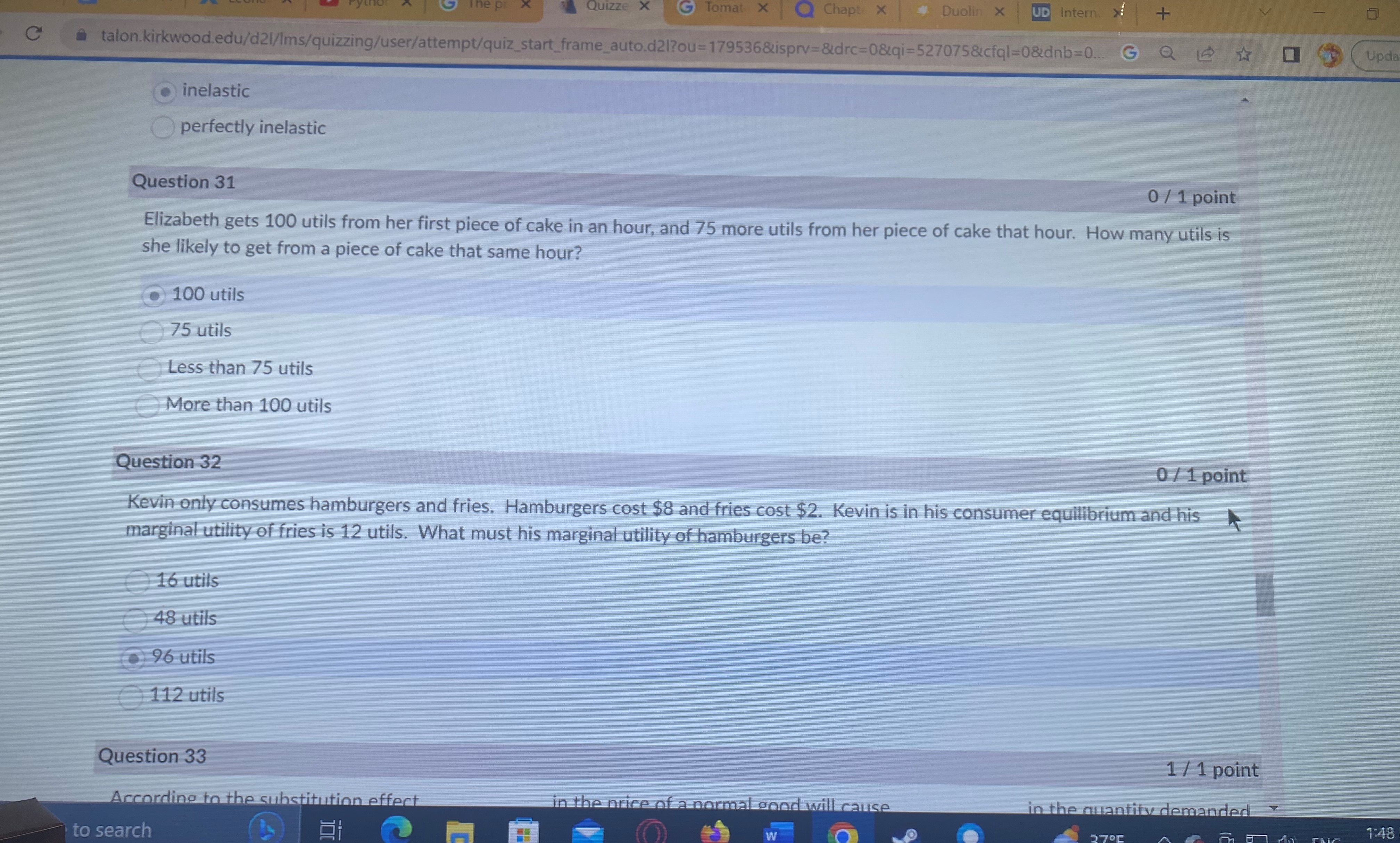
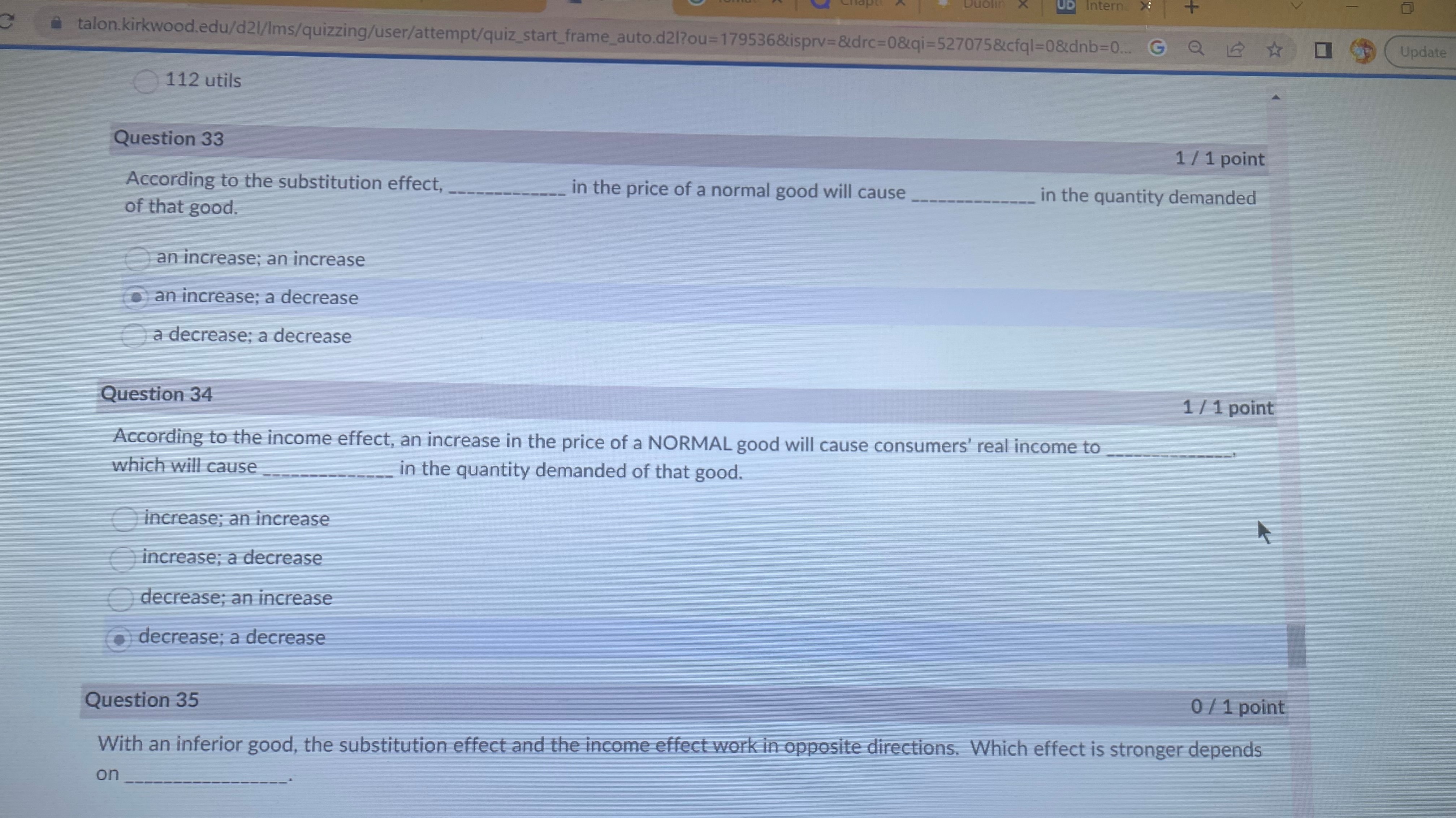
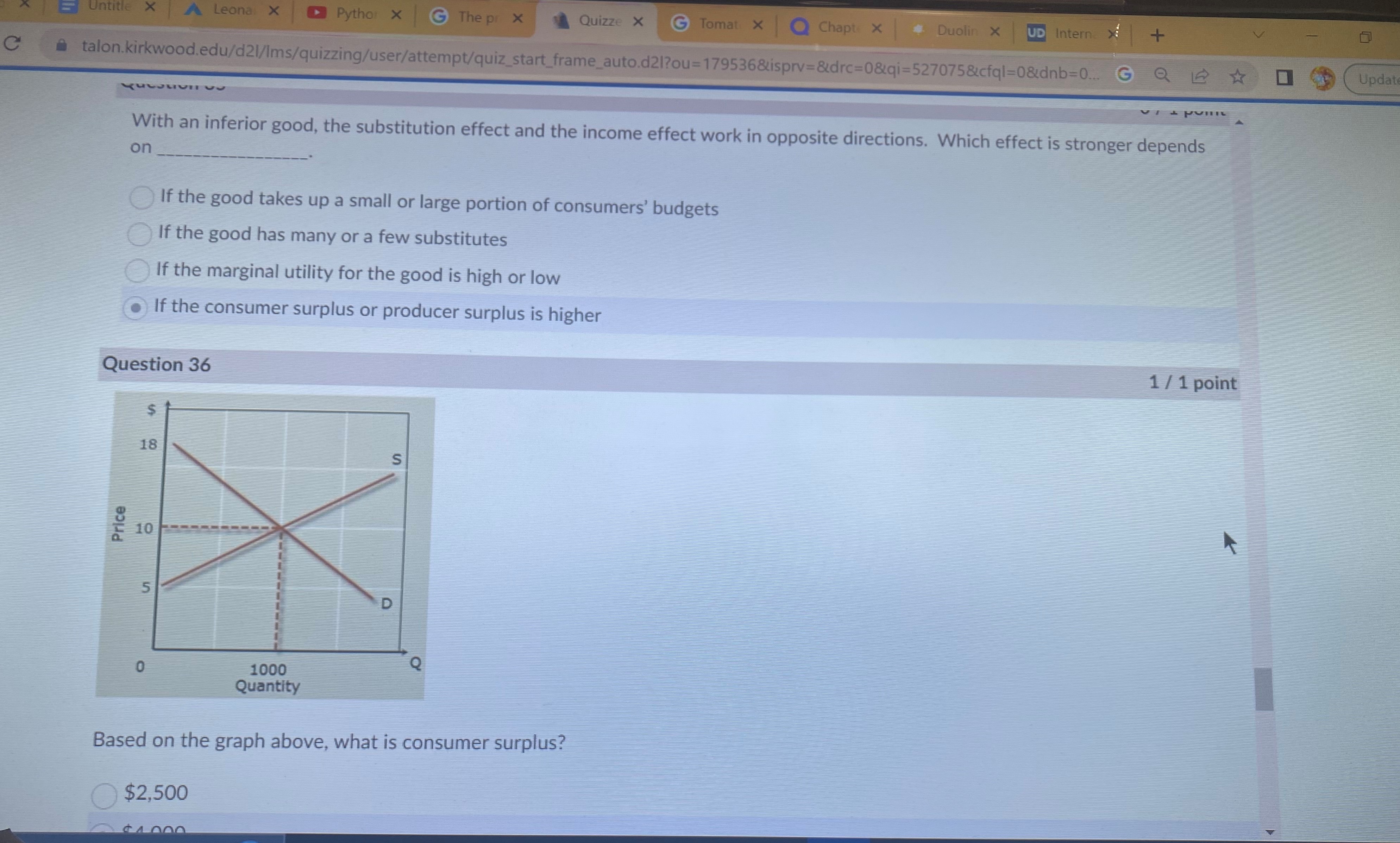
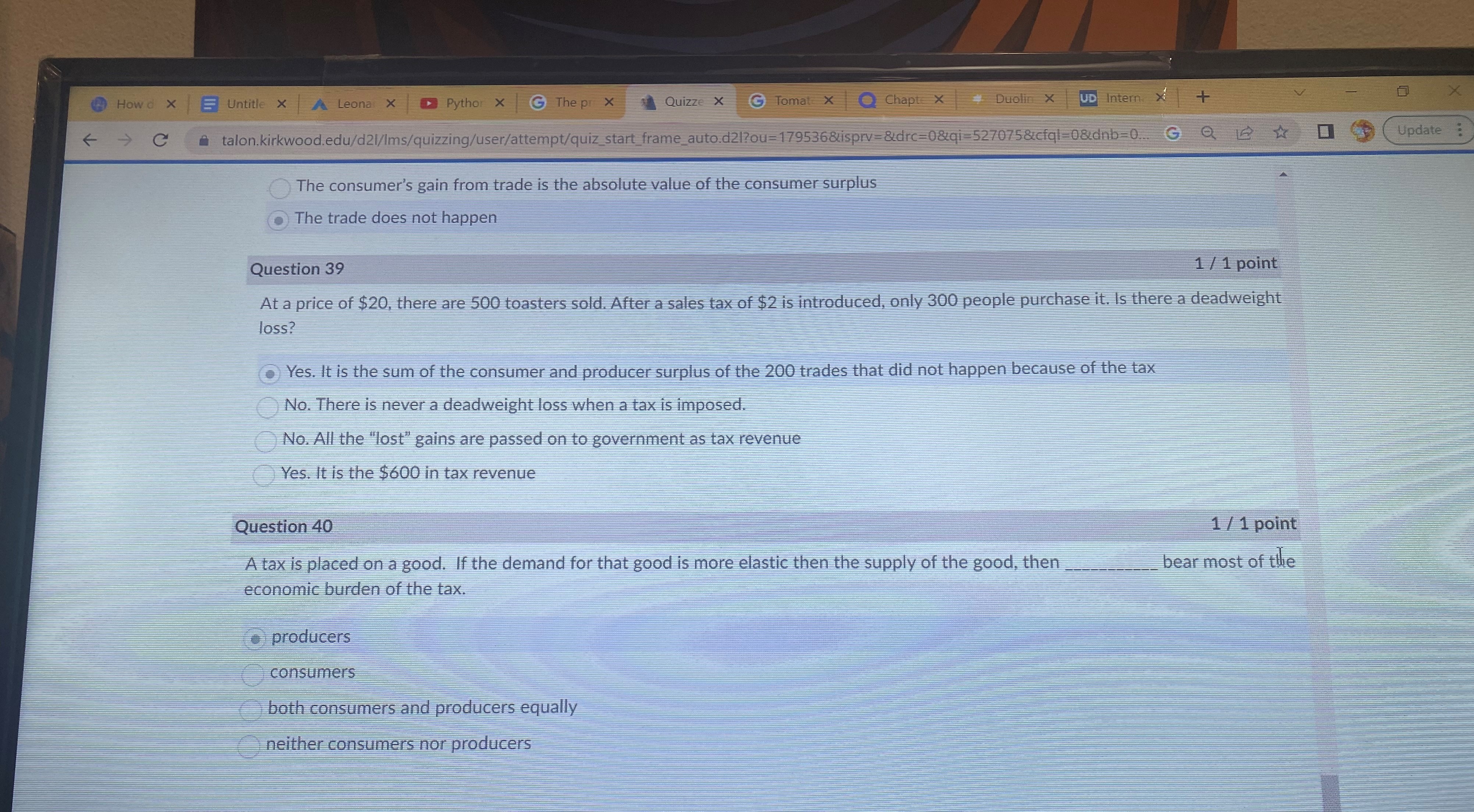
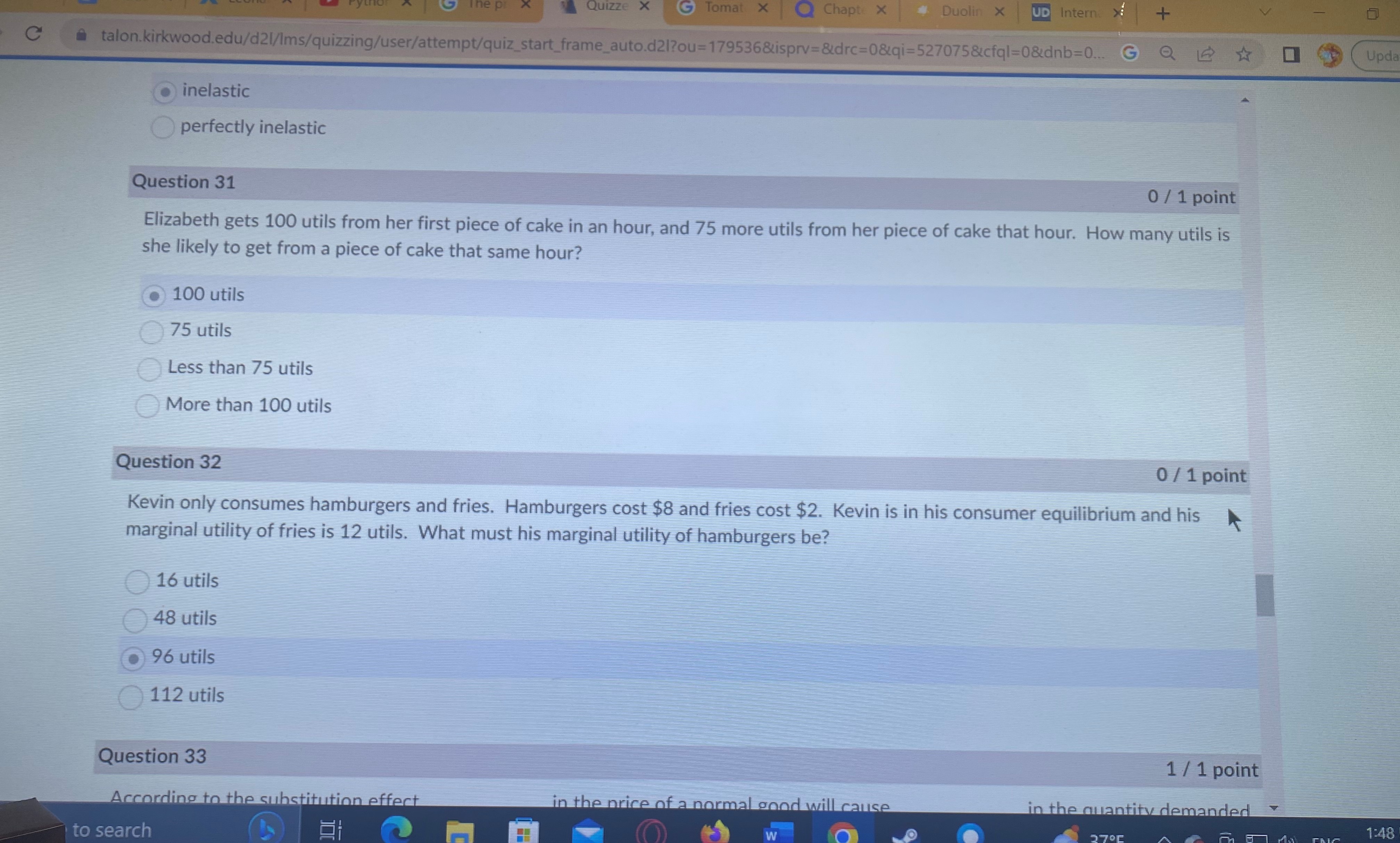
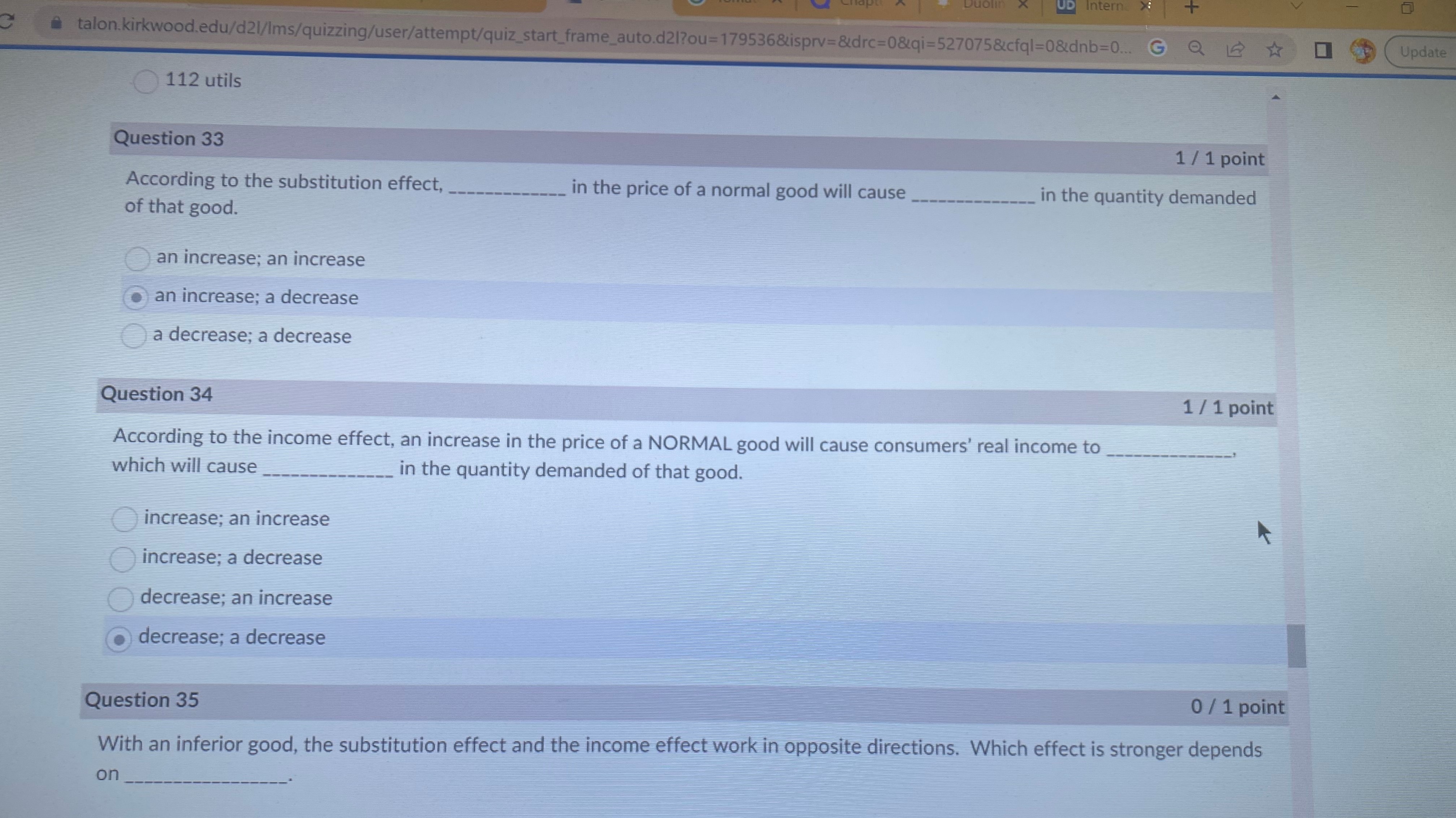
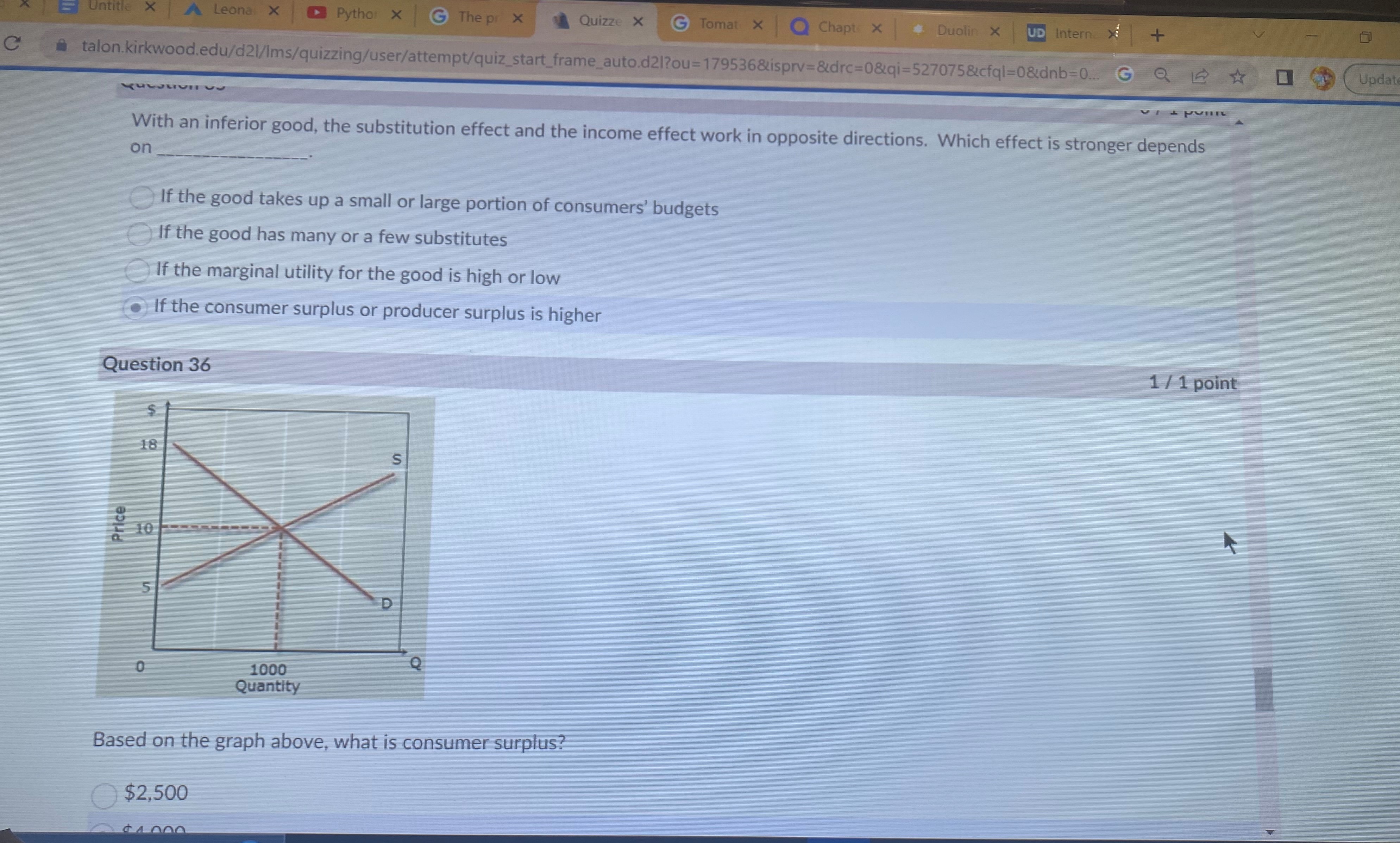
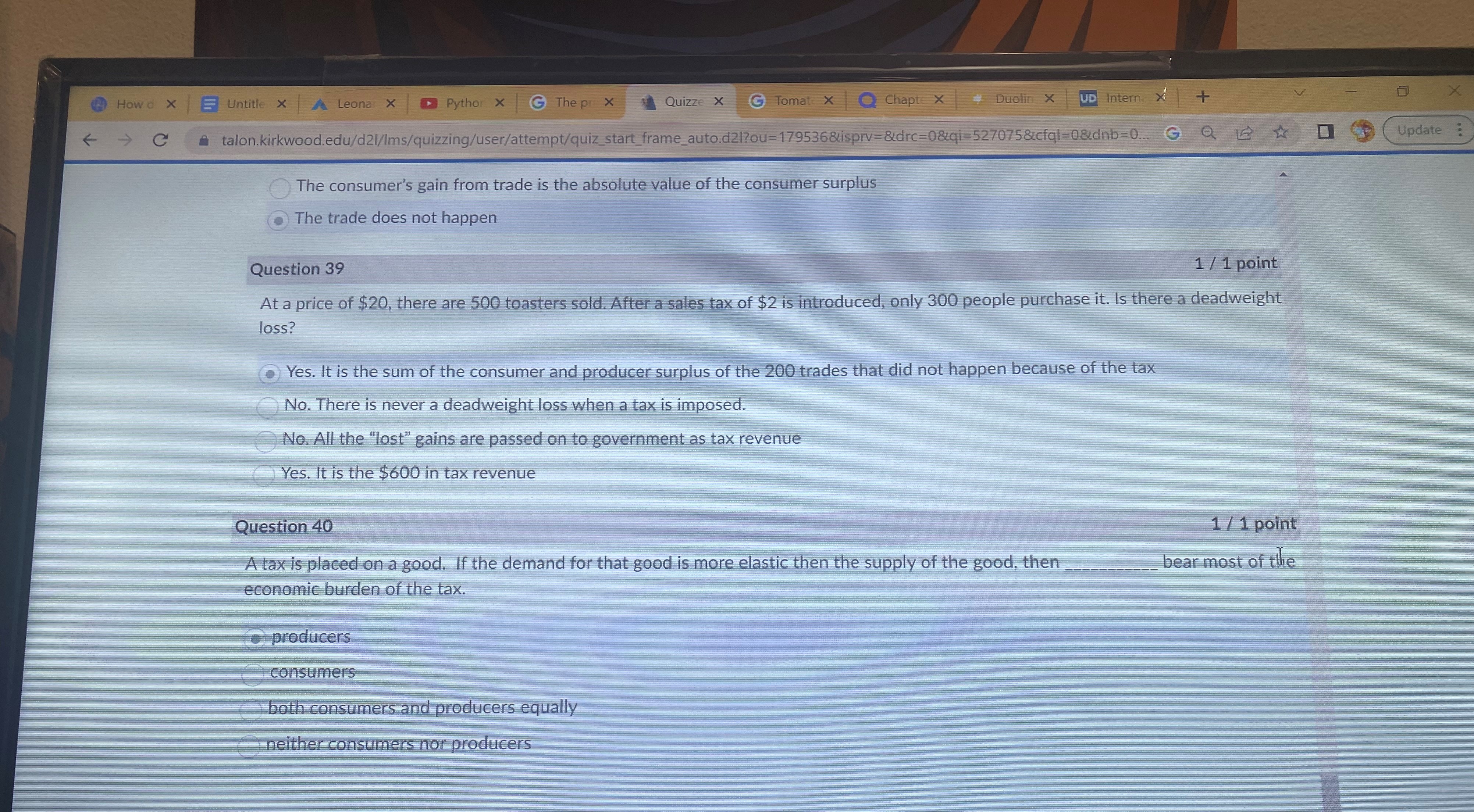
Quizze G Tomat X Chapt X * Duolin x UD Intern. > + talon.kirkwood.edu/d21/Ims/quizzing/user/attempt/quiz_start_frame_auto.d21?ou=179536&isprv=&drc=0&qi=527075&cfql=0&dnb=0... G Q 2 * Upda inelastic perfectly inelastic Question 31 0 / 1 point Elizabeth gets 100 utils from her first piece of cake in an hour, and 75 more utils from her piece of cake that hour. How many utils is she likely to get from a piece of cake that same hour? 100 utils 75 utils Less than 75 utils More than 100 utils Question 32 0 / 1 point Kevin only consumes hamburgers and fries. Hamburgers cost $8 and fries cost $2. Kevin is in his consumer equilibrium and his marginal utility of fries is 12 utils. What must his marginal utility of hamburgers be? 16 utils 48 utils 96 utils 112 utils Question 33 1 / 1 point According to the substitution effect in the price of a normal good will cause in the quantity demanded Y to search O W 1:48UD Intern talon.kirkwood.edu/d21/Ims/quizzing/user/attempt/quiz_start_frame_auto.d21?ou=179536&isprv=&drc=0&qi=527075&cfql=0&dnb=0... GQ Update 112 utils Question 33 1 / 1 point According to the substitution effect, in the price of a normal good will cause in the quantity demanded of that good. an increase; an increase . an increase; a decrease a decrease; a decrease Question 34 1 / 1 point According to the income effect, an increase in the price of a NORMAL good will cause consumers' real income to which will cause in the quantity demanded of that good. increase; an increase increase; a decrease O decrease; an increase decrease; a decrease Question 35 0 / 1 point With an inferior good, the substitution effect and the income effect work in opposite directions. Which effect is stronger depends onUntitle X A Leona X Pytho X G The pr X Quizze X G Tomat X Chapt x * Duolin x UD Intern X + C talon.kirkwood.edu/d21/Ims/quizzing/user/attempt/quiz_start_frame_auto.d21?ou=179536&isprv=&drc=0&qi=527075&cfql=0&dnb=0... G Q 2 x Update & PUILIL With an inferior good, the substitution effect and the income effect work in opposite directions. Which effect is stronger depends on If the good takes up a small or large portion of consumers' budgets If the good has many or a few substitutes If the marginal utility for the good is high or low If the consumer surplus or producer surplus is higher Question 36 1 / 1 point 18 Price 10 0 1000 Quantity Based on the graph above, what is consumer surplus? $2,500 LonAHowd X _ Untitle X A Leona X Pythor X G The pr X Quizze x G Tomat X O Chapt X - Duolin x UD Intern X + V X C talon.kirkwood.edu/d21/Ims/quizzing/user/attempt/quiz_start_frame_auto.d21?ou=179536&isprv=&drc=0&qi=527075&cfql=08dnb=0... G Q 2 * 06 Update The consumer's gain from trade is the absolute value of the consumer surplus . The trade does not happen Question 39 1 / 1 point At a price of $20, there are 500 toasters sold. After a sales tax of $2 is introduced, only 300 people purchase it. Is there a deadweight loss? . Yes. It is the sum of the consumer and producer surplus of the 200 trades that did not happen because of the tax No. There is never a deadweight loss when a tax is imposed. No. All the "lost" gains are passed on to government as tax revenue Yes. It is the $600 in tax revenue Question 40 1 / 1 point A tax is placed on a good. If the demand for that good is more elastic then the supply of the good, then bear most of the economic burden of the tax. producers consumers both consumers and producers equally neither consumers nor producers
Step by Step Solution
There are 3 Steps involved in it

Get step-by-step solutions from verified subject matter experts
 Study Help