







Question: please complete all parts to this question. Complete ratio analysis, recognizing significant differences Home Health, Inc., has come to Jane Ross for a yearly financial
please complete all parts to this question.
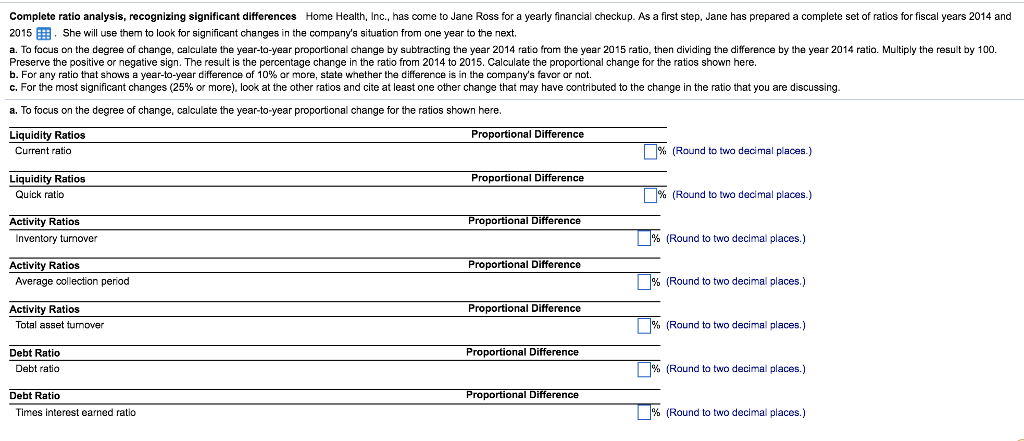
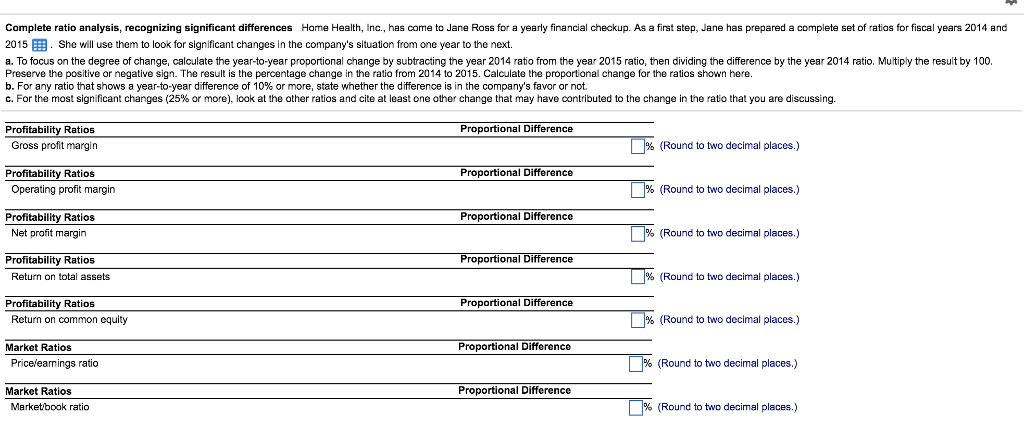
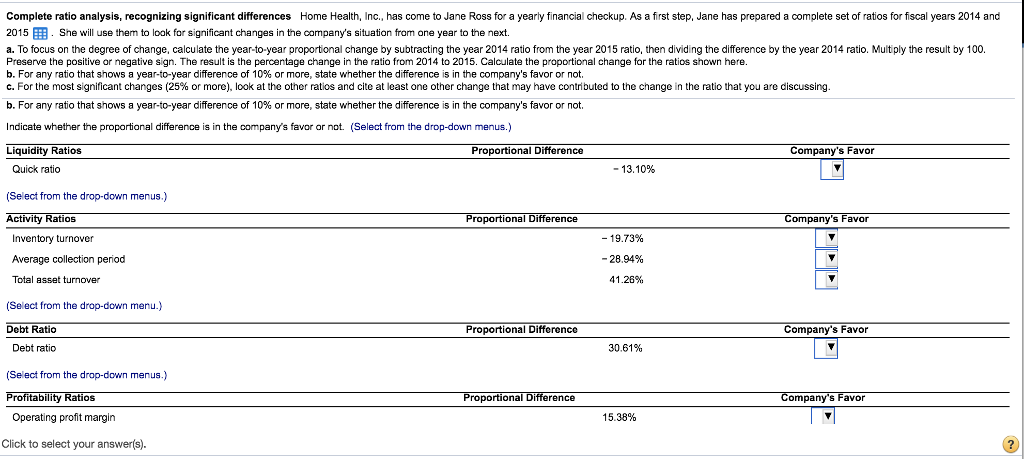
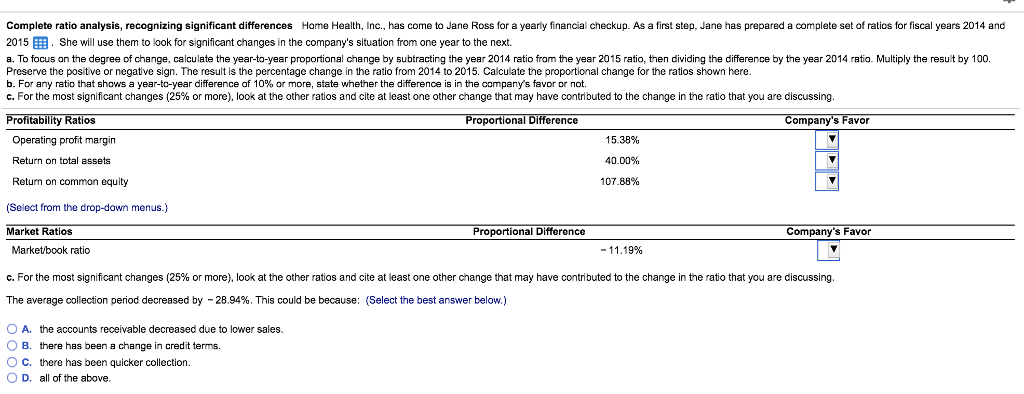
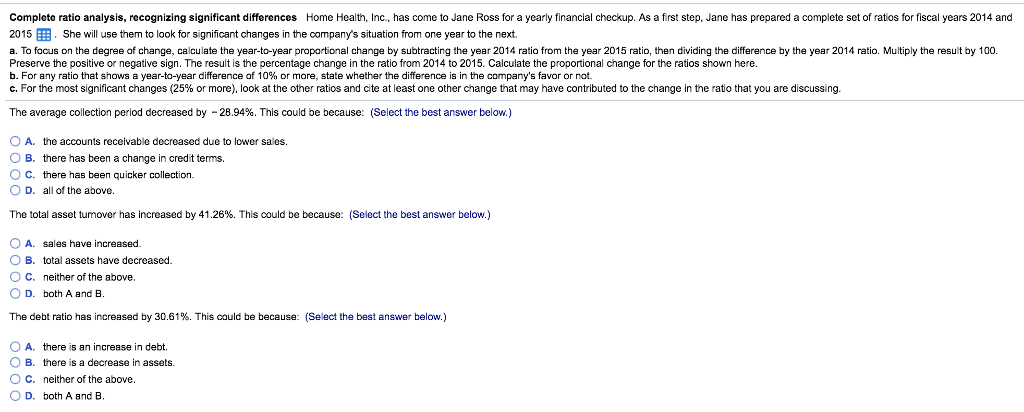
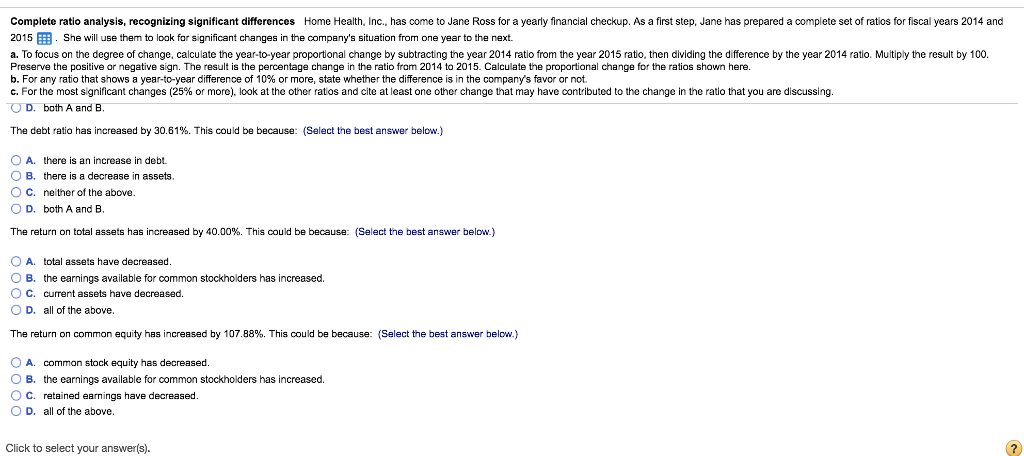
Complete ratio analysis, recognizing significant differences Home Health, Inc., has come to Jane Ross for a yearly financial checkup. As a first step, Jane has prepared a complete set of ratios for fiscal years 2014 and 2015. She will use them to look for significant changes in the company's situation from one year to the next. a. To focus on the degree of change, calculate the year-to-year proportional change by subtracting the year 2014 ratio from the year 2015 ratio, then dividing the difference by the year 2014 ratio. Multiply the resut by 100 Preserve the positive or negative sign. The result is the percentage change in the ratio from 2014 to 2015. Calculate the proportional change for the ratios shown here b. For any ratio that shows a year-to-year difference of 10% or more, state whether the difference is in the company's favor or not. c. For the most significant changes 25% or more . look at the other ratios and cite at least one other change that may have contributed to the change in the ratio that you are discussing. a. To focus on the degree of change, calculate the year-to-year proportional change for the ratios shown here Liquidity Ratios Proportional Difference Current ratio (Round to two decimal places.) Liquidity Ratios Proportional Difference Quick ratio (Round to two decimal places.) Activity Ratios portional Difference Inventory turnover Round to two decimal places.) Activity Ratios Proportional Difference Average collection period Round to two decimal places.) Activity Ratios Proportional Difference Total asset turnover % (Round to two decimal places.) Debt Ratio Proportional Difference Debt ratio % (Round to two decimal places.) Debt Ratio rtiona Times interest earned ratio % (Round to two decimal places.) Complete ratio analysis, recognizing significant differences Home Health, Inc., has come to Jane Ross for a yearly financial checkup. As a first step, Jane has prepared a complete set of ratios for fiscal years 2014 and 2015. She will use them to look for significant changes in the company's situation from one year to the next. a. To focus on the degree of change, calculate the year-to-year proportional change by subtracting the year 2014 ratio from the year 2015 ratio, then dividing the difference by the year 2014 ratio. Multiply the resut by 100 Preserve the positive or negative sign. The result is the percentage change in the ratio from 2014 to 2015. Calculate the proportional change for the ratios shown here b. For any ratio that shows a year-to-year difference of 10% or more, state whether the difference is in the company's favor or not. c. For the most significant changes 25% or more . look at the other ratios and cite at least one other change that may have contributed to the change in the ratio that you are discussing. a. To focus on the degree of change, calculate the year-to-year proportional change for the ratios shown here Liquidity Ratios Proportional Difference Current ratio (Round to two decimal places.) Liquidity Ratios Proportional Difference Quick ratio (Round to two decimal places.) Activity Ratios portional Difference Inventory turnover Round to two decimal places.) Activity Ratios Proportional Difference Average collection period Round to two decimal places.) Activity Ratios Proportional Difference Total asset turnover % (Round to two decimal places.) Debt Ratio Proportional Difference Debt ratio % (Round to two decimal places.) Debt Ratio rtiona Times interest earned ratio % (Round to two decimal places.)
Step by Step Solution
There are 3 Steps involved in it

Get step-by-step solutions from verified subject matter experts
 Study Help