Question: PLEASE CREATE AN IN DEPTH CASE ANALYSIS AND ANSWER THE FOLLOWING QUESTIONS AS STATED. PLEASE USE THIS FORMAT IN ANSWERING CASE STUDIES CASE 6.1 Interface
PLEASE CREATE AN IN DEPTH CASE ANALYSIS AND ANSWER THE FOLLOWING QUESTIONS AS STATED. PLEASE USE THIS FORMAT IN ANSWERING 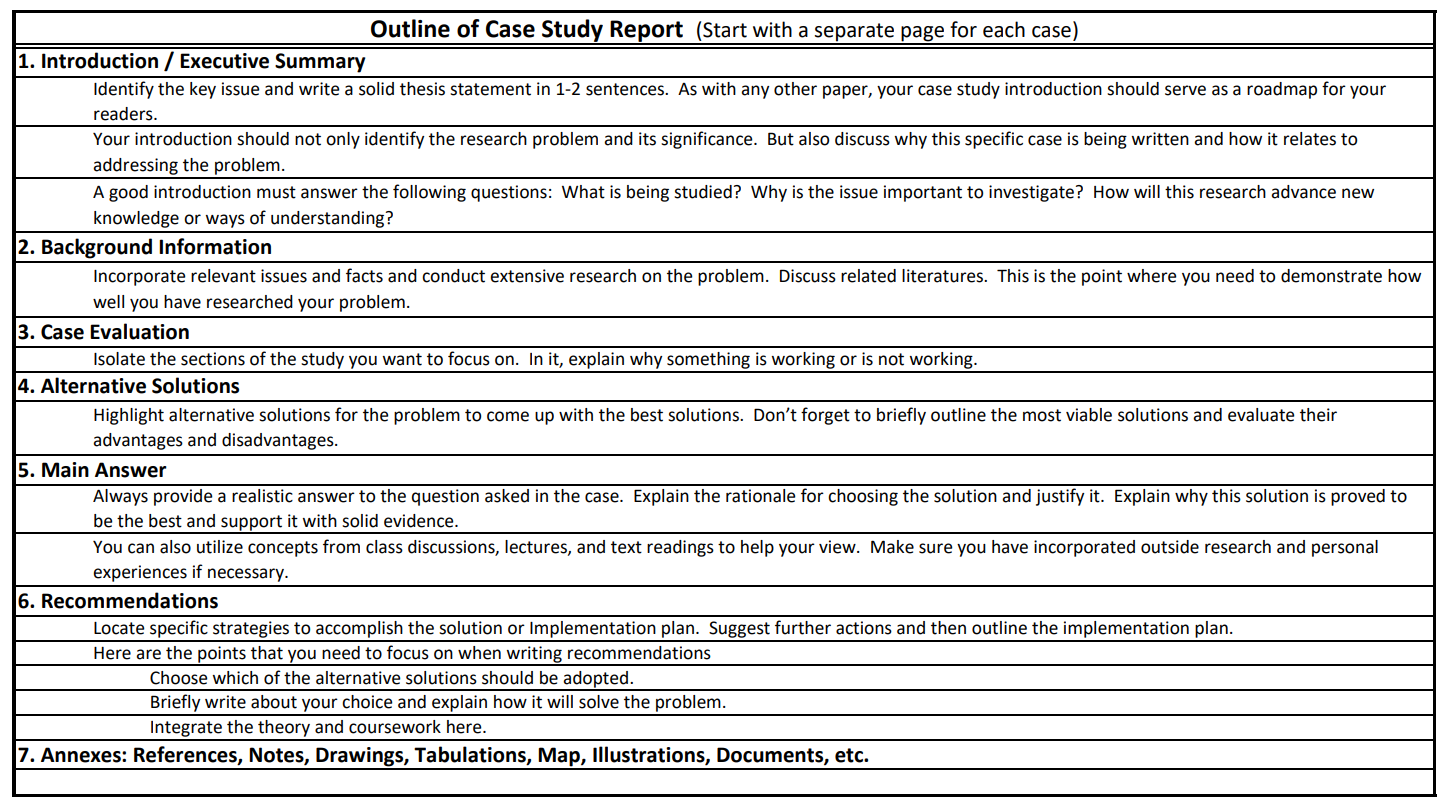
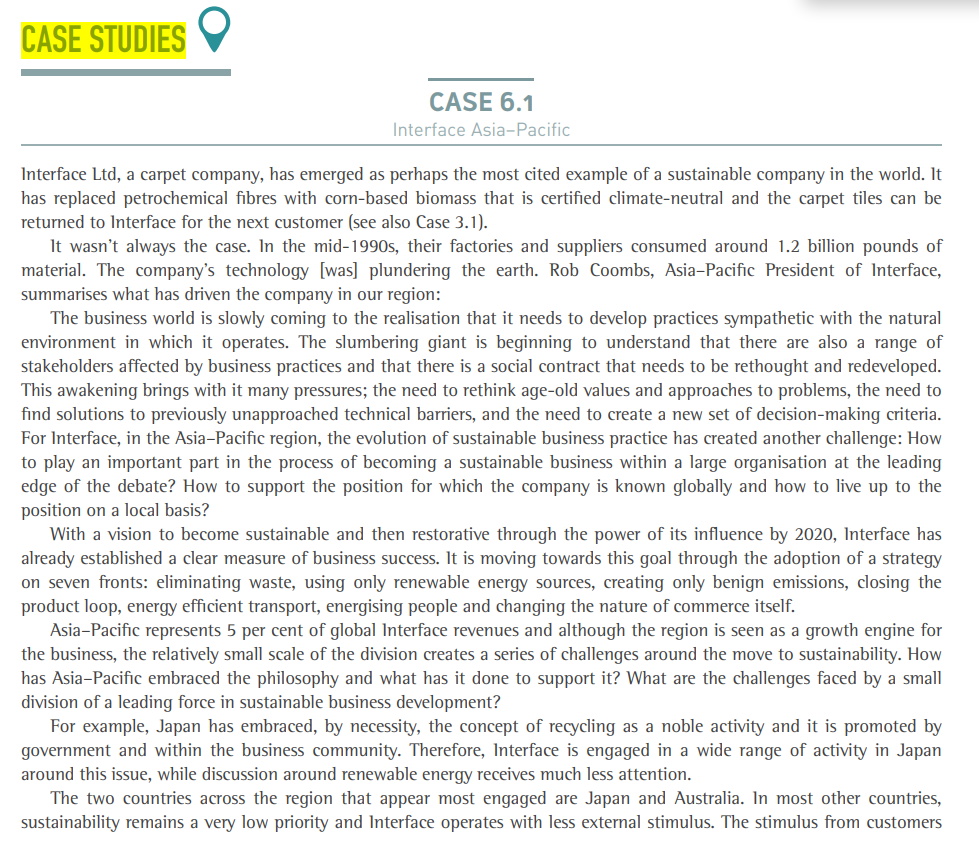
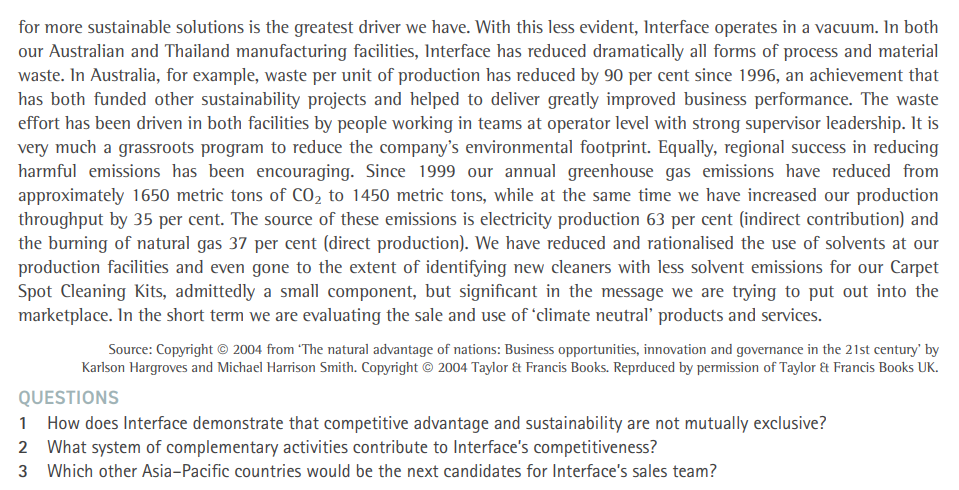
CASE STUDIES CASE 6.1 Interface Asia-Pacific Interface Ltd, a carpet company, has emerged as perhaps the most cited example of a sustainable company in the world. It has replaced petrochemical fibres with corn-based biomass that is certified climate-neutral and the carpet tiles can be returned to Interface for the next customer (see also Case 3.1). It wasn't always the case. In the mid-1990s, their factories and suppliers consumed around 1.2 billion pounds of material. The company's technology [was) plundering the earth. Rob Coombs, Asia-Pacific President of Interface, summarises what has driven the company in our region: The business world is slowly coming to the realisation that it needs to develop practices sympathetic with the natural environment in which it operates. The slumbering giant is beginning to understand that there are also a range of stakeholders affected by business practices and that there is a social contract that needs to be rethought and redeveloped. This awakening brings with it many pressures; the need to rethink age-old values and approaches to problems, the need to find solutions to previously unapproached technical barriers, and the need to create a new set of decision-making criteria. For Interface, in the Asia-Pacific region, the evolution of sustainable business practice has created another challenge: How play an important part in the process of becoming a sustainable business within large organisation at the leading edge of the debate? How to support the position for which the company is known globally and how to live up to the position on a local basis? With a vision to become sustainable and then restorative through the power of its influence by 2020, Interface has already established a clear measure of business success. It is moving towards this goal through the adoption of a strategy on seven fronts: eliminating waste, using only renewable energy sources, creating only benign emissions, closing the product loop, energy efficient transport, energising people and changing the nature of commerce itself. Asia-Pacific represents 5 per cent of global Interface revenues and although the region is seen as a growth engine for the business, the relatively small scale of the division creates a series of challenges around the move to sustainability. How has Asia-Pacific embraced the philosophy and what has it done to support it? What are the challenges faced by a small division of a leading force in sustainable business development? For example, Japan has embraced, by necessity, the concept of recycling as a noble activity and it is promoted by government and within the business community. Therefore, Interface is engaged in a wide range of activity in Japan around this issue, while discussion around renewable energy receives much less attention. The two countries across the region that appear most engaged are Japan and Australia. In most other countries, sustainability remains a very low priority and Interface operates with less external stimulus. The stimulus from customers for more sustainable solutions is the greatest driver we have. With this less evident, Interface operates in a vacuum. In both our Australian and Thailand manufacturing facilities, Interface has reduced dramatically all forms of process and material waste. In Australia, for example, waste per unit of production has reduced by 90 per cent since 1996, an achievement that has both funded other sustainability projects and helped to deliver greatly improved business performance. The waste effort has been driven in both facilities by people working in teams at operator level with strong supervisor leadership. It is very much a grassroots program to reduce the company's environmental footprint. Equally, regional success in reducing harmful emissions has been encouraging. Since 1999 our annual greenhouse gas emissions have reduced from approximately 1650 metric tons of CO2 to 1450 metric tons, while at the same time we have increased our production throughput by 35 per cent. The source of these emissions is electricity production 63 per cent (indirect contribution) and the burning of natural gas 37 per cent (direct production). We have reduced and rationalised the use of solvents at our production facilities and even gone to the extent of identifying new cleaners with less solvent emissions for our Carpet Spot Cleaning Kits, admittedly a small component, but significant in the message we are trying to put out into the marketplace. In the short term we are evaluating the sale and use of climate neutral products and services. Source: Copyright 2004 from 'The natural advantage of nations: Business opportunities, innovation and governance in the 21st century' by Karlson Hargroves and Michael Harrison Smith. Copyright 2004 Taylor & Francis Books. Reprduced by permission of Taylor & Francis Books UK. QUESTIONS 1 How does Interface demonstrate that competitive advantage and sustainability are not mutually exclusive? 2 What system of complementary activities contribute to Interface's competitiveness? 3 Which other Asia-Pacific countries would be the next candidates for Interface's sales team? Outline of Case Study Report (Start with a separate page for each case) 1. Introduction / Executive Summary Identify the key issue and write a solid thesis statement in 1-2 sentences. As with any other paper, your case study introduction should serve as a roadmap for your readers. Your introduction should not only identify the research problem and its significance. But also discuss why this specific case is being written and how it relates to addressing the problem. A good introduction must answer the following questions: What is being studied? Why is the issue important to investigate? How will this research advance new knowledge or ways of understanding? 2. Background Information Incorporate relevant issues and facts and conduct extensive research on the problem. Discuss related literatures. This is the point where you need to demonstrate how well you have researched your problem. 3. Case Evaluation Isolate the sections of the study you want to focus on. In it, explain why something is working or is not working. 4. Alternative Solutions Highlight alternative solutions for the problem to come up with the best solutions. Don't forget to briefly outline the most viable solutions and evaluate their advantages and disadvantages. 5. Main Answer Always provide a realistic answer to the question asked in the case. Explain the rationale for choosing the solution and justify it. Explain why this solution is proved to be the best and support it with solid evidence. You can also utilize concepts from class discussions, lectures, and text readings to help your view. Make sure you have incorporated outside research and personal experiences if necessary. 6. Recommendations Locate specific strategies to accomplish the solution or Implementation plan. Suggest further actions and then outline the implementation plan. Here are the points that you need to focus on when writing recommendations Choose which of the alternative solutions should be adopted. Briefly write about your choice and explain how it will solve the problem. Integrate the theory and coursework here. 7. Annexes: References, Notes, Drawings, Tabulations, Map, Illustrations, Documents, etc









 Study Help