







Question: Please do not use an Excel spreadsheet. Please show how you got the answer and use time value keys if possible so I can work
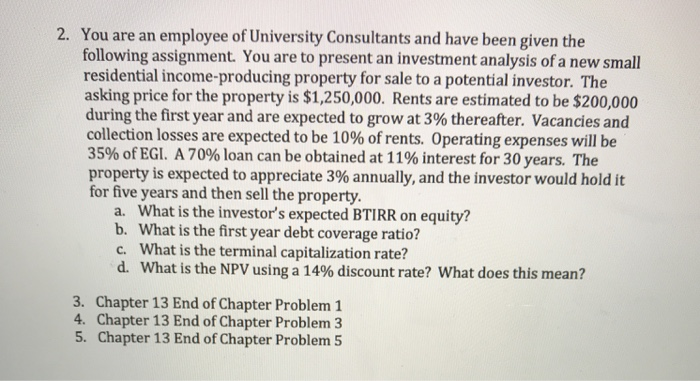
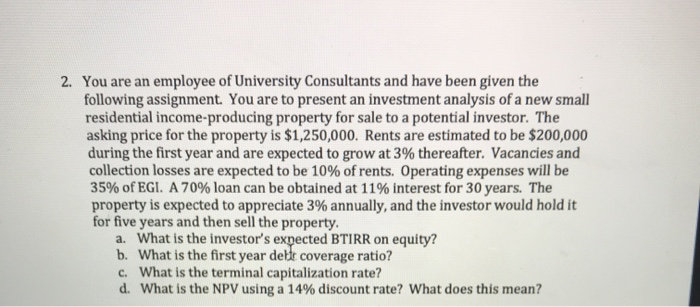
2. You are an employee of University Consultants and have been given the following assignment. You are to present an investment analysis of a new small residential income-producing property for sale to a potential investor. The asking price for the property is $1,250,000. Rents are estimated to be $200,000 during the first year and are expected to grow at 3% thereafter. Vacancies and collection losses are expected to be 10% of rents. Operating expenses will be 35% of EGI. A 70% loan can be obtained at 11% interest for 30 years. The property is expected to appreciate 3% annually, and the investor would hold it for five years and then sell the property. a. What is the investor's expected BTIRR on equity? b. What is the first year debt coverage ratio? c. What is the terminal capitalization rate? d. What is the NPV using a 14% discount rate? What does this mean? 3. Chapter 13 End of Chapter Problem 1 4. Chapter 13 End of Chapter Problem 3 5. Chapter 13 End of Chapter Problem 5 2. You are an employee of University Consultants and have been given the following assignment. You are to present an investment analysis of a new small residential income-producing property for sale to a potential investor. The asking price for the property is $1,250,000. Rents are estimated to be $200,000 during the first year and are expected to grow at 3% thereafter. Vacancies and collection losses are expected to be 10% of rents. Operating expenses will be 35% of EGI. A 70% loan can be obtained at 11% interest for 30 years. The property is expected to appreciate 3% annually, and the investor would hold it for five years and then sell the property. a. What is the investor's expected BTIRR on equity? b. What is the first year delle coverage ratio? c. What is the terminal capitalization rate? d. What is the NPV using a 14% discount rate? What does this mean? 2. You are an employee of University Consultants and have been given the following assignment. You are to present an investment analysis of a new small residential income-producing property for sale to a potential investor. The asking price for the property is $1,250,000. Rents are estimated to be $200,000 during the first year and are expected to grow at 3% thereafter. Vacancies and collection losses are expected to be 10% of rents. Operating expenses will be 35% of EGI. A 70% loan can be obtained at 11% interest for 30 years. The property is expected to appreciate 3% annually, and the investor would hold it for five years and then sell the property. a. What is the investor's expected BTIRR on equity? b. What is the first year debt coverage ratio? c. What is the terminal capitalization rate? d. What is the NPV using a 14% discount rate? What does this mean? 3. Chapter 13 End of Chapter Problem 1 4. Chapter 13 End of Chapter Problem 3 5. Chapter 13 End of Chapter Problem 5 2. You are an employee of University Consultants and have been given the following assignment. You are to present an investment analysis of a new small residential income-producing property for sale to a potential investor. The asking price for the property is $1,250,000. Rents are estimated to be $200,000 during the first year and are expected to grow at 3% thereafter. Vacancies and collection losses are expected to be 10% of rents. Operating expenses will be 35% of EGI. A 70% loan can be obtained at 11% interest for 30 years. The property is expected to appreciate 3% annually, and the investor would hold it for five years and then sell the property. a. What is the investor's expected BTIRR on equity? b. What is the first year delle coverage ratio? c. What is the terminal capitalization rate? d. What is the NPV using a 14% discount rate? What does this mean
Step by Step Solution
There are 3 Steps involved in it

Get step-by-step solutions from verified subject matter experts
 Study Help