







Question: Please do not use other chegg answers. They are wrong and I will downvote wrong answers. Please show all work and use correct given values
Please do not use other chegg answers. They are wrong and I will downvote wrong answers. Please show all work and use correct given values and units.
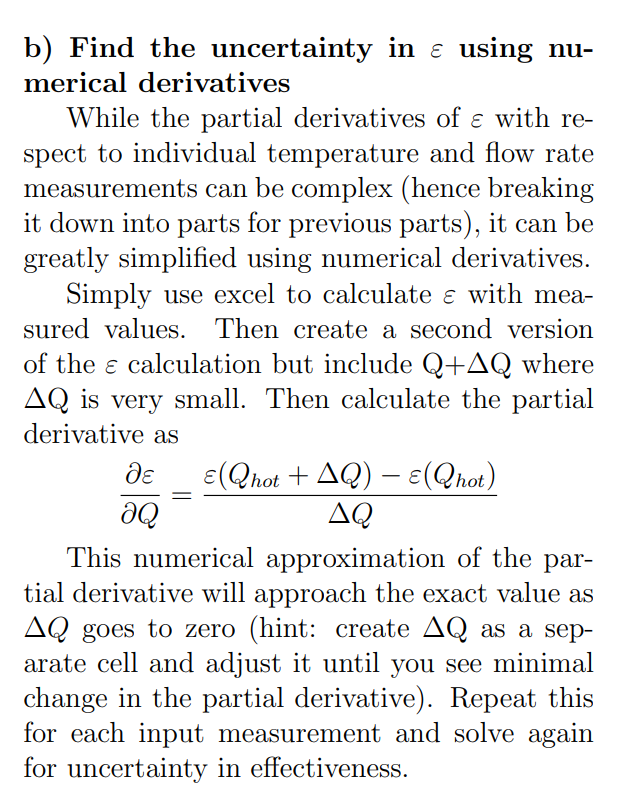
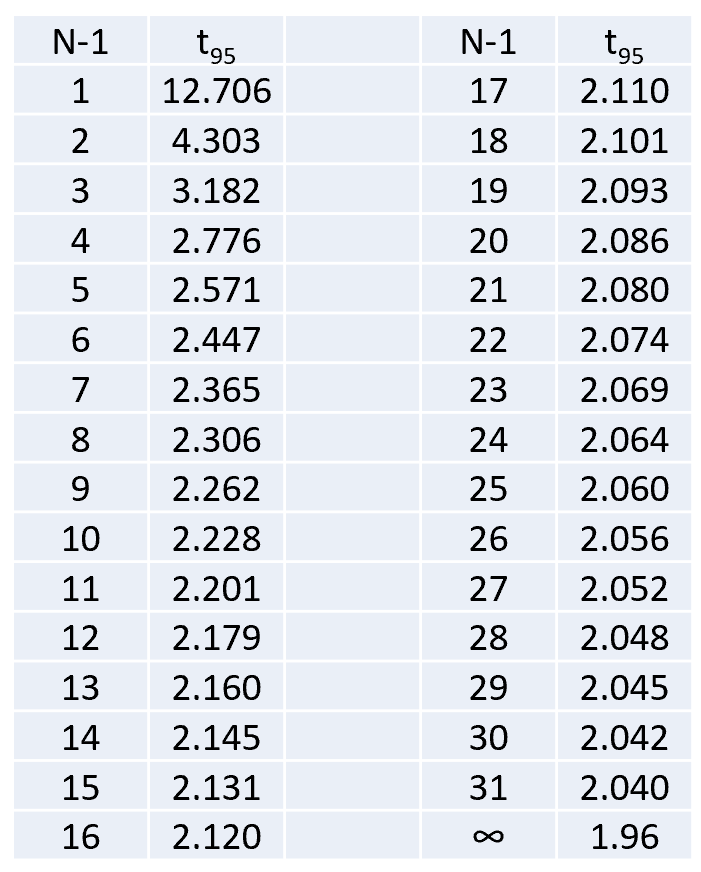
b) Find the uncertainty in using nu- merical derivatives While the partial derivatives of with re- spect to individual temperature and flow rate measurements can be complex (hence breaking it down into parts for previous parts), it can be greatly simplified using numerical derivatives. Simply use excel to calculate with mea- sured values. Then create a second version of the e calculation but include Q+AQ where AQ is very small. Then calculate the partial derivative as ( Qio +Q)-E( Qhot) This numerical approximation of the par- tial derivative will approach the exact value as AQ goes to zero (hint: create AQ as a sep- arate cell and adjust it until you see minimal change in the partial derivative). Repeat this for each input measurement and solve again for uncertainty in effectiveness. tg5 N-1 t95 N-1 tg5 2.110 12.706 17 2.101 4.303 18 19 2.093 3 3.182 4 2.776 20 2.086 2.571 21 2.080 2.447 22 2.074 2.365 23 2.069 2.306 2.064 24 25 2.262 2.060 10 2.228 26 2.056 2.052 11 2.201 27 12 2.179 28 2.048 2.160 13 29 2.045 2.145 14 30 2.042 15 2.131 31 2.040 16 2.120 1.96 b) Find the uncertainty in using nu- merical derivatives While the partial derivatives of with re- spect to individual temperature and flow rate measurements can be complex (hence breaking it down into parts for previous parts), it can be greatly simplified using numerical derivatives. Simply use excel to calculate with mea- sured values. Then create a second version of the e calculation but include Q+AQ where AQ is very small. Then calculate the partial derivative as ( Qio +Q)-E( Qhot) This numerical approximation of the par- tial derivative will approach the exact value as AQ goes to zero (hint: create AQ as a sep- arate cell and adjust it until you see minimal change in the partial derivative). Repeat this for each input measurement and solve again for uncertainty in effectiveness. tg5 N-1 t95 N-1 tg5 2.110 12.706 17 2.101 4.303 18 19 2.093 3 3.182 4 2.776 20 2.086 2.571 21 2.080 2.447 22 2.074 2.365 23 2.069 2.306 2.064 24 25 2.262 2.060 10 2.228 26 2.056 2.052 11 2.201 27 12 2.179 28 2.048 2.160 13 29 2.045 2.145 14 30 2.042 15 2.131 31 2.040 16 2.120 1.96
Step by Step Solution
There are 3 Steps involved in it

Get step-by-step solutions from verified subject matter experts
 Study Help