







Question: Please don't answer this question if you are unsure how to solve. Choose the correct answer and prove why it is correct When comparing two
Please don't answer this question if you are unsure how to solve.
Choose the correct answer and prove why it is correct
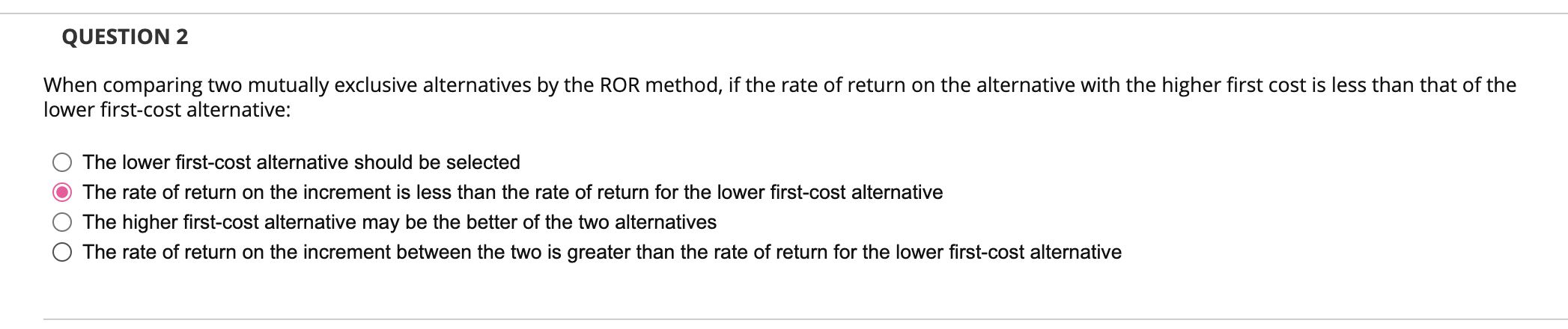
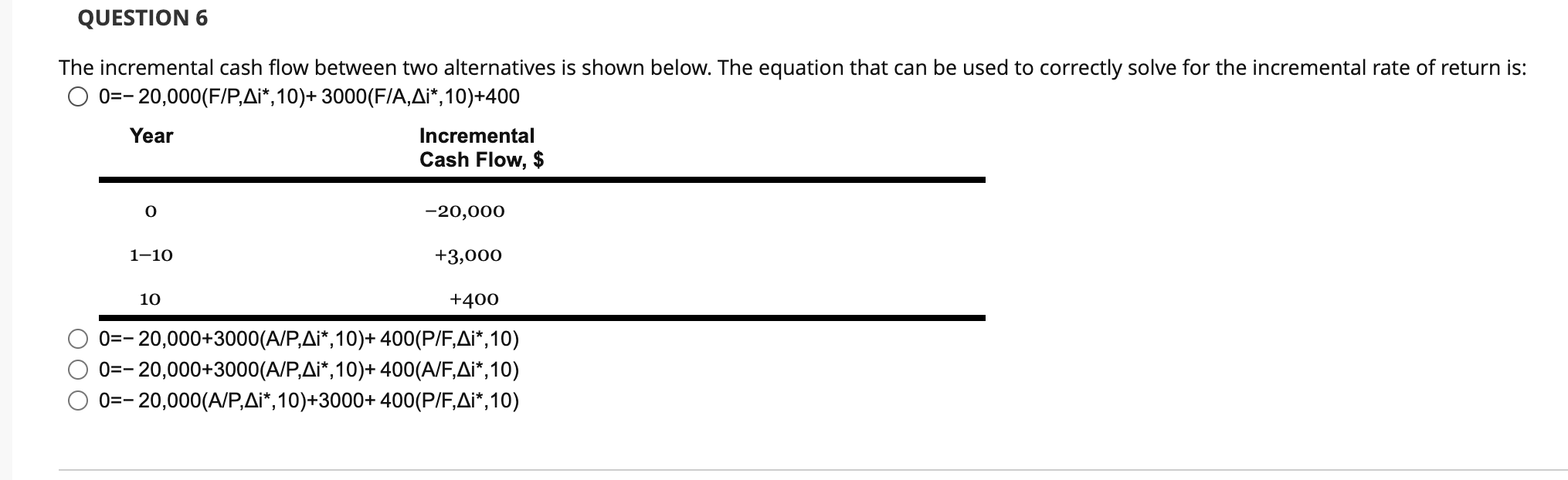
When comparing two mutually exclusive alternatives by the ROR method, if the rate of return on the alternative with the higher first cost is less than that of the lower first-cost alternative: The lower first-cost alternative should be selected The rate of return on the increment is less than the rate of return for the lower first-cost alternative The higher first-cost alternative may be the better of the two alternatives The rate of return on the increment between the two is greater than the rate of return for the lower first-cost alternative 0=20,000(F/P,i,10)+3000(F/A,i,10)+400 When comparing two mutually exclusive alternatives by the ROR method, if the rate of return on the alternative with the higher first cost is less than that of the lower first-cost alternative: The lower first-cost alternative should be selected The rate of return on the increment is less than the rate of return for the lower first-cost alternative The higher first-cost alternative may be the better of the two alternatives The rate of return on the increment between the two is greater than the rate of return for the lower first-cost alternative 0=20,000(F/P,i,10)+3000(F/A,i,10)+400
Step by Step Solution
There are 3 Steps involved in it

Get step-by-step solutions from verified subject matter experts
 Study Help