







Question: Please fill in the blanks and explain WHY or how you got your answer. Thank you! Scrappers Supplies tracks the number of units purchased and
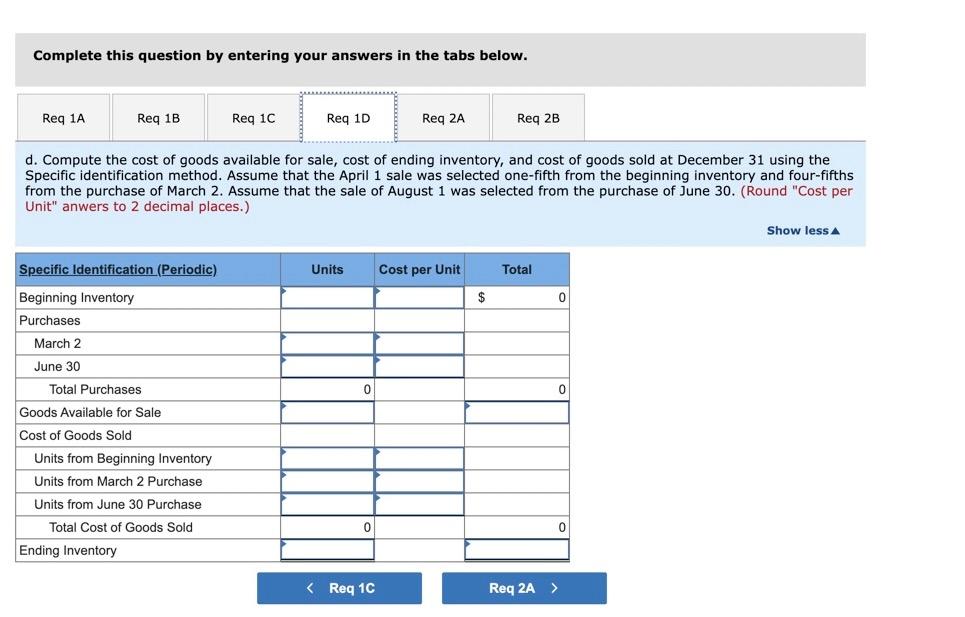
Please fill in the blanks and explain WHY or how you got your answer. Thank you!
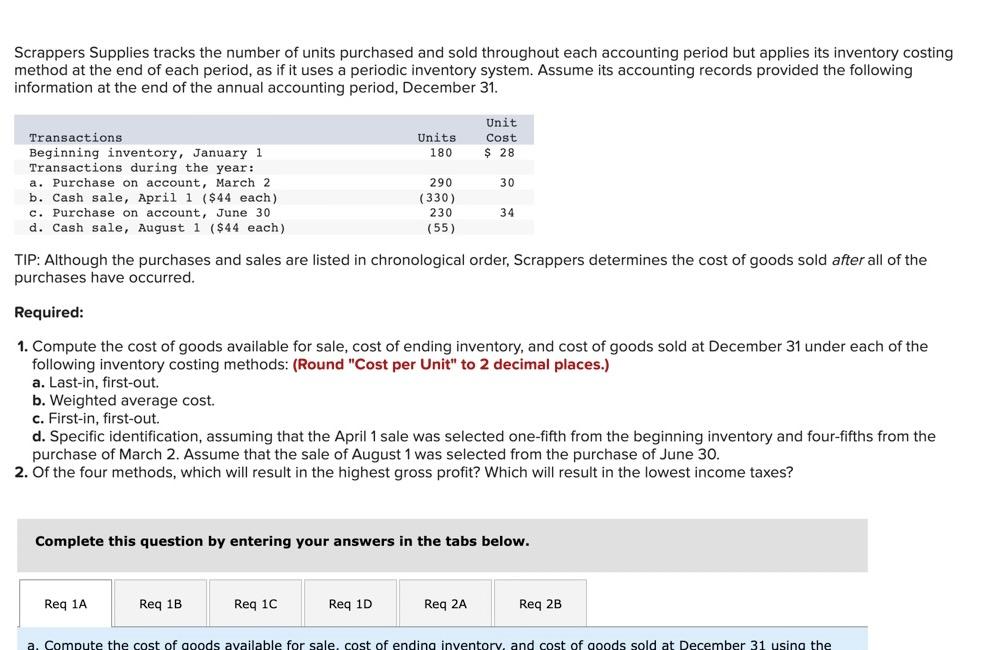
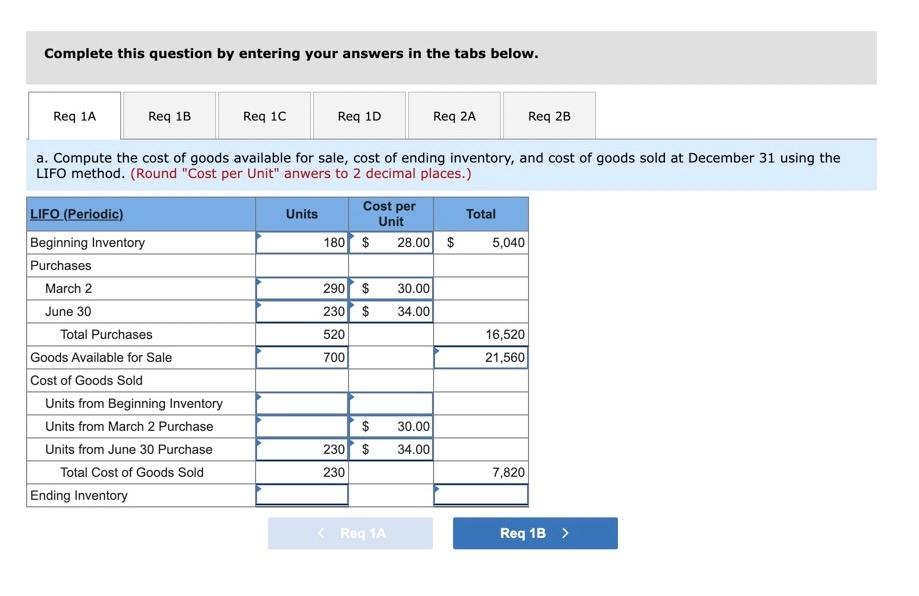
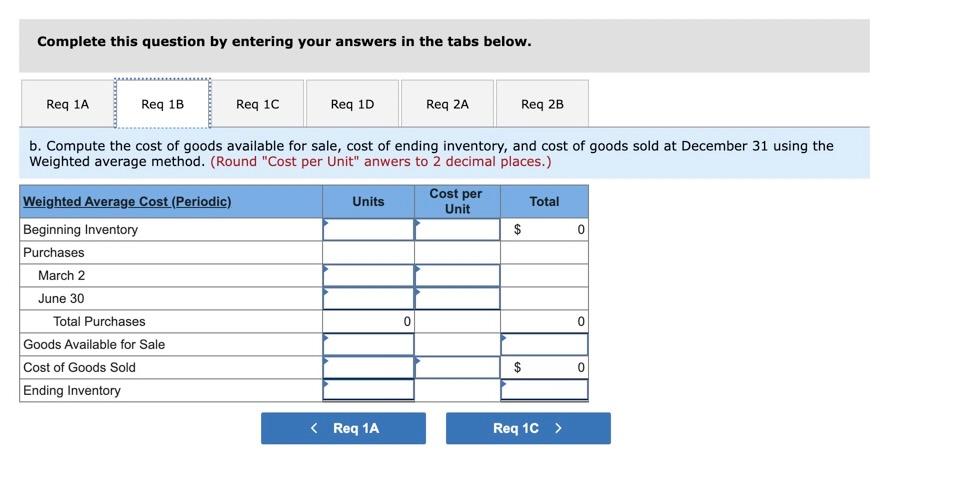
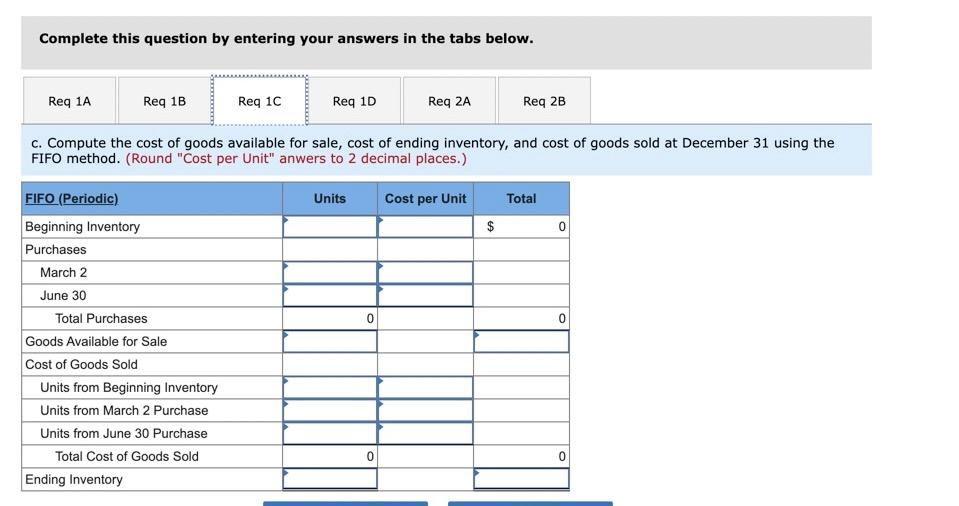
Scrappers Supplies tracks the number of units purchased and sold throughout each accounting period but applies its inventory costing method at the end of each period, as if it uses a periodic inventory system. Assume its accounting records provided the following information at the end of the annual accounting period, December 31. Unit Cost Transactions Units 180 $ 28 Beginning inventory, January 1 Transactions during the year: a. Purchase on account, March 2 290 30 b. Cash sale, April 1 ($44 each). (330) c. Purchase on account, June 30 230 34 d. Cash sale, August 1 ($44 each). (55) TIP: Although the purchases and sales are listed in chronological order, Scrappers determines the cost of goods sold after all of the purchases have occurred. Required: 1. Compute the cost of goods available for sale, cost of ending inventory, and cost of goods sold at December 31 under each of the following inventory costing methods: (Round "Cost per Unit" to 2 decimal places.) a. Last-in, first-out. b. Weighted average cost. c. First-in, first-out. d. Specific identification, assuming that the April 1 sale was selected one-fifth from the beginning inventory and four-fifths from the purchase of March 2. Assume that the sale of August 1 was selected from the purchase of June 30. 2. Of the four methods, which will result in the highest gross profit? Which will result in the lowest income taxes? Complete this question by entering your answers in the tabs below. Req 1A Req 1B Req 1C Req 1D Req 2A Req 2B a. Compute the cost of goods available for sale, cost of ending inventory, and cost of goods sold at December 31 using the Complete this question by entering your answers in the tabs below. Req 1A Req 1B Req 1C Req 1D Req 2A Req 2B a. Compute the cost of goods available for sale, cost of ending inventory, and cost of goods sold at December 31 using the LIFO method. (Round "Cost per Unit" anwers to 2 decimal places.) LIFO (Periodic) Units Cost per Unit Total Beginning Inventory 180 $ Purchases March 2 290 $ June 30 230 $ Total Purchases 520 Goods Available for Sale 700 Cost of Goods Sold Units from Beginning Inventory Units from March 2 Purchase $ Units from June 30 Purchase 230 $ 230 Total Cost of Goods Sold Complete this question by entering your answers in the tabs below. Req 1A Req 1B Req 1C Req 1D Req 2A Req 2B b. Compute the cost of goods available for sale, cost of ending inventory, and cost of goods sold at December 31 using the Weighted average method. (Round "Cost per Unit" anwers to 2 decimal places.) Weighted Average Cost (Periodic) Units Cost per Unit Total Beginning Inventory Purchases March 2 June 30 Total Purchases Goods Available for Sale Cost of Goods Sold Ending Inventory 69 0 0 0 Complete this question by entering your answers in the tabs below. Req 1A Req 1B Req 1C Req 1D Req 2A Req 2B c. Compute the cost of goods available for sale, cost of ending inventory, and cost of goods sold at December 31 using the FIFO method. (Round "Cost per Unit" anwers to 2 decimal places.) FIFO (Periodic) Units Cost per Unit Total Beginning Inventory Purchases March 2 June 30 Total Purchases 0 Goods Available for Sale Cost of Goods Sold Units from Beginning Inventory Units from March 2 Purchase Units from June 30 Purchase Total Cost of Goods Sold Ending Inventory 0 $ 0 0 0 Complete this question by entering your answers in the tabs below. Req 1A Req 1B Req 1C Req 1D Req 2A Req 2B d. Compute the cost of goods available for sale, cost of ending inventory, and cost of goods sold at December 31 using the Specific identification method. Assume that the April 1 sale was selected one-fifth from the beginning inventory and four-fifths from the purchase of March 2. Assume that the sale of August 1 was selected from the purchase of June 30. (Round "Cost per Unit" anwers to 2 decimal places.) Show less A Specific Identification (Periodic) Units Cost per Unit Total Beginning Inventory Purchases March 2 June 30 Total Purchases Goods Available for Sale Cost of Goods Sold Units from Beginning Inventory Units from March 2 Purchase Units from June 30 Purchase Total Cost of Goods Sold Ending Inventory 0 0
Step by Step Solution
There are 3 Steps involved in it

Get step-by-step solutions from verified subject matter experts
 Study Help