







Question: please help 100 PART Uverview Case Two 5 n d ST st fos Ir wa ch ap cus inc TUI Deutschland Uses Information Systems to
please help 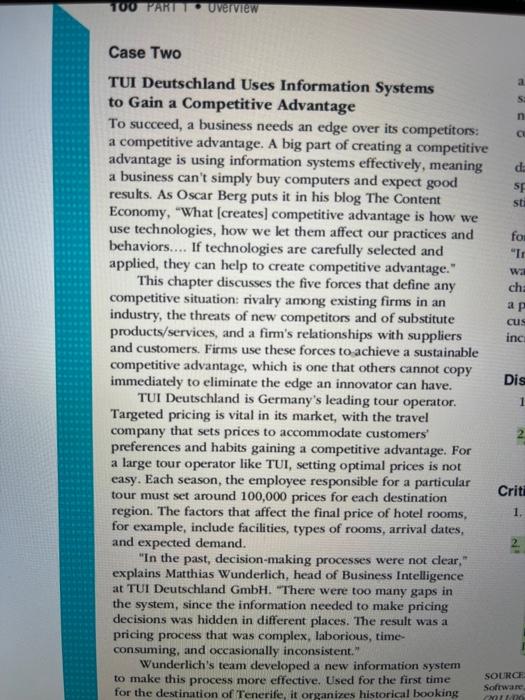
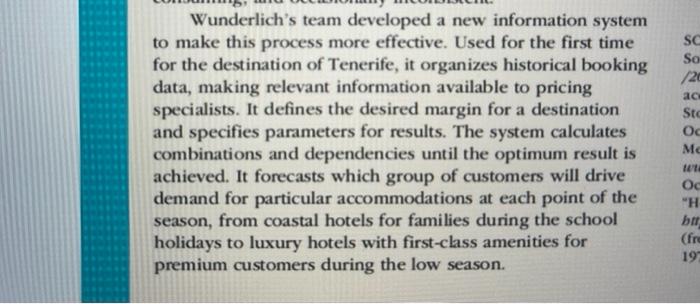
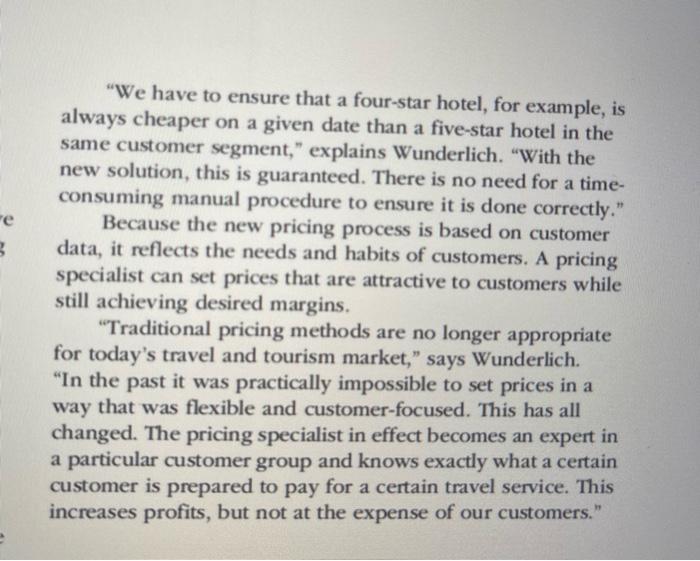
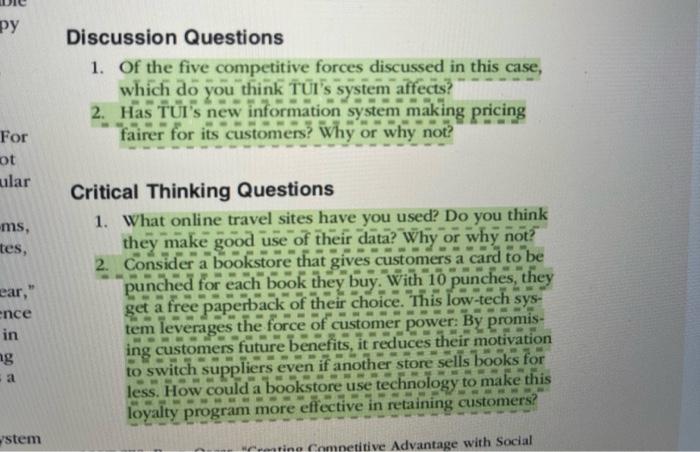
100 PART Uverview Case Two 5 n d ST st fos "Ir wa ch ap cus inc TUI Deutschland Uses Information Systems to Gain a Competitive Advantage To succeed, a business needs an edge over its competitors: a competitive advantage. A big part of creating a competitive advantage is using information systems effectively, meaning a business can't simply buy computers and expect good results. As Oscar Berg puts it in his blog The Content Economy, "What creates) competitive advantage is how we use technologies, how we let them affect our practices and behaviors.... If technologies are carefully selected and applied, they can help to create competitive advantage." This chapter discusses the five forces that define any competitive situation: rivalry among existing firms in an industry, the threats of new competitors and of substitute products/services, and a fim's relationships with suppliers and customers. Firms use these forces to achieve a sustainable competitive advantage, which is one that others cannot copy immediately to eliminate the edge an innovator can have. TUI Deutschland is Germany's leading tour operator. Targeted pricing is vital in its market, with the travel company that sets prices to accommodate customers' preferences and habits gaining a competitive advantage. For a large tour operator like TUI, setting optimal prices is not easy. Each season, the employee responsible for a particular tour must set around 100,000 prices for each destination region. The factors that affect the final price of hotel rooms, for example, include facilities, types of rooms, arrival dates, and expected demand. "In the past, decision-making processes were not clear," explains Matthias Wunderlich, head of Business Intelligence at TUI Deutschland GmbH. "There were too many gaps in the system, since the information needed to make pricing decisions was hidden in different places. The result was a pricing process that was complex, laborious, time consuming, and occasionally inconsistent." Wunderlich's team developed a new information system to make this process more effective. Used for the first time for the destination of Tenerife, it organizes historical booking Dis 1 Criti 1. SOURCE Software CM Wunderlich's team developed a new information system to make this process more effective. Used for the first time for the destination of Tenerife, it organizes historical booking data, making relevant information available to pricing specialists. It defines the desired margin for a destination and specifies parameters for results. The system calculates combinations and dependencies until the optimum result is achieved. It forecasts which group of customers will drive demand for particular accommodations at each point of the season, from coastal hotels for families during the school holidays to luxury hotels with first-class amenities for premium customers during the low season. SC So 20 ac Sto MO 101 "H ba (fre 19 a re 3 "We have to ensure that a four-star hotel, for example, is always cheaper on a given date than a five-star hotel in the same customer segment," explains Wunderlich. "With the new solution, this is guaranteed. There is no need for a time- consuming manual procedure to ensure it is done correctly." Because the new pricing process is based on customer data, it reflects the needs and habits of customers. A pricing specialist can set prices that are attractive to customers while still achieving desired margins. "Traditional pricing methods are no longer appropriate for today's travel and tourism market, says Wunderlich. "In the past it was practically impossible to set prices in a way that was flexible and customer-focused. This has all changed. The pricing specialist in effect becomes an expert in a particular customer group and knows exactly what a certain customer is prepared to pay for a certain travel service. This increases profits, but not at the expense of our customers." a Discussion Questions 1. Of the five competitive forces discussed in this case, which do you think TUL's system affects? 2. Has Tt's new information system making pricing fairer for its customers? Why or why not? For ot ular -ms, tes, a ear," ence Critical Thinking Questions 1. What online travel sites have you used? Do you think they make good use of their data? Why or why not? 2. Consider a bookstore that gives customers a card to be punched for each book they buy. With 10 punches, they get a free paperback of their choice. This low-tech sys- tem leverages the force of customer power: By promis- ing customers future benefits, it reduces their motivation to switch suppliers even if another store sells books for less. How could a bookstore use technology to make this loyalty program more effective in retaining customers?" in ng a stem "mtina Comnetitive Advantage with Social Step by Step Solution
There are 3 Steps involved in it
1 Expert Approved Answer
Step: 1 Unlock

Question Has Been Solved by an Expert!
Get step-by-step solutions from verified subject matter experts
Step: 2 Unlock
Step: 3 Unlock
 Study Help