







Question: Please Help me answer that. 61. Case Study Question. To be Answered. Question appears at the end of the case study Twenty years ago, Hillton
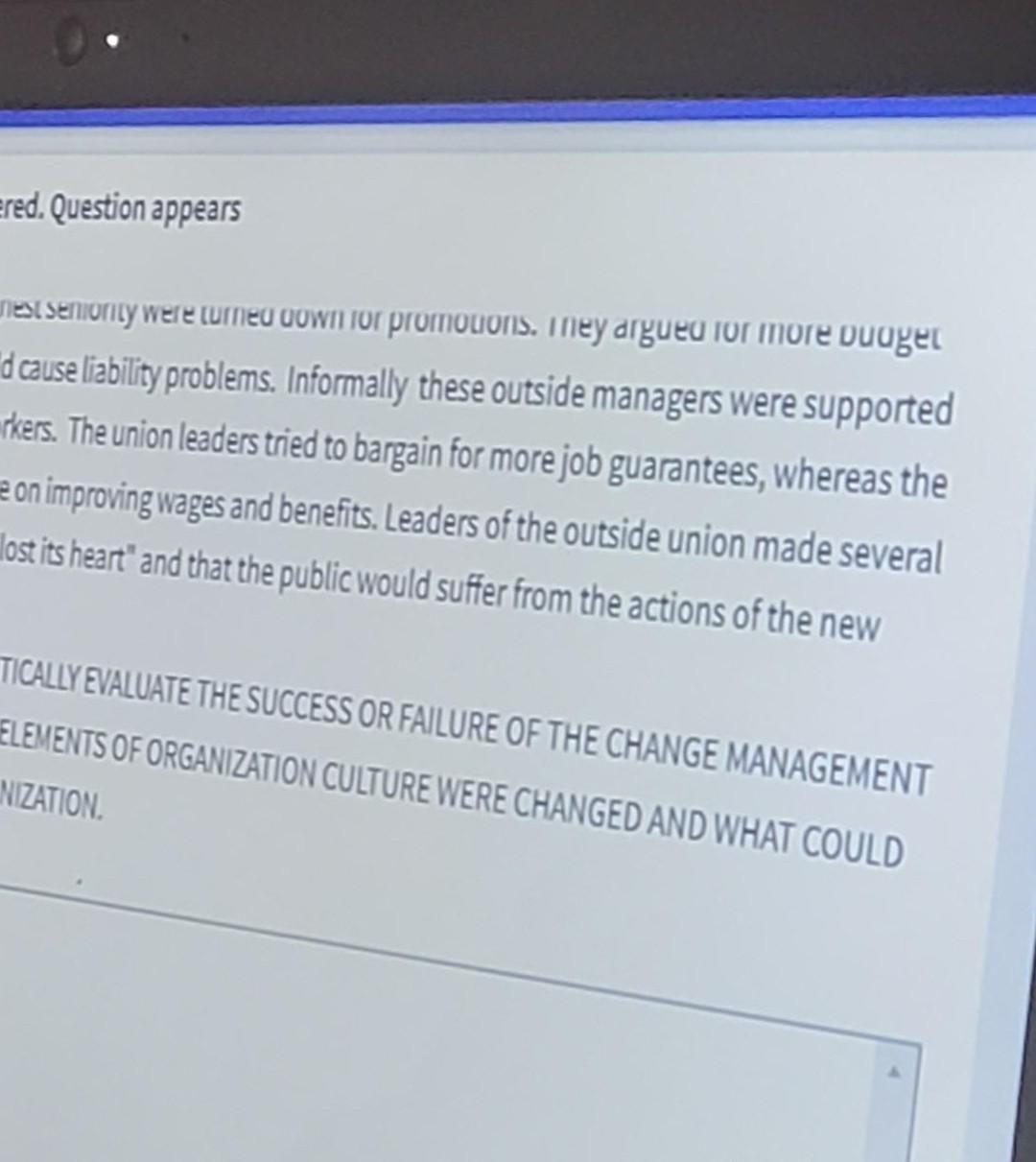
Please Help me answer that.
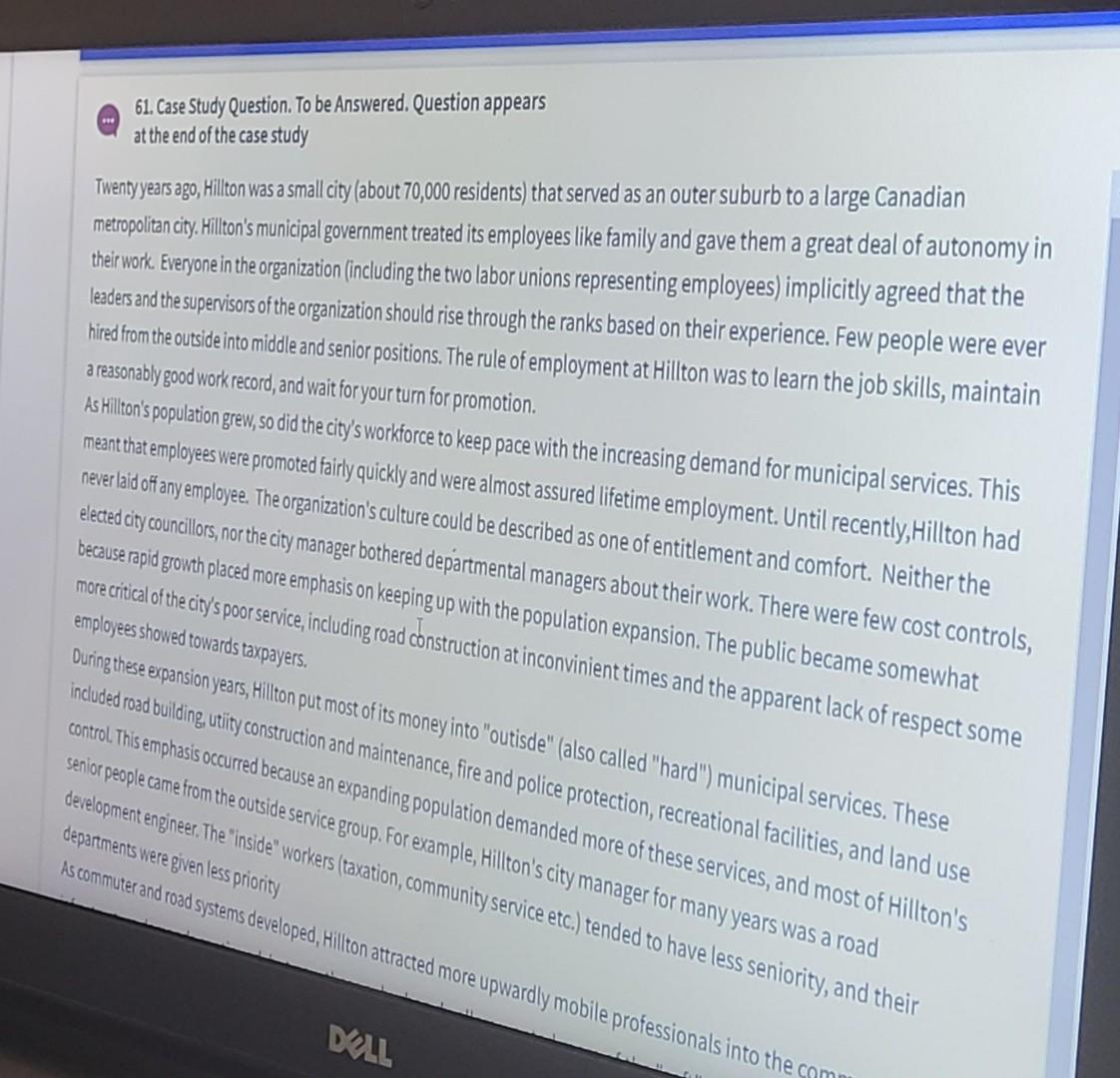
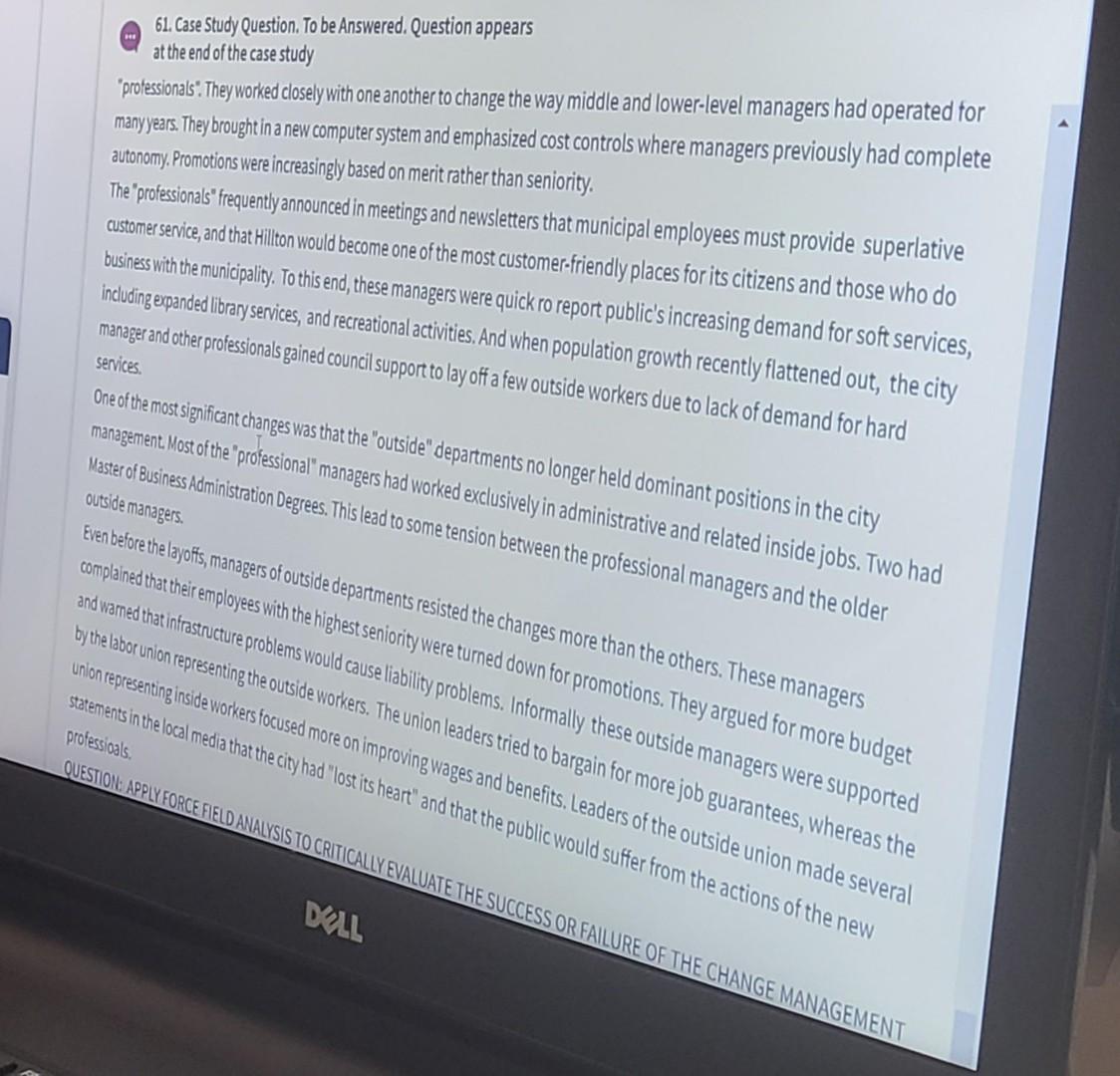
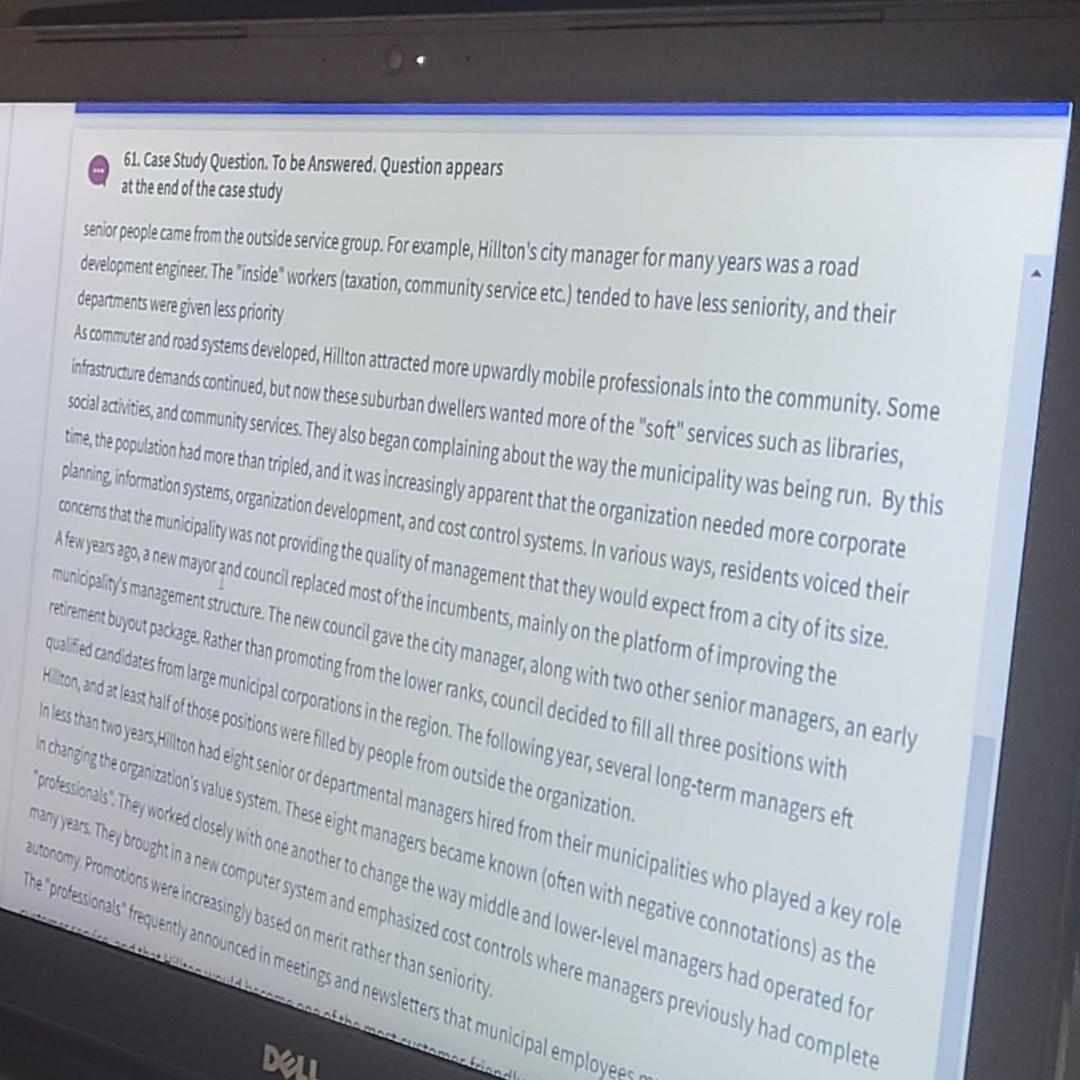
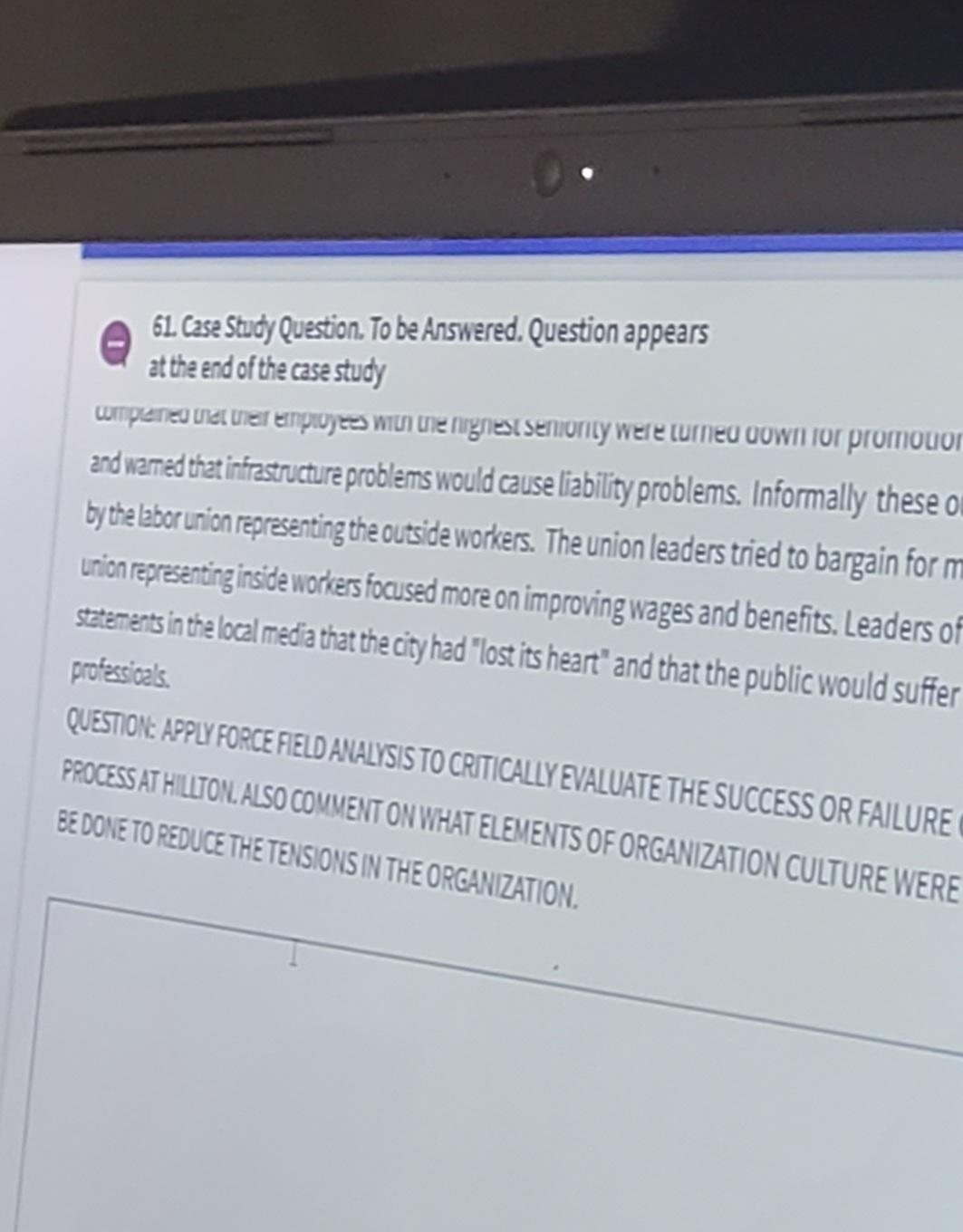
61. Case Study Question. To be Answered. Question appears at the end of the case study Twenty years ago, Hillton was a small city (about 70,000 residents) that served as an outer suburb to a large Canadian metropolitan city. Hillton's municipal government treated its employees like family and gave them a great deal of autonomy in their work. Everyone in the organization (including the two labor unions representing employees) implicitly agreed that the leaders and the supervisors of the organization should rise through the ranks based on their experience. Few people were ever hired from the outside into middle and senior positions. The rule of employment at Hillton was to learn the job skills, maintain a reasonably good work record, and wait for your turn for promotion. As Hillton's population grew, so did the city's workforce to keep pace with the increasing demand for municipal services. This meant that employees were promoted fairly quickly and were almost assured lifetime employment. Until recently, Hillton had never laid off any employee. The organization's culture could be described as one of entitlement and comfort. Neither the elected city councillors, nor the city manager bothered departmental managers about their work. There were few cost controls, because rapid growth placed more emphasis on keeping up with the population expansion. The public became somewhat more critical of the city's poor service, including road construction at inconvinient times and the apparent lack of respect some employees showed towards taxpayers. During these expansion years, Hillton put most of its money into "outisde" (also called "hard") municipal services. These included road building, utility construction and maintenance, fire and police protection, recreational facilities, and land use control. This emphasis occurred because an expanding population demanded more of these services, and most of Hillton's senior people came from the outside service group. For example, Hillton's city manager for many years was a road development engineer. The inside workers (taxation, community service etc.) tended to have less seniority, and their departments were given less priority As commuter and road systems developed, Hillton attracted more upwardly mobile professionals into the com DELL 61. Case Study Question. To be Answered. Question appears at the end of the case study "professionals". They worked closely with one another to change the way middle and lower-level managers had operated for many years. They brought in a new computer system and emphasized cost controls where managers previously had complete autonomy. Promotions were increasingly based on merit rather than seniority. The "professionals" frequently announced in meetings and newsletters that municipal employees must provide superlative customer service, and that Hillton would become one of the most customer-friendly places for its citizens and those who do business with the municipality . To this end, these managers were quick ro report public's increasing demand for soft services, including expanded library services, and recreational activities. And when population growth recently flattened out, the city manager and other professionals gained council support to lay off a few outside workers due to lack of demand for hard services. One of the most significant changes was that the "outside" departments no longer held dominant positions in the city management. Most of the "professional" managers had worked exclusively in administrative and related inside jobs. Two had Master of Business Administration Degrees. This lead to some tension between the professional managers and the older outside managers. Even before the layoffs, managers of outside departments resisted the changes more than the others. These managers complained that their employees with the highest seniority were turned down for promotions. They argued for more budget and warned that infrastructure problems would cause liability problems. Informally these outside managers were supported by the labor union representing the outside workers. The union leaders tried to bargain for more job guarantees, whereas the union representing inside workers focused more on improving wages and benefits. Leaders of the outside union made several statements in the local media that the city had "lost its heart and that the public would suffer from the actions of the new professioals. QUESTIONS APPLY FORCE FIELD ANALYSIS TO CRITICALLY EVALUATE THE SUCCESS OR FAILURE OF THE CHANGE MANAGEMENT DELL 61. Case Study Question. To be Answered. Question appears at the end of the case study senior people came from the outside service group. For example, Hillton's city manager for many years was a road development engineer. The "inside workers (taxation, community service etc.) tended to have less seniority, and their departments were given less priority As commuter and road systems developed, Hillton attracted more upwardly mobile professionals into the community. Some infrastructure demands continued, but now these suburban dwellers wanted more of the "soft" services such as libraries, social activities, and community services. They also began complaining about the way the municipality was being run. By this time, the population had more than tripled, and it was increasingly apparent that the organization needed more corporate planning information systems, organization development, and cost control systems. In various ways, residents voiced their concerns that the municipality was not providing the quality of management that they would expect from a city of its size, A few years ago, a new mayor and council replaced most of the incumbents, mainly on the platform of improving the municipality's management structure. The new council gave the city manager, along with two other senior managers, an early retirement buyout package. Rather than promoting from the lower ranks, council decided to fill all three positions with qualified candidates from large municipal corporations in the region. The following year, several long-term managers eft Hilton, and at least half of those positions were filled by people from outside the organization. In less than two years, Hillton had eight senior or departmental managers hired from their municipalities who played a key role In changing the organization's value system. These eight managers became known (often with negative connotations) as the professionals". They worked closely with one another to change the way middle and lower-level managers had operated for many years. They brought in a new computer system and emphasized cost controls where managers previously had complete autonomy Promotions were increasingly based on merit rather than seniority. The professionals frequently announced in meetings and newsletters that municipal employees framed 61. Case Study Question. To be Answered. Question appears at the end of the case study wmpeneo met vielenployees with tie rugniest seniunily were come down for promotion and wamed that infrastructure problems would cause liability problems. Informally these on by the labor union representing the outside workers. The union leaders tried to bargain form union representing inside workers focused more on improving wages and benefits. Leaders of statements in the local media that the city had "lost its heart and that the public would suffer professicals QUESTION: APPLY FORCE FIELD ANALYSIS TO CRITICALLY EVALUATE THE SUCCESS OR FAILURE PROCESS AT HILLTON. ALSO COMMENT ON WHAT ELEMENTS OF ORGANIZATION CULTURE WERE BE DONE TO REDUCE THE TENSIONS IN THE ORGANIZATION. ered. Question appears est seniority were turned Down for promotions, mey argued for more duoger id cause liability problems. Informally these outside managers were supported rkers. The union leaders tried to bargain for more job guarantees, whereas the e on improving wages and benefits. Leaders of the outside union made several lost its heart and that the public would suffer from the actions of the new TICALLY EVALUATE THE SUCCESS OR FAILURE OF THE CHANGE MANAGEMENT ELEMENTS OF ORGANIZATION CULTURE WERE CHANGED AND WHAT COULD NIZATION. 61. Case Study Question. To be Answered. Question appears at the end of the case study Twenty years ago, Hillton was a small city (about 70,000 residents) that served as an outer suburb to a large Canadian metropolitan city. Hillton's municipal government treated its employees like family and gave them a great deal of autonomy in their work. Everyone in the organization (including the two labor unions representing employees) implicitly agreed that the leaders and the supervisors of the organization should rise through the ranks based on their experience. Few people were ever hired from the outside into middle and senior positions. The rule of employment at Hillton was to learn the job skills, maintain a reasonably good work record, and wait for your turn for promotion. As Hillton's population grew, so did the city's workforce to keep pace with the increasing demand for municipal services. This meant that employees were promoted fairly quickly and were almost assured lifetime employment. Until recently, Hillton had never laid off any employee. The organization's culture could be described as one of entitlement and comfort. Neither the elected city councillors, nor the city manager bothered departmental managers about their work. There were few cost controls, because rapid growth placed more emphasis on keeping up with the population expansion. The public became somewhat more critical of the city's poor service, including road construction at inconvinient times and the apparent lack of respect some employees showed towards taxpayers. During these expansion years, Hillton put most of its money into "outisde" (also called "hard") municipal services. These included road building, utility construction and maintenance, fire and police protection, recreational facilities, and land use control. This emphasis occurred because an expanding population demanded more of these services, and most of Hillton's senior people came from the outside service group. For example, Hillton's city manager for many years was a road development engineer. The inside workers (taxation, community service etc.) tended to have less seniority, and their departments were given less priority As commuter and road systems developed, Hillton attracted more upwardly mobile professionals into the com DELL 61. Case Study Question. To be Answered. Question appears at the end of the case study "professionals". They worked closely with one another to change the way middle and lower-level managers had operated for many years. They brought in a new computer system and emphasized cost controls where managers previously had complete autonomy. Promotions were increasingly based on merit rather than seniority. The "professionals" frequently announced in meetings and newsletters that municipal employees must provide superlative customer service, and that Hillton would become one of the most customer-friendly places for its citizens and those who do business with the municipality . To this end, these managers were quick ro report public's increasing demand for soft services, including expanded library services, and recreational activities. And when population growth recently flattened out, the city manager and other professionals gained council support to lay off a few outside workers due to lack of demand for hard services. One of the most significant changes was that the "outside" departments no longer held dominant positions in the city management. Most of the "professional" managers had worked exclusively in administrative and related inside jobs. Two had Master of Business Administration Degrees. This lead to some tension between the professional managers and the older outside managers. Even before the layoffs, managers of outside departments resisted the changes more than the others. These managers complained that their employees with the highest seniority were turned down for promotions. They argued for more budget and warned that infrastructure problems would cause liability problems. Informally these outside managers were supported by the labor union representing the outside workers. The union leaders tried to bargain for more job guarantees, whereas the union representing inside workers focused more on improving wages and benefits. Leaders of the outside union made several statements in the local media that the city had "lost its heart and that the public would suffer from the actions of the new professioals. QUESTIONS APPLY FORCE FIELD ANALYSIS TO CRITICALLY EVALUATE THE SUCCESS OR FAILURE OF THE CHANGE MANAGEMENT DELL 61. Case Study Question. To be Answered. Question appears at the end of the case study senior people came from the outside service group. For example, Hillton's city manager for many years was a road development engineer. The "inside workers (taxation, community service etc.) tended to have less seniority, and their departments were given less priority As commuter and road systems developed, Hillton attracted more upwardly mobile professionals into the community. Some infrastructure demands continued, but now these suburban dwellers wanted more of the "soft" services such as libraries, social activities, and community services. They also began complaining about the way the municipality was being run. By this time, the population had more than tripled, and it was increasingly apparent that the organization needed more corporate planning information systems, organization development, and cost control systems. In various ways, residents voiced their concerns that the municipality was not providing the quality of management that they would expect from a city of its size, A few years ago, a new mayor and council replaced most of the incumbents, mainly on the platform of improving the municipality's management structure. The new council gave the city manager, along with two other senior managers, an early retirement buyout package. Rather than promoting from the lower ranks, council decided to fill all three positions with qualified candidates from large municipal corporations in the region. The following year, several long-term managers eft Hilton, and at least half of those positions were filled by people from outside the organization. In less than two years, Hillton had eight senior or departmental managers hired from their municipalities who played a key role In changing the organization's value system. These eight managers became known (often with negative connotations) as the professionals". They worked closely with one another to change the way middle and lower-level managers had operated for many years. They brought in a new computer system and emphasized cost controls where managers previously had complete autonomy Promotions were increasingly based on merit rather than seniority. The professionals frequently announced in meetings and newsletters that municipal employees framed 61. Case Study Question. To be Answered. Question appears at the end of the case study wmpeneo met vielenployees with tie rugniest seniunily were come down for promotion and wamed that infrastructure problems would cause liability problems. Informally these on by the labor union representing the outside workers. The union leaders tried to bargain form union representing inside workers focused more on improving wages and benefits. Leaders of statements in the local media that the city had "lost its heart and that the public would suffer professicals QUESTION: APPLY FORCE FIELD ANALYSIS TO CRITICALLY EVALUATE THE SUCCESS OR FAILURE PROCESS AT HILLTON. ALSO COMMENT ON WHAT ELEMENTS OF ORGANIZATION CULTURE WERE BE DONE TO REDUCE THE TENSIONS IN THE ORGANIZATION. ered. Question appears est seniority were turned Down for promotions, mey argued for more duoger id cause liability problems. Informally these outside managers were supported rkers. The union leaders tried to bargain for more job guarantees, whereas the e on improving wages and benefits. Leaders of the outside union made several lost its heart and that the public would suffer from the actions of the new TICALLY EVALUATE THE SUCCESS OR FAILURE OF THE CHANGE MANAGEMENT ELEMENTS OF ORGANIZATION CULTURE WERE CHANGED AND WHAT COULD NIZATIONStep by Step Solution
There are 3 Steps involved in it
1 Expert Approved Answer
Step: 1 Unlock

Question Has Been Solved by an Expert!
Get step-by-step solutions from verified subject matter experts
Step: 2 Unlock
Step: 3 Unlock
 Study Help