







Question: Please help me out with these questions, it would be very appreciated. Thank you. True-False-Answer and Explain Briefly: (3 points each) 1. The free rider
Please help me out with these questions, it would be very appreciated. Thank you.
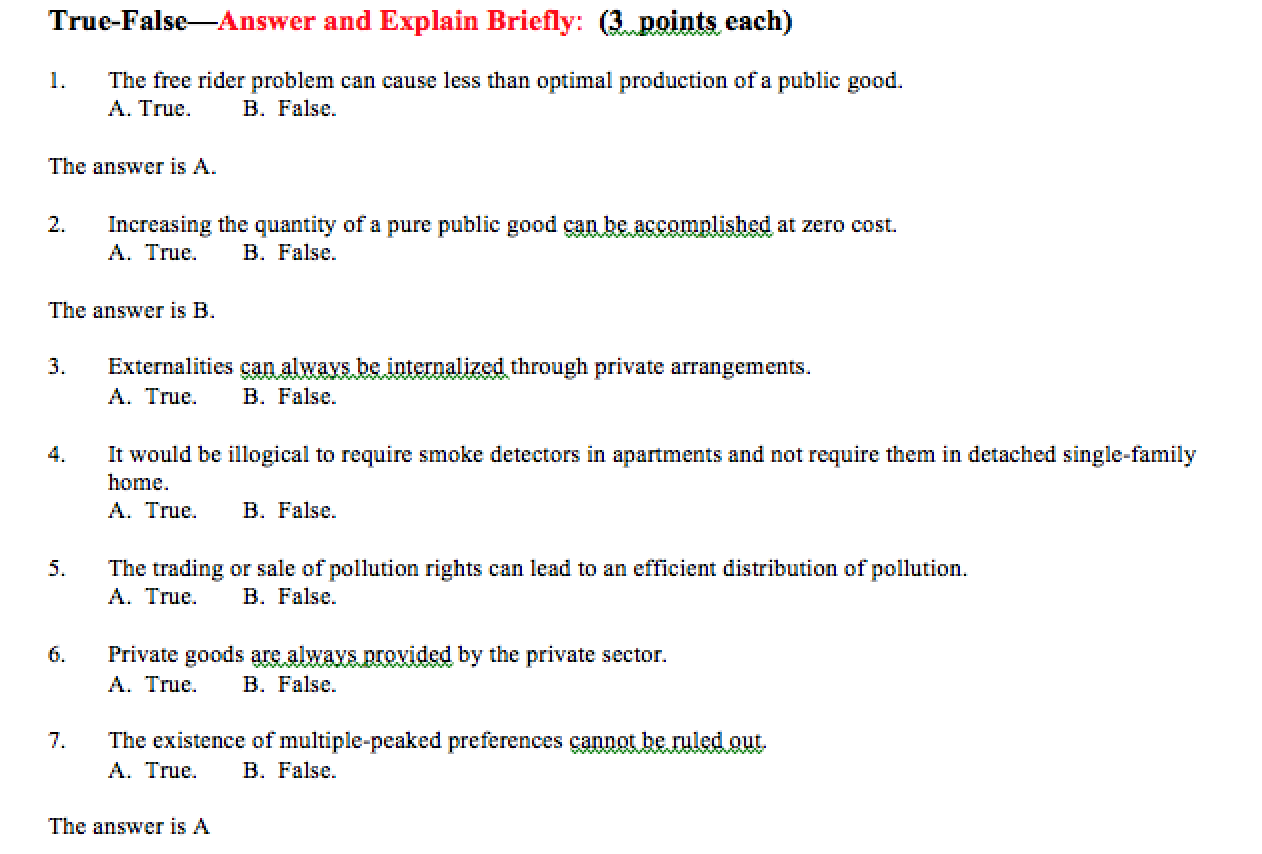
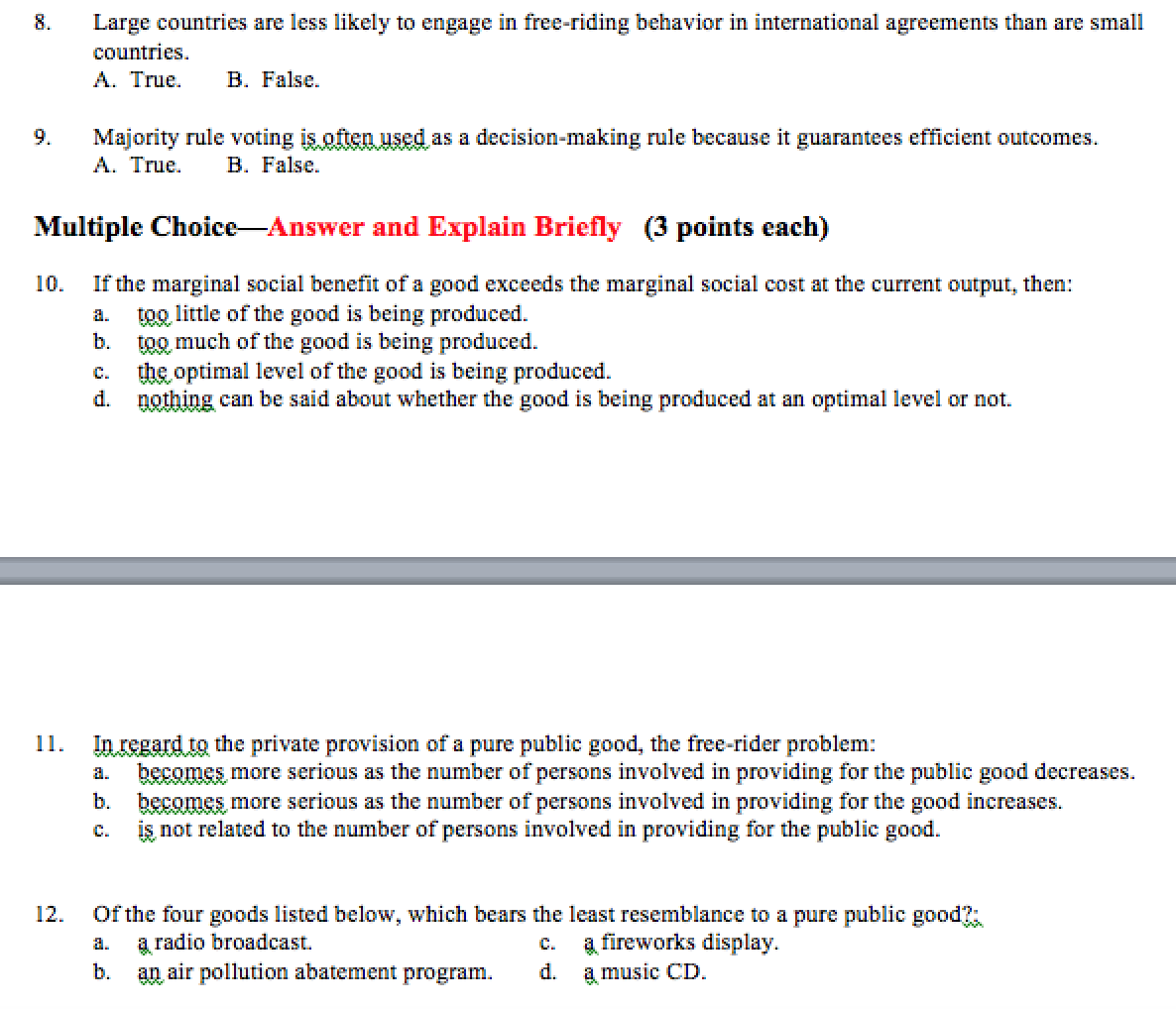
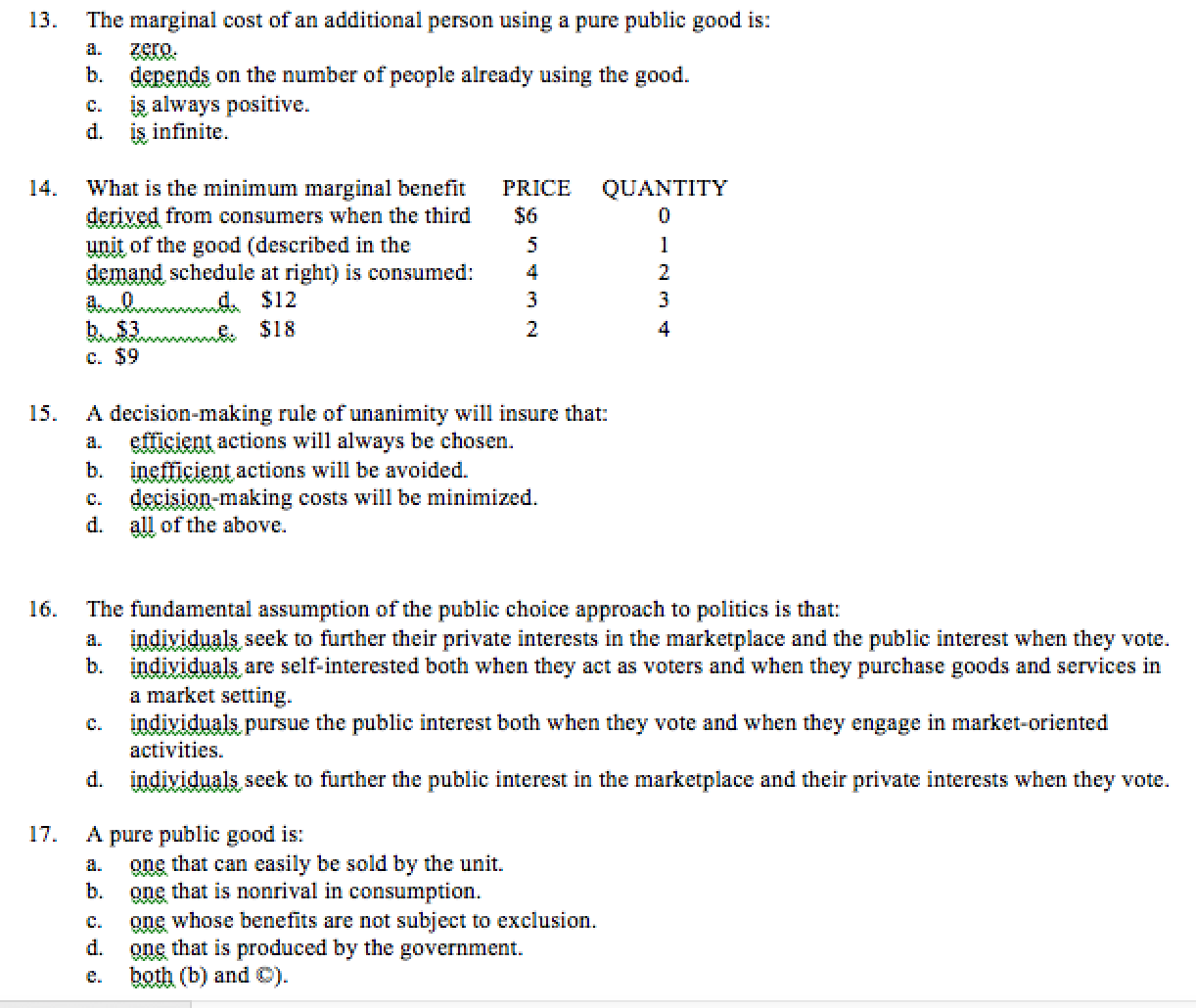
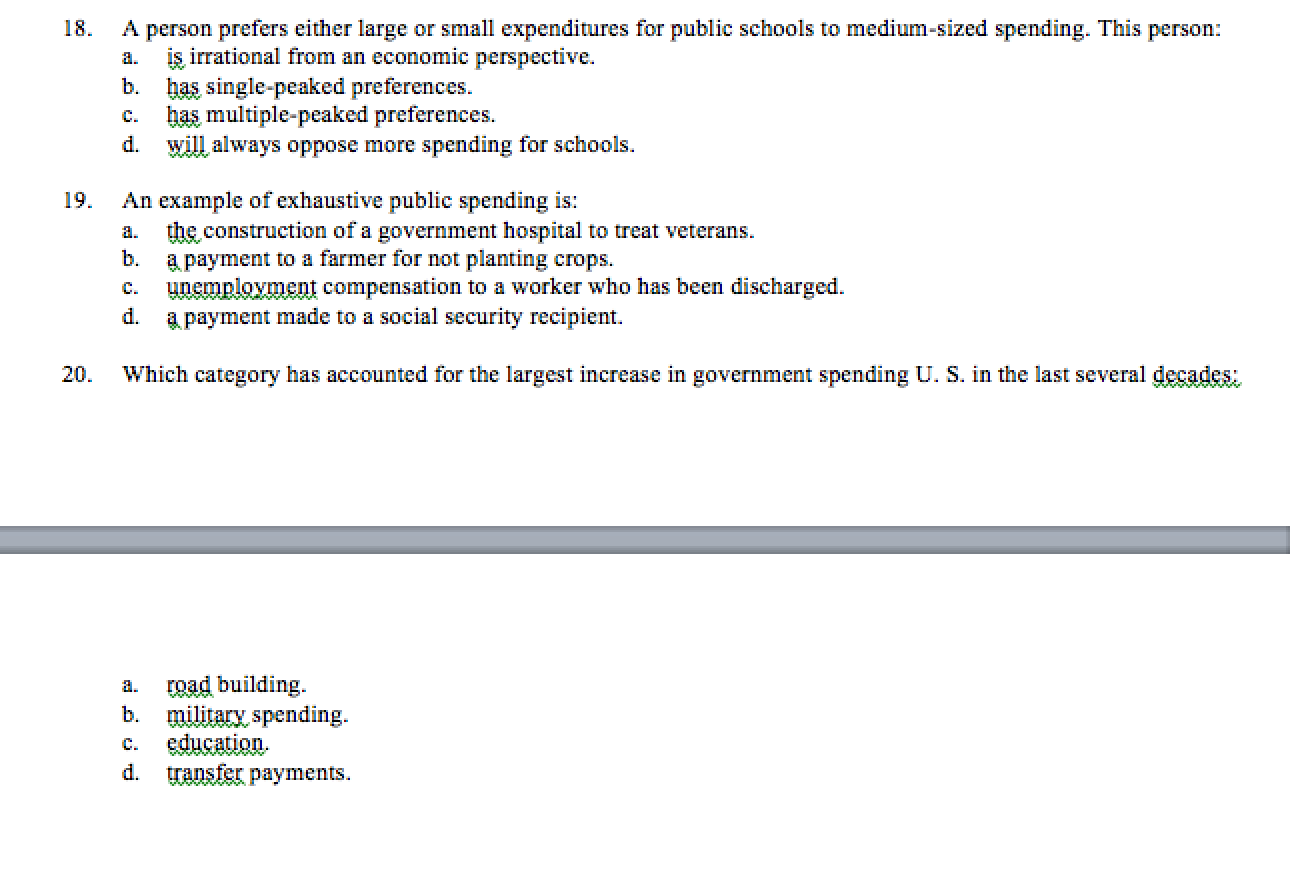
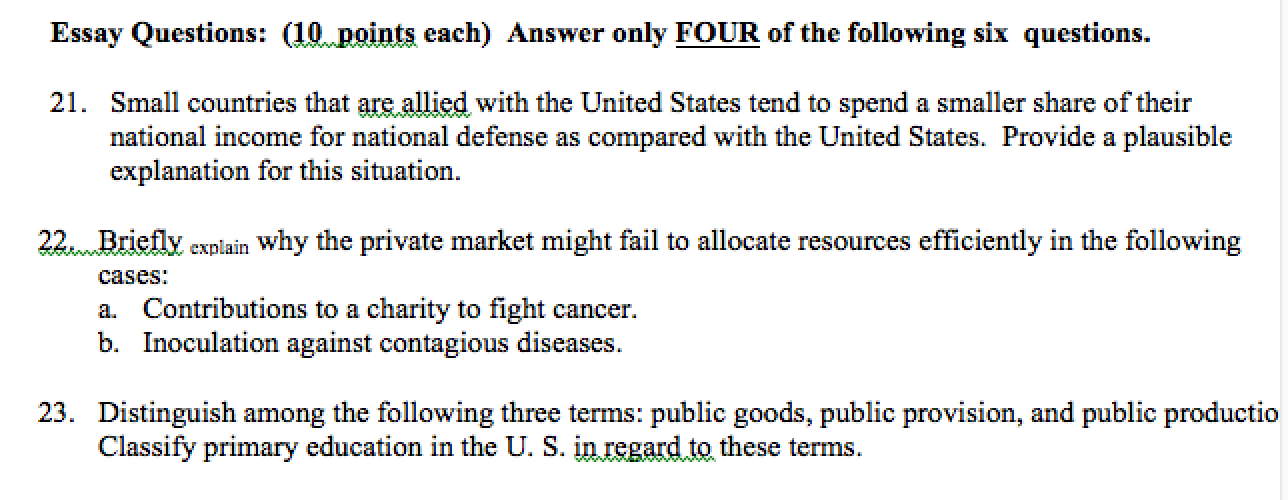
True-False-Answer and Explain Briefly: (3 points each) 1. The free rider problem can cause less than optimal production of a public good. A. True. B. False. The answer is A. 2. Increasing the quantity of a pure public good can be accomplished at zero cost. A. True. B. False. The answer is B. 3. Externalities can always be internalized through private arrangements. A. True. B. False. 4. It would be illogical to require smoke detectors in apartments and not require them in detached single-family home. A. True. B. False. 5. The trading or sale of pollution rights can lead to an efficient distribution of pollution. A. True. B. False. 6. Private goods are always provided by the private sector. A. True. B. False. 7. The existence of multiple-peaked preferences cannot be ruled out. A. True. B. False. The answer is A8. Large countries are less likely to engage in free-riding behavior in international agreements than are small countries. A. True. B. False. 9. Majority rule voting is often used as a decision-making rule because it guarantees efficient outcomes. A. True. B. False. Multiple Choice-Answer and Explain Briefly (3 points each) 10. If the marginal social benefit of a good exceeds the marginal social cost at the current output, then: a. too little of the good is being produced. . too much of the good is being produced. the optimal level of the good is being produced. d. nothing can be said about whether the good is being produced at an optimal level or not. 1 1. In regard to the private provision of a pure public good, the free-rider problem: a. becomes more serious as the number of persons involved in providing for the public good decreases. b. becomes more serious as the number of persons involved in providing for the good increases. is not related to the number of persons involved in providing for the public good. 12. Of the four goods listed below, which bears the least resemblance to a pure public good?: a. a radio broadcast. c. a fireworks display. . an air pollution abatement program. d. a music CD.13. The marginal cost of an additional person using a pure public good is: a. zero. b. depends on the number of people already using the good. d. . is always positive. is infinite. 14. What is the minimum marginal benefit PRICE QUANTITY derived from consumers when the third $6 unit of the good (described in the demand schedule at right) is consumed: And $12 be $18 NJWAU c. $9 15. A decision-making rule of unanimity will insure that: a. efficient actions will always be chosen. b. inefficient actions will be avoided. C. decision-making costs will be minimized. d. all of the above. 16. The fundamental assumption of the public choice approach to politics is that: a. individuals seek to further their private interests in the marketplace and the public interest when they vote. b. individuals are self-interested both when they act as voters and when they purchase goods and services in a market setting. c. individuals pursue the public interest both when they vote and when they engage in market-oriented activities. d. individuals seek to further the public interest in the marketplace and their private interests when they vote. 17. A pure public good is: a. one that can easily be sold by the unit. b. one that is nonrival in consumption. C. d. one whose benefits are not subject to exclusion. one that is produced by the government. e. both (b) and O).18. A person prefers either large or small expenditures for public schools to medium-sized spending. This person: a. is irrational from an economic perspective. b. has single-peaked preferences. c. has multiple-peaked preferences. d. will always oppose more spending for schools. 19. An example of exhaustive public spending is: a. the construction of a government hospital to treat veterans. b. a payment to a farmer for not planting crops. C. unemployment compensation to a worker who has been discharged. d. a payment made to a social security recipient. 20. Which category has accounted for the largest increase in government spending U. S. in the last several decades; a. road building. b. military spending. C. education. d. transfer payments.Essay Questions: (10 points each) Answer only FOUR of the following six questions. 21. Small countries that are allied with the United States tend to spend a smaller share of their national income for national defense as compared with the United States. Provide a plausible explanation for this situation. 22..Briefly explain why the private market might fail to allocate resources efficiently in the following cases: a. Contributions to a charity to fight cancer. b. Inoculation against contagious diseases. 23. Distinguish among the following three terms: public goods, public provision, and public production Classify primary education in the U. S. in regard to these terms
Step by Step Solution
There are 3 Steps involved in it

Get step-by-step solutions from verified subject matter experts
 Study Help