







Question: please help me solve question #4 in excel in above given format. it would be really appreciated. thank you Sneaker 2013 The business case team

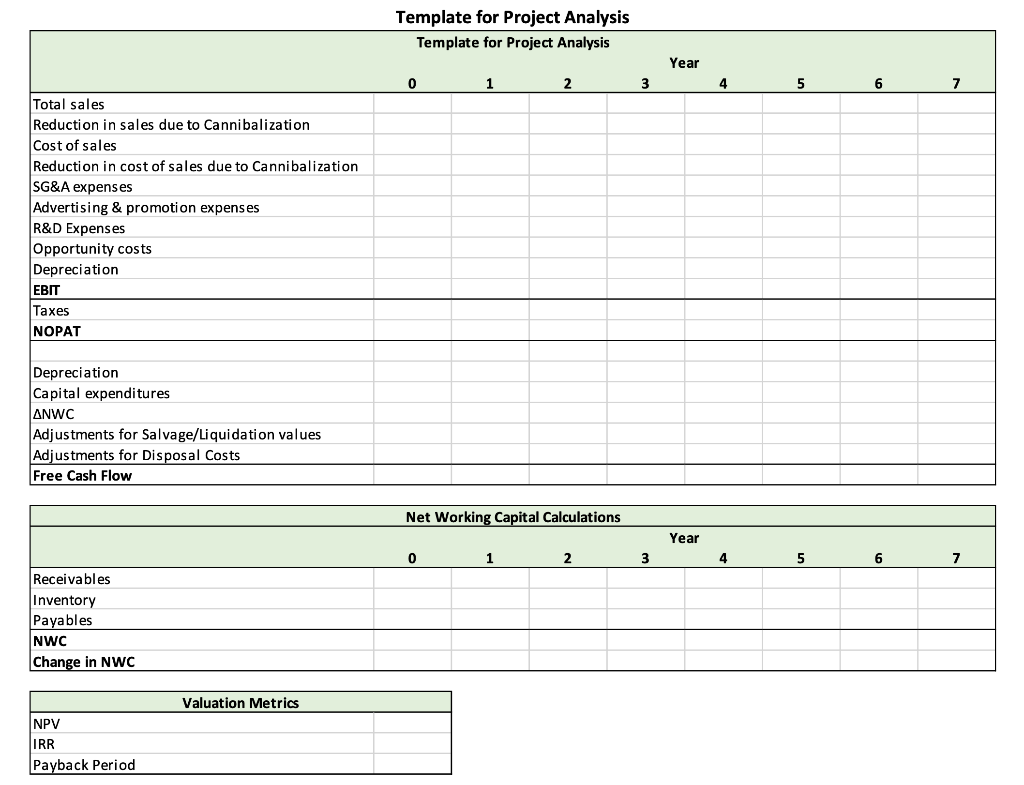
please help me solve question #4 in excel in above given format. it would be really appreciated. thank you
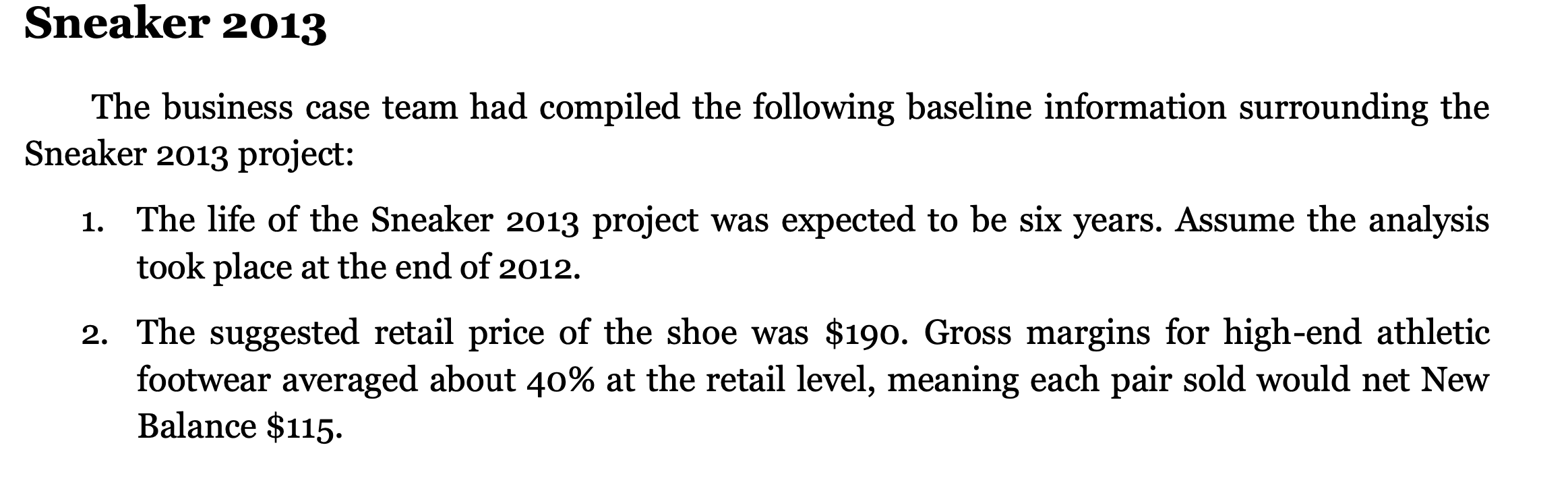
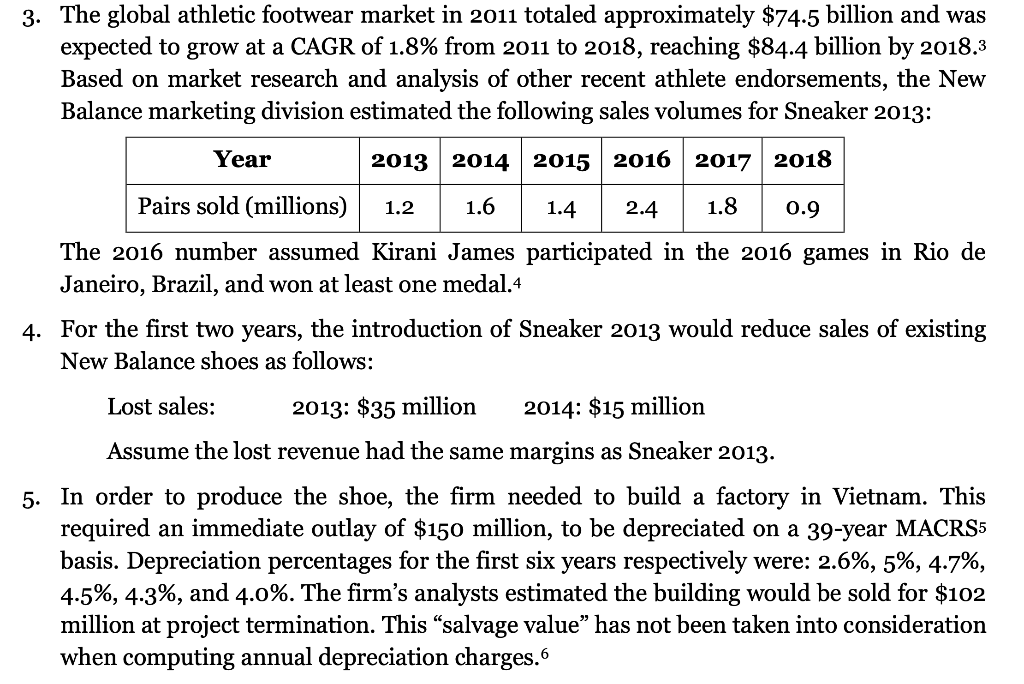
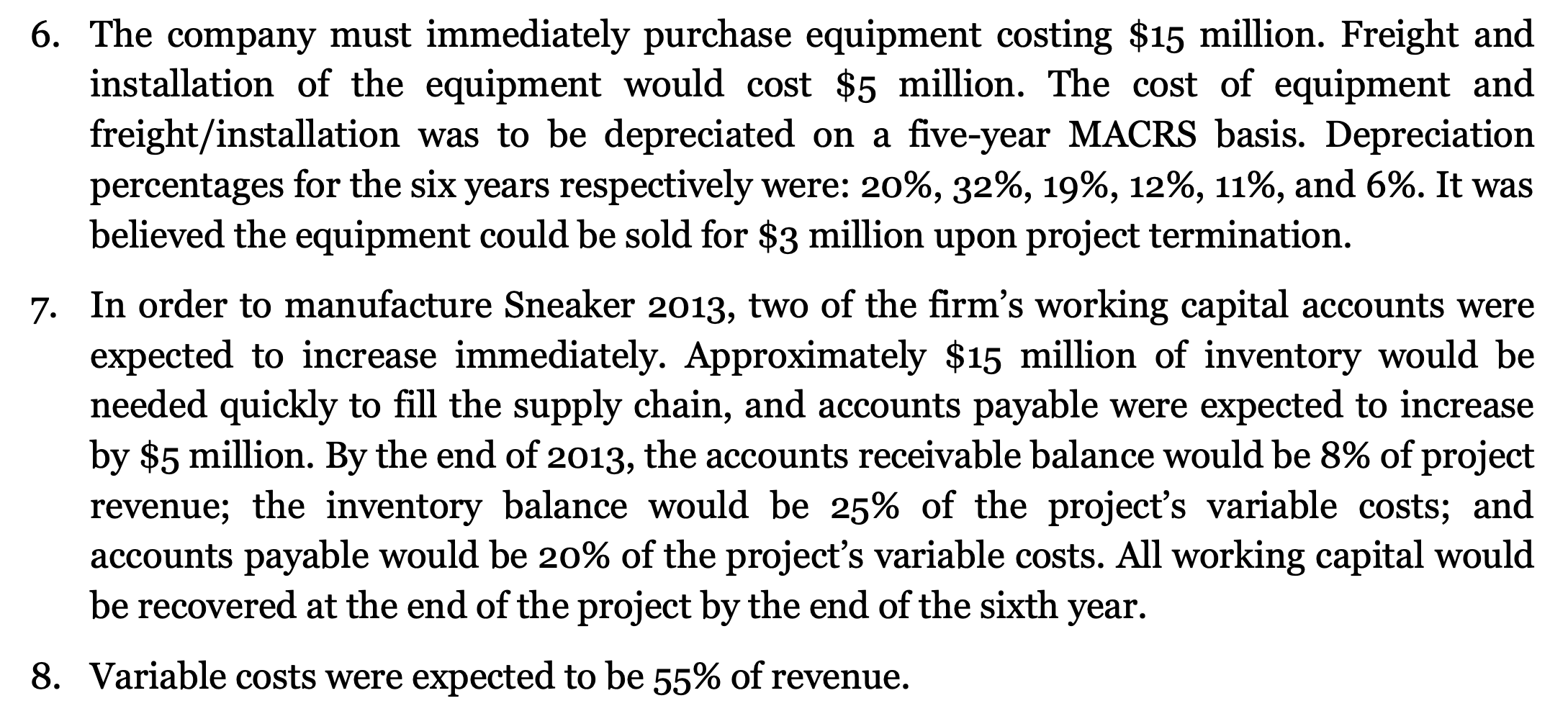
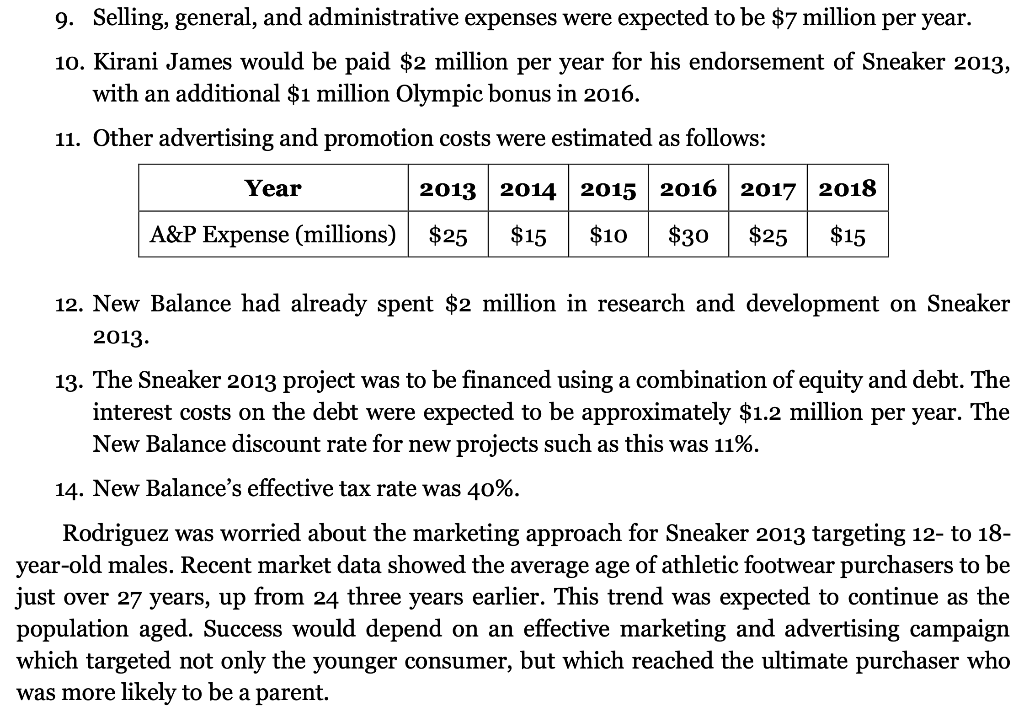
Sneaker 2013 The business case team had compiled the following baseline information surrounding the Sneaker 2013 project: 1. The life of the Sneaker 2013 project was expected to be six years. Assume the analysis took place at the end of 2012. 2. The suggested retail price of the shoe was $190. Gross margins for high-end athletic footwear averaged about 40% at the retail level, meaning each pair sold would net New Balance $115. 3. The global athletic footwear market in 2011 totaled approximately $74.5 billion and was expected to grow at a CAGR of 1.8% from 2011 to 2018, reaching $84.4 billion by 2018.3 Based on market research and analysis of other recent athlete endorsements, the New Balance marketing division estimated the following sales volumes for Sneaker 2013: Year 2013 2014 2015 2016 2017 2018 Pairs sold (millions) 1.2 1.6 1.4 2.4 1.8 0.9 The 2016 number assumed Kirani James participated in the 2016 games in Rio de Janeiro, Brazil, and won at least one medal.4 4. For the first two years, the introduction of Sneaker 2013 would reduce sales of existing New Balance shoes as follows: Lost sales: 2013: $35 million 2014: $15 million Assume the lost revenue had the same margins as Sneaker 2013. 5. In order to produce the shoe, the firm needed to build a factory in Vietnam. This required an immediate outlay of $150 million, to be depreciated on a 39-year MACRS5 basis. Depreciation percentages for the first six years respectively were: 2.6%, 5%, 4.7%, 4.5%, 4.3%, and 4.0%. The firm's analysts estimated the building would be sold for $102 million at project termination. This salvage value has not been taken into consideration when computing annual depreciation charges.6 6. The company must immediately purchase equipment costing $15 million. Freight and installation of the equipment would cost $5 million. The cost of equipment and freight/installation was to be depreciated on a five-year MACRS basis. Depreciation percentages for the six years respectively were: 20%, 32%, 19%, 12%, 11%, and 6%. It was believed the equipment could be sold for $3 million upon project termination. 7. In order to manufacture Sneaker 2013, two of the firm's working capital accounts were expected to increase immediately. Approximately $15 million of inventory would be needed quickly to fill the supply chain, and accounts payable were expected to increase by $5 million. By the end of 2013, the accounts receivable balance would be 8% of project revenue; the inventory balance would be 25% of the project's variable costs; and accounts payable would be 20% of the project's variable costs. All working capital would be recovered at the end of the project by the end of the sixth year. 8. Variable costs were expected to be 55% of revenue. 9. Selling, general, and administrative expenses were expected to be $7 million per year. 10. Kirani James would be paid $2 million per year for his endorsement of Sneaker 2013, with an additional $1 million Olympic bonus in 2016. 11. Other advertising and promotion costs were estimated as follows: Year 2013 2014 2015 2016 2017 2018 A&P Expense (millions) $25 $15 $10 $30 $25 $15 12. New Balance had already spent $2 million in research and development on Sneaker 2013 13. The Sneaker 2013 project was to be financed using a combination of equity and debt. The interest costs on the debt were expected to be approximately $1.2 million per year. The New Balance discount rate for new projects such as this was 11%. 14. New Balance's effective tax rate was 40%. Rodriguez was worried about the marketing approach for Sneaker 2013 targeting 12- to 18- year-old males. Recent market data showed the average age of athletic footwear purchasers to be just over 27 years, up from 24 three years earlier. This trend was expected to continue as the population aged. Success would depend on an effective marketing and advertising campaign which targeted not only the younger consumer, but which reached the ultimate purchaser who was more likely to be a parent. Question 4 (20 points) Produce a detailed free cash flow statement for the Sneaker 13 project and calculate the NPV, IRR, and Payback period for the project. Use a table similar to the one provided in the template on page 4 of this assignment for your calculations and make any necessary adjustments. Express all $-amounts in millions of dollars and round to two decimals. Template for Project Analysis Template for Project Analysis Year 0 1 2 3 4 5 6 7 Total sales Reduction in sales due to Cannibalization Cost of sales Reduction in cost of sales due to Cannibalization SG&A expenses Advertising & promotion expenses R&D Expenses Opportunity costs Depreciation EBIT Taxes NOPAT Depreciation Capital expenditures ANWC Adjustments for Salvage/Liquidation values Adjustments for Disposal Costs Free Cash Flow Net Working Capital Calculations Year 0 1 2 3 4 5 6 7 Receivables Inventory Payables NWC Change in NWC Valuation Metrics NPV IRR Payback Period
Step by Step Solution
There are 3 Steps involved in it

Get step-by-step solutions from verified subject matter experts
 Study Help